Understanding pollination Normal Plants and Animals Worksheets for Ages 6-8
3 filtered results
-
From - To
Discover the enchanting world of pollination with our "Understanding Pollination: Normal Plants and Animals Worksheets for Ages 6-8." These engaging, science-focused worksheets are designed to captivate young learners as they explore how plants and animals collaborate in nature. Through fun activities and vivid illustrations, children will uncover the essential roles of pollinators, understand pollination mechanisms, and appreciate the interdependence of plants and animals. Perfect for classroom learning or at-home enrichment, these worksheets align with core educational standards, fostering curiosity and laying a strong foundation for future scientific exploration. Unlock the wonders of nature with our interactive and educational worksheets!
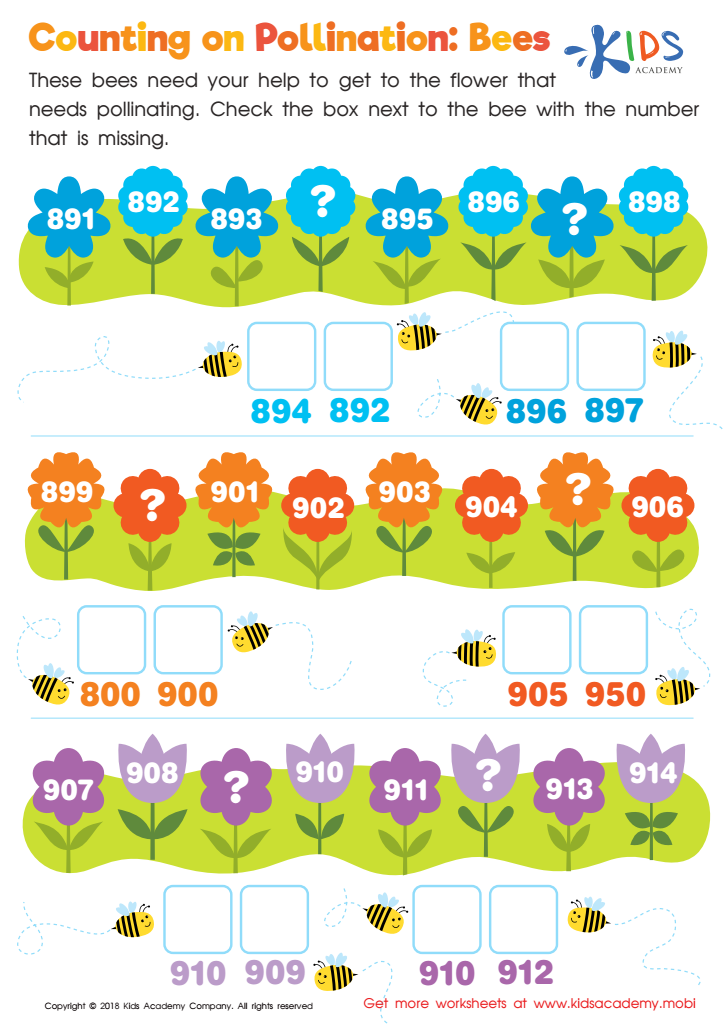
Counting on Pollination: Bees Worksheet
 Assign to My Students











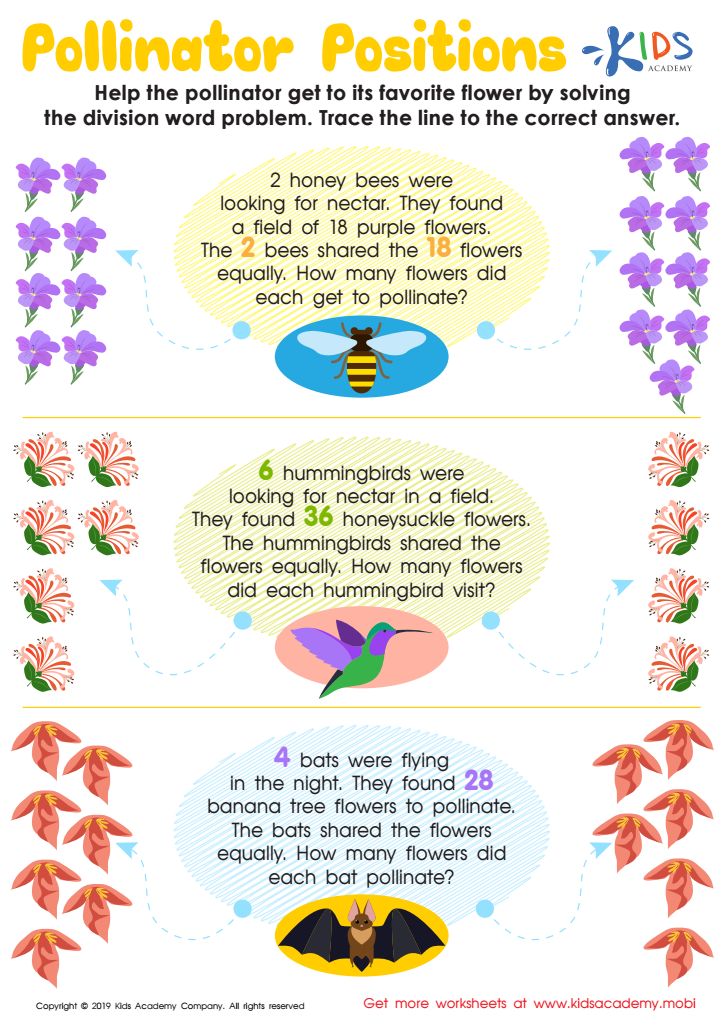
Pollinator Positions Worksheet
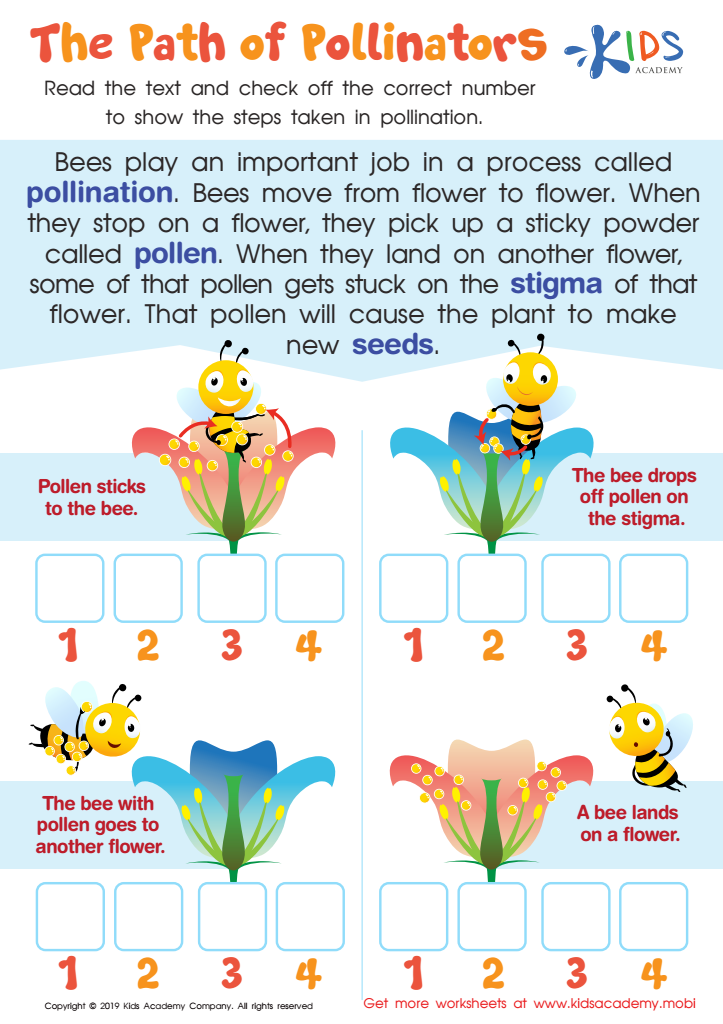
The Path of Pollinators Worksheet







Understanding pollination is crucial for young children, as it lays the foundation for appreciation and awareness of environmental relationships and sustainability. At ages 6-8, kids are naturally curious and eager to learn about the world around them. Learning about pollination helps them grasp the essential role that pollinators like bees, butterflies, and other animals play in the ecosystem.
When parents or teachers introduce children to this concept, they are fostering a sense of curiosity and respect for nature. The knowledge that pollination is necessary for plant growth, food production, and ecosystem balance makes children aware of how interconnected life is. This understanding can foster early interest in science and environmental conservation.
Additionally, by learning about pollination, children can appreciate the variety of plants and animals in their environment and understand the importance of biodiversity. Parents and teachers using hands-on activities like observing flowers, visiting gardens, or reading age-appropriate books, makes the information engaging and memorable.
Ultimately, instilling this knowledge from a young age not only aligns with educational standards in biology and ecology but also promotes responsible citizenship. An informed child is more likely to grow into an adult who values and protects natural resources, making understanding pollination a small yet significant step toward a greener future.







