Building vocabulary Normal Community Worksheets for Ages 6-8
3 filtered results
-
From - To
Enhance your child's language skills with "Building Vocabulary Normal Community Worksheets for Ages 6-8". Perfectly designed for young learners, these engaging worksheets focus on expanding vocabulary related to community and social studies. Through fun activities and visual aids, children will explore community roles, landmarks, and essential social concepts. Each worksheet provides practical exercises that encourage critical thinking and language development, fostering a deeper understanding of their surroundings. Ideal for both classroom and home use, these resources are a fantastic tool to support your child's educational journey and build a solid vocabulary foundation in an interactive way.
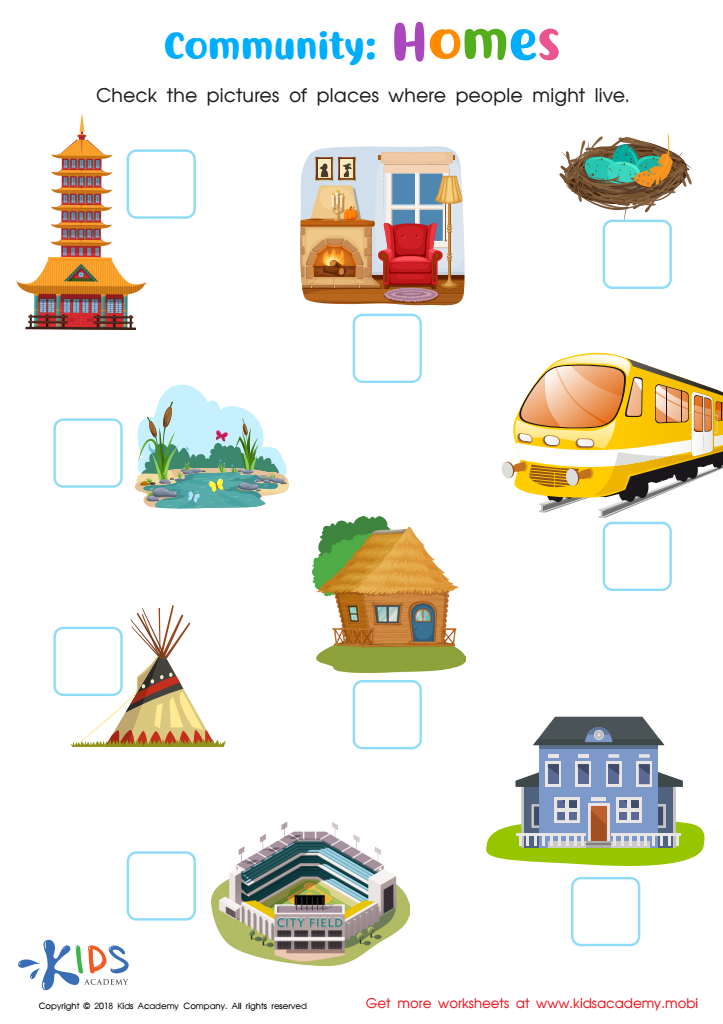
Community: Homes Worksheet
 Assign to My Students
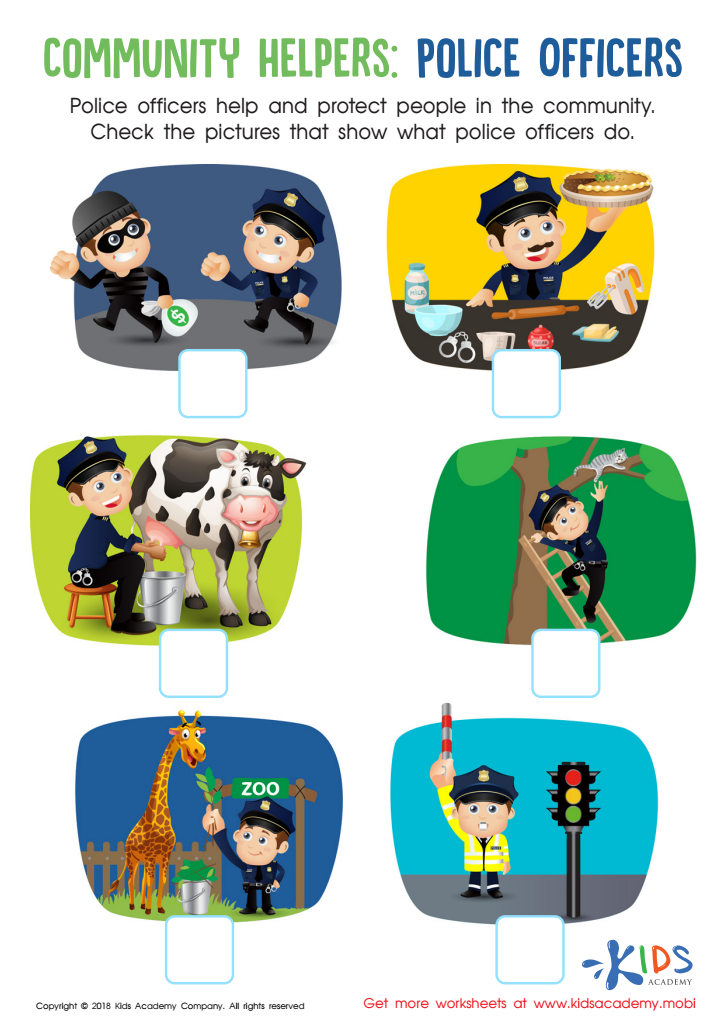
Police Officers Community Helpers Worksheet
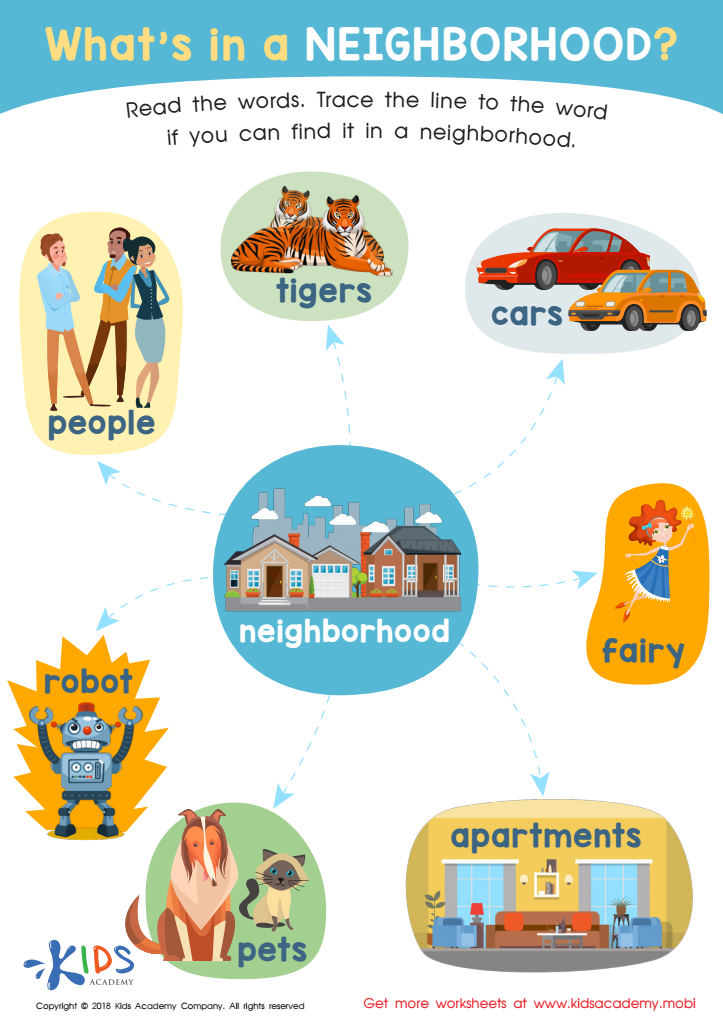
What's in a Neighborhood? Worksheet








Building vocabulary for children ages 6-8 is pivotal for their overall development and success. During these formative years, children are like sponges, absorbing new information eagerly. A rich vocabulary enhances not only their reading and writing skills but also their ability to express thoughts clearly and understand others effectively. This foundational skill is crucial for academic achievement, particularly in subjects that require strong language skills.
For parents and teachers, focusing on vocabulary expansion helps bridge the word gap, a phenomenon where children from less verbal households enter school with significantly fewer words than their peers. By actively engaging children in conversations, reading diverse books, and encouraging curiosity, adults foster an environment where language flourishes.
Furthermore, a robust vocabulary improves cognitive abilities, including problem-solving, critical thinking, and creativity. It bolsters a child's confidence, boosting participation in class discussions and social interactions. This increased engagement leads to a more enriching learning experience.
Moreover, strong vocabulary skills correlate with future academic and life success, affecting performance in standardized tests and opening doors to higher education and career opportunities. Investing time and effort into building a child's vocabulary at an early age equips them with essential tools for lifelong learning and development, making it a priority for both parents and teachers.