Vocabulary Building Normal Community Worksheets for Ages 6-8
4 filtered results
-
From - To
Enhance your child's vocabulary with our engaging Community Vocabulary Building Worksheets, designed for ages 6-8. These worksheets help young learners explore essential words related to community and social studies. Kids will delight in interactive activities that reinforce their understanding of various community roles, places, and concepts. Each worksheet is meticulously crafted to foster both language skills and critical thinking, making learning fun and effective. Ideal for home or classroom use, these vocabulary-building resources ensure children develop a strong foundation in language while learning about their community. Download now and watch your child grow in confidence and knowledge!
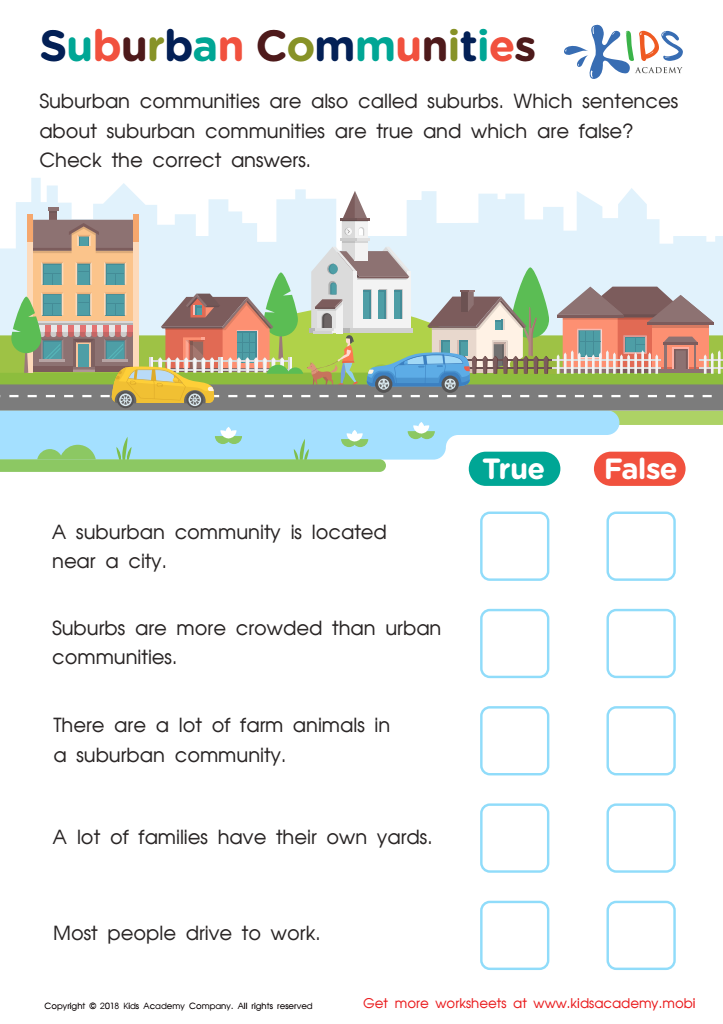
Suburban Communities Worksheet
 Assign to My Students
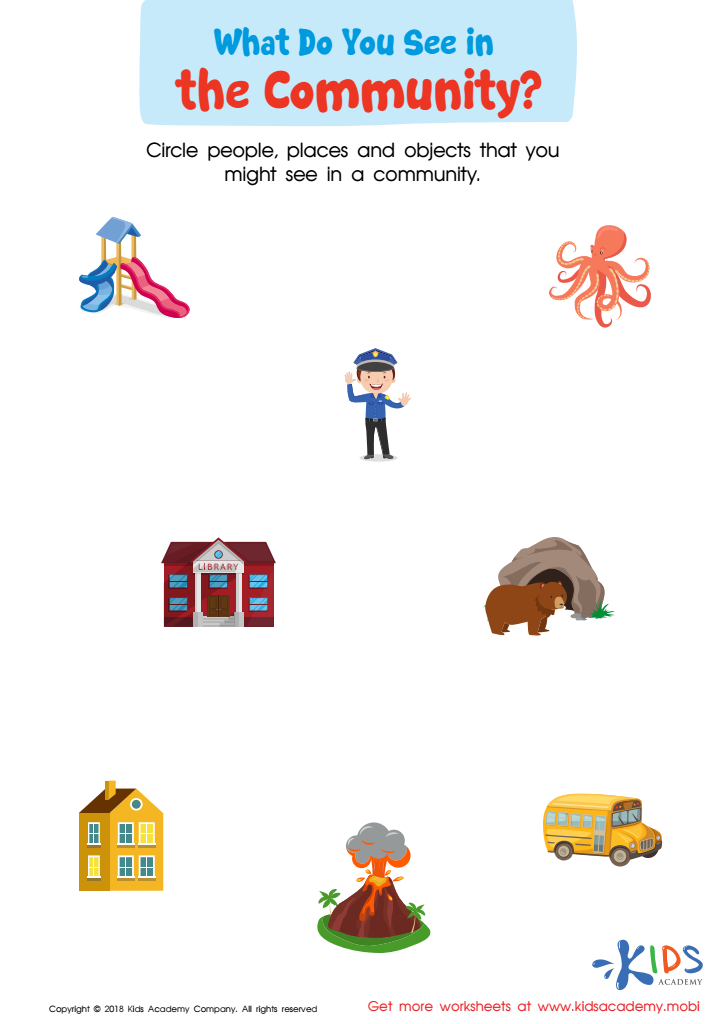
What Do You See in the Community Worksheet
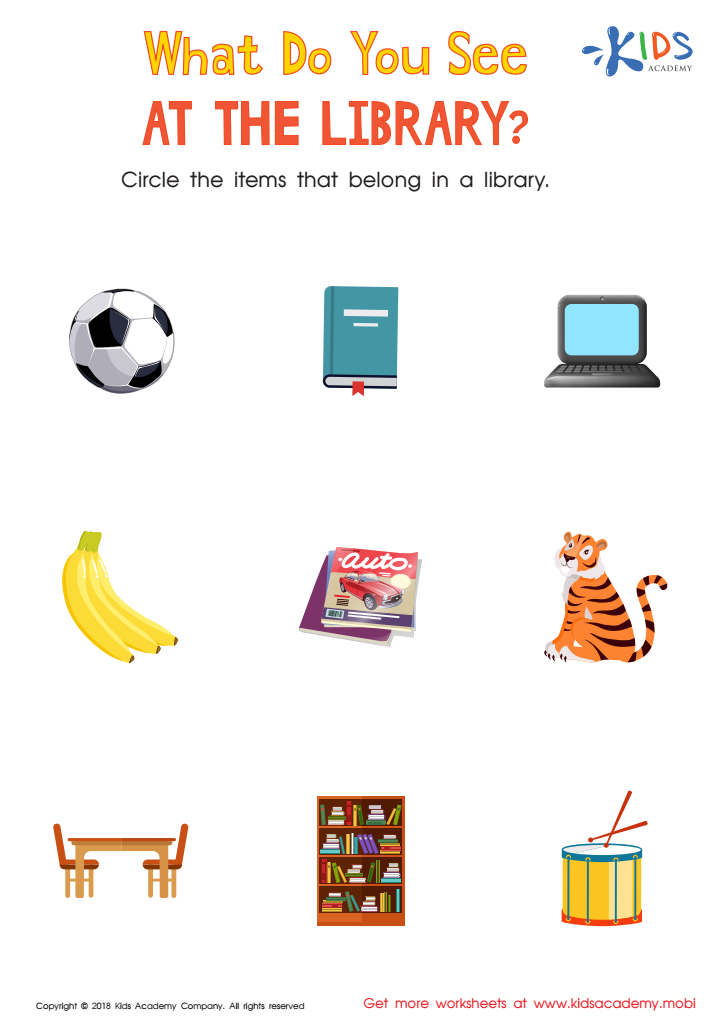
What Do you See at the Library? Worksheet
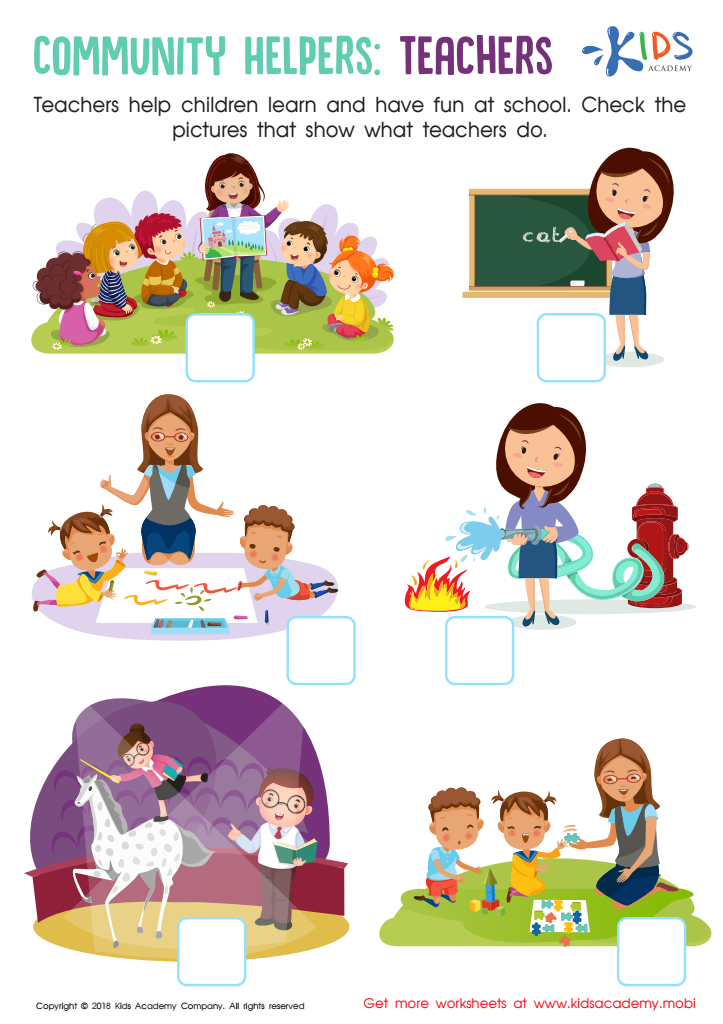
Teachers Community Helpers Worksheet








Vocabulary building is crucial for children aged 6-8 as it lays the foundation for literacy and communication skills. Parents and teachers should prioritize vocabulary development within a normal community setting to ensure children can express themselves clearly and develop a love for language. This age group is particularly receptive to new words and concepts, and a rich vocabulary supports their reading comprehension and writing abilities.
Engaging in vocabulary building activities fosters critical thinking and enhances cognitive development. Children who are exposed to diverse vocabulary in everyday conversations, through reading, and in various community interactions are better equipped to participate in discussions, solve problems, and think creatively. This, in turn, positively impacts their academic success across subjects.
Moreover, strong vocabulary skills are linked to self-esteem and social skills, facilitating better relationships with peers. By creating a supportive community environment focused on vocabulary enhancement, parents and teachers help children become articulate individuals capable of navigating the world around them.
In short, prioritizing vocabulary building from ages 6 to 8 not only prepares children for academic achievement but also equips them with essential life skills for effective communication and personal expression. This foundation will serve them well beyond their early education years.