Geography skills Normal Social Studies Worksheets for Ages 6-8
3 filtered results
-
From - To
Discover engaging Geography Skills worksheets tailored for kids ages 6-8 on Kids Academy. These captivating printables are designed to introduce youngsters to essential geographical concepts, enhance their map-reading abilities, and foster an interest in the world around them. Our worksheets cover topics such as identifying continents and oceans, understanding cardinal directions, and recognizing various landforms. Perfect for both classroom use and at-home learning, these tools support social studies curricula while making learning fun and interactive. Empower your child with the knowledge to navigate and appreciate their global environment through our comprehensive educational resources.
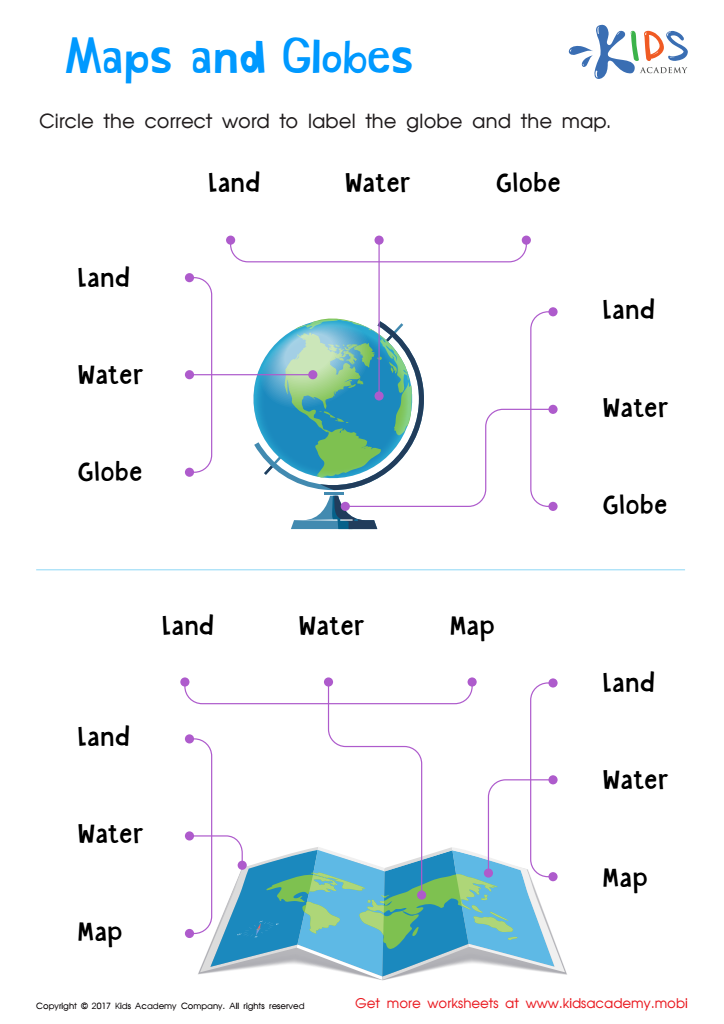
 Assign to My Students
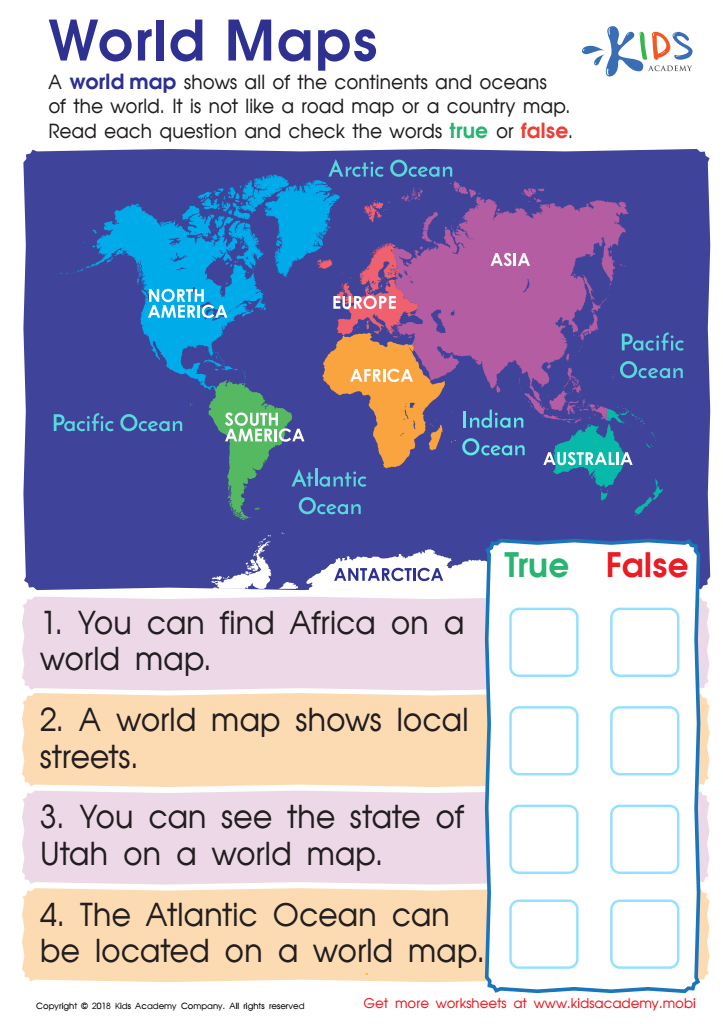
World Maps Worksheet
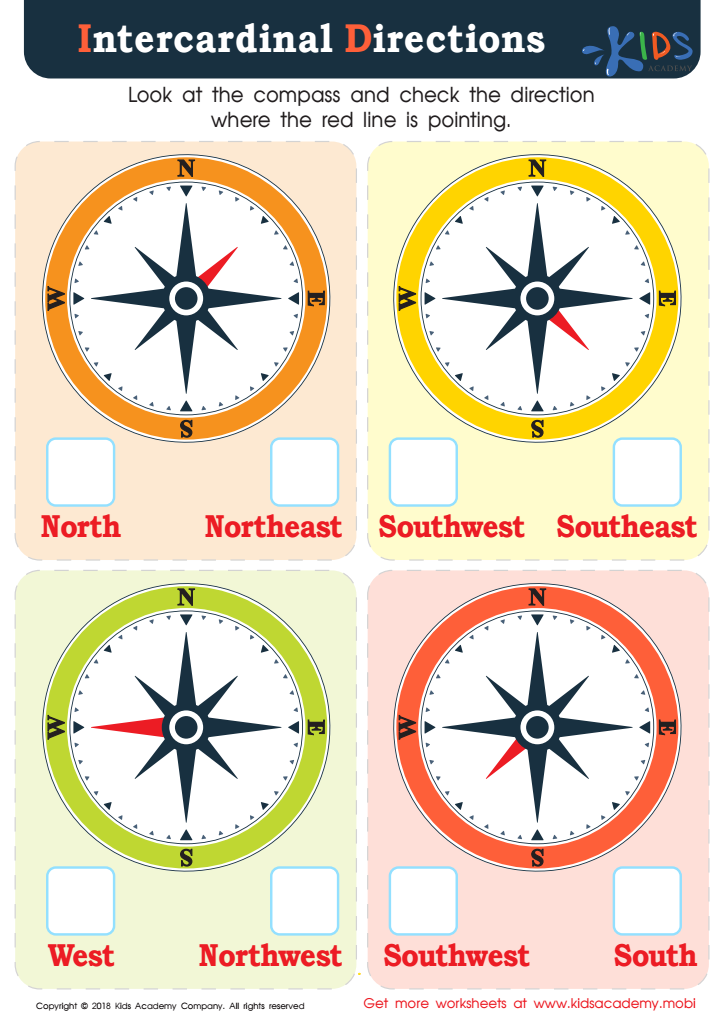
Intercardinal Directions Worksheet






Parents and teachers play an essential role in nurturing a child’s development, and fostering geography skills during early grades (ages 6-8) is crucial. At this formative age, children are incredibly receptive to new information and experiences. Geography provides a foundation for understanding the world around them, enabling children to appreciate different cultures, environments, and how interconnected we are.
Developing geography skills helps kids grasp basic concepts of direction, location, and place, which are foundational for future learning in both social studies and general education. Understanding maps, for instance, enhances spatial thinking, an ability that translates to problem-solving skills in mathematics and science. Geography also introduces children to global awareness and empathy, as they learn about people in different parts of the world, fostering open-mindedness and reducing cultural biases.
Furthermore, integrating geography into the curriculum encourages curiosity and active learning. Kids become little explorers, eager to discover more about the world beyond their immediate surroundings. Practical activities, such as creating simple maps and talking about various landforms, enhance fine motor skills and cognitive development.
By prioritizing geography, parents and teachers help children build a solid academic foundation, broaden their worldviews, and pave the way for lifelong learning and responsible citizenship.








