Multiplication practice Normal Social Studies Worksheets for Ages 6-8
3 filtered results
-
From - To
Enhance your child's learning experience with our Multiplication Practice Normal Social Studies Worksheets designed specifically for ages 6-8. These engaging worksheets integrate essential multiplication skills with social studies concepts, making learning fun and effective. Your child will practice basic multiplication while exploring important social topics, developing a well-rounded understanding of both math and the world around them. Each worksheet is thoughtfully crafted to cater to young learners, featuring vibrant illustrations and age-appropriate exercises. Perfect for classroom use or at-home practice, these resources will boost confidence and mastery in multiplication. Download now and support your child’s educational journey today!
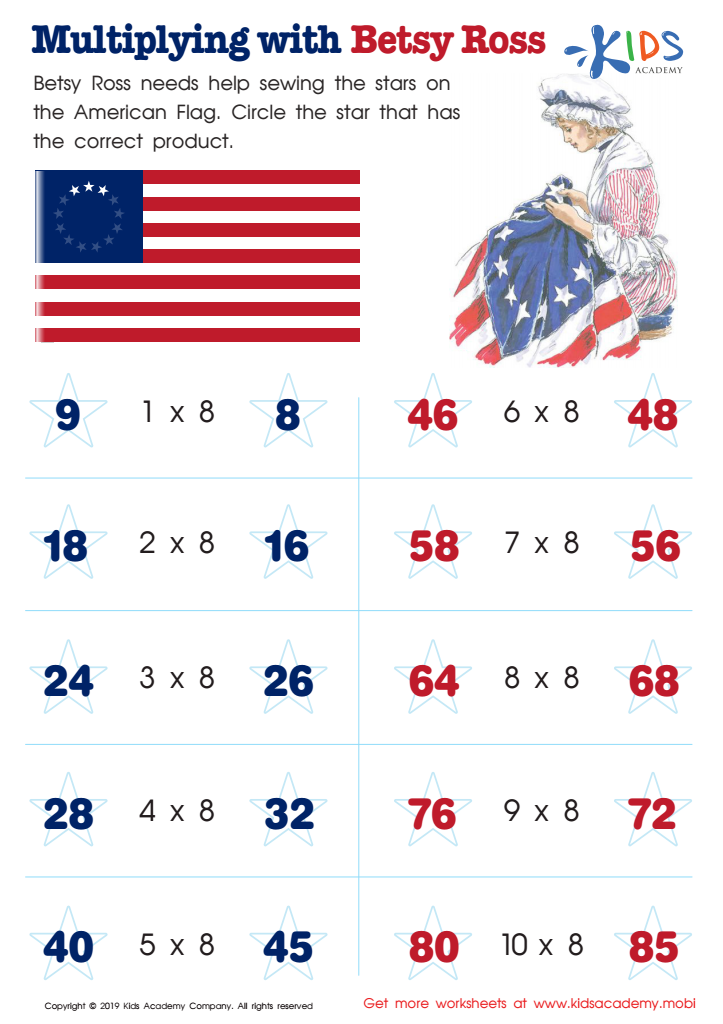
Multiplying with Betsy Ross Worksheet
 Assign to My Students
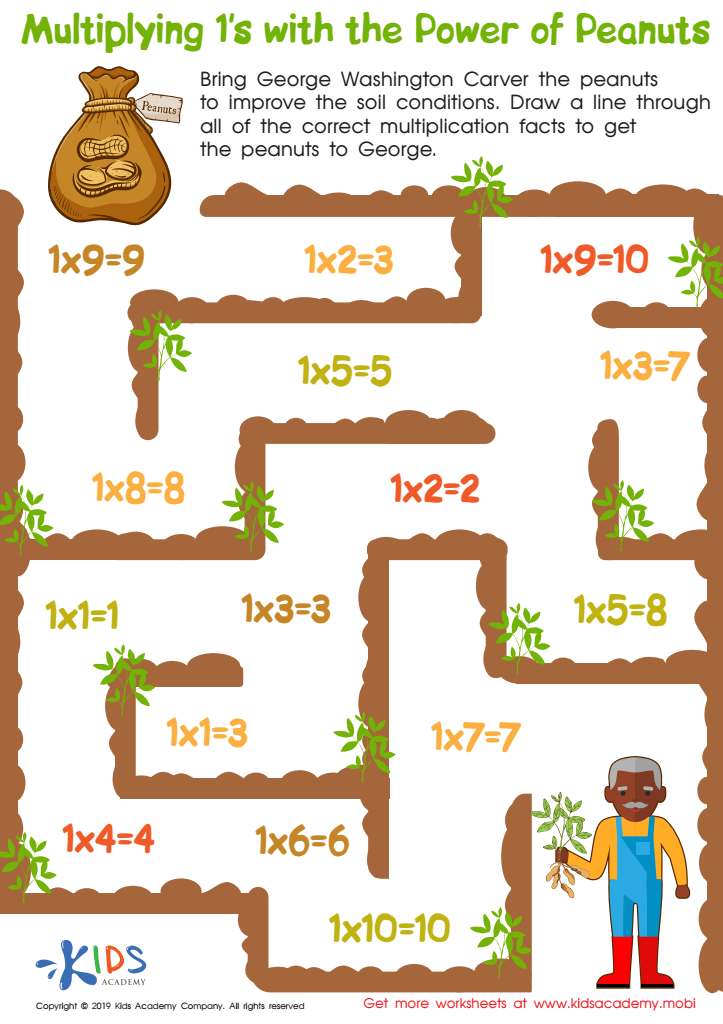
Multiplying 1’s With the Power of Peanuts Worksheet
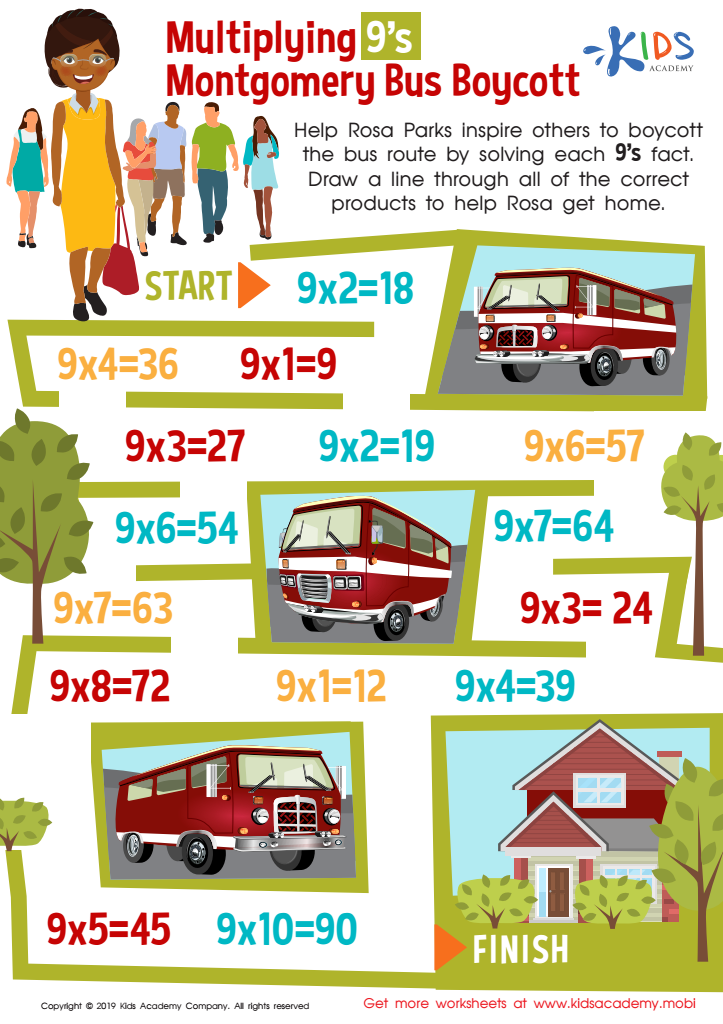
Multiplying 9’s Montgomery Bus Boycott Worksheet







Parents and teachers should prioritize multiplication practice within the context of normal social studies for ages 6-8 because it promotes critical thinking and connections between subjects. Multiplication, a foundational math skill, enhances students' analytical abilities, which can be applied in understanding various social studies concepts, such as population density, economic patterns, and resource distribution. By integrating multiplication practice with social studies, children can better grasp how numerical data influences societal structures and historical events.
Moreover, early mastery of multiplication fosters confidence and independence in students, encouraging a positive attitude towards learning. Children who engage in these practices are likely to develop a deeper appreciation for the relevance of mathematics in their daily lives and society as a whole. Early incorporation of math skills within the social studies context also allows for meaningful discussions about cultures, environments, and systems, promoting a well-rounded educational experience.
Additionally, involving parents in this practice can create a collaborative learning environment, reinforcing community ties and demonstrating the importance of education in everyday life. This holistic approach equips children with the tools they need for future academic success and informed citizenship, making it essential for adults to care and actively participate in their learning journey.








