Critical Thinking Normal Grammar Worksheets for Ages 6-8
3 filtered results
Difficulty Level
Grade
Age
-
From - To
Subject
Activity
Standards
Introducing our "Critical Thinking Normal Grammar Worksheets for Ages 6-8," a fantastic resource designed to develop young learners' grammar skills while nurturing their critical thinking abilities. These engaging worksheets provide a variety of interactive activities that challenge children to analyze, evaluate, and create meaningful sentences, enhancing their understanding of grammar concepts such as parts of speech and punctuation. Each worksheet supports both independent practice and collaborative learning, making them perfect for classroom situations or at-home practice. Foster a love for language and strengthen cognitive skills in your child today with our specially crafted grammar worksheets that ignite curiosity and excitement for writing!
Favorites
With answer key
Interactive
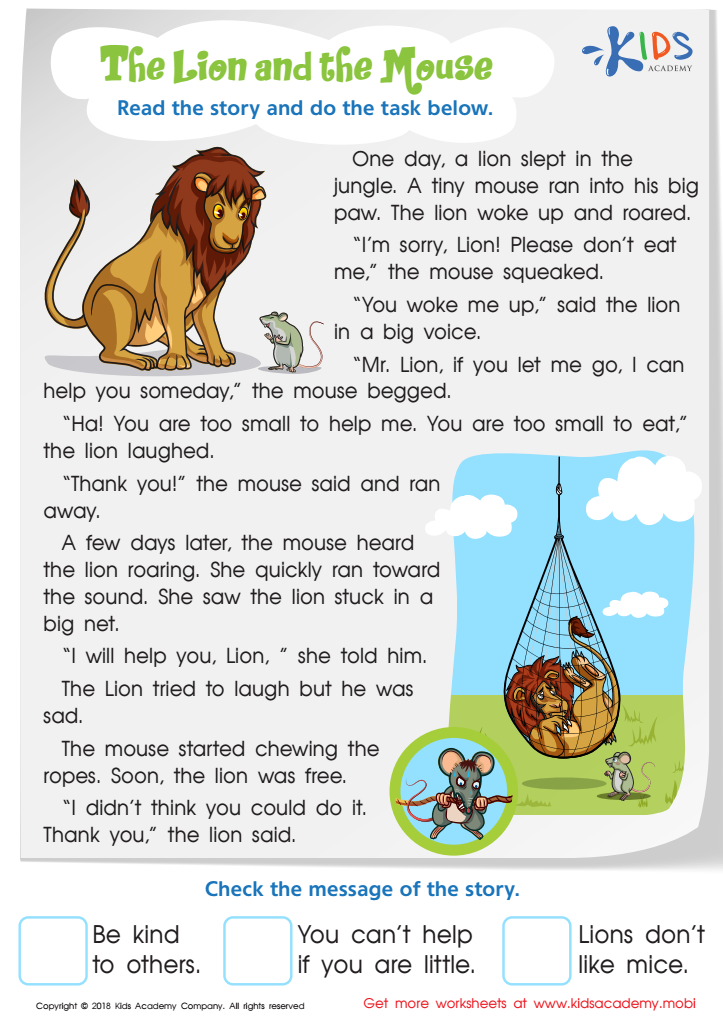
The Lion and the Mouse Worksheet
Writers often have a hidden message or theme in their stories. This printable worksheet helps readers uncover these themes by looking at what characters do and say in "The Lion and the Mouse". It's a great practice resource for learning to interpret stories.
 Assign to My Students
The Lion and the Mouse Worksheet
Worksheet
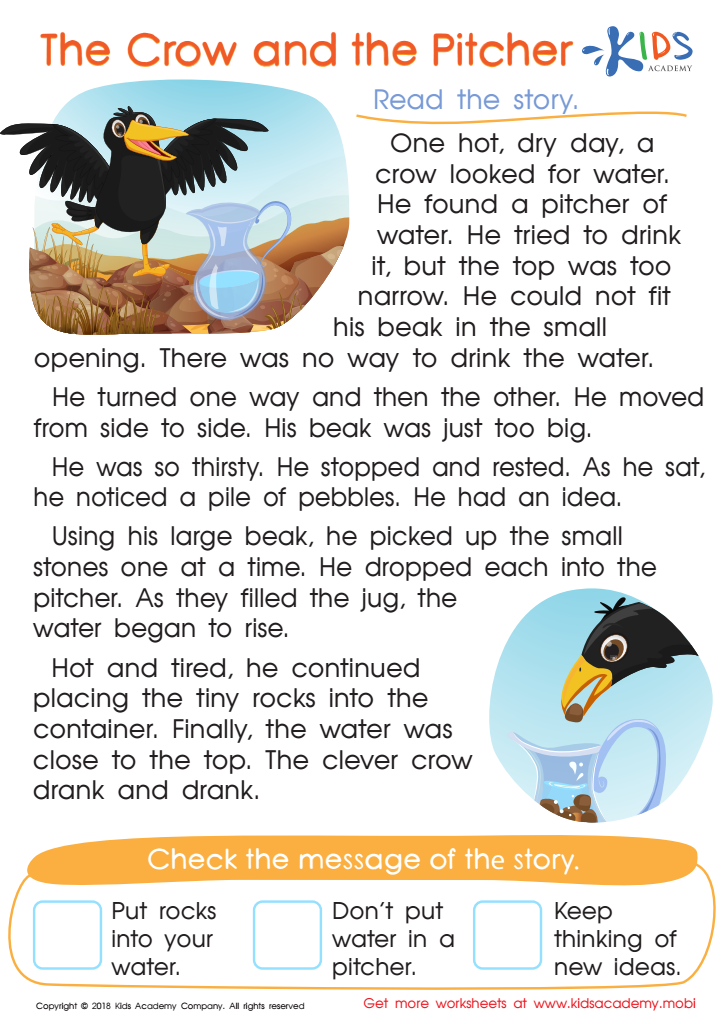
The Crow and the Pitcher Worksheet
Introduce your child to reading comprehension with this fascinating worksheet from Kids Academy! Featuring Aesop's fable of a thirsty crow, your child will enjoy reading and determining the central theme of the passage. This worksheet is a great way to give your child a purpose for reading while helping to build their comprehension skills.
The Crow and the Pitcher Worksheet
Worksheet
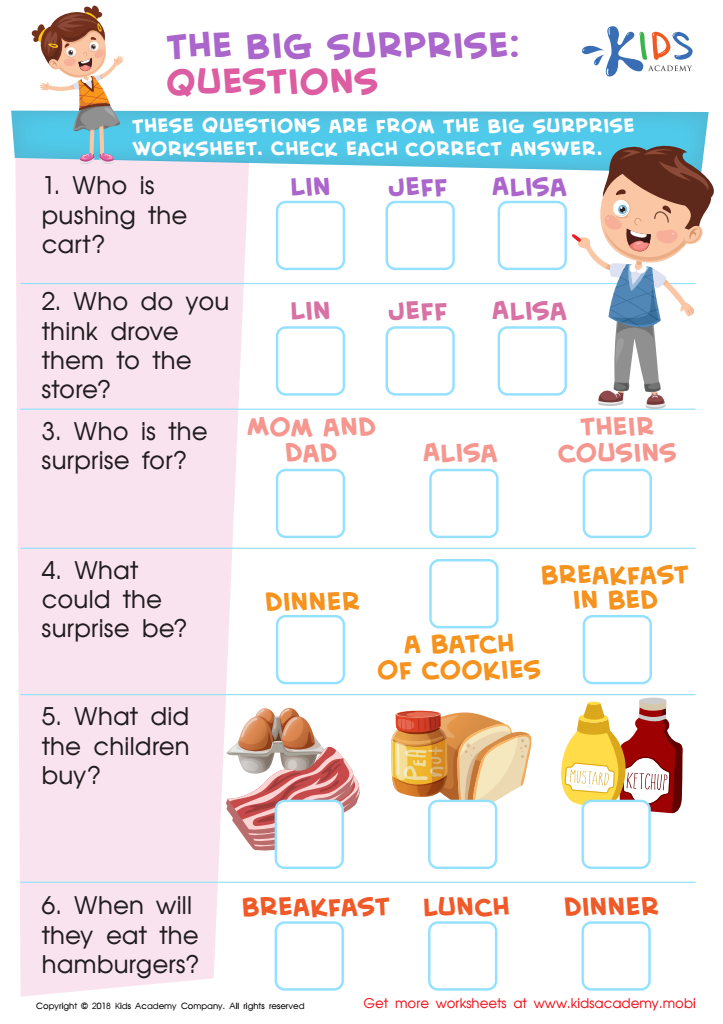
The Big Surprise: Questions Worksheet
Have your child read or listen to The Big Surprise. Ask them the questions in the printable, help check the answers and discuss the story. Keep it to 80 words.
Have your child read or listen to The Big Surprise, then ask them the questions in the printable. Discuss the story and help them check the answers.
The Big Surprise: Questions Worksheet
Worksheet
Join Kids Academy for Free
Who is primarily going to use this learning content?







Critical thinking is essential for children aged 6-8, as it lays the foundation for their lifelong learning and problem-solving abilities. At this tender age, children are naturally curious, making them more receptive to learning how to analyze information, ask questions, and think thoughtfully about the world around them. Instilling strong critical thinking skills fosters creativity and innovation, empowering children to explore new ideas and develop their own opinions.
For parents and teachers, nurturing critical thinking is crucial for several reasons. Firstly, it helps children make sense of complex information, enhancing their academic performance in subjects like math and reading. Furthermore, critical thinking equips children with the ability to differentiate between fact and opinion, which is increasingly valuable in today's digital age filled with misinformation.
Additionally, integrating critical thinking into early education promotes social-emotional development. Children learn to respect diverse perspectives, work collaboratively, and articulate their thoughts effectively—skills that are vital for effective communication and teamwork in the future. Consequently, parents and teachers dedicated to fostering these skills not only enhance children's immediate educational experiences but also prepare them for success in an increasingly complex and interconnected world.