
Phonics skills improvement Normal Alphabet Worksheets for Ages 6-9
6 filtered results
Difficulty Level
Grade
Age
-
From - To
Subject
Activity
Standards
Boost your child's phonics skills with our engaging Normal Alphabet Worksheets tailored for ages 6-9. Designed to enhance reading and writing abilities, these worksheets offer a fun and interactive approach to learning letters, sounds, and words. Each worksheet encourages children to practice phonetic sounds through various activities, including letter recognition, sound matching, and word building. Ideal for reinforcing classroom instruction or as a supplement at home, these resources foster a love of learning while promoting literacy development. Empower your child’s educational journey with our phonics-focused worksheets and watch their confidence soar as they master the foundations of reading!
Favorites
With answer key
Interactive
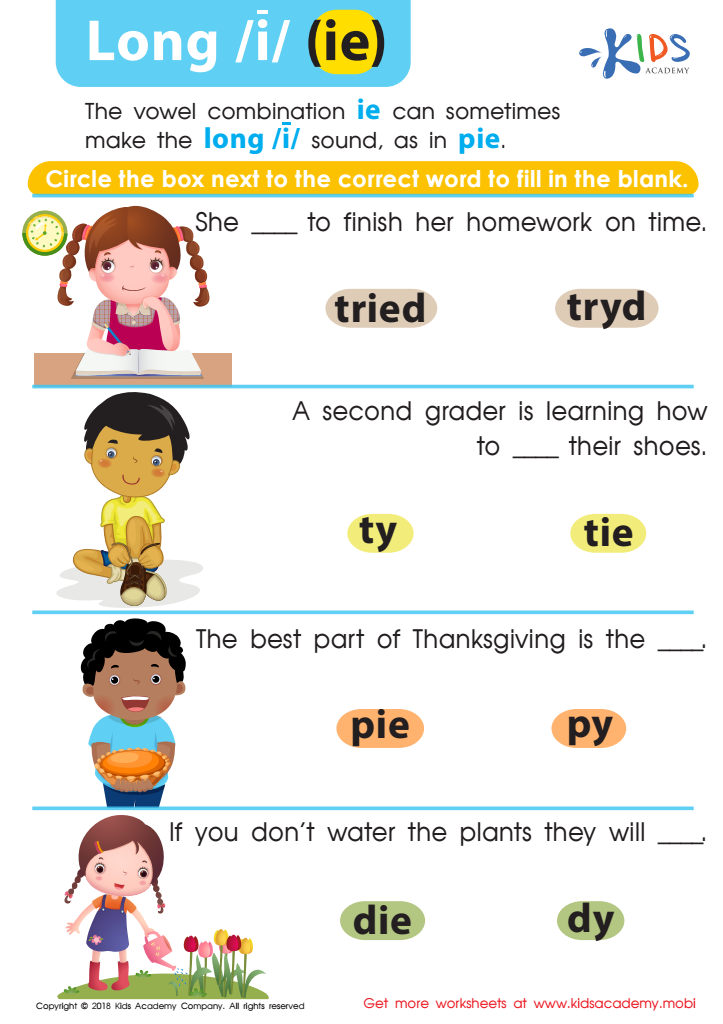
Reading: Long I and IE Worksheet
Have your child list words with the long /i/ sound (eg. 'pie'), and if needed, help them out with some examples. Read each word in the worksheet together and check their answer by having them circle the correct word.
Reading: Long I and IE Worksheet
Worksheet
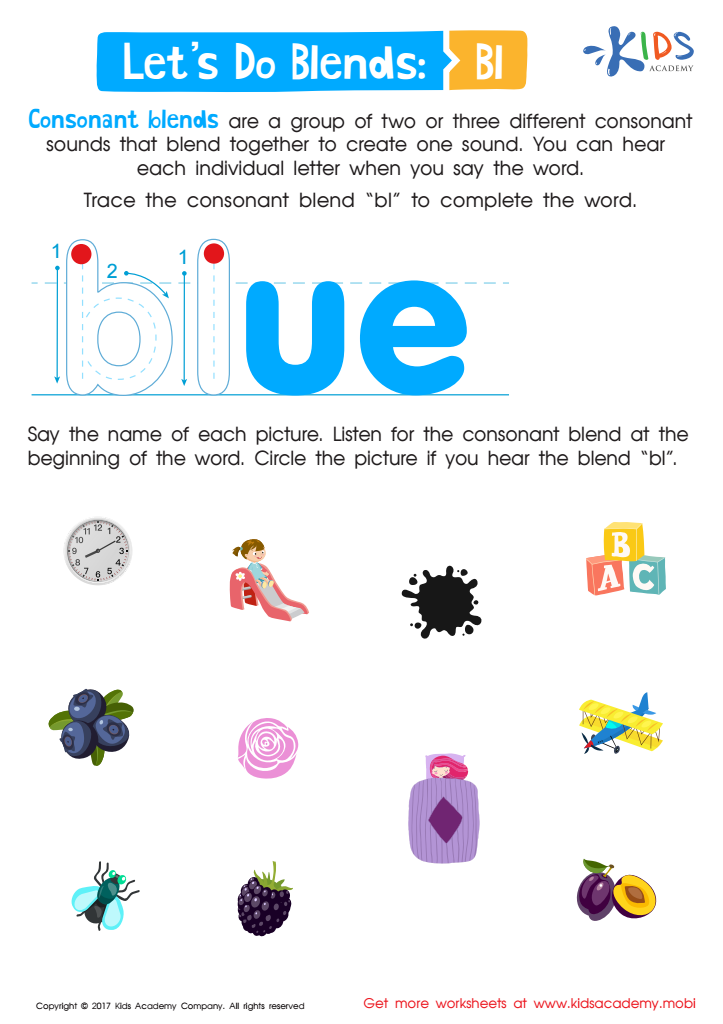
Beginning Blends: "Bl" Words Worksheet
Help your child master their phonics skills with this fun, focused consonant blend worksheet! They'll practice spelling, reading, and sounding out the words, which will help their speech and other skills. The worksheet focuses on "Bl" but extend your child's learning by finding other blends on the page. After completion, they'll be closer to phonics mastery!
Beginning Blends: "Bl" Words Worksheet
Worksheet
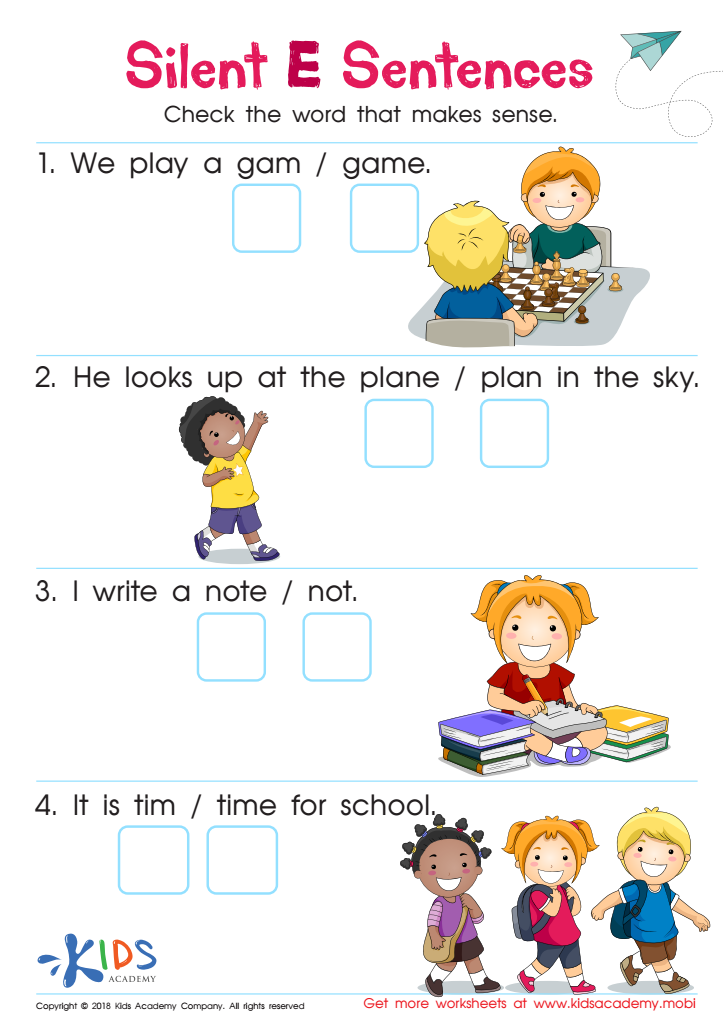
Silent E Sentences Worksheet
Young readers can find learning Silent E tricky, so this helpful worksheet can help! It teaches them to distinguish words that look the same but for the Silent E and choose the right word for sentence blanks. Kids can mark the correct answer and become familiar with closed syllables and words that require the E.
Silent E Sentences Worksheet
Worksheet
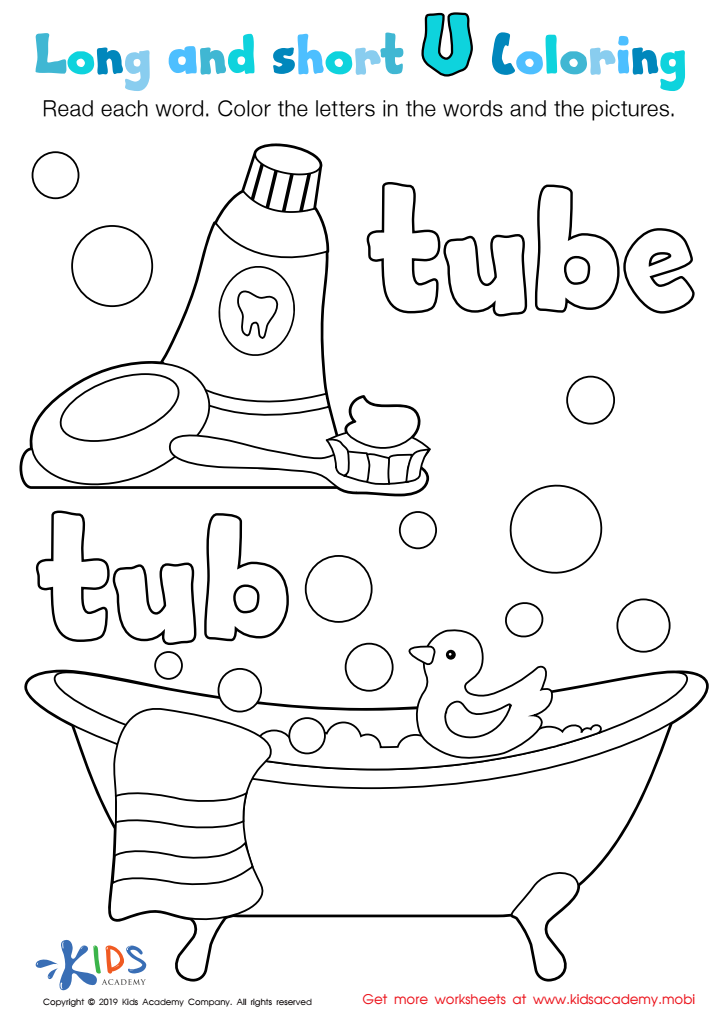
Long and Short U Worksheet
Revised: Spice up your lesson on long and short vowels with this fun printout! Kids read the words "tube" and "tub," then reinforce the sound by coloring in the words and pictures. It's a great way to make phonics class enjoyable!
Download (PDF)
 Assign to My Students
Assign to My Students
Long and Short U Worksheet
Worksheet
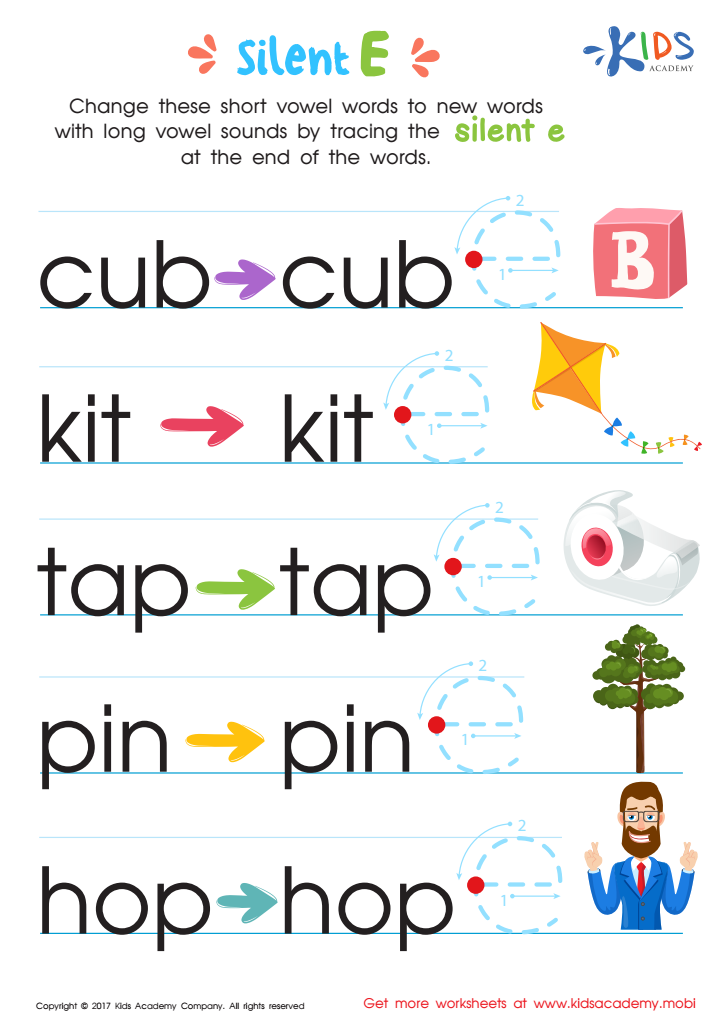
Silent E Words Worksheet
The letter e is amazing - it changes words without making a sound! Boost spelling and phonics with this Silent e worksheet from Kids Academy - fun and colorful!
Silent E Words Worksheet
Worksheet
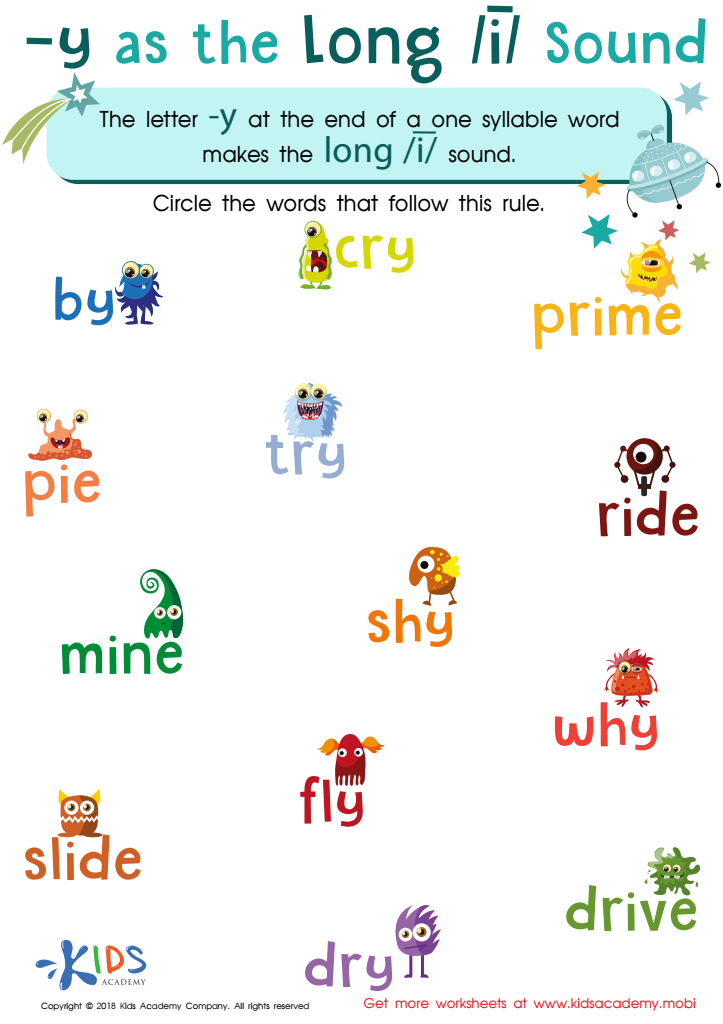
Reading: Y as Long I Worksheet
Students need practice and exposure to letters that make different sounds for decoding and reading success. This printable is a great resource for language arts classes: it explains that words ending with Y and having only one syllable make the long I sound. Students will circle all words with Y that have this sound.
Reading: Y as Long I Worksheet
Worksheet
Join Kids Academy for Free
Who is primarily going to use this learning content?






Phonics skills are crucial for children aged 6-9 because they form the foundation of reading and writing proficiency. At this stage, children are transitioning from learning to read to reading to learn. Understanding phonics allows children to decode new words, making reading an enjoyable and less daunting task. This skill directly impacts their overall literacy, affecting academic performance in all subject areas.
Moreover, strong phonics skills enhance vocabulary development and comprehension, enabling children to make connections between words and their meanings. Effective phonics instruction also supports spelling and encourages confident writing. When children gain competence in these skills, they are more likely to develop a lifelong love for reading.
Teachers and parents play vital roles in this developmental phase. By providing structured phonics programs and positive reading experiences, they can foster a supportive environment. Engaging activities, such as phonics games and interactive storytelling, can make learning fun and relatable. By prioritizing phonics skill improvement, both teachers and parents ensure that children become confident readers and writers, equipped with the tools they need for lifelong learning. Enhancing phonics skills sets children on a successful educational trajectory, opening doors to future opportunities and knowledge exploration.







