Reading skills development Normal Alphabet Worksheets for Ages 6-9
3 filtered results
-
From - To
Unlock your child's reading potential with our Normal Alphabet Worksheets designed specifically for ages 6-9! These engaging resources provide a variety of activities that enhance essential reading skills, including letter recognition, phonics, and word formation. Each worksheet is crafted to foster a love for reading while developing fluency and comprehension. With vibrant illustrations and interactive exercises, children are encouraged to practice at their own pace, making learning both fun and effective. Perfect for homeschooling or classroom use, these worksheets support young learners in building a solid foundation for future reading success. Start your child's reading journey today!
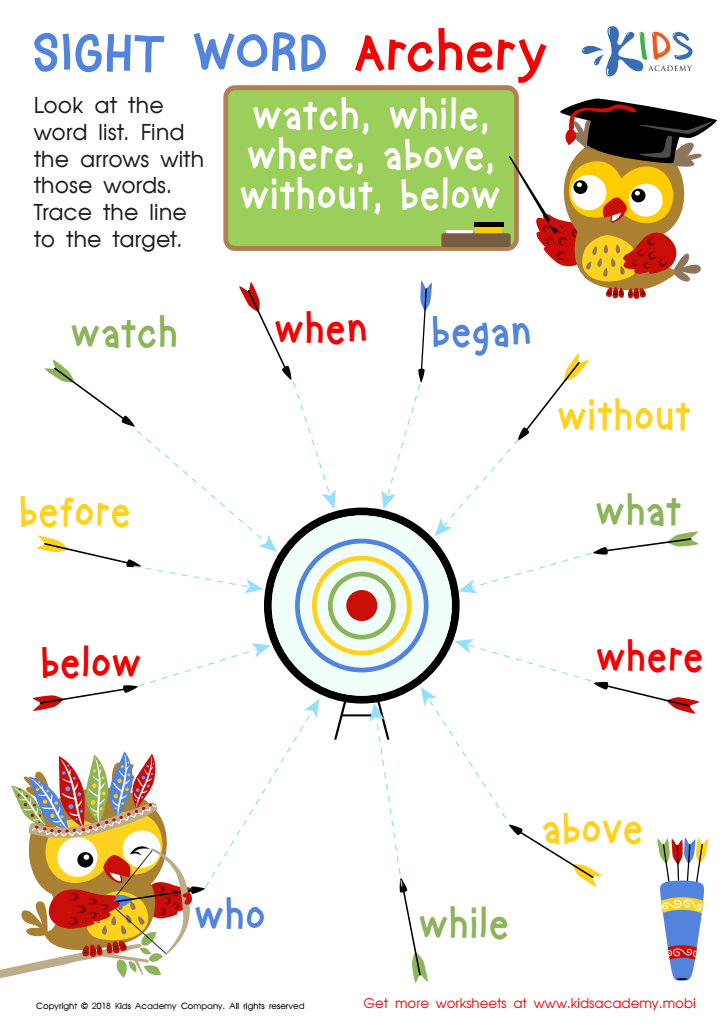
Sight Word Archery Worksheet
 Assign to My Students
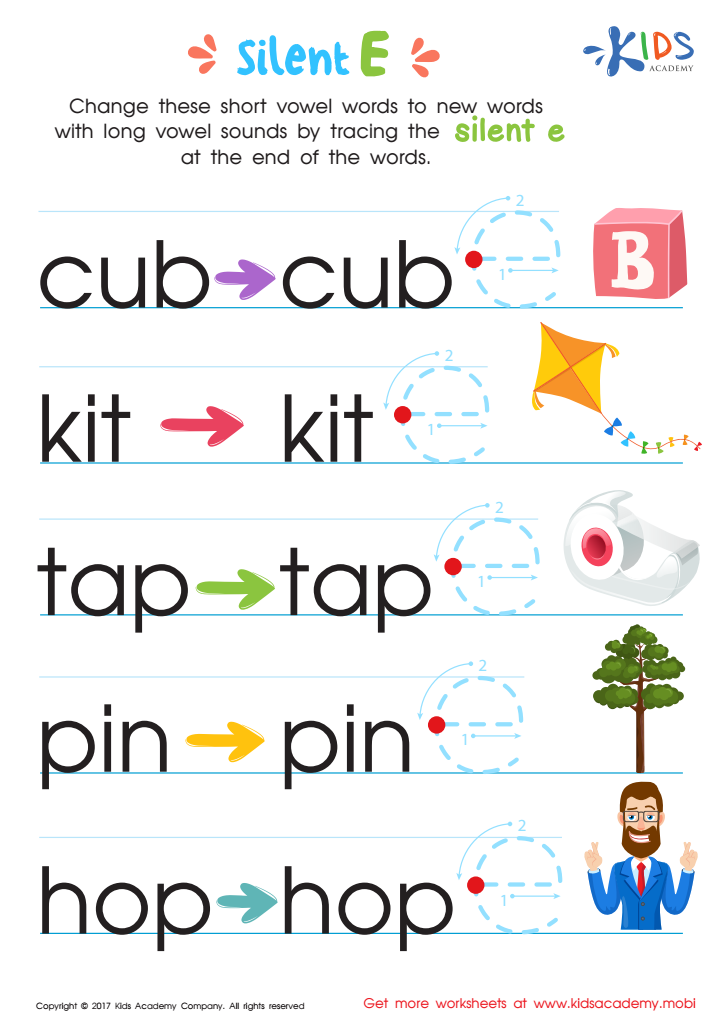
Silent E Words Worksheet
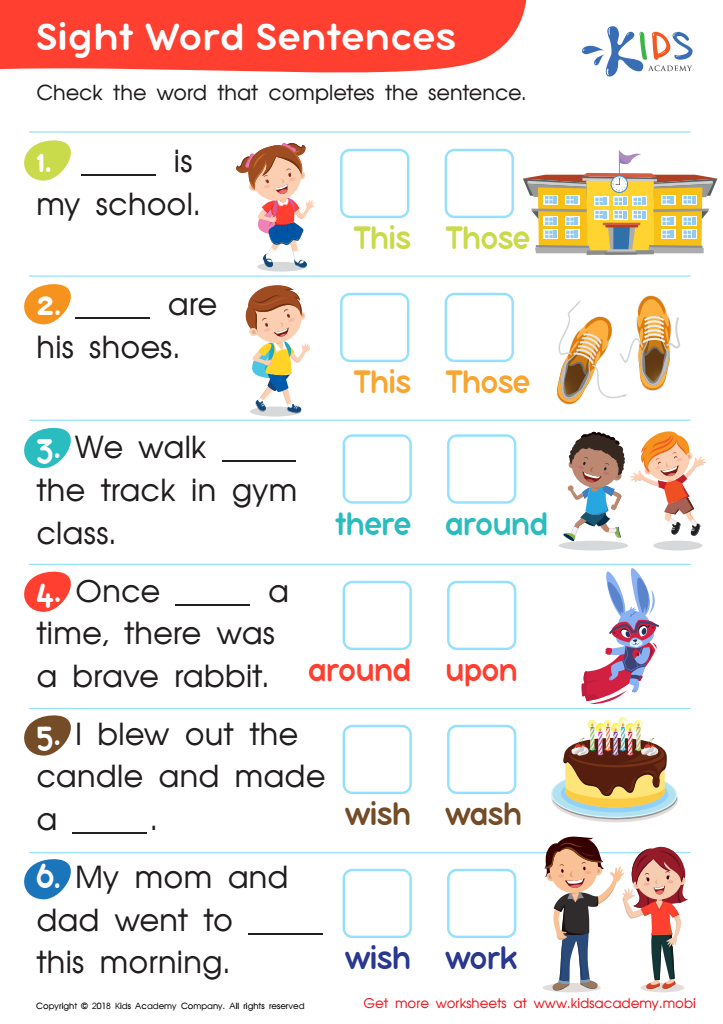
Sight Word Sentences Worksheet








Parents and teachers play a crucial role in the reading skills development of children aged 6-9, as these foundational years significantly influence a child’s academic journey and overall growth. Developing reading skills at this age encourages language acquisition, vocabulary expansion, and improves comprehension abilities, setting the stage for future learning.
Strong reading skills in early childhood foster critical thinking and creativity. Children learn to interpret stories, analyze characters, and understand different perspectives, which enhances empathy and connection to the world around them. Moreover, proficient readers are more likely to perform well in other subjects, as reading is essential for understanding instructions, materials, and assessments.
Encouraging a love for reading also serves to improve a child's self-esteem, instilling confidence as they become independent learners. Regular reading practices, including storytelling and engaging in discussions about stories, deepen a child's understanding and make reading an enjoyable part of their daily routine.
Ultimately, fostering strong reading skills at ages 6-9 prepares children for lifelong success, equipped not only with academic skills but also with the social and cognitive abilities necessary to navigate an increasingly complex world. Parents and teachers should prioritize reading development to enable children to thrive both in and out of the classroom.







