Word identification Normal Alphabet Worksheets for Ages 6-9
5 filtered results
-
From - To
Introduce your child to the exciting world of reading with our Word Identification Normal Alphabet Worksheets, specifically designed for ages 6-9. These engaging worksheets offer a variety of fun activities to help your young learners recognize and identify words using the standard alphabet. Each worksheet emphasizes essential skills such as phonemic awareness, vocabulary development, and comprehension, ensuring a solid foundation for effective reading. With colorful illustrations and easy-to-follow instructions, these resources make learning enjoyable. Perfect for classrooms or at-home practice, our worksheets support early literacy in a playful, interactive manner, empowering your child to become a confident reader in no time!
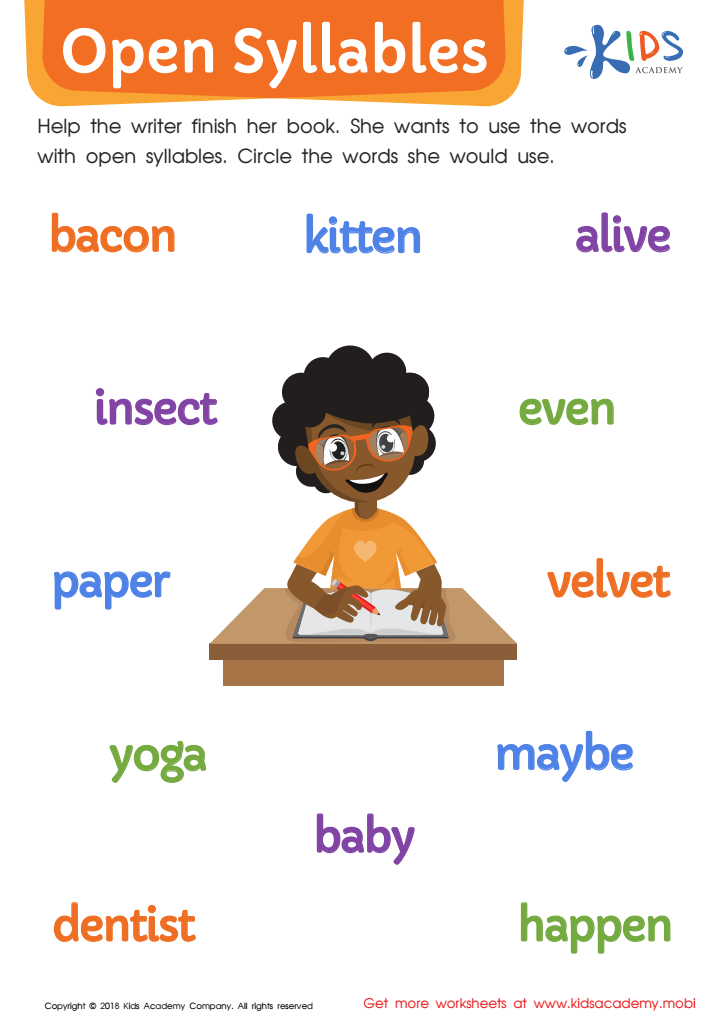
Open Syllables Worksheet
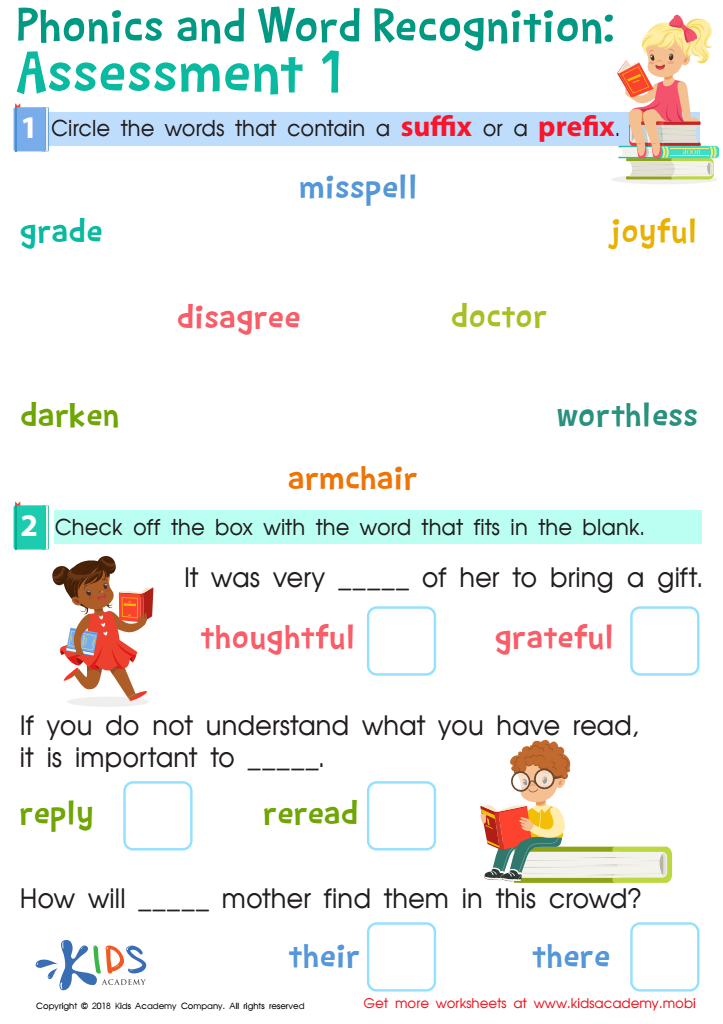
Phonics and Word Recognition: Assessment 1 Worksheet
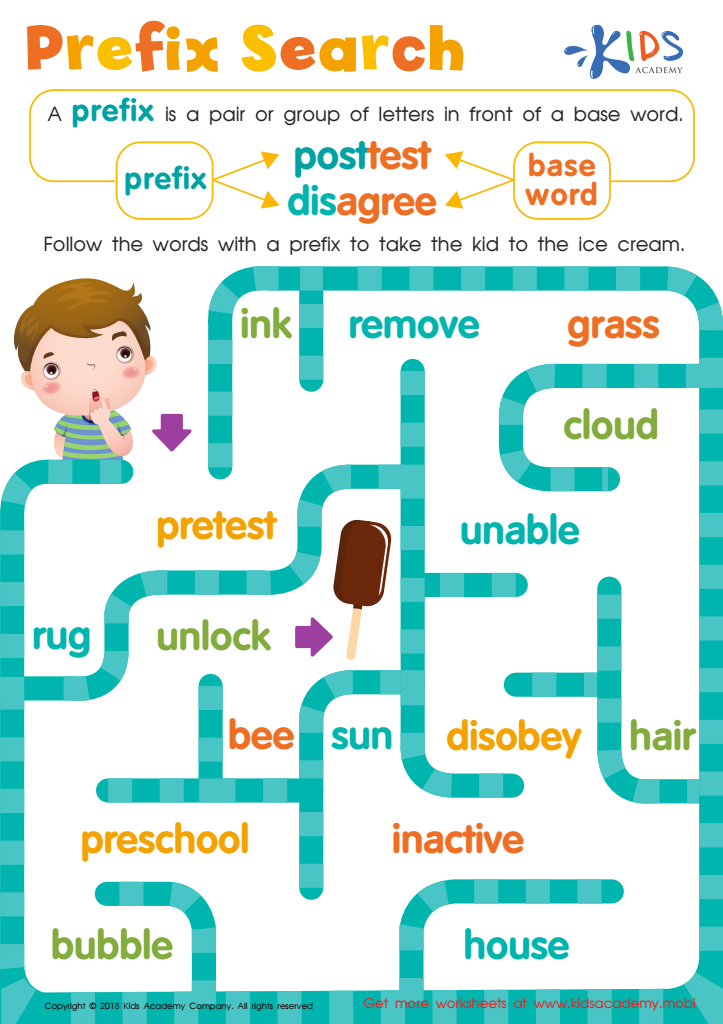
Reading: Prefix Search Worksheet
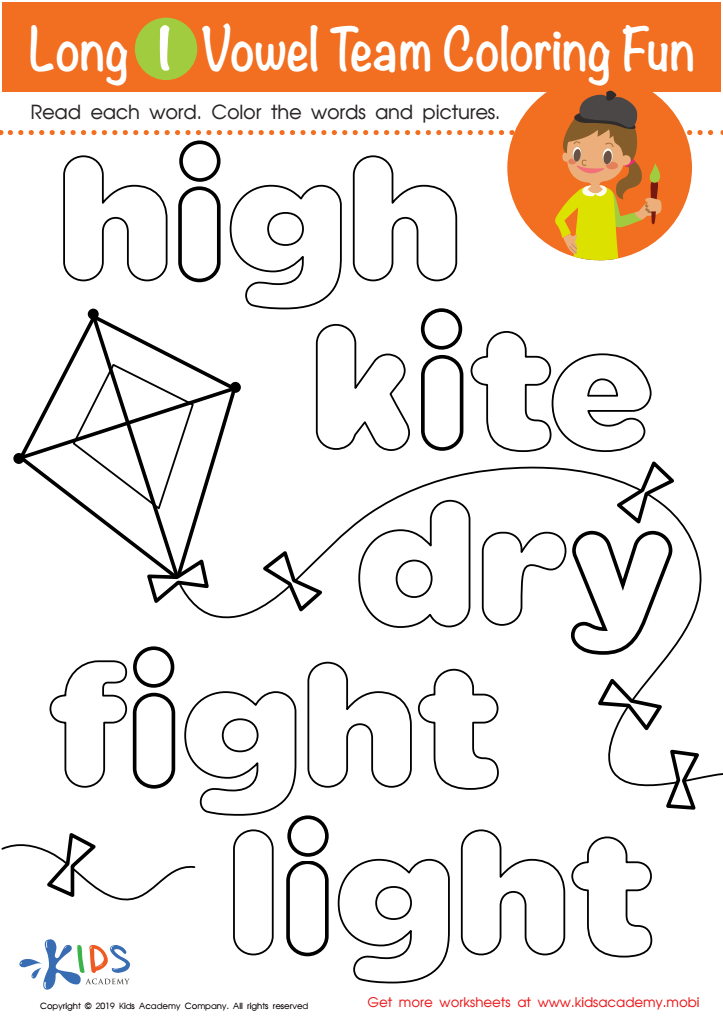
Long I Vowel Team Coloring Worksheet
 Assign to My Students
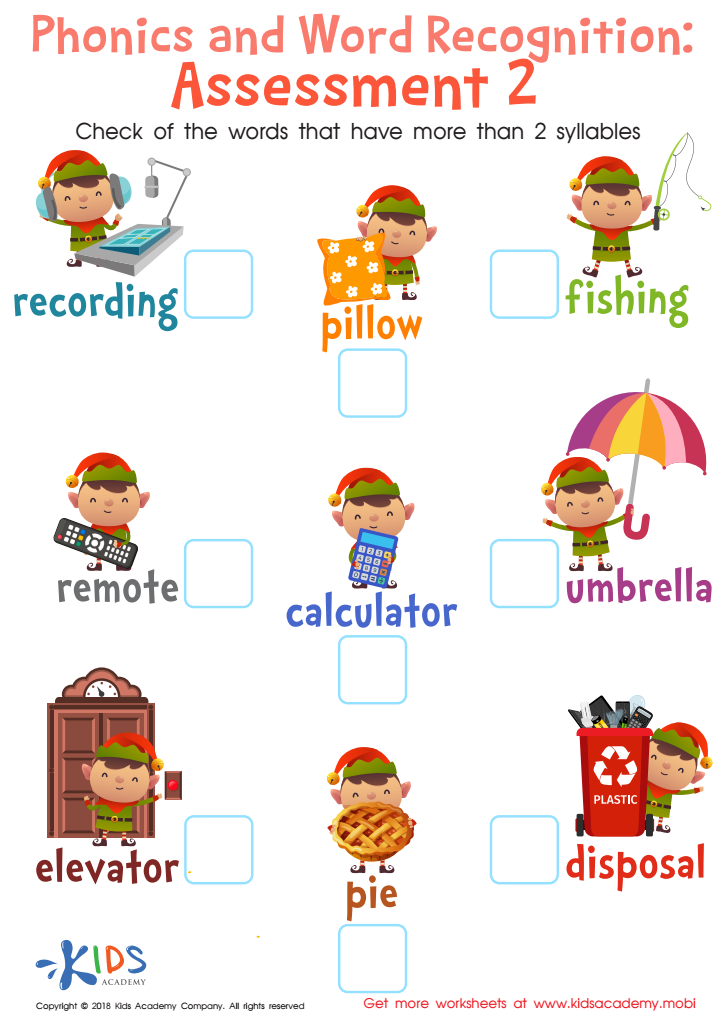
Phonics and Word Recognition: Assessment 2 Worksheet





.jpg)


Word identification is a crucial skill for children aged 6-9, as it lays the foundation for reading fluency and comprehension. At this age, children are transitioning from learning to read to reading to learn, and strong word identification skills are essential for their academic success. Parents and teachers should care about this aspect of literacy development because proficient word identification helps foster confidence and motivation in young learners.
Incorporating normal alphabet recognition activities into daily routines enhances a child's ability to recognize familiar words quickly and accurately. This not only supports their reading abilities but also improves their writing skills, as they become more familiar with spelling and word patterns. Moreover, successful word identification encourages engagement with literature, as children can navigate text with greater ease and enjoyment.
Additionally, monitoring progress in word identification can help identify any potential reading difficulties early on. Intervening at this stage can prevent long-term academic challenges. In essence, nurturing word identification skills in children fosters a love of reading and supports their overall cognitive development, making it a vital focus for both parents and educators.







