Lowercase identification Normal Letter Recognition Worksheets for Ages 6-9
4 filtered results
-
From - To
Discover our engaging Lowercase Identification Normal Letter Recognition Worksheets specially designed for children ages 6-9. These fun, educational resources help young learners confidently identify and distinguish lowercase letters. Perfect for developing foundational literacy skills, these worksheets include diverse activities that make learning enjoyable and effective. Ideal for classroom use or at-home practice, they're tailored to support kids in improving letter recognition, phonetic awareness, and reading readiness. Explore our thoughtfully crafted worksheets to give your child a head start in their learning journey! Visit the link now for interactive exercises that make lowercase letter identification a breeze.
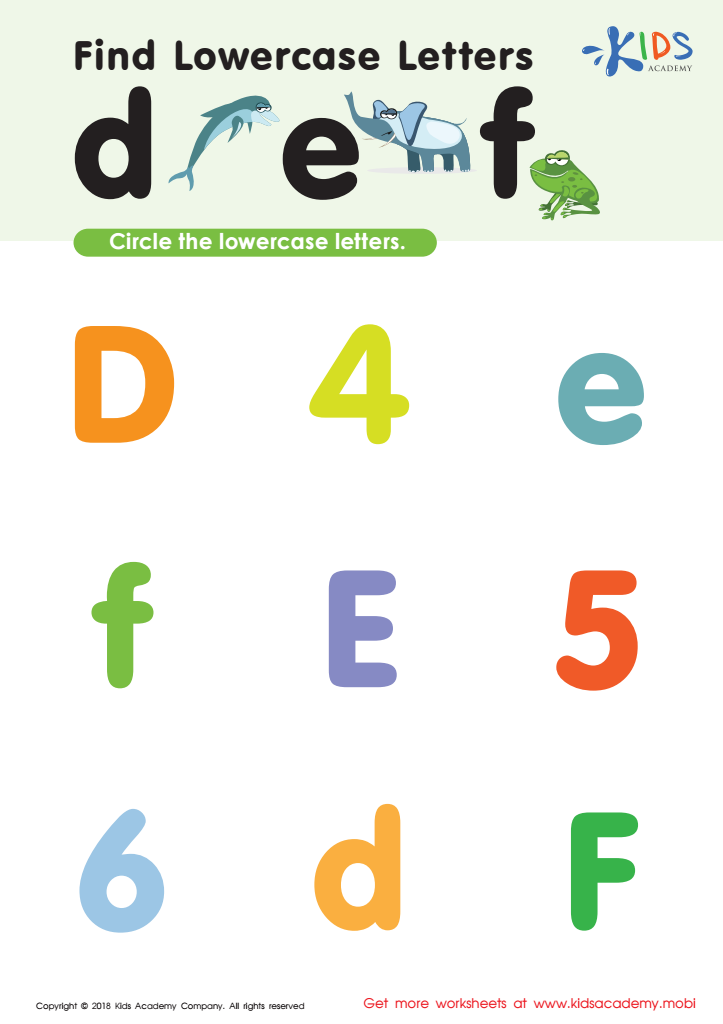
Find Lowercase Letters d e f Worksheet
 Assign to My Students
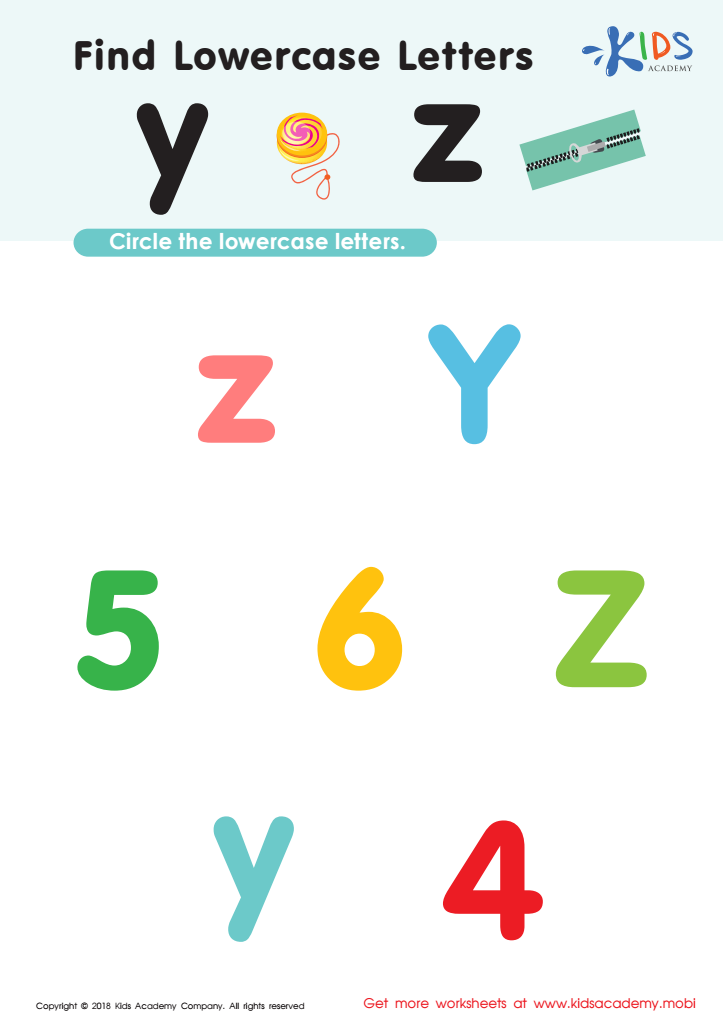
Find Lowercase Letters y z Worksheet
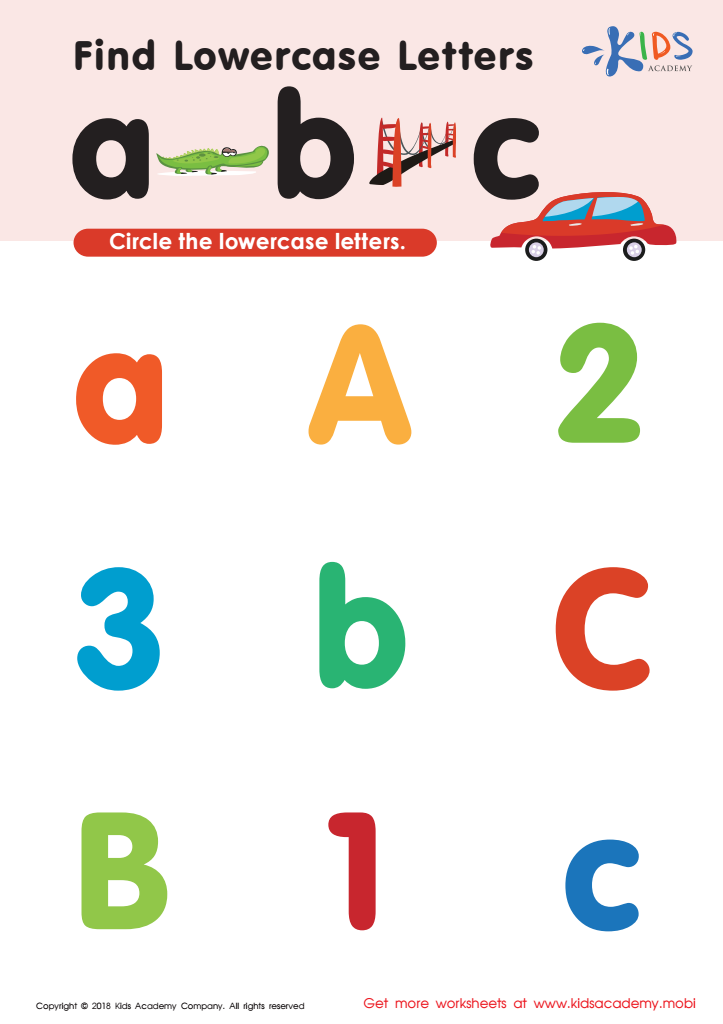
Find lowercase letters a b c Worksheet
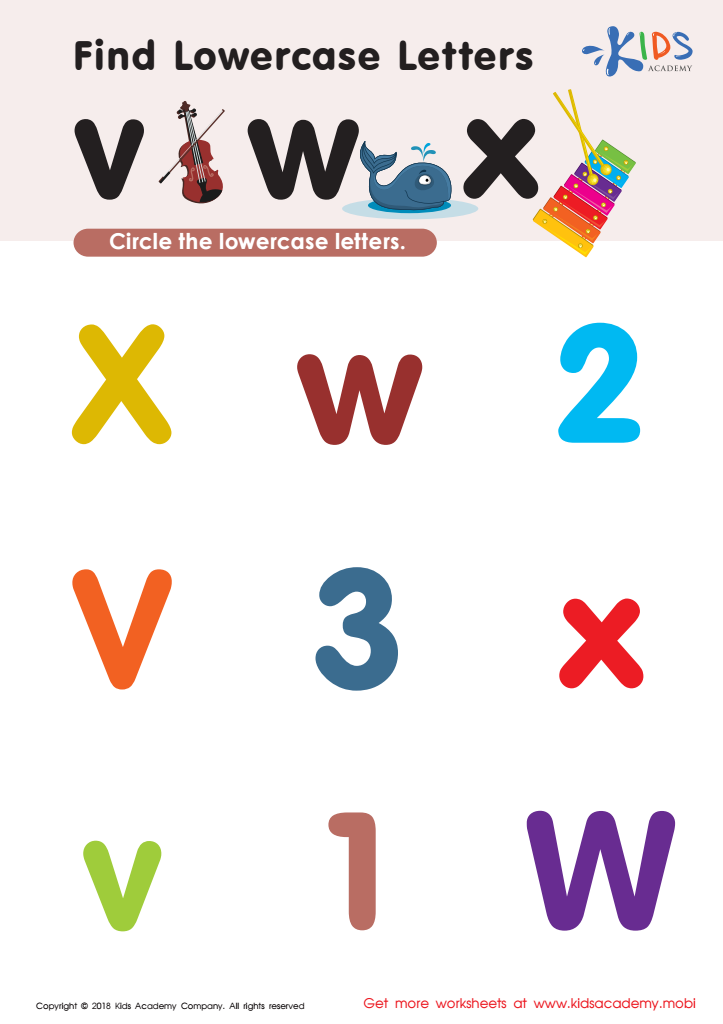
Find Lowercase Letters v w x Worksheet








Parents and teachers should prioritize lowercase identification and normal letter recognition for ages 6-9 as these skills are fundamental to literacy development. At this critical age range, children transition from learning to read to reading to learn. Proficiency in lowercase letter recognition underpins their ability to decode words efficiently. Since most written text is in lowercase, including books, worksheets, and digital content, familiarity with these letters enhances reading fluency, comprehension, and ultimately, learning across subjects.
Moreover, children who struggle with letter recognition may face obstacles in writing coherency as well. Understanding the distinction between lowercase and uppercase letters contributes to proper sentence structure and punctuation, crucial for effective writing.
Early mastery of these skills builds confidence and fosters a positive attitude toward reading and writing, potentially igniting a lifelong interest in learning. It also reduces frustration and the likelihood of developing learning disabilities or falling behind in subsequent grades.
Parents and teachers collectively play a pivotal role in reinforcing these foundational skills through engaging, multisensory activities, and consistent practice. When children can readily identify and use letters, they are better equipped to tackle the increasingly complex tasks presented to them as their educational journey advances. Investing time in lowercase letter recognition lays the groundwork for academic success.








