Vocabulary expansion Normal Long Vowels Worksheets for Ages 6-9
6 filtered results
Difficulty Level
Grade
Age
-
From - To
Subject
Activity
Standards
Enhance your child's vocabulary with our engaging Normal Long Vowels Worksheets designed specifically for ages 6-9. These worksheets focus on long vowel sounds and help young learners expand their vocabulary through fun exercises. Each activity encourages children to recognize and use long vowel words in context, promoting better reading and writing skills. With a variety of colorful and interactive worksheets, kids will enjoy learning as they develop critical thinking and language abilities. Perfect for classroom settings or at-home practice, our vocabulary expansion worksheets make mastering long vowels an exciting adventure. Start boosting your child's language skills today!
Favorites
With answer key
Interactive
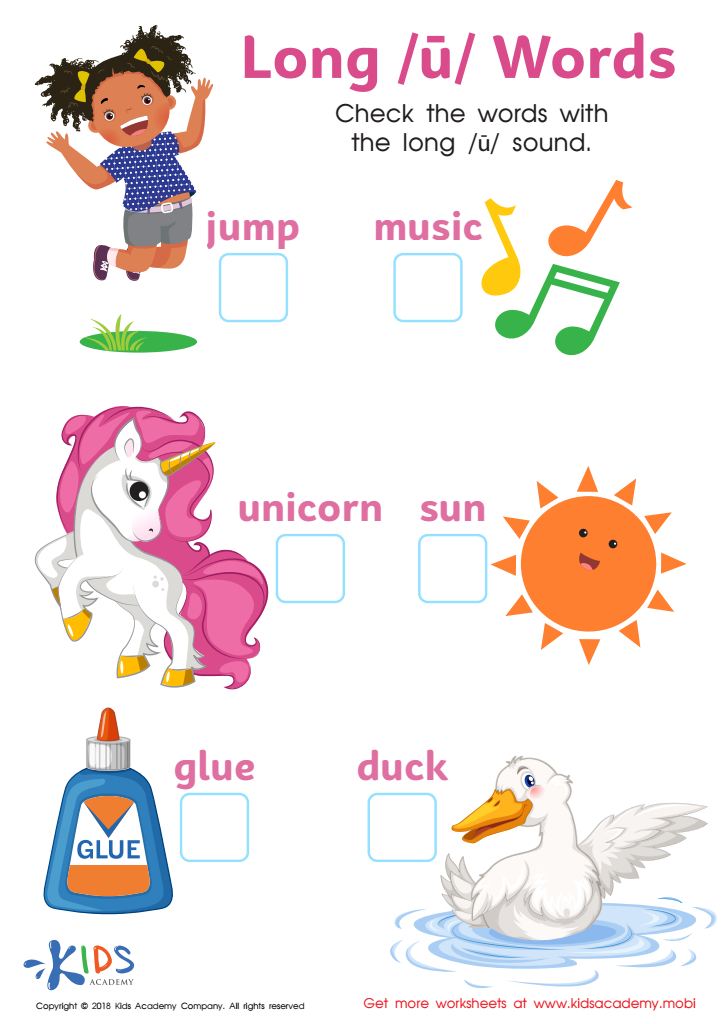
Long U Words Reading Worksheet
Emerging readers will love this free worksheet! It's a great way to practice distinguising between long and short vowel sounds, while identifying high-frequency words. They'll also get to develop fine motor skills and gain confidence in decoding and reading skills.
Long U Words Reading Worksheet
Worksheet
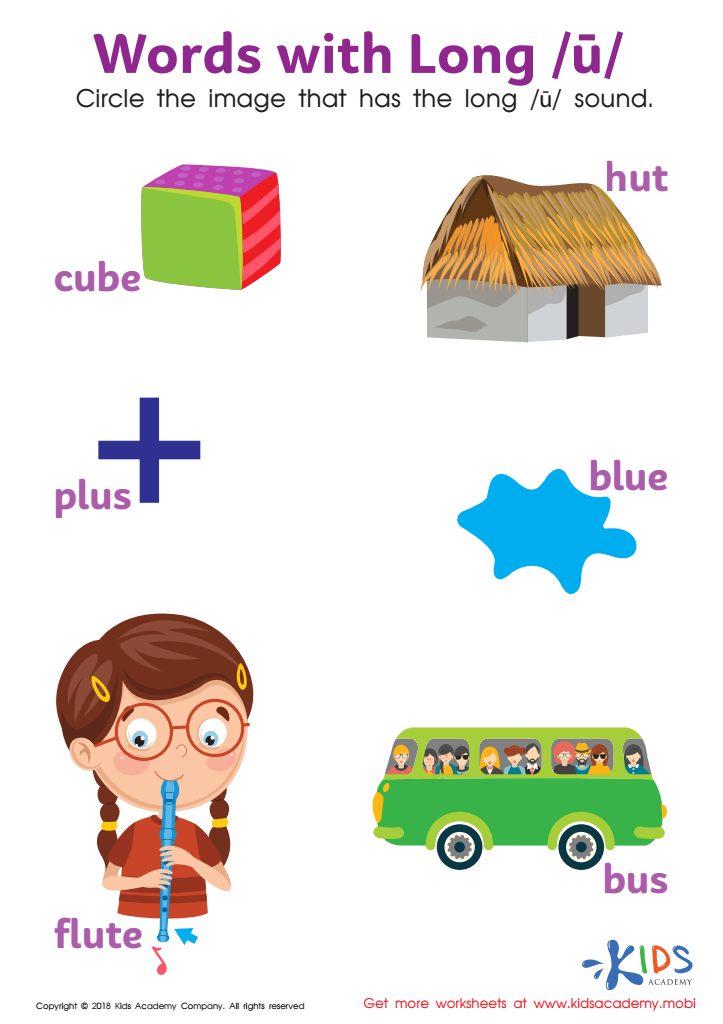
Words with Long U Reading Worksheet
Help your new reader master vowel recognition with this fun worksheet. By using picture clues and practicing fine motor skills, they'll learn to differentiate between words with the long and short «u» sound. Your learner will also get to practice vowel discrimination in high-frequency words. It's a great way to learn the importance of vowels in reading!
Words with Long U Reading Worksheet
Worksheet
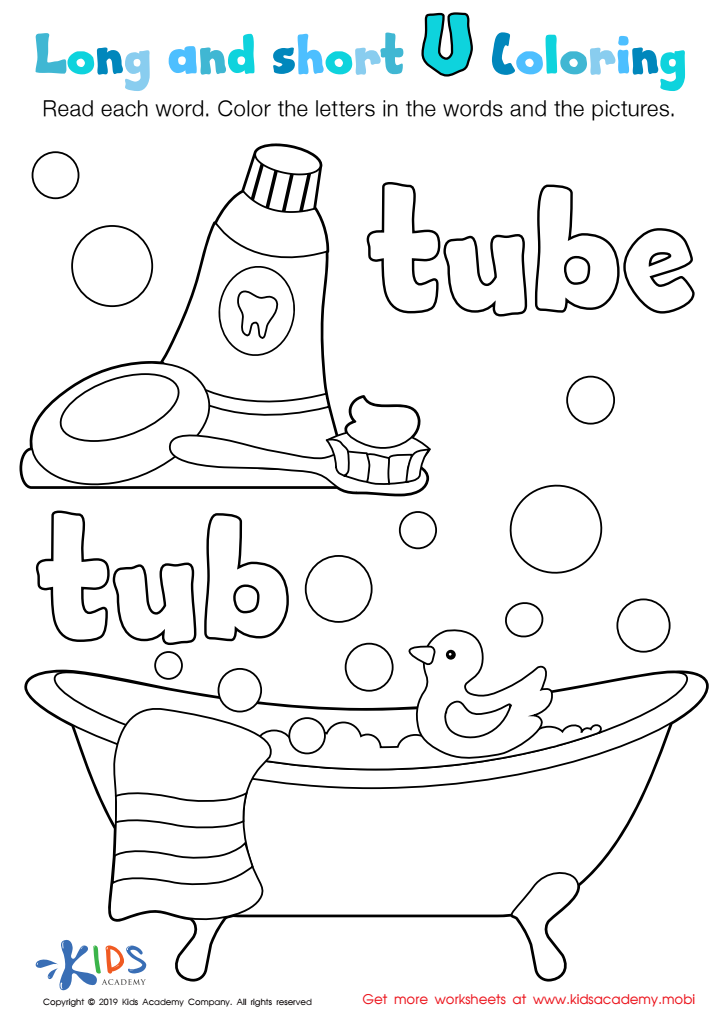
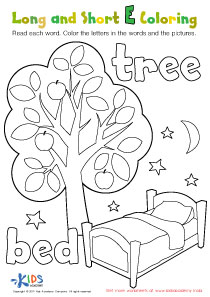
Long and Short U Worksheet
Revised: Spice up your lesson on long and short vowels with this fun printout! Kids read the words "tube" and "tub," then reinforce the sound by coloring in the words and pictures. It's a great way to make phonics class enjoyable!
Download (PDF)
 Assign to My Students
Assign to My Students
Long and Short U Worksheet
Worksheet
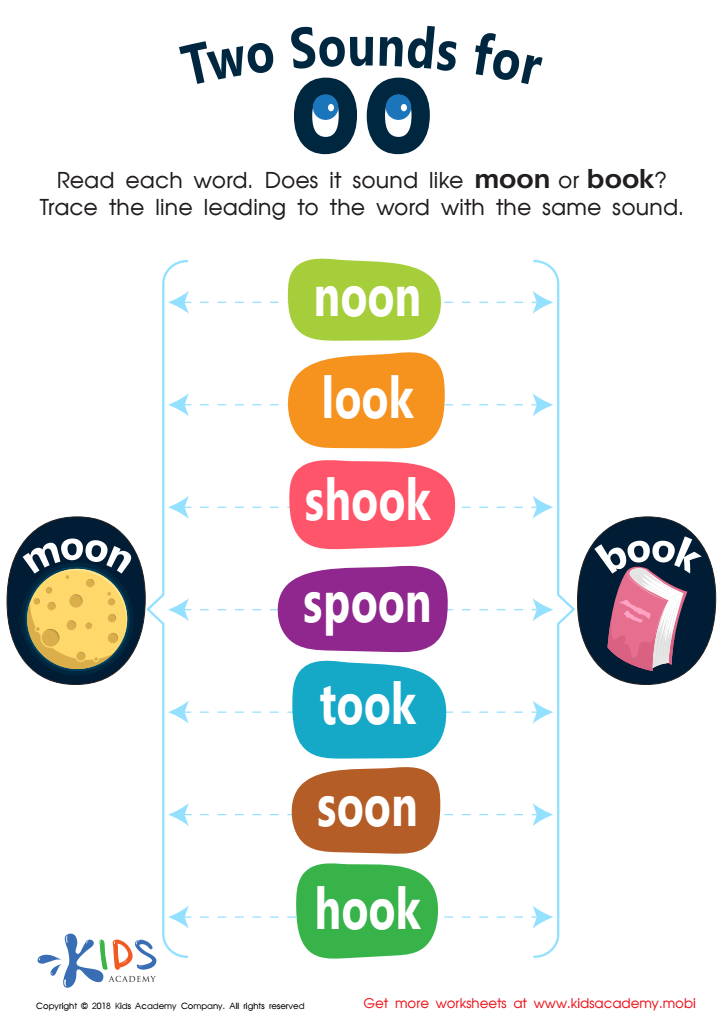
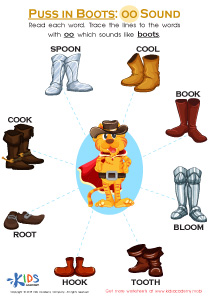
Two Sounds for OO Worksheet
This worksheet helps kids learn the different sounds of the -oo digraph. They match words based on whether they sound like moon or book, plus practice fine motor skills tracing lines. Fun and educational!
Two Sounds for OO Worksheet
Worksheet
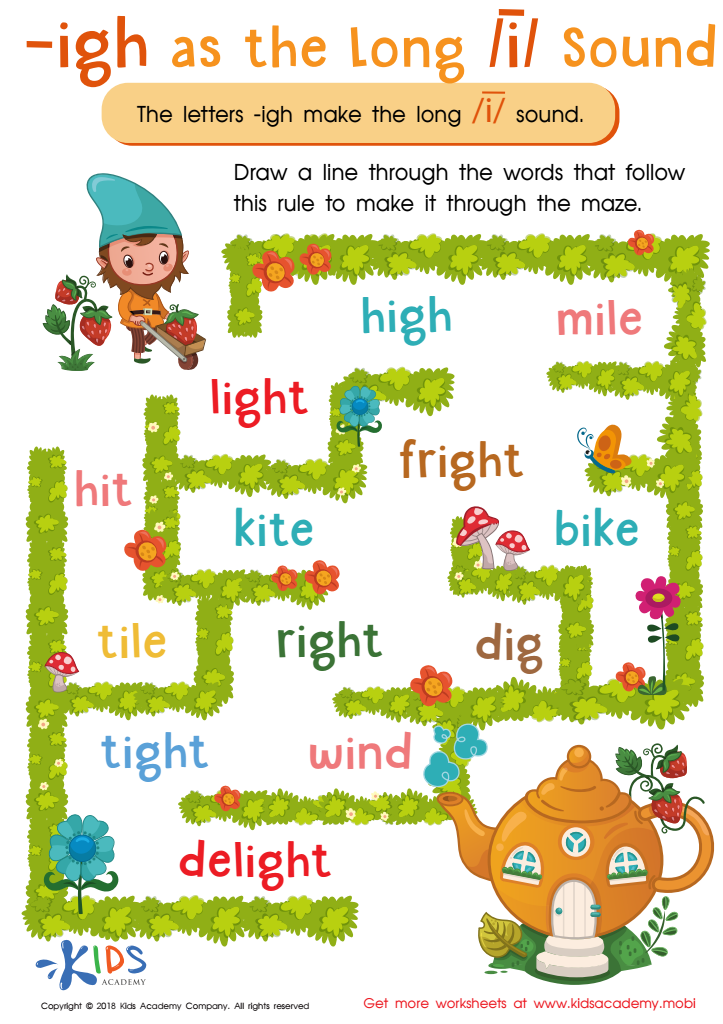
Reading: IGH as Long I Worksheet
Kids can have fun and learn with this maze! They'll look for and read words with the 'long I' sound spelled 'igh'. Most words ending with 'T' have this spelling. Decode words while learning about long vowel sounds and their spellings.
Reading: IGH as Long I Worksheet
Worksheet
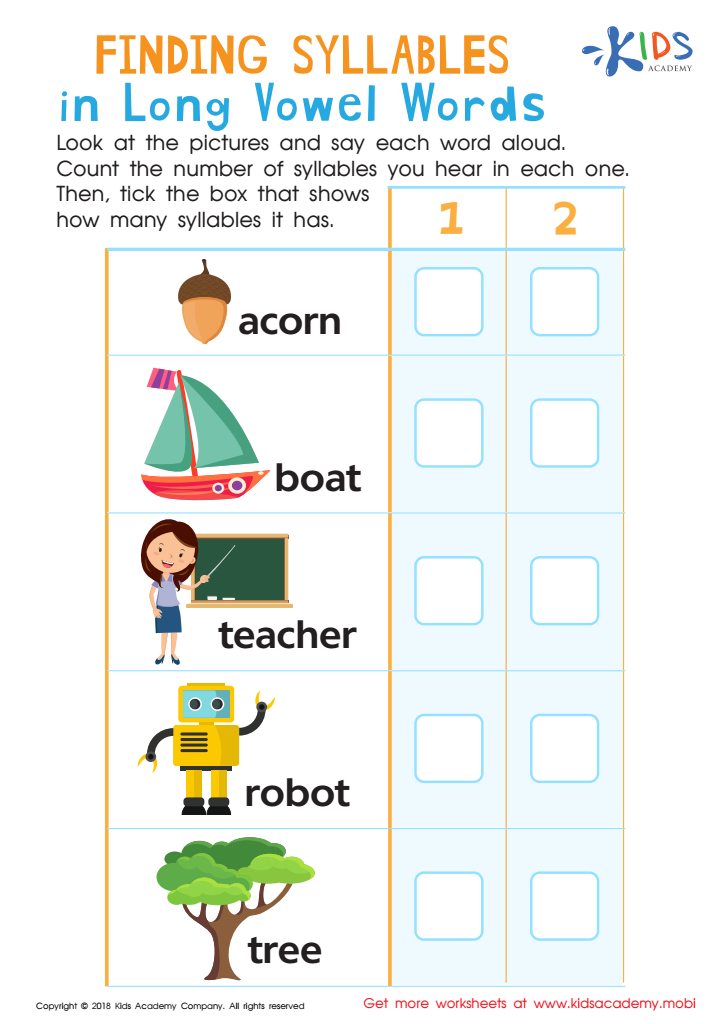
Finding Syllables in Long Vowel Words Worksheet
Help your kids identify objects and better count syllables in words. Look at the printout images with them and have them say each word out loud. Ask them to count syllables and tick the box with the correct number. With this worksheet, your kids will become more skilled.
Finding Syllables in Long Vowel Words Worksheet
Worksheet
Join Kids Academy for Free
Who is primarily going to use this learning content?



Vocabulary expansion, particularly focusing on normal long vowels, is crucial for children aged 6-9, as this period is foundational for language development. Mastering long vowel sounds helps young learners decode words accurately, leading to improved reading fluency and comprehension. When children grasp how long vowels function, they can recognize and spell a wider range of words, enhancing their overall literacy skills.
Furthermore, a rich vocabulary fosters effective communication, allowing children to express their thoughts and ideas more clearly. This is vital not just in academic settings, where expressive writing and verbal participation are encouraged, but also in social interactions, where effective communication strengthens relationships.
Parents and teachers play a pivotal role in this developmental phase. By engaging children in activities that reinforce long vowel sounds, such as games, reading aloud, and interactive storytelling, adults can nurture a love for language and learning. This foundation in vocabulary also supports critical thinking and problem-solving skills, as children learn to articulate their understanding.
Ultimately, investing time in vocabulary expansion contributes to a child’s confidence and success in school and beyond. It equips them with tools for lifelong learning and effective social interactions, making this an essential focus for educators and parents alike.