Fine Motor Skills Normal Lowercase/Small Letters Worksheets for Ages 6-9
14 filtered results
Difficulty Level
Grade
Age
-
From - To
Subject
Activity
Standards
Enhance your child's fine motor skills with our engaging worksheets designed for ages 6-9! Our Normal Lowercase/Small Letters worksheets focus on developing essential writing abilities while making learning fun. Each worksheet features a variety of activities, such as tracing letters, connecting dots, and coloring, all aimed at improving hand-eye coordination and pencil control. These interactive challenges not only build vital fine motor skills but also foster confidence in letter recognition and writing. Perfect for home or classroom use, these worksheets provide an exciting way for children to practice their lowercase letters as they develop critical skills necessary for their academic success. Get started today!
Favorites
With answer key
Interactive
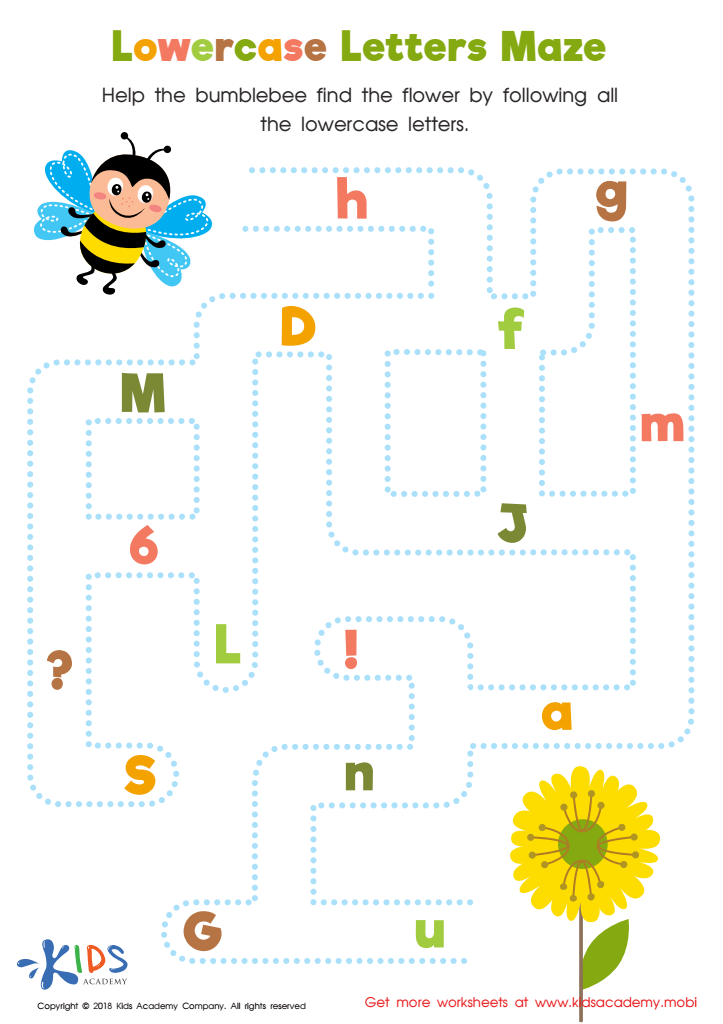
Lowercase Letters Maze Worksheet
Traceable pages can be great learning tools for children. For example, have them trace the path of lowercase letters to help a bumblebee pollinate flowers. Students will quickly learn the difference between uppercase and lowercase letters and numbers, and have fun doing it!
 Assign to My Students
Lowercase Letters Maze Worksheet
Worksheet
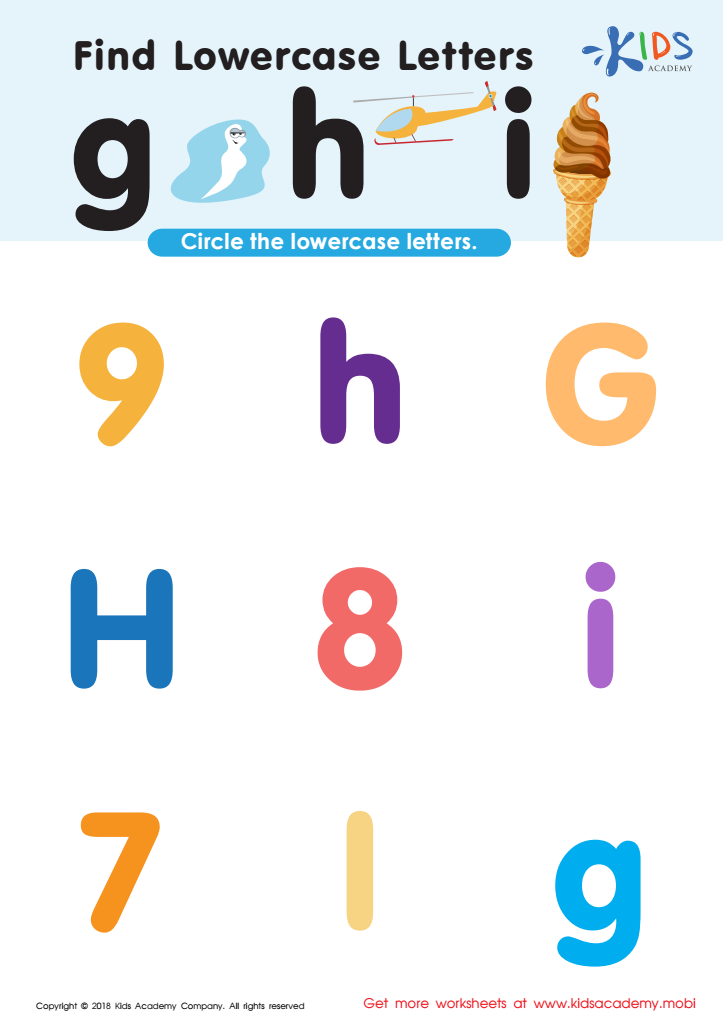
Find Lowercase Letters g h i Worksheet
Turn learning into a fun journey with your child! Use this free worksheet to find and circle the lowercase letters hidden amongst uppercase letters and numbers. Your child will understand what you're teaching them as they enjoy the search.
Find Lowercase Letters g h i Worksheet
Worksheet
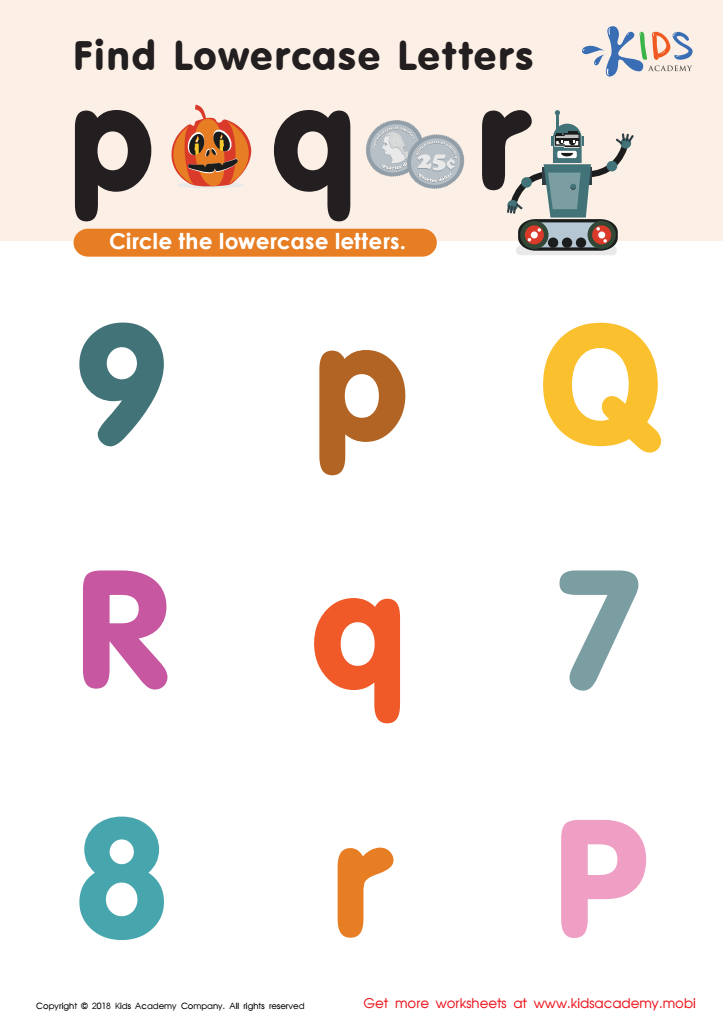
Find lowercase Letters p q r Worksheet
Help your child spot the lowercase letters among the numbers and uppercase letters in this worksheet. It's a great way to teach them to identify and write the lowercase and uppercase letters. Assist them in completing the exercise to give them a better understanding of the alphabets.
Find lowercase Letters p q r Worksheet
Worksheet
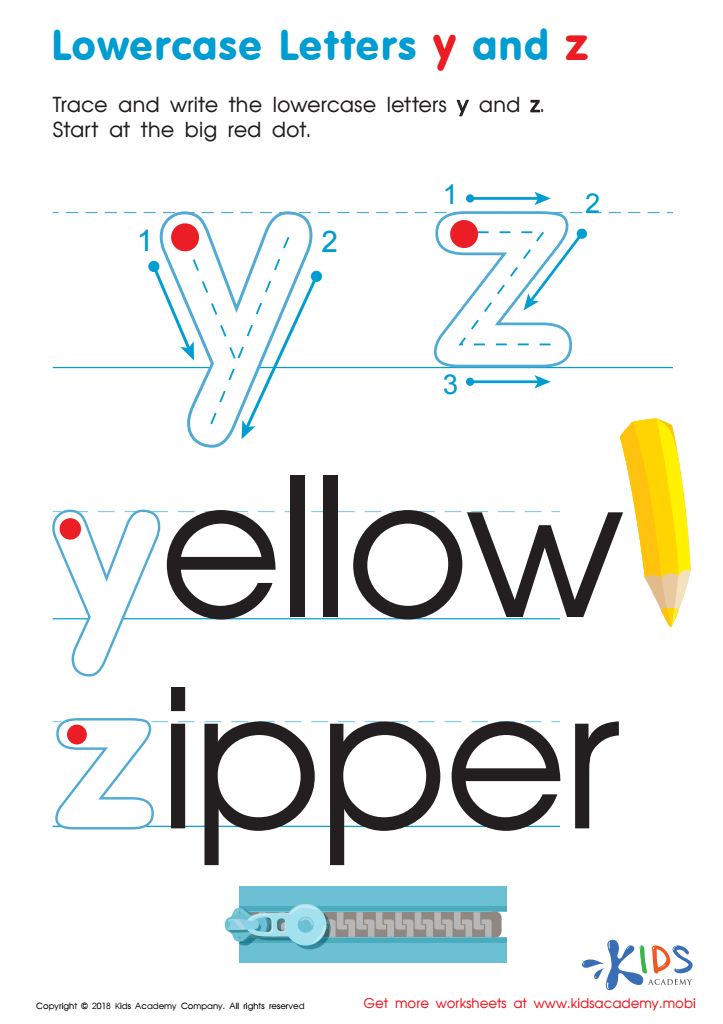
Lowercase Letters y z Worksheet
Help your child get a good start in writing and reading by tracing and writing the lowercase letters y and z. With this activity, they will learn the alphabet, which is essential for literacy success. Guide them through the worksheet and make sure they form the letters correctly. This will help them learn the basics needed to write and read fluently.
Lowercase Letters y z Worksheet
Worksheet
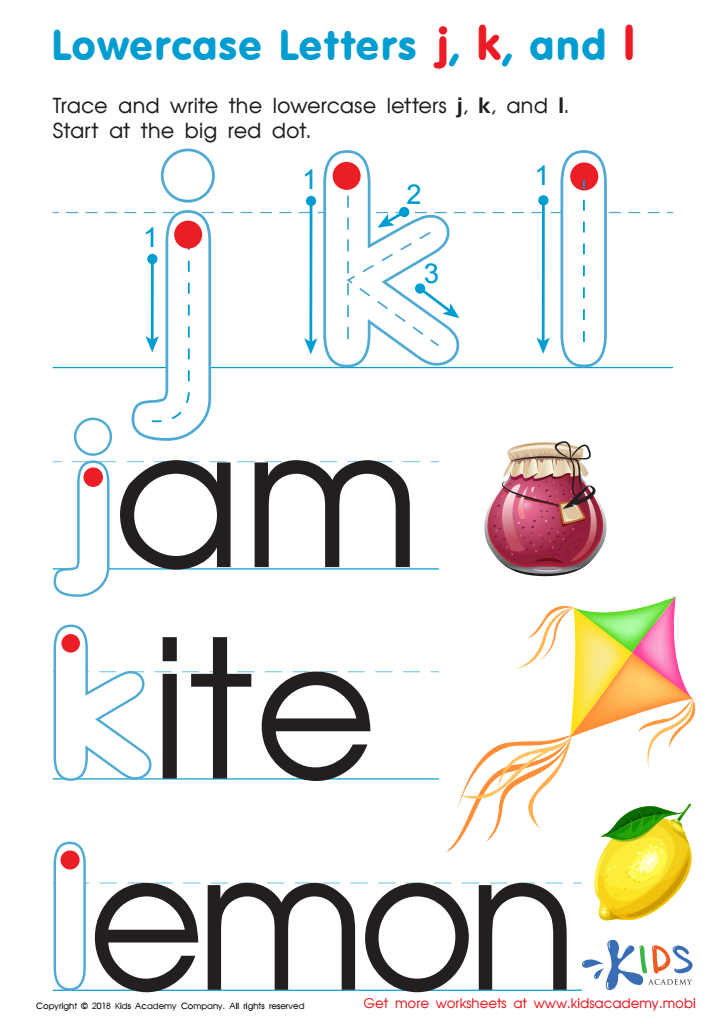
Lowercase Letters j k l Worksheet
Teach your child the difference between uppercase and lowercase letters. Have them trace and write the lowercase letters j, k, and l, starting at the red dot. Guide your child's hand to form the letters correctly.
Lowercase Letters j k l Worksheet
Worksheet
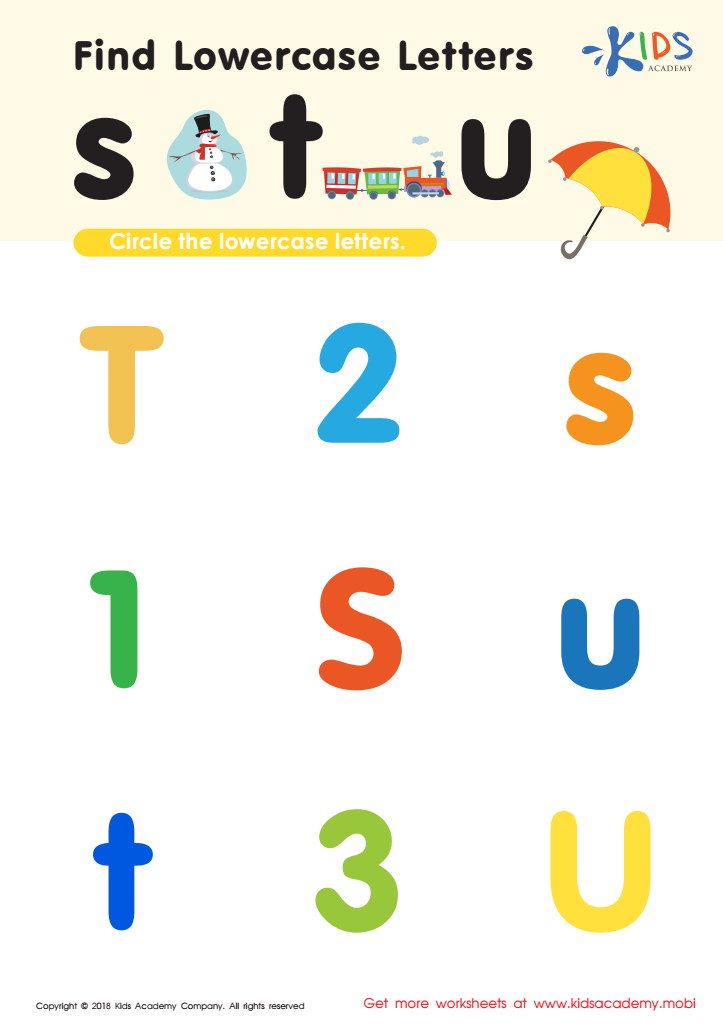
Find lowercase Letters s t u Worksheet
Puzzles are great for boosting your child's thinking skills. Can they identify lowercase letters s, t and u? This free printout contains the letters mixed in with uppercase letters and numbers, all presented in a fun, colorful format - sure to keep them entertained as they learn!
Find lowercase Letters s t u Worksheet
Worksheet
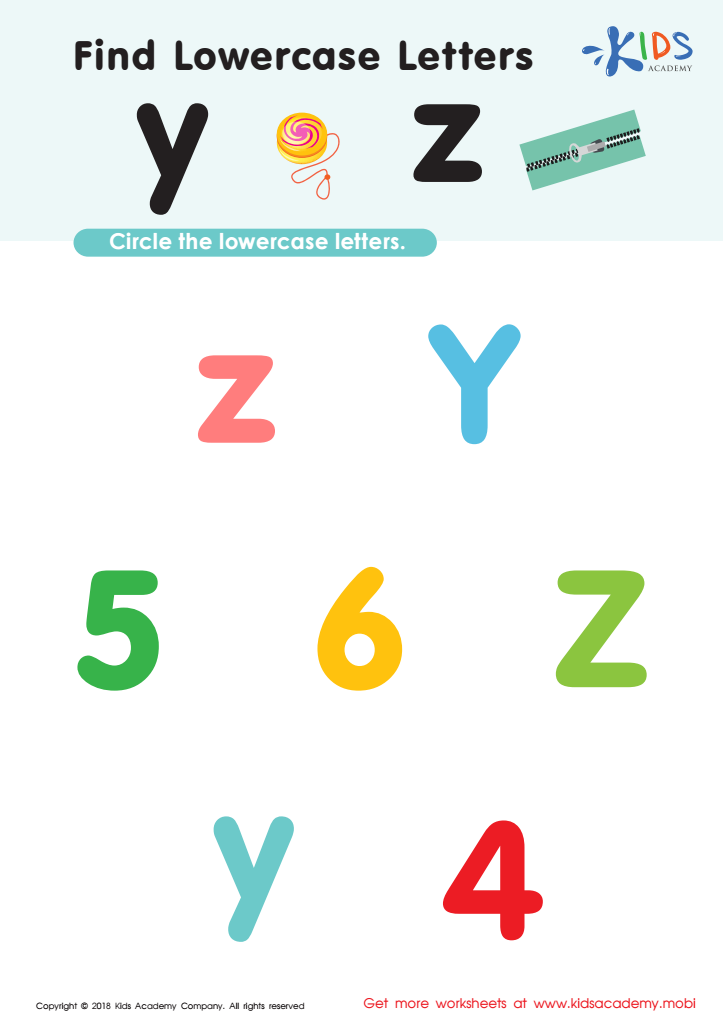
Find Lowercase Letters y z Worksheet
Help your kid learn the alphabet. Before they can move on to words and reading, they must first know the lower and uppercase letters. Show them how to find the letters y and z in this worksheet, which is filled with uppercase letters and numbers. Together, find and circle them.
Find Lowercase Letters y z Worksheet
Worksheet
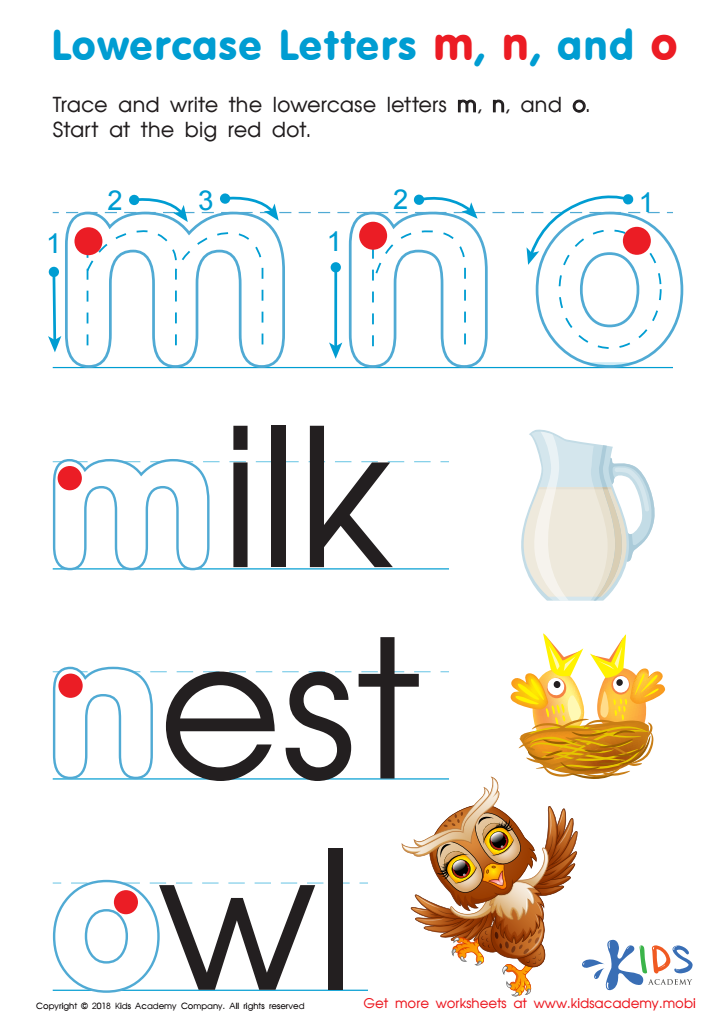
Lowercase Letters m n o Worksheet
Help your child learn the alphabet with letter tracing. Show them the difference between uppercase and lowercase letters by working through this free worksheet, tracing and writing lowercase m, n and o.
Lowercase Letters m n o Worksheet
Worksheet
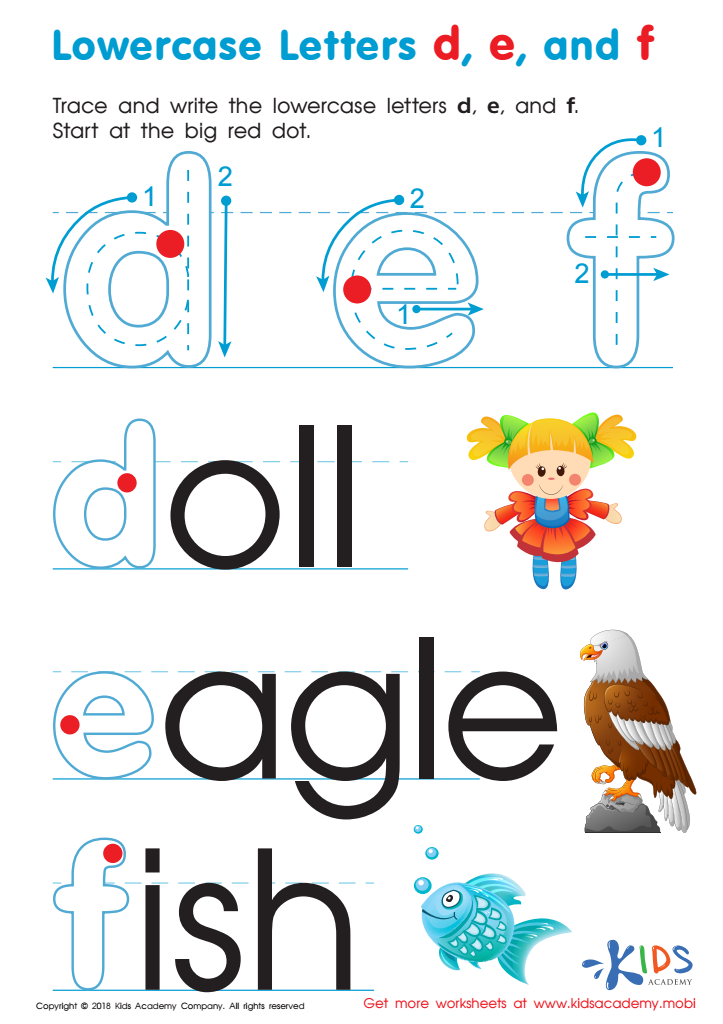
Lowercase Letters d e f Worksheet
Help your child learn the alphabet letters by tracing and writing the lowercase letters d, e, and f. Begin at the big red dot and follow the dots. This worksheet will help your little one gain a better understanding of the letters.
Lowercase Letters d e f Worksheet
Worksheet
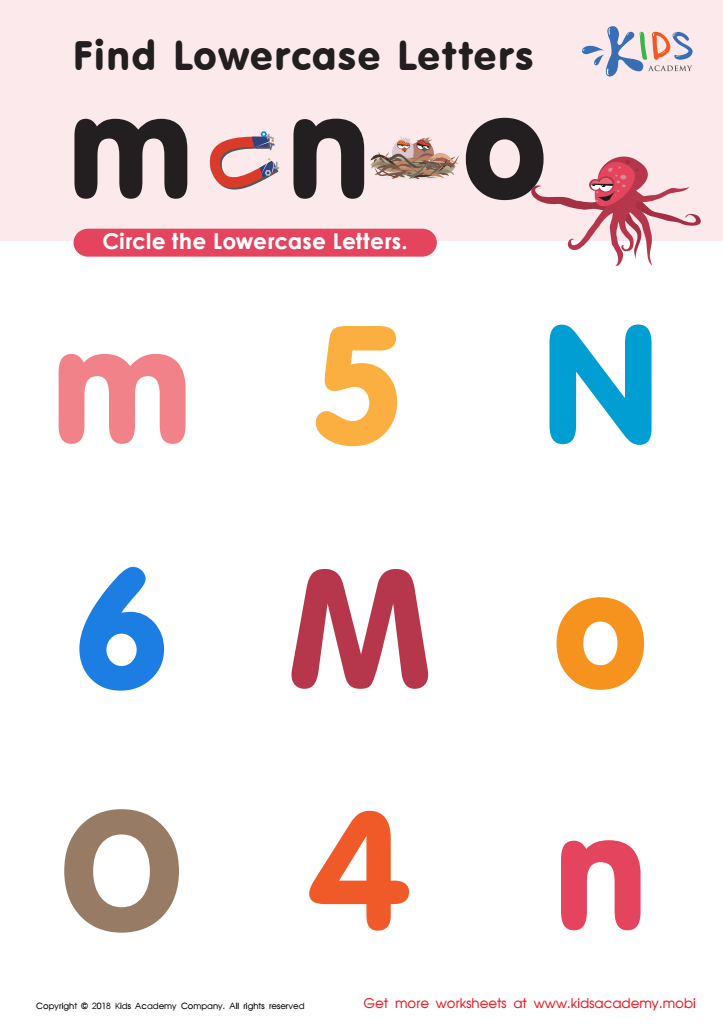
Find Lowercase Letters m n o Worksheet
Help your child find and circle the lowercase letters m, n, and o in this printable worksheet. With colorful texts and fun pictures, this exercise is sure to engage and entertain your child. Guide them in correctly identifying the lowercase letters m, n, and o in the free PDF.
Find Lowercase Letters m n o Worksheet
Worksheet
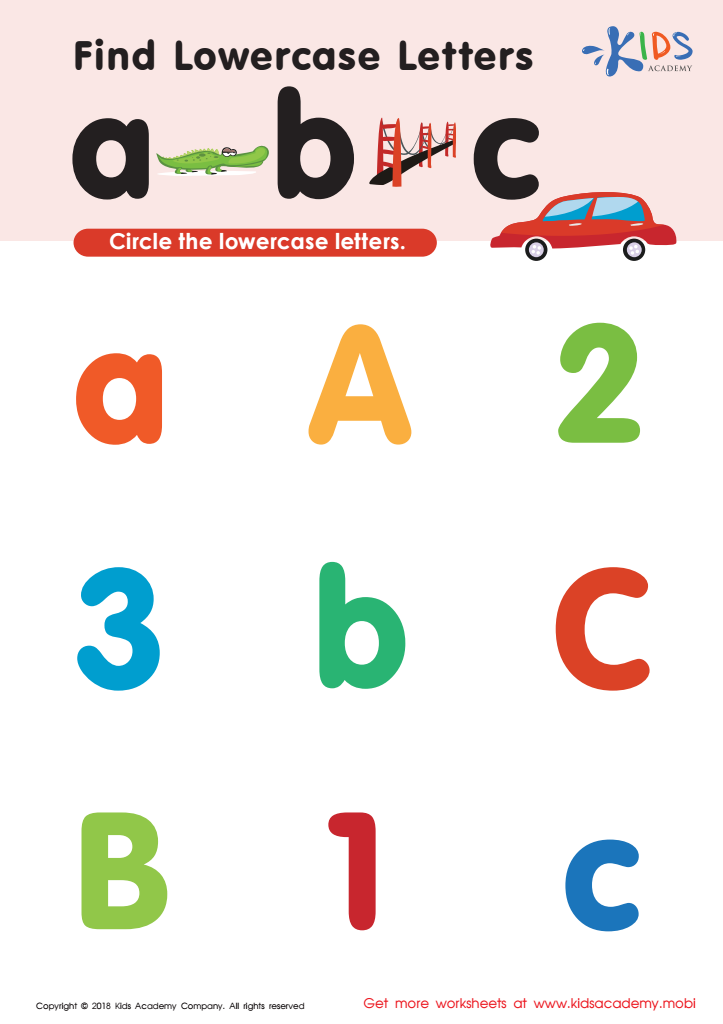
Find lowercase letters a b c Worksheet
Help your child identify lowercase letters with this worksheet. Carefully look at each letter and have your child circle the lowercase ones. This exercise is vital in helping them understand the alphabet and the difference between lower and uppercase letters.
Find lowercase letters a b c Worksheet
Worksheet
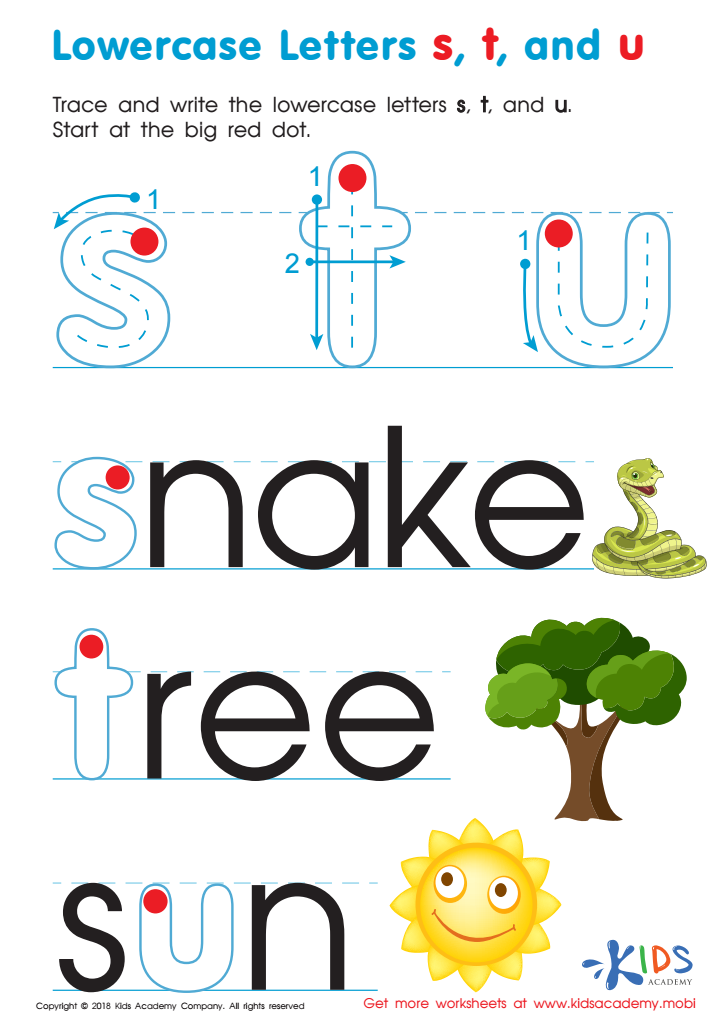
Lowercase Letters s t u Worksheet
Help your child trace lowercase letters s, t and u. Ask questions like: "What word starts with 's'? What about 't' and 'u'? Point out the snake, tree and sun pictures. Start tracing from the big red dot.
Lowercase Letters s t u Worksheet
Worksheet

Find Lowercase Letters v w x Worksheet
If your child doesn't know the alphabet, get them this helpful worksheet. It's an easy exercise to build their understanding of the alphabet and lowercase letters. Find the letters v, w, and x among other uppercase letters and numbers in the downloadable PDF.
Find Lowercase Letters v w x Worksheet
Worksheet
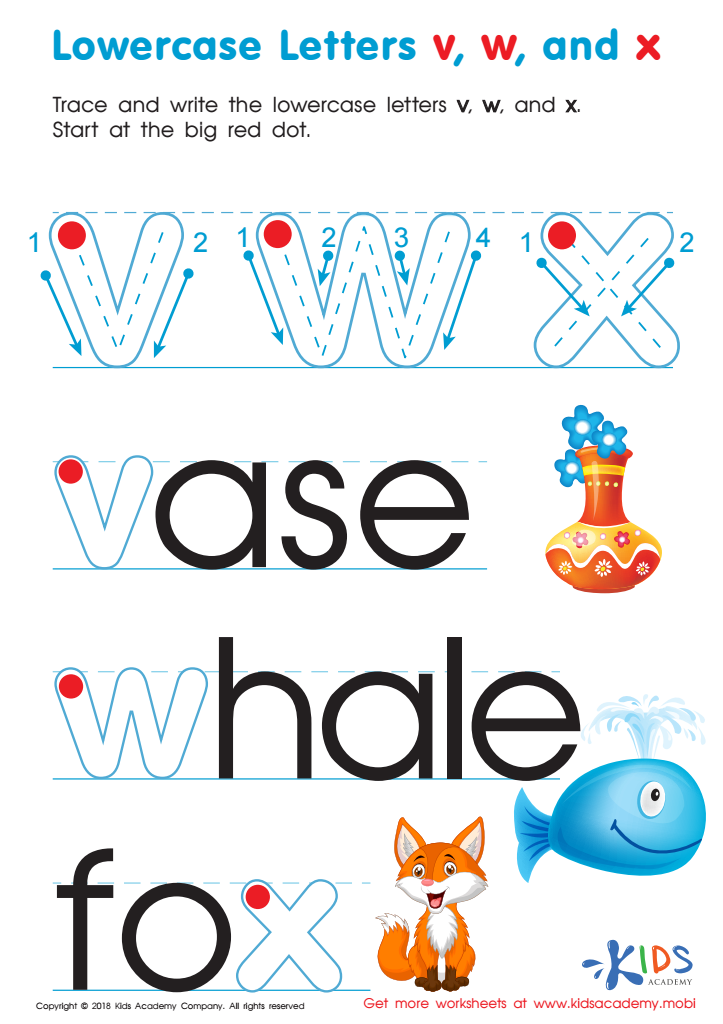
Lowercase Letters v w x Worksheet
Help your child learn to write lowercase letters v, w, and x, starting at the big red dot. This activity will help them develop writing skills and correctly identify the letters. Guide them as they trace the letters and enjoy watching them improve!
Lowercase Letters v w x Worksheet
Worksheet
Join Kids Academy for Free
Who is primarily going to use this learning content?


Fine motor skills are essential for children ages 6-9 as they form the foundation for many developmental abilities. From writing lowercase letters to tying shoelaces, these skills support everyday activities and academic tasks. When children learn to write neatly in small letters, they enhance their handwriting clarity and confidence, making it easier for them to communicate their thoughts effectively.
Understanding the importance of fine motor skills encourages parents and teachers to create an engaging environment where children can practice. Activities like coloring, cutting with scissors, or manipulating clay can directly enhance these skills. Moreover, proficiency in fine motor skills impacts cognitive development, fine-tuning hand-eye coordination, visual-motor integration, and problem-solving abilities.
As children this age start to navigate complex tasks in school, strong fine motor skills can reduce frustration and build independence. Teachers and parents nurturing these skills can foster a child's self-esteem and academic performance. Ultimately, caring about fine motor development helps children thrive not just in the classroom but throughout their lives, equipping them with essential abilities for both educational success and daily living. Therefore, fine motor skills should be a focal point of both home and school learning experiences for children in this critical age group.