
Letter recognition Normal Phonics Worksheets for Ages 6-9
8 filtered results
Difficulty Level
Grade
Age
-
From - To
Subject
Activity
Standards
Enhance your child's reading skills with our comprehensive Letter Recognition Normal Phonics Worksheets, designed specifically for ages 6 to 9. These engaging and interactive worksheets help young learners identify and sound out letters, laying the foundation for strong literacy skills. Each activity promotes phonemic awareness while making learning fun and effective. Whether in the classroom or at home, our worksheets support diverse learning styles, ensuring that every child can succeed. Help your child build confidence in their abilities and prepare for future reading adventures. Explore our collection today and watch their letter recognition skills flourish!
Favorites
With answer key
Interactive
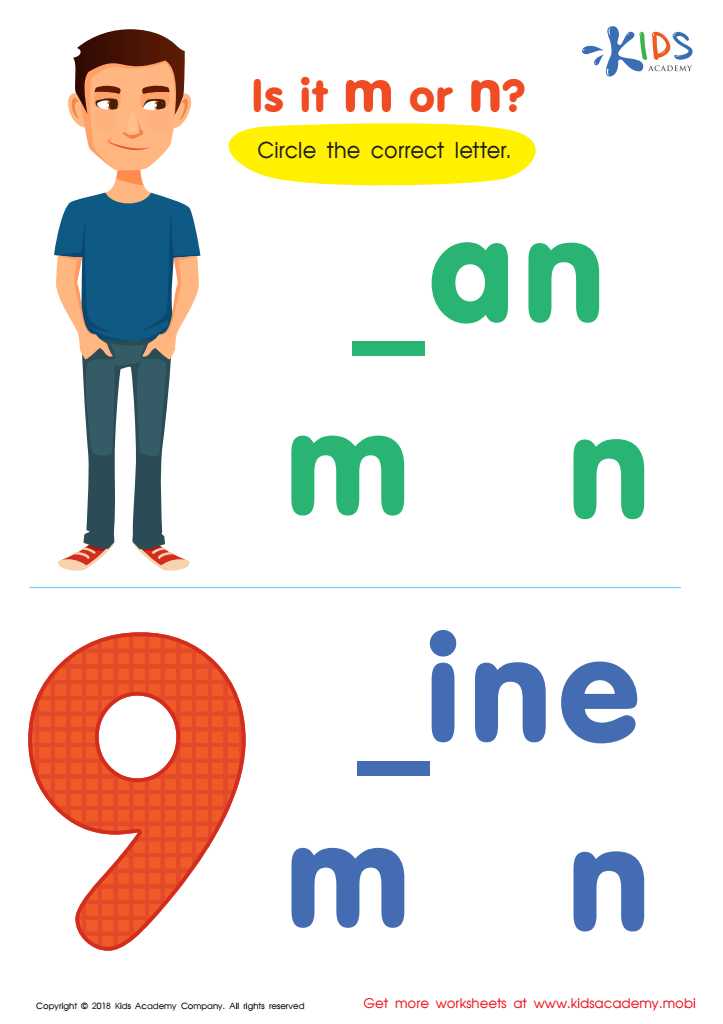
Is It m or n? Worksheet
Help your child circle the letter that begins the words "man" and "nine" in the picture. This is a great way for them to learn the alphabet.
Is It m or n? Worksheet
Worksheet
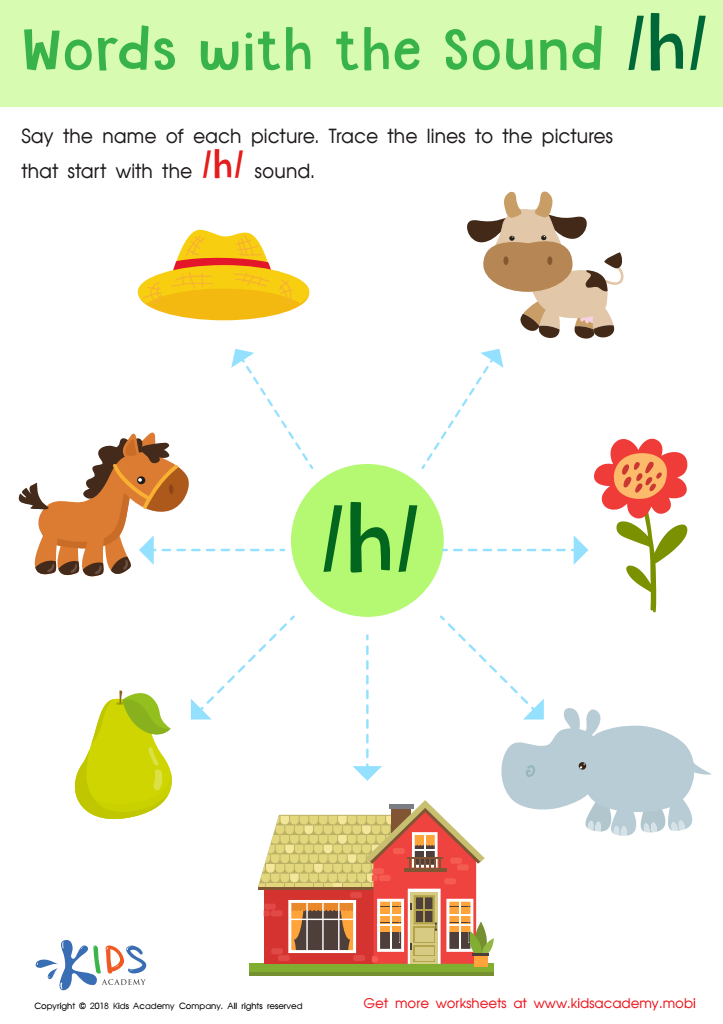
Words with sound h Reading Worksheet
The letter H can often be heard in words! Check your child's knowledge with an engaging worksheet from Kids Academy. Ask them to go around a circle and name each image aloud. Listen for the starting sound and trace the line from the middle letter to the images with the sound. This is a great way to practice phonics!
Words with sound h Reading Worksheet
Worksheet
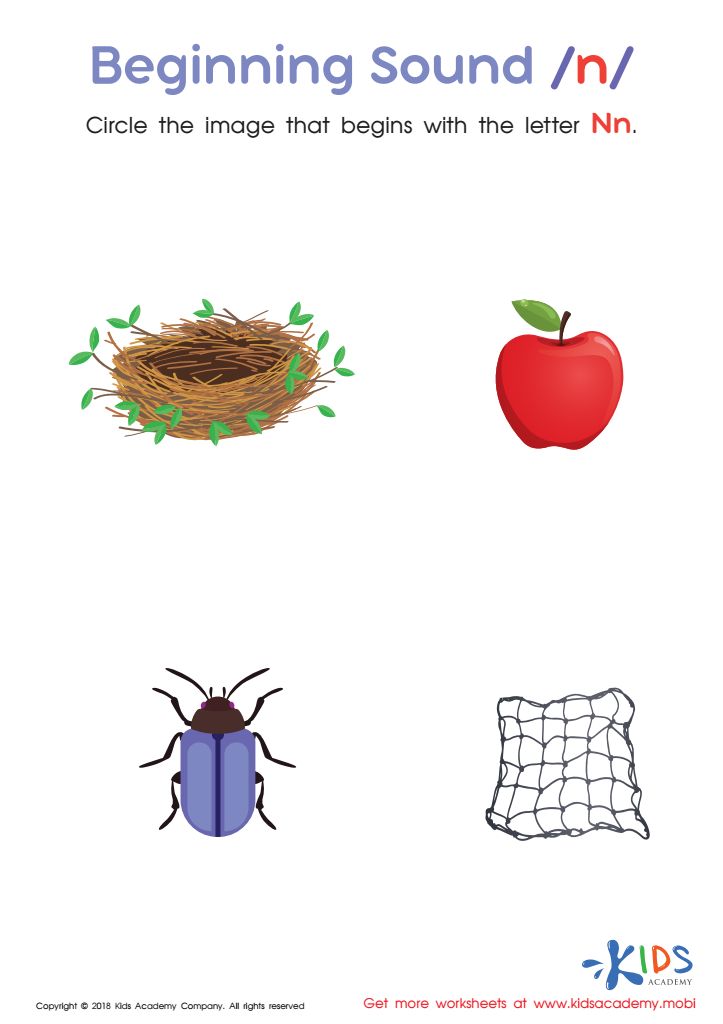
Beginning Sound «n» Worksheet
Help your emerging reader learn the initial «n» sound with this free PDF worksheet! Strengthen fine motor skills by tracing circles around words beginning with «n». Pictures are clear and engaging, giving beginning Phonics learners the right amount of practice and the confidence to succeed.
Beginning Sound «n» Worksheet
Worksheet
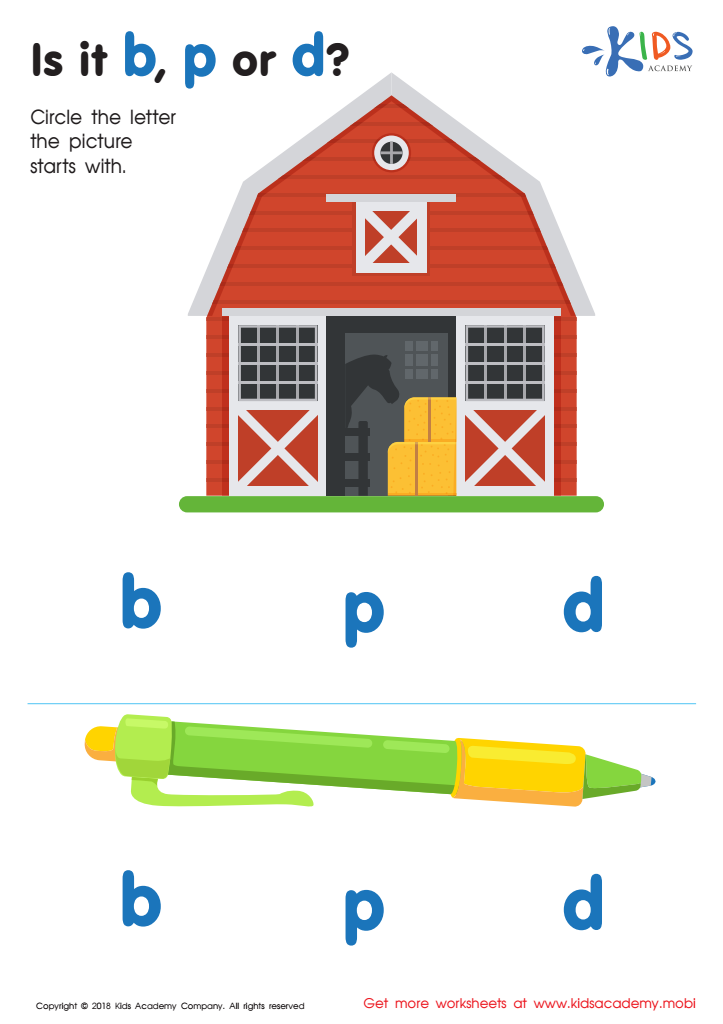
Is it b, p or d? Worksheet
Test your child's identification skills with this worksheet. They must identify the image and then circle the letter it begins with: 'b', 'p', or 'd' (e.g. an image of the sun would mean they circle 's').
Is it b, p or d? Worksheet
Worksheet

Long and Short U Worksheet
Revised: Spice up your lesson on long and short vowels with this fun printout! Kids read the words "tube" and "tub," then reinforce the sound by coloring in the words and pictures. It's a great way to make phonics class enjoyable!
Download (PDF)
 Assign to My Students
Assign to My Students
Long and Short U Worksheet
Worksheet
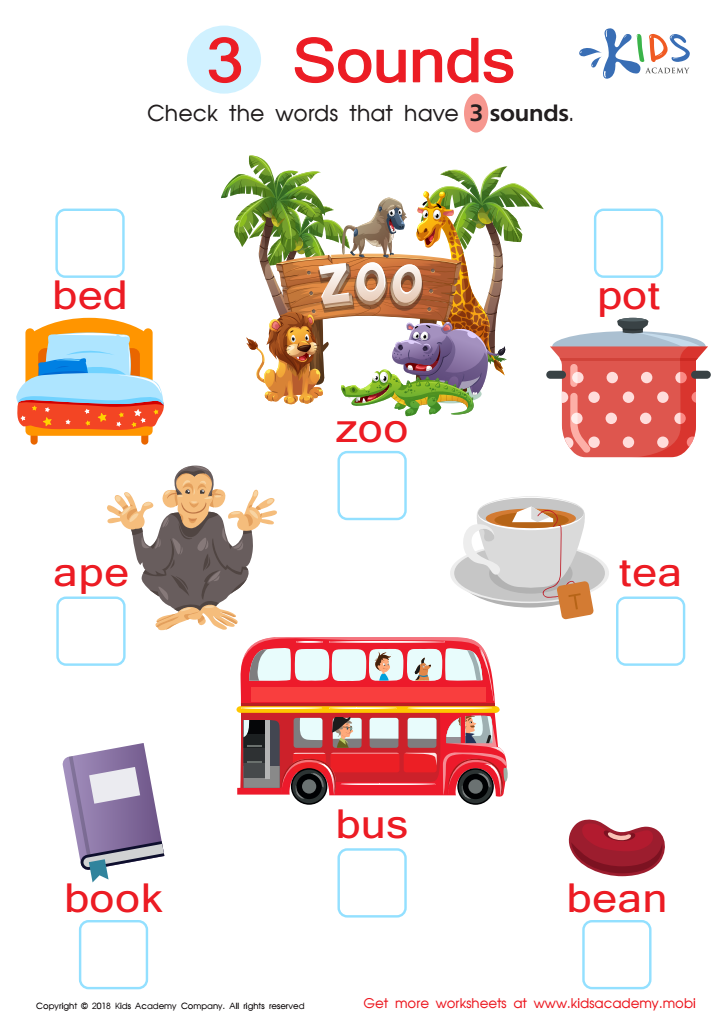
3 Sounds Worksheet
Kids will love learning with this free, colorful worksheet. It's full of familiar words they can name and sound out with three distinct sounds. This helps build decoding skills, plus they get to check off words they read. It's a fun way to teach children to identify and use sounds.
3 Sounds Worksheet
Worksheet
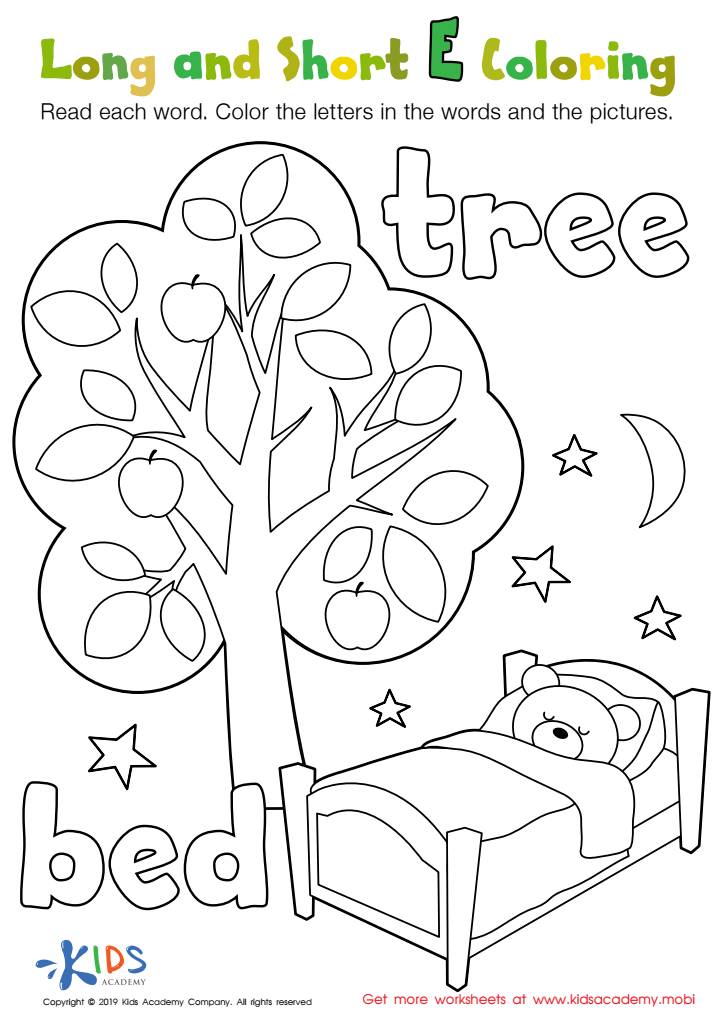
Long and Short E Worksheet
This fun printout makes learning phonics enjoyable for Grade 3 students. Get them to read the words “tree” and “bed” to recognize the different sounds of the letter “E”. After hearing the words they can color the words and the pictures to understand differences between long and short vowels.
Download (PDF)
Assign to My Students
Assign to My Students
Long and Short E Worksheet
Worksheet
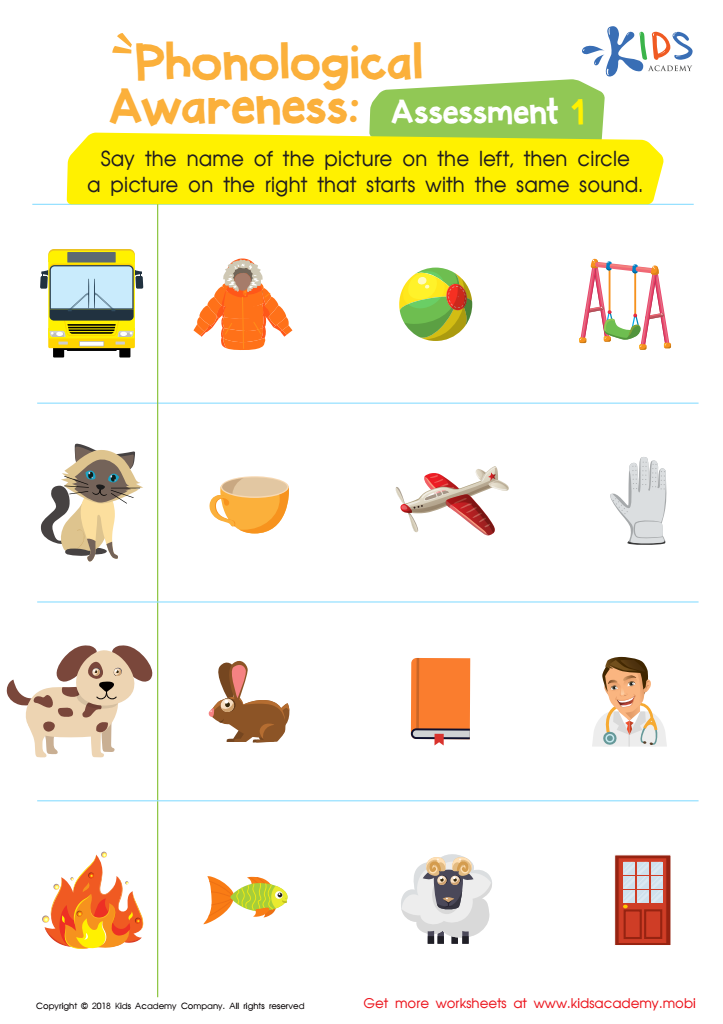
Phonological Awareness: Assessment 1 Worksheet
This worksheet helps kids build key phonics skills for pre-reading. They say each picture name aloud, focusing on the starting sound. Then, they match the sound with an image in the same row. Use as a checkpoint for kindergarten or grade 1 phonics readiness.
Phonological Awareness: Assessment 1 Worksheet
Worksheet
Join Kids Academy for Free
Who is primarily going to use this learning content?








Letter recognition and phonics are fundamental building blocks for literacy development in children aged 6 to 9. Early mastery of these skills fosters confidence and competence in reading, which are essential for academic success. Parents and teachers should care about these concepts as they directly influence a child's ability to decode words, make connections between sounds and letters, and ultimately develop a love for reading.
Understanding how letters function in the alphabet and the sounds they represent helps children with word formation, spelling, and vocabulary growth. Proficiency in phonics enables them to tackle unfamiliar words, laying the groundwork for fluency and comprehension. Moreover, engaging children in letter recognition while incorporating phonics raises their awareness of language structure, enhancing their overall communication skills.
Investigating letter recognition and phonics fosters a stimulating and interactive learning environment, where children feel encouraged to explore and express their ideas. As they become proficient readers, they gain access to a treasure trove of knowledge, expanding their horizons and stimulating their curiosity. Ultimately, by prioritizing these foundational skills, parents and teachers equip children with the tools necessary to navigate their educational journey and cultivate a lifelong passion for learning.







