Rhyming skills development Normal Phonics Worksheets for Ages 6-9
4 filtered results
-
From - To
Enhance your child's phonics journey with our engaging Normal Phonics Worksheets designed for ages 6-9! Our rhyming skills development worksheets provide a fun and interactive way for young learners to explore the world of rhymes. These resources encourage phonemic awareness, improve vocabulary, and foster reading readiness through entertaining activities. Children will enjoy connecting words through rhymes, strengthening their ability to recognize patterns and sounds. Ideal for classroom or home use, our worksheets are crafted to support early literacy in a colorful and stimulating format. Empower your child's love for language and watch their confidence grow with every completed worksheet!
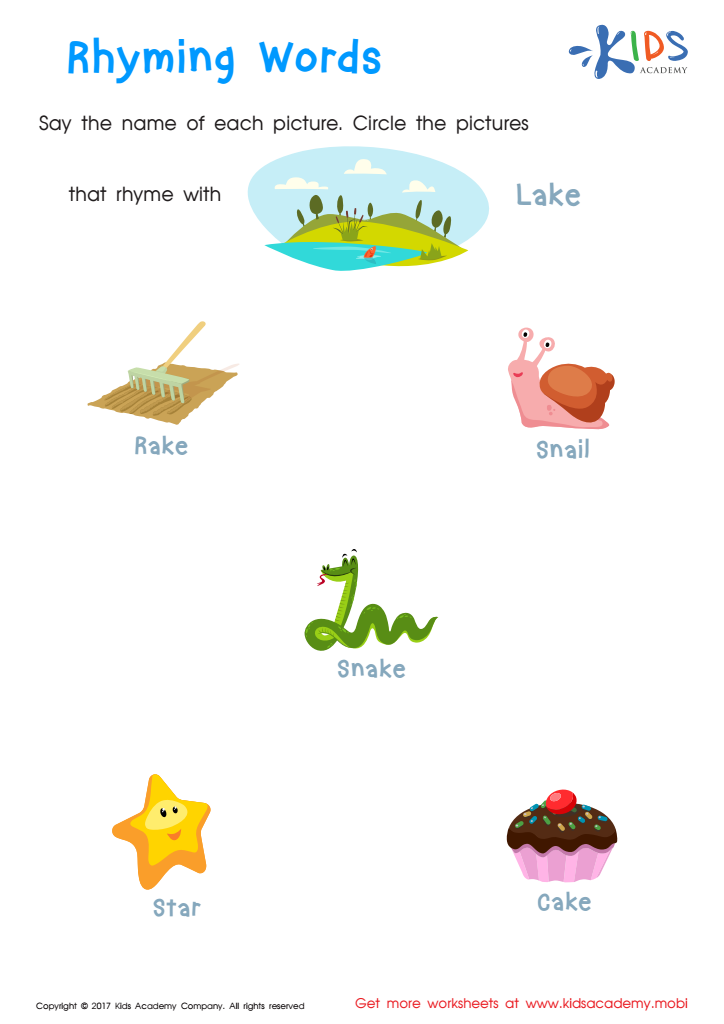
Rhyming Words Rhyming Worksheet
 Assign to My Students
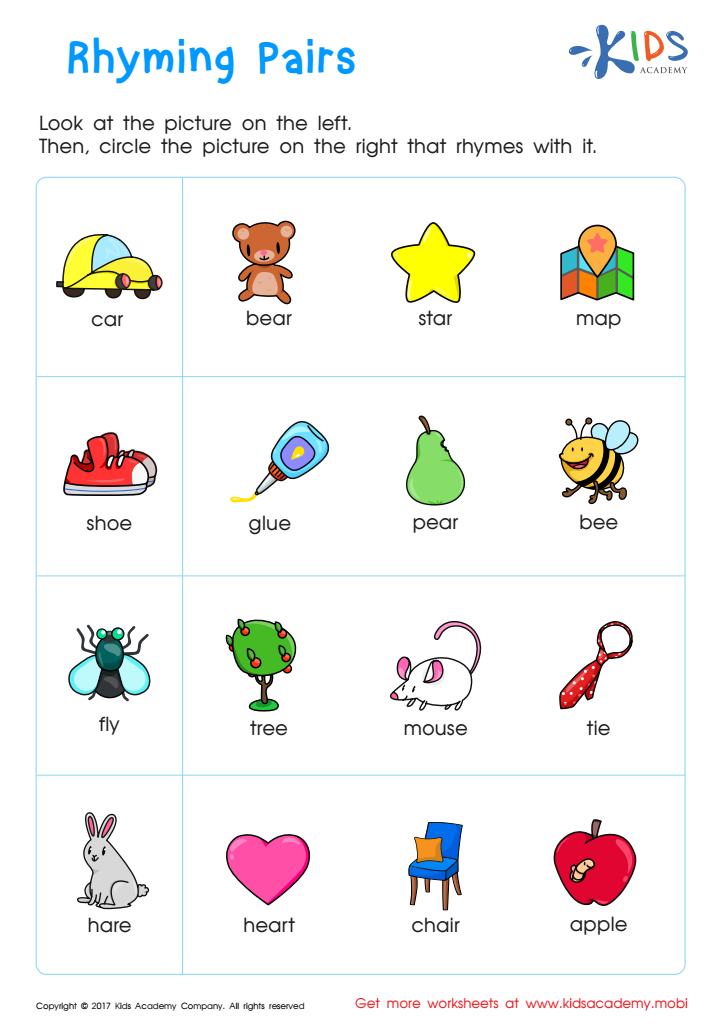
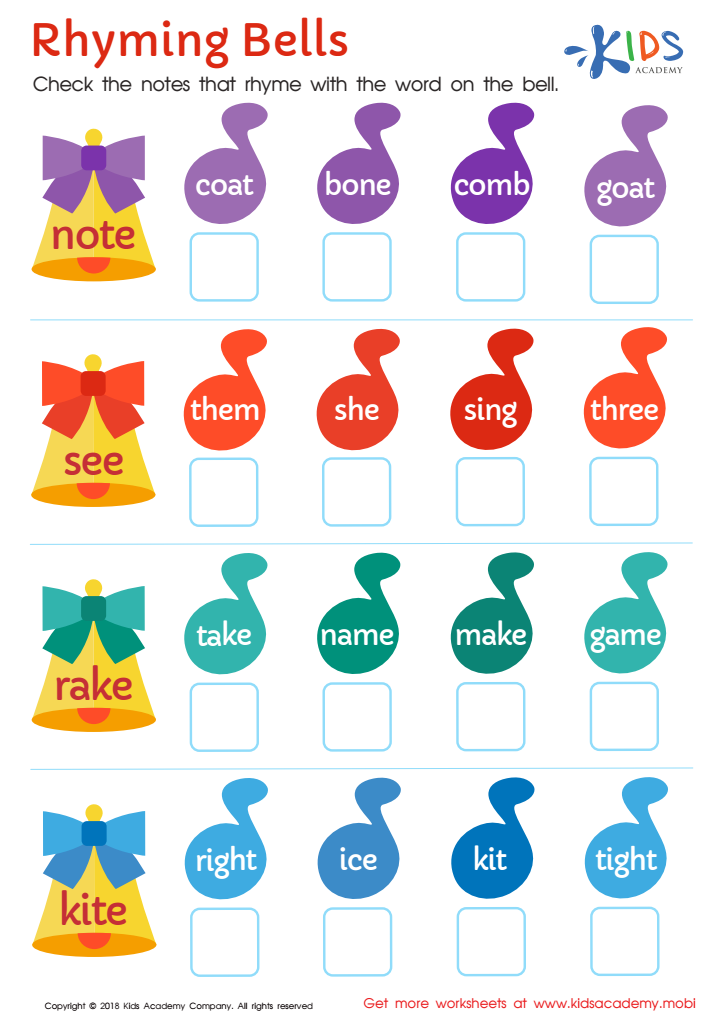
Rhyming Bells Worksheet
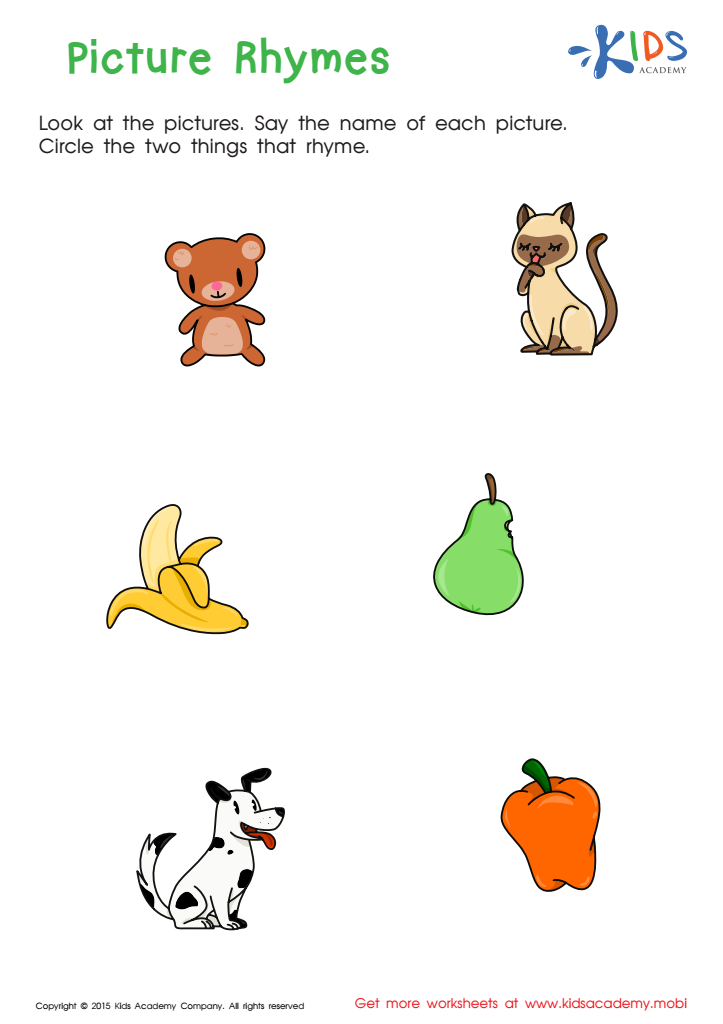
First Words: Picture Rhymes Worksheet








Rhyming skills and phonics development are crucial for children aged 6-9 as they form the foundation for literacy and language acquisition. Rhyming helps children recognize sound patterns, aiding in their ability to decode words during reading. This skill enhances phonemic awareness, which is essential for understanding that words are made up of individual sounds, thereby fostering effective reading and writing strategies.
Parents and teachers should prioritize rhyming and phonics because they boost vocabulary, comprehension, and spelling abilities. Exposure to rhyming words encourages playful engagement with language, making learning fun and interactive. It also promotes critical cognitive skills such as memory and auditory discrimination.
Furthermore, a solid grasp of phonics enables children to tackle unfamiliar words confidently, ensuring greater independence in their reading journey. By engaging in activities like singing rhymes or playing rhyming games, educators and parents can create enriching environments that spotlight phonemic relationships, ignite a love for reading, and develop linguistic skills.
Overall, supporting rhyming and phonics development equips children with essential tools for academic success and fosters a lifelong passion for literacy, ultimately influencing their communication abilities and overall confidence in learning.







