Sound differentiation Normal Phonics Worksheets for Ages 6-9
3 filtered results
-
From - To
Explore our Sound Differentiation Normal Phonics Worksheets designed specifically for children aged 6-9! These engaging worksheets focus on helping young learners distinguish between similar sounds, enhancing their phonemic awareness and reading skills. Each activity encourages children to identify and categorize sounds, promoting a solid foundation for literacy development. Ideal for classroom use or at-home practice, these worksheets are perfect for helping students grasp essential phonics concepts while enjoying a fun learning experience. Foster your child's confidence in reading with imaginative exercises that make sound differentiation easy and enjoyable! Empower their future success with the essential skills they need.
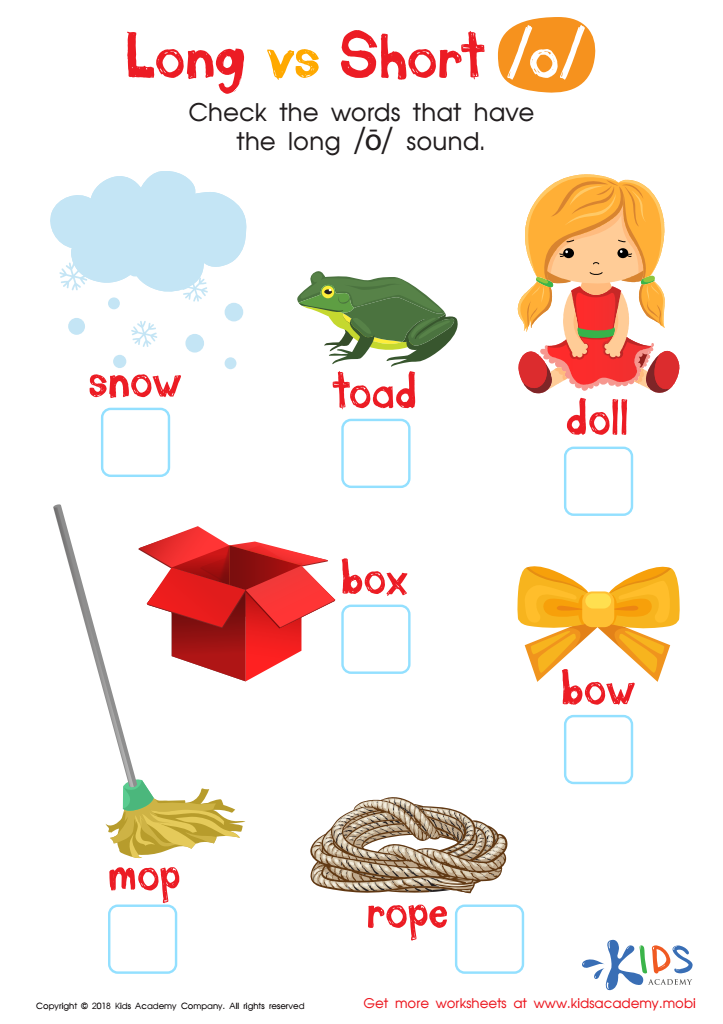
Long vs Short O Reading Worksheet
 Assign to My Students
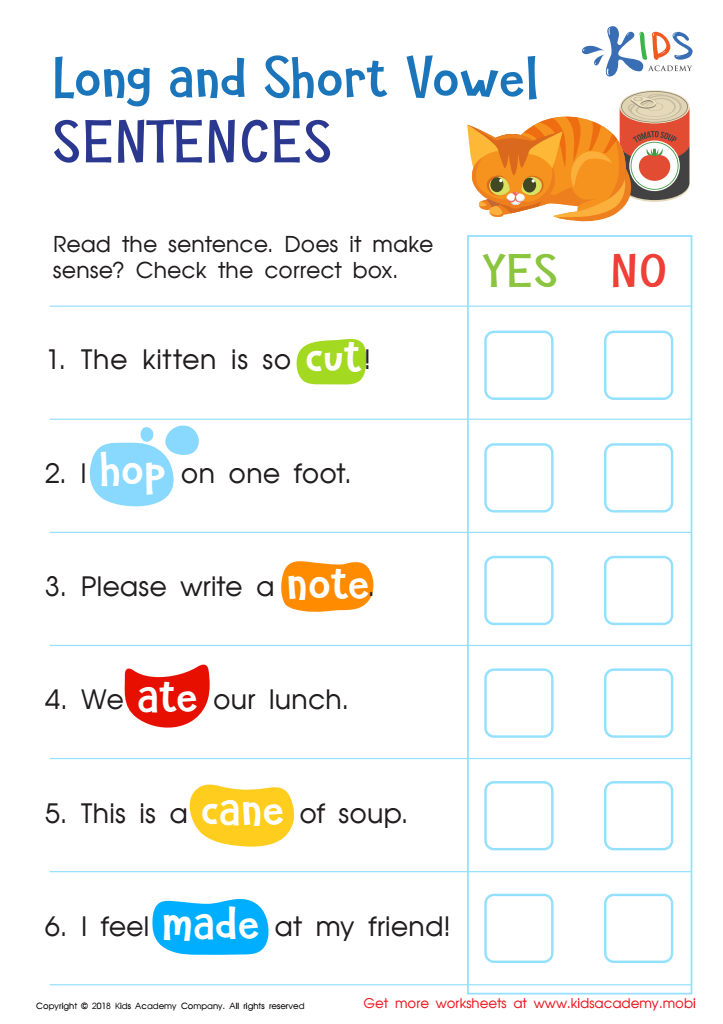
Long and Short Vowel Sentences: Assessment Worksheet
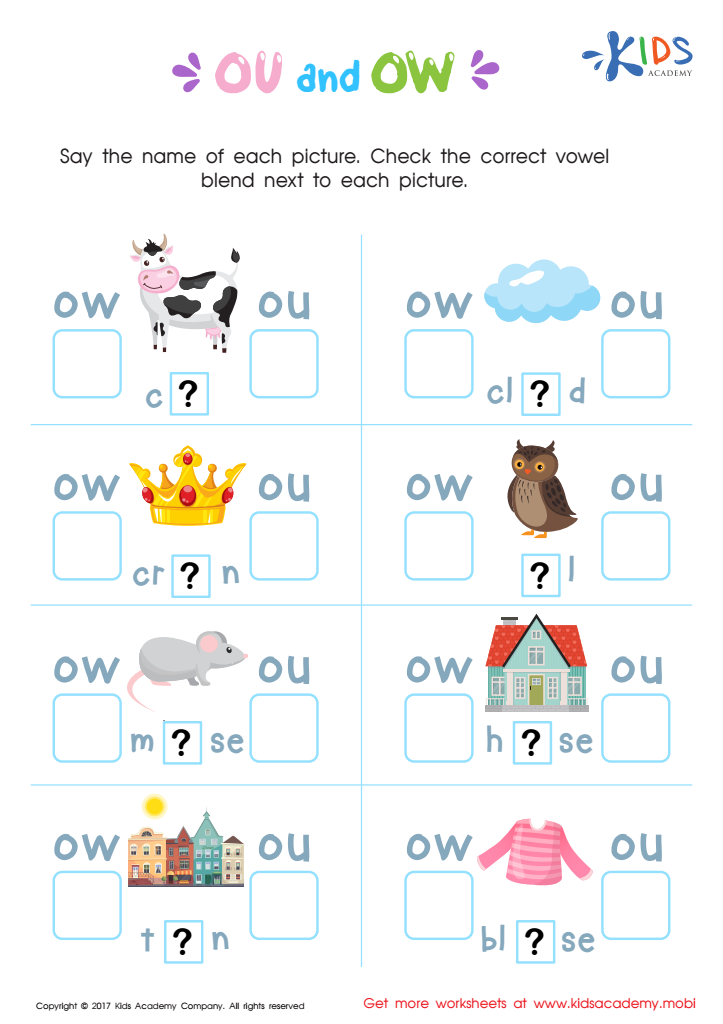
OU and OW Words Worksheet








Sound differentiation in phonics is crucial for children aged 6-9, as it lays the foundation for their reading and writing abilities. During these formative years, children begin to connect sounds with letters and gain skills in decoding words. Understanding sound differentiation enables them to distinguish between similar phonemes, such as 'b' and 'p', which is essential for accurate pronunciation and spelling.
Parents and teachers play a vital role in fostering these skills. By emphasizing sound differentiation, they help children develop phonemic awareness, which is linked to overall literacy success. Engaging in activities that promote this skill—such as rhyming games, singing, and phonics songs—can make learning enjoyable and more effective.
Moreover, strong phonics skills enhance a child’s confidence when reading aloud, bolstering their overall academic progress. Early intervention in this area also helps prevent long-term struggles with literacy, contributing to a child's self-esteem and love for reading.
In conclusion, focusing on sound differentiation in phonics not only aids in reading and writing development but also supports emotional and intellectual growth, making it imperative for both parents and teachers to prioritize this essential skill.







