Word identification Normal Phonics Worksheets for Ages 6-9
5 filtered results
-
From - To
Discover our engaging "Word Identification Normal Phonics Worksheets" designed specifically for children ages 6-9. These worksheets provide an interactive way for young learners to enhance their phonics skills and improve reading comprehension through word identification activities. Each worksheet is carefully crafted to reinforce letter sounds, vocabulary recognition, and phonetic patterns, ensuring a fun and educational experience. Ideal for both classroom and at-home learning, our worksheets support various learning styles, promoting confidence in young readers. With colorful illustrations and age-appropriate challenges, these phonics worksheets make learning enjoyable. Equip your child with the skills they need to succeed in their reading journey!
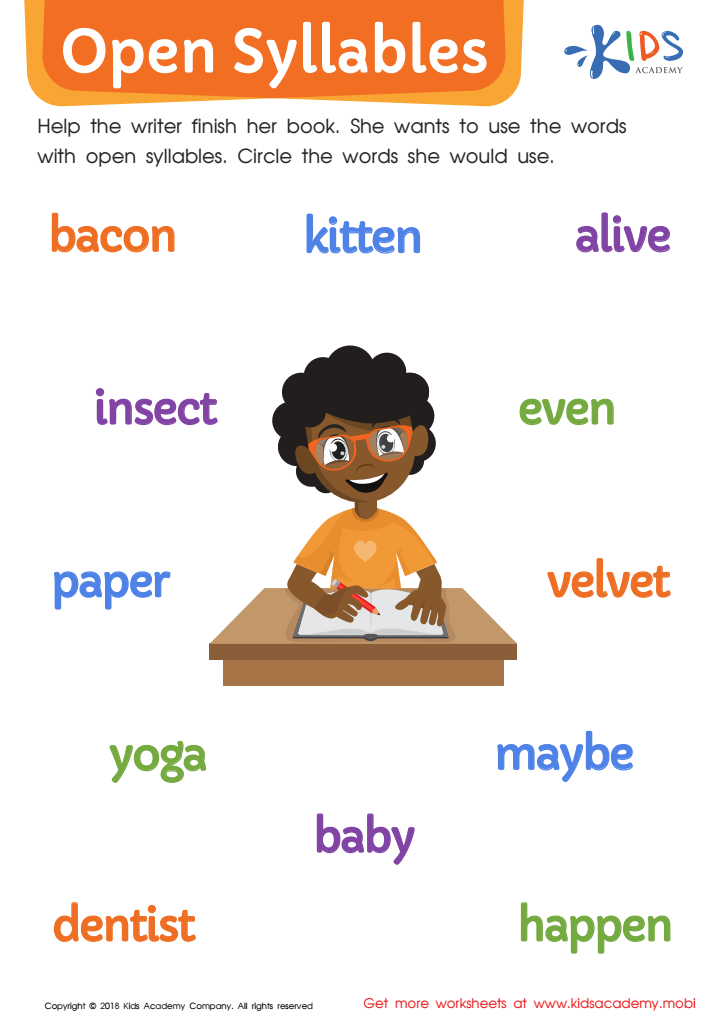
Open Syllables Worksheet
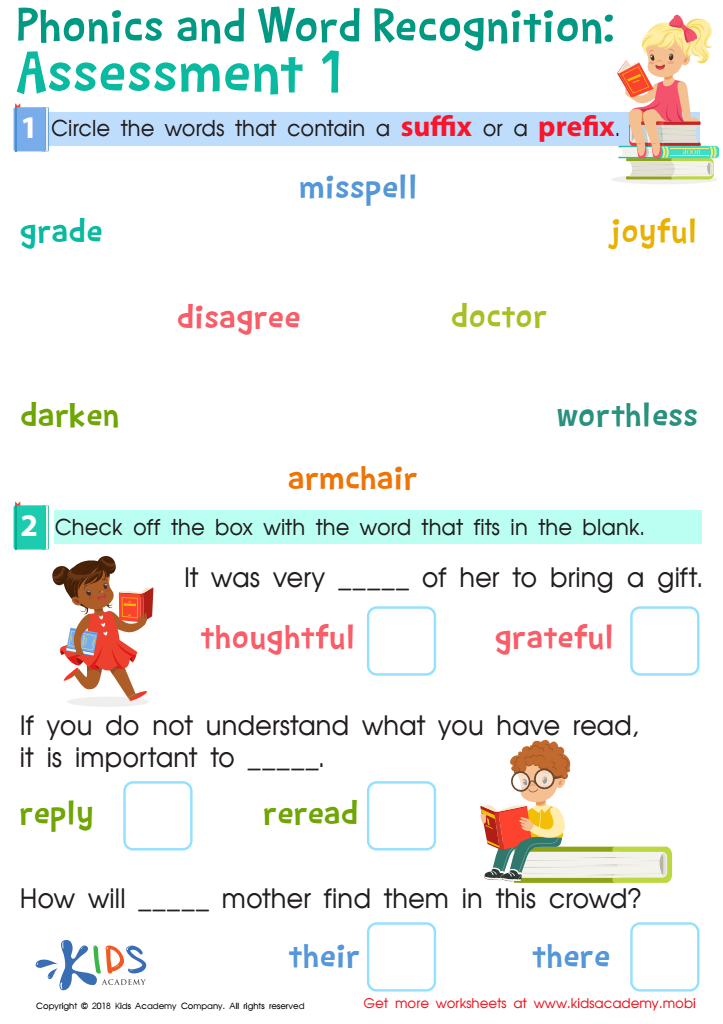
Phonics and Word Recognition: Assessment 1 Worksheet
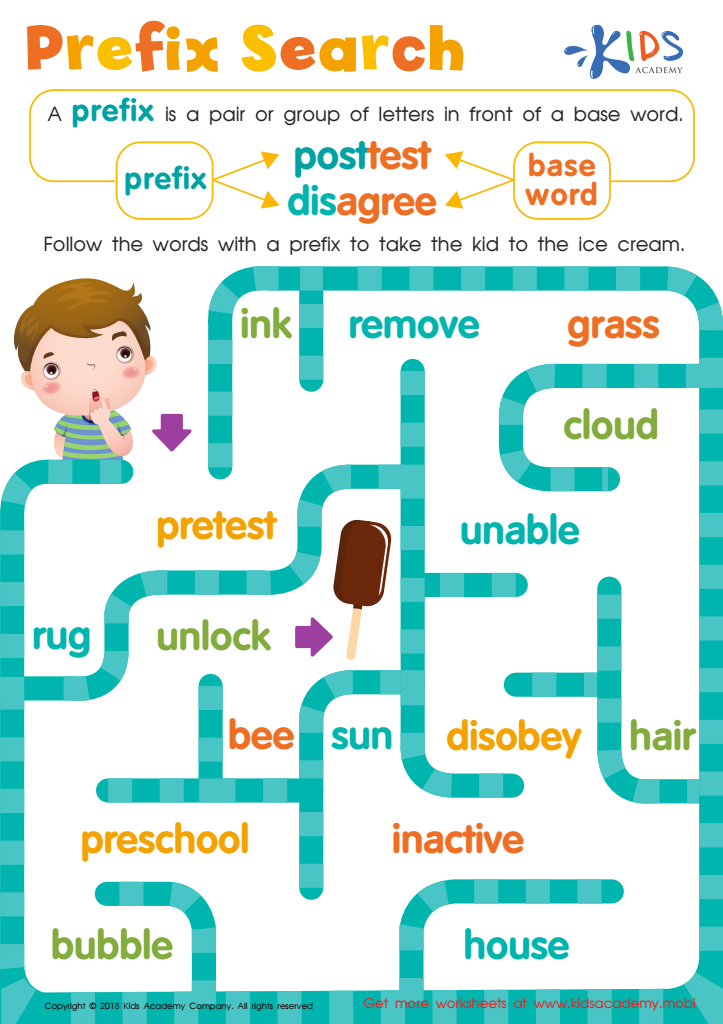
Reading: Prefix Search Worksheet
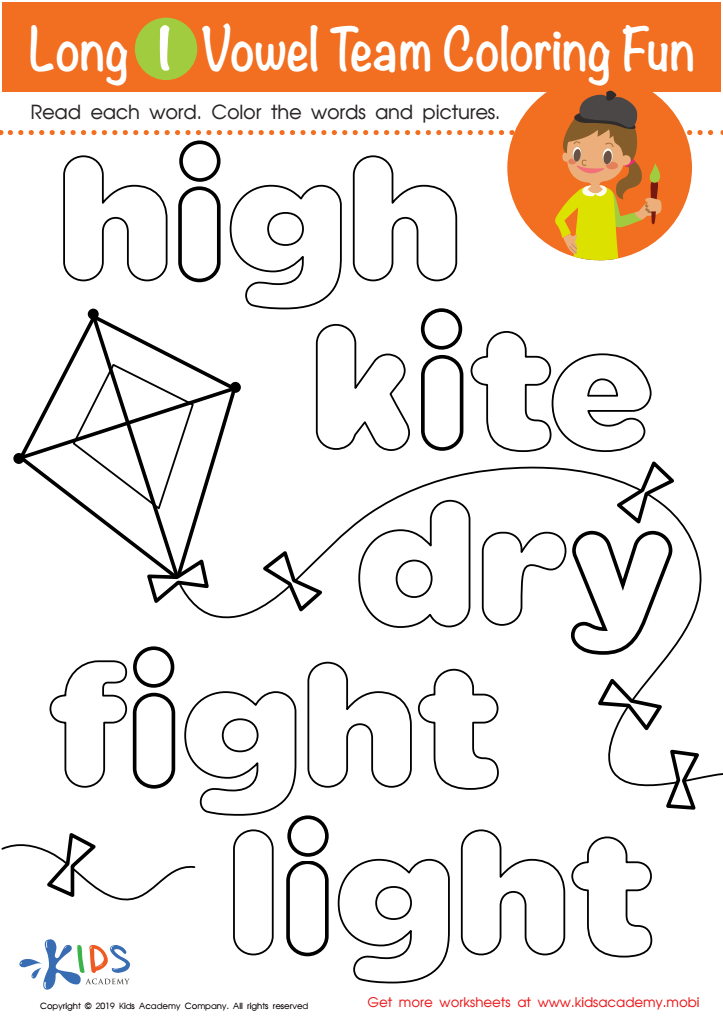
Long I Vowel Team Coloring Worksheet
 Assign to My Students
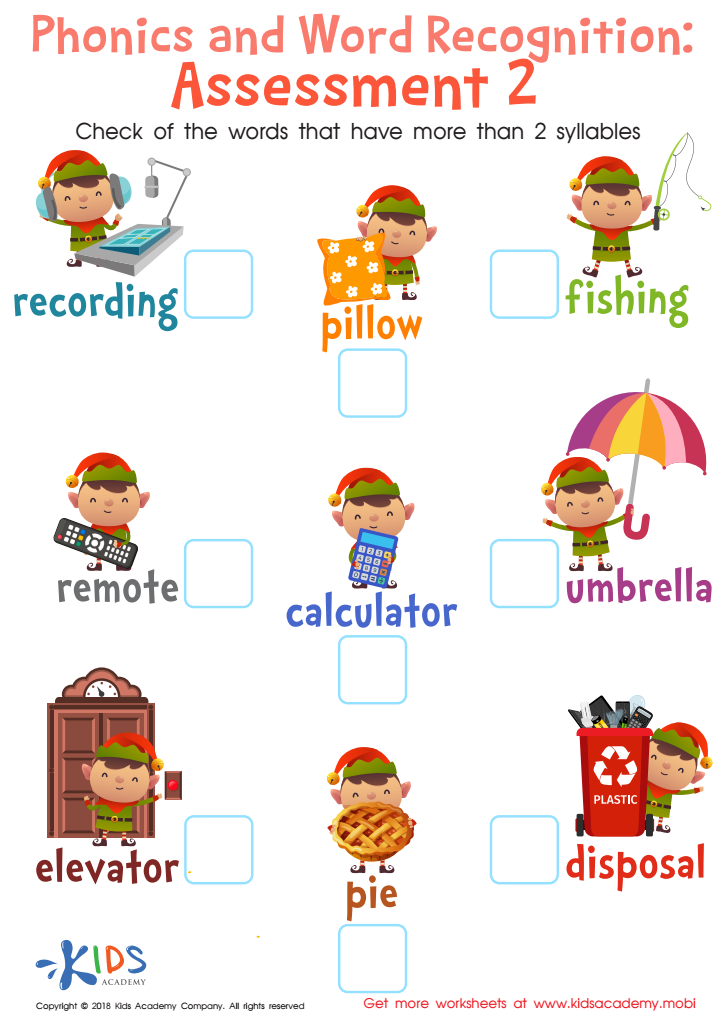
Phonics and Word Recognition: Assessment 2 Worksheet








Word identification and phonics are crucial for children aged 6-9 as they form the foundation for reading and literacy. During this developmental stage, children are transitioning from learning to read to reading to learn, making strong reading skills essential for academic success. Effective phonics instruction helps children recognize the sounds that letters and combinations of letters make, enabling them to decode words independently. This proficiency not only enhances their reading comprehension but also boosts their confidence and motivation in learning.
Parents and teachers should care about word identification and phonics because these skills are integral for language development and cognitive growth. Strong phonics instruction fosters a love for reading, stimulating curiosity and imagination. Furthermore, children who struggle with phonics are at risk for reading difficulties, affecting their performance in all subjects, and leading to negative self-esteem.
By focusing on phonics and word identification, parents and educators lay the groundwork for a lifelong skillset that enhances communication, critical thinking, and creativity. Actively engaging children in phonics activities at home and in the classroom makes learning fun, ensuring that they develop not just as better readers but as enthusiastic learners equipped for future educational challenges.







