Letter tracing skills Normal Upper & Lowercase Letters Worksheets for Ages 6-9
3 filtered results
-
From - To
Enhance your child's handwriting with our "Letter Tracing Skills: Normal Upper & Lowercase Letters Worksheets for Ages 6-9". These worksheets are designed to help young learners master the fundamentals of letter formation. Perfect for children aged 6-9, each activity provides ample practice for both uppercase and lowercase letters, improving their writing fluency and muscle memory. With clear, guided tracing lines and engaging themes, kids can develop fine motor skills and gain confidence in their writing abilities. Visit our webpage for a collection of fun and educational tracing worksheets that make learning letters a breeze.
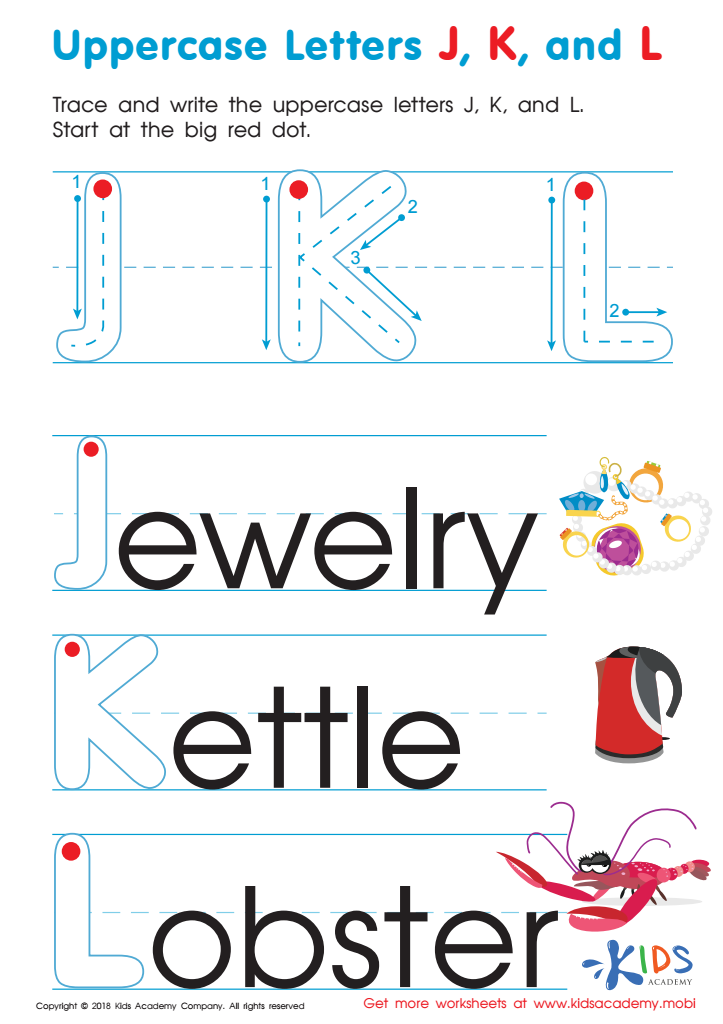
Uppercase Letters J, K, and L Worksheet
 Assign to My Students

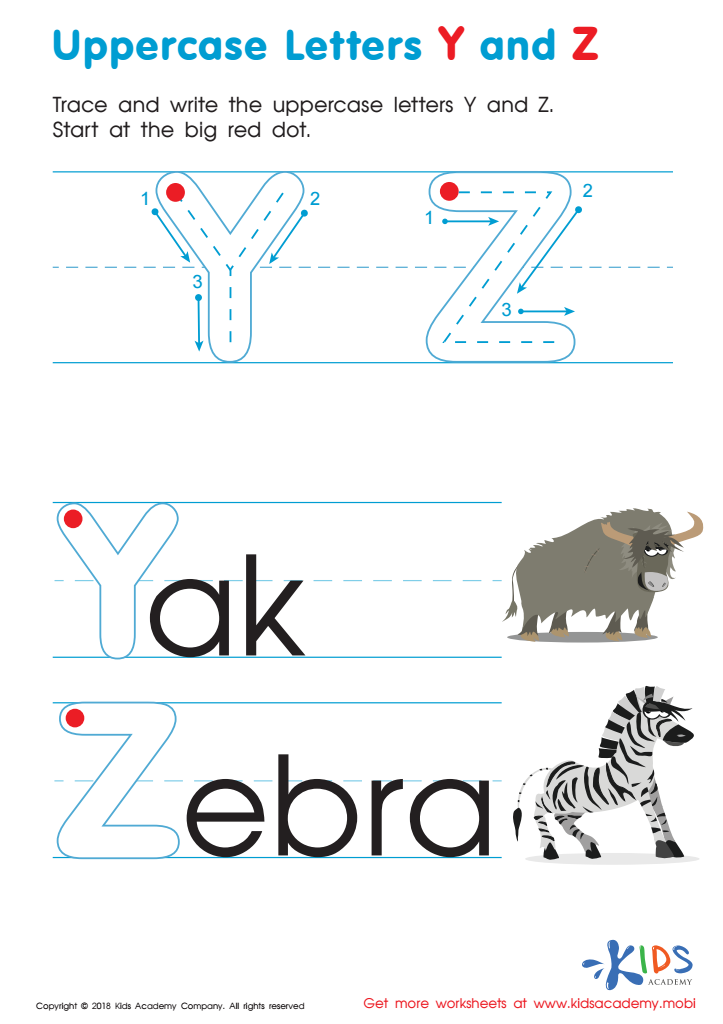
Uppercase Letters Y Z Worksheet
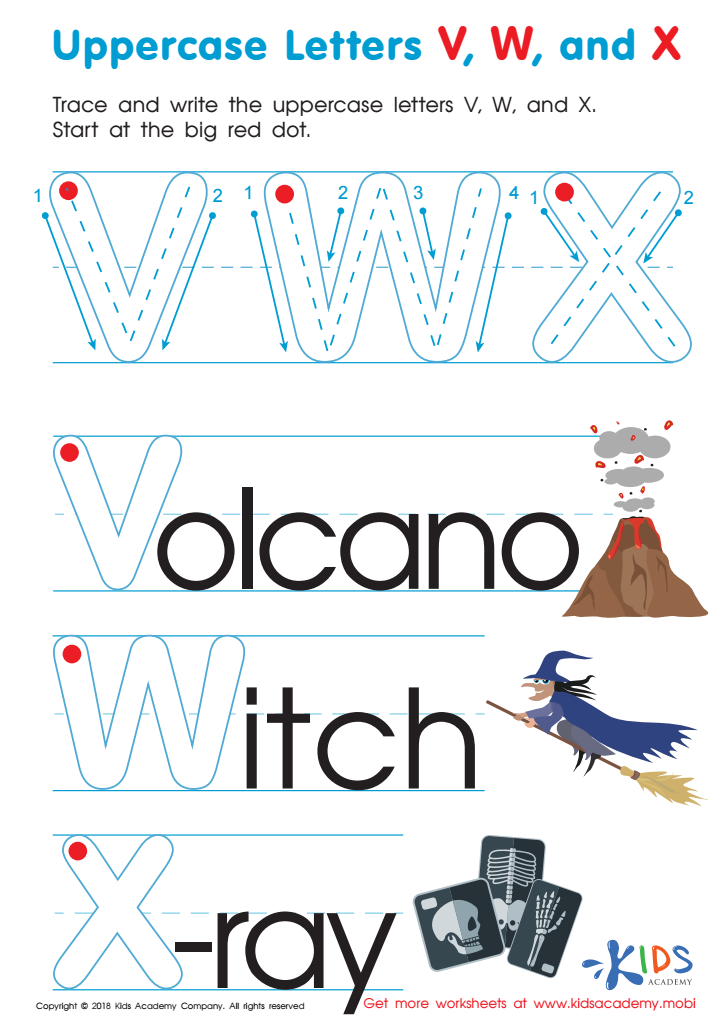
Uppercase Letters V, W, and X Worksheet






Letter tracing skills are foundational to literacy and set the stage for more advanced writing abilities. For children aged 6-9, mastering both uppercase and lowercase letters is crucial for several key reasons.
First, letter tracing helps children develop fine motor skills. Precise finger movements strengthen hand muscles and improve hand-eye coordination, which are essential for more complex tasks such as drawing and manipulating objects.
Second, consistent practice with tracing teaches correct letter formation, important for legibility. When children write clearly, their ability to communicate via written text improves, enhancing their confidence and academic performance.
Third, distinguishing between uppercase and lowercase letters is critical for reading and writing. Many texts children encounter use both forms, and proficiency aids in correct sentence structures and comprehension.
Lastly, developing these skills early on instills a sense of discipline and patience. These traits benefit broader educational pursuits and contribute to lifelong learning habits.
In sum, parents and teachers should prioritize letter tracing for ages 6-9 as it builds essential motor skills, promotes clear communication, aids in text comprehension, and fosters valuable personal traits. Investing time in these activities offers a strong foundation for future academic and personal success.







