Lowercase identification Normal Upper & Lowercase Letters Worksheets for Ages 6-9
4 filtered results
-
From - To
Discover our engaging Lowercase Identification Worksheets, specially designed for children aged 6-9 to master uppercase and lowercase letters. These printable resources provide fun and interactive activities that promote letter recognition and differentiation. Tailored for early learners, our worksheets include tracing, matching, and coloring tasks that boost fine motor skills while reinforcing letter concepts. Each activity encourages creative learning, ensuring that children remain motivated and excited about their educational journey. With our thoughtfully crafted materials, students will confidently identify and use lowercase letters in no time. Explore our worksheets today and support your child's literacy development with enjoyable activities!
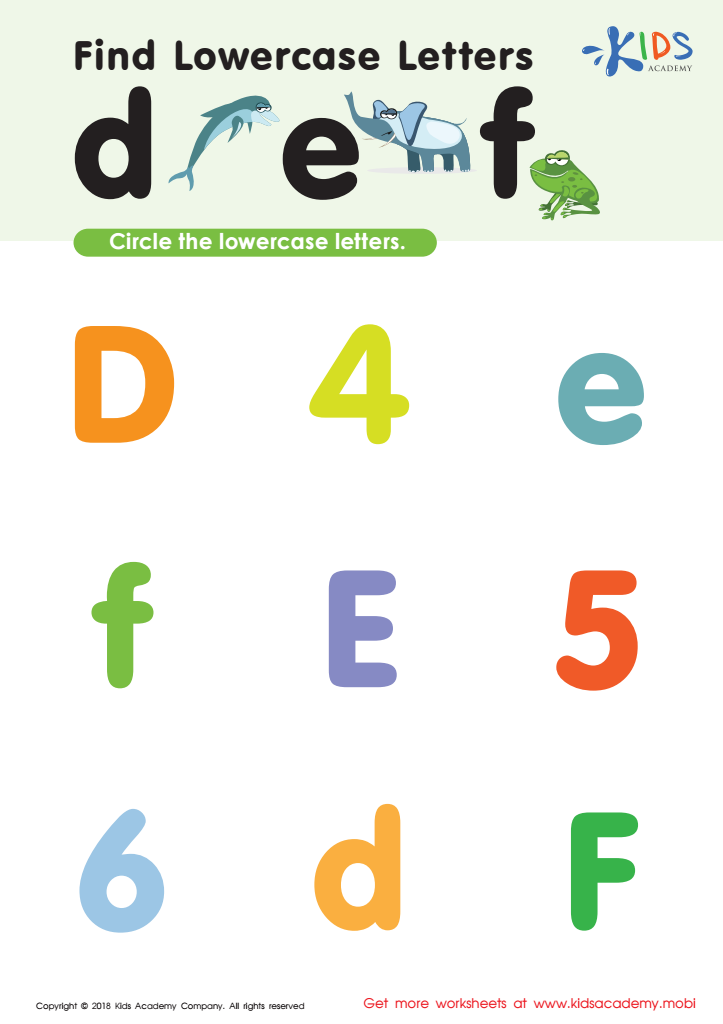
Find Lowercase Letters d e f Worksheet
 Assign to My Students


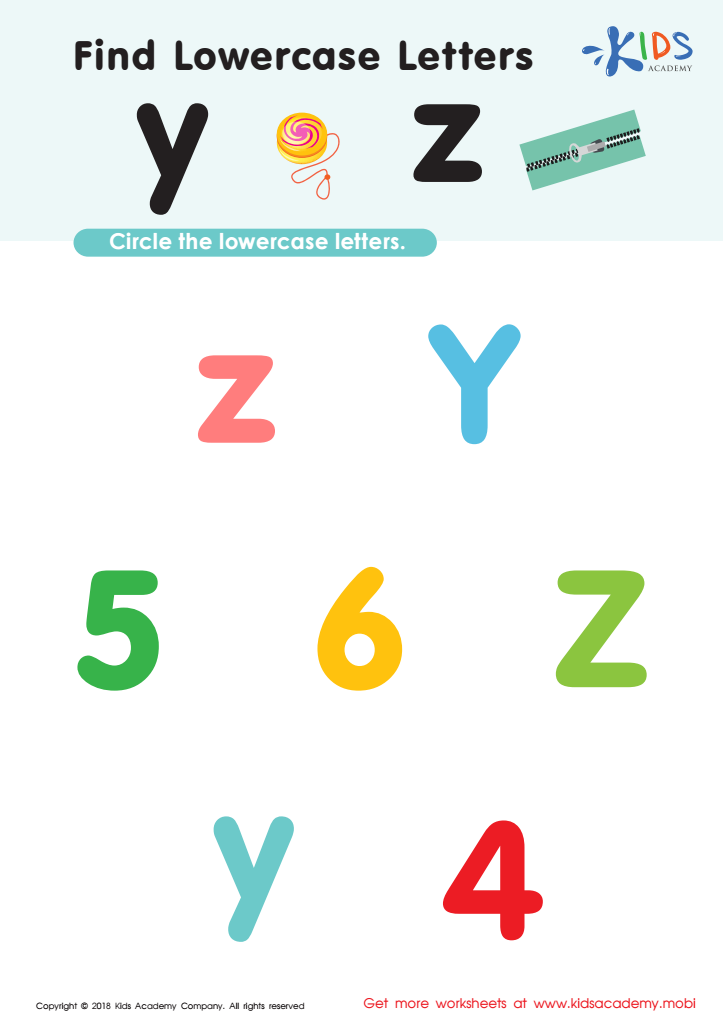
Find Lowercase Letters y z Worksheet
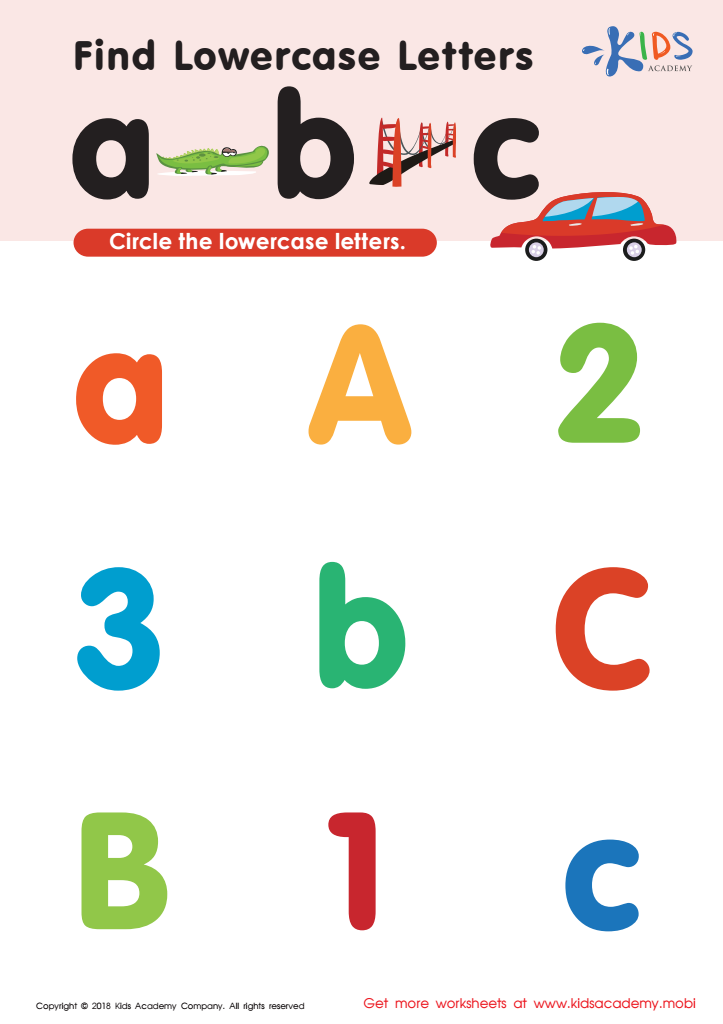
Find lowercase letters a b c Worksheet
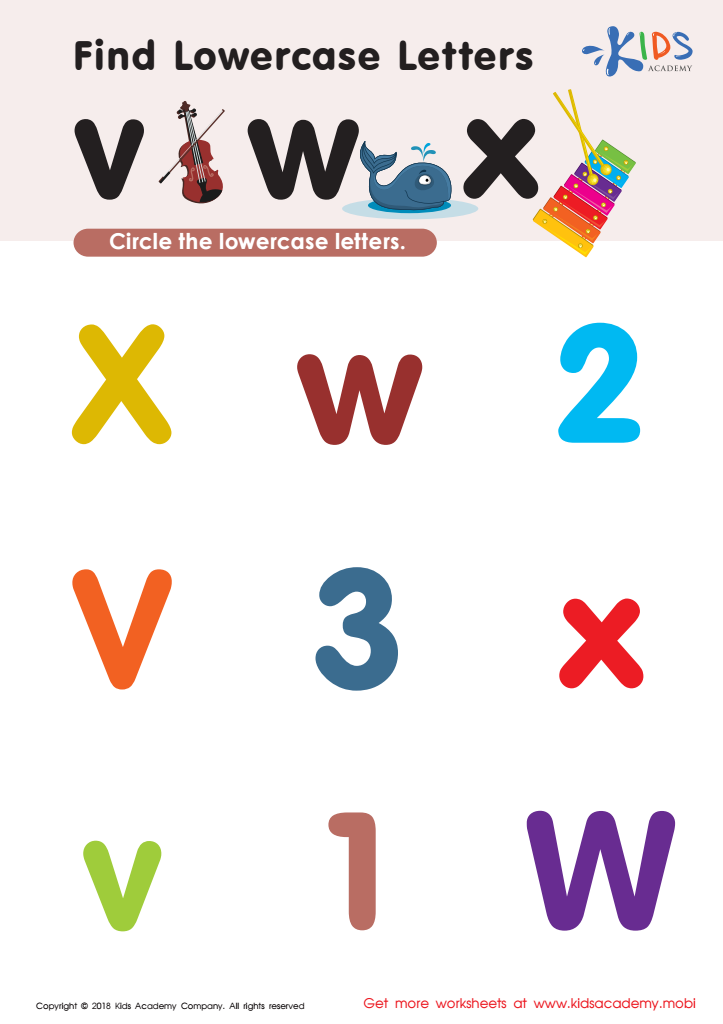
Find Lowercase Letters v w x Worksheet






Understanding lowercase and uppercase letter identification is crucial for children aged 6-9, laying the foundation for reading and writing skills. During this developmental stage, children are transitioning from recognizing letters to comprehending their functions within words, sentences, and stories. Lowercase letters are predominantly used in written text, comprising about 90% of what children encounter daily. If children struggle with differentiating between uppercase and lowercase letters, it can hinder their reading fluency, comprehension, and spelling abilities.
Moreover, mastery of lowercase letters enhances a child’s writing skills. When composing sentences, children need to understand when and how to use uppercase letters grammatically. Teachers and parents can support this learning by providing engaging activities that foster letter recognition through games, storytelling, and hands-on exercises, leading to improved literacy skills.
Finally, identifying both forms of letters boosts a child’s confidence in communication. As they gain proficiency in reading and writing, they develop a love for literacy that encourages ongoing learning. Thus, recognizing the importance of lowercase and uppercase letter identification allows parents and teachers to advocate for effective educational strategies, ultimately contributing to children’s overall academic success.







