Sound differentiation Normal Vowels Worksheets for Ages 6-9
3 filtered results
-
From - To
Enhance your child's phonetic skills with our "Sound Differentiation Normal Vowels Worksheets" designed specifically for ages 6-9. These engaging worksheets focus on helping young learners recognize and distinguish between short and long vowel sounds in an entertaining, interactive way. Through a variety of activities, including word matching, visual aids, and fill-in-the-blank exercises, children will develop their understanding of vowel sounds in the context of language. Perfect for both classroom and home learning, these worksheets foster early literacy and build a solid foundation for reading skills.
Download today to make learning vowels enjoyable and effective!
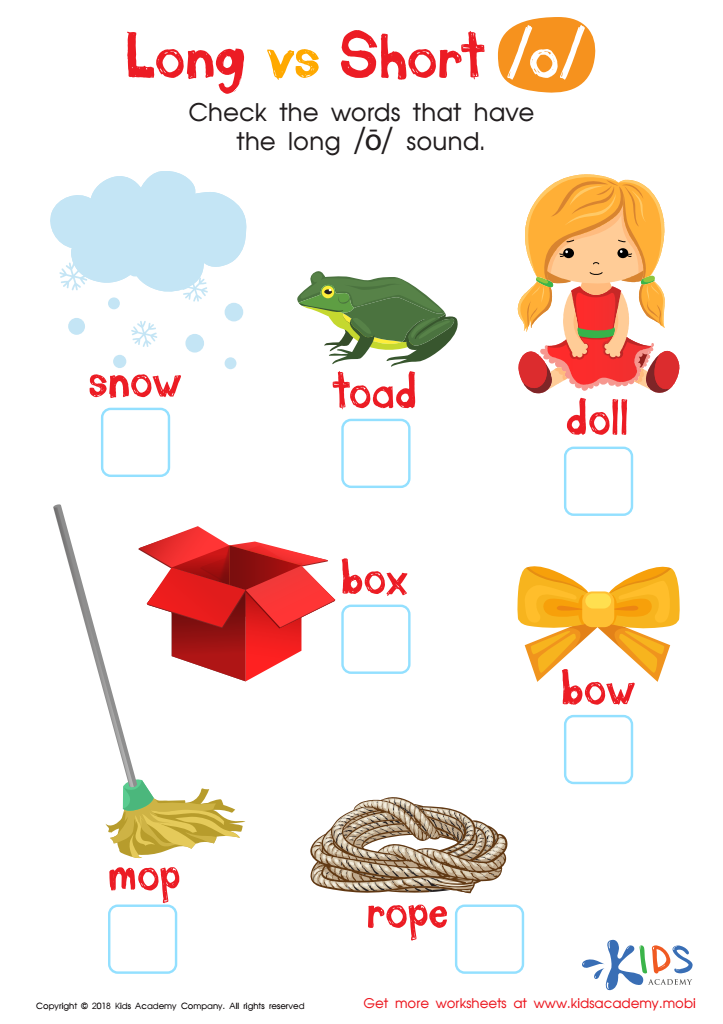
Long vs Short O Reading Worksheet
 Assign to My Students
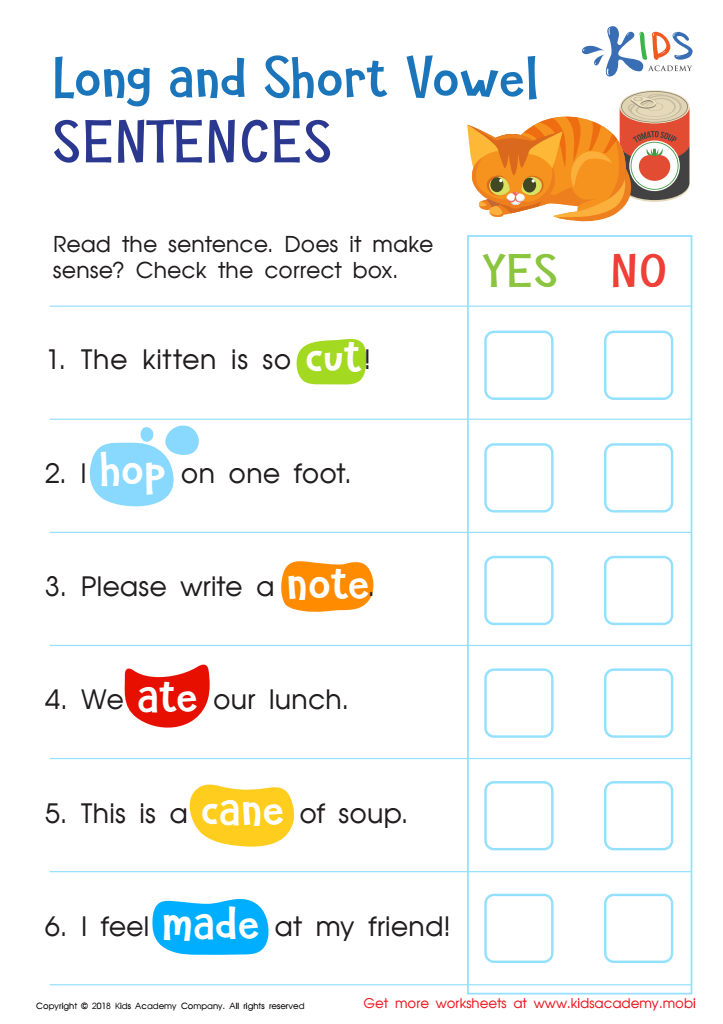
Long and Short Vowel Sentences: Assessment Worksheet
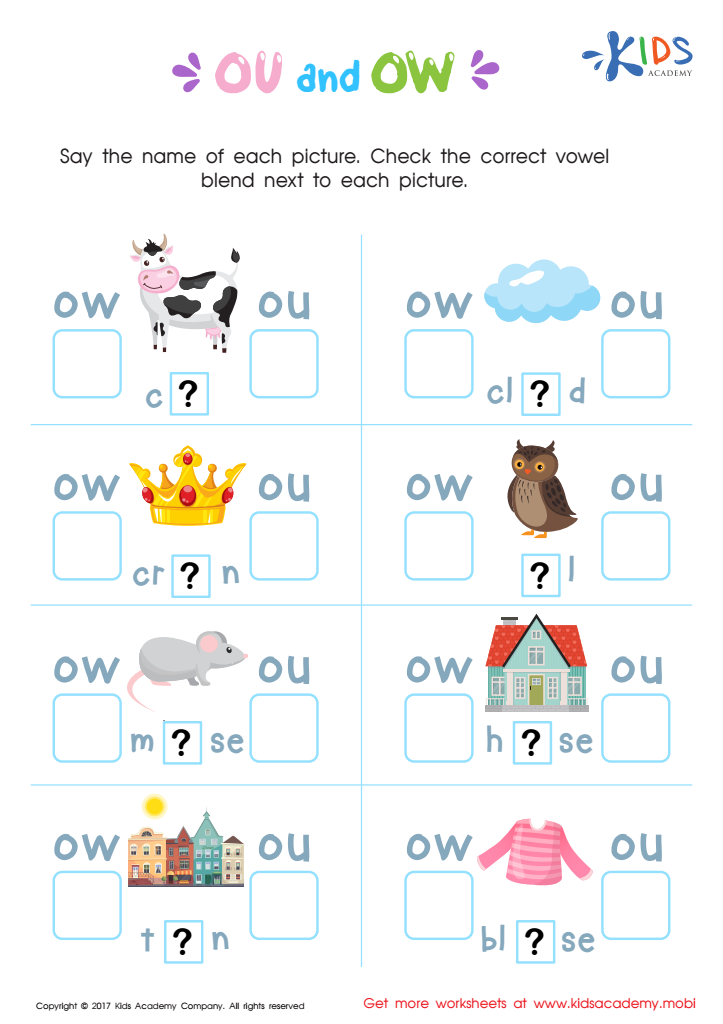
OU and OW Words Worksheet





Sound differentiation of normal vowels is crucial for children aged 6-9, as it lays the groundwork for reading, writing, and effective communication. During these formative years, children are developing their phonemic awareness, which refers to the ability to hear, identify, and manipulate sounds in spoken words. Understanding vowel sound differentiation helps children decode words more accurately, enhancing their reading fluency and comprehension skills.
When children grasp how different vowels function within words, it empowers them to apply this knowledge to spelling, punctuation, and phonics, which are essential literacy skills. For instance, confusing similar vowel sounds can lead to miscommunication and frustration when children express themselves through writing.
Furthermore, mastering vowel sounds can boost a child’s overall confidence in their academic abilities. Teachers and parents can support this process through engaging activities such as storytelling, songs, and games that focus on vowel sounds. By valuing sound differentiation, adults not only foster a love for language but also equip children with essential skills that will benefit them academically and socially, providing a strong foundation for continued learning throughout their educational journey. Therefore, it is paramount for parents and teachers to prioritize and emphasize sound differentiation in vowels during this crucial developmental stage.






