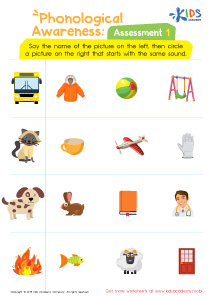
Sound recognition Normal Vowels Worksheets for Ages 6-9
5 filtered results
Difficulty Level
Grade
Age
-
From - To
Subject
Activity
Standards
Welcome to our Sound Recognition Normal Vowels Worksheets for Ages 6-9! Designed for early learners, these engaging resources help children identify and differentiate vowel sounds through fun activities. Each worksheet focuses on a specific vowel, allowing kids to practice sound recognition in a playful and interactive way. With colorful illustrations and age-appropriate exercises, students will enhance their phonemic awareness and foundational reading skills. Perfect for classroom use or at-home learning, our worksheets support a structured approach to literacy development. Explore our collection today and help your child master vowel sounds in a supportive and inspiring learning environment!
Favorites
With answer key
Interactive
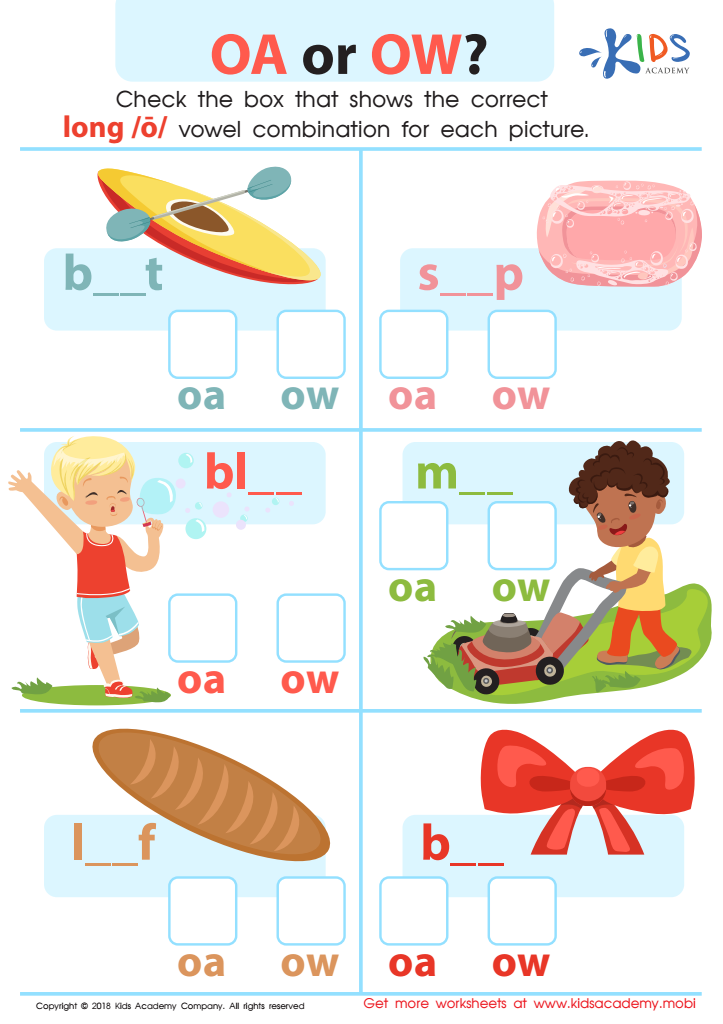
Reading: OA or OW Worksheet
This printable worksheet helps young and emergent readers with decoding words and understanding digraphs (two letters with one sound). It requires students to complete the spelling for each word based on the picture, focusing on /oa/ and /ow/ spellings. It's ideal for a reading classroom and for spelling practice.
Reading: OA or OW Worksheet
Worksheet
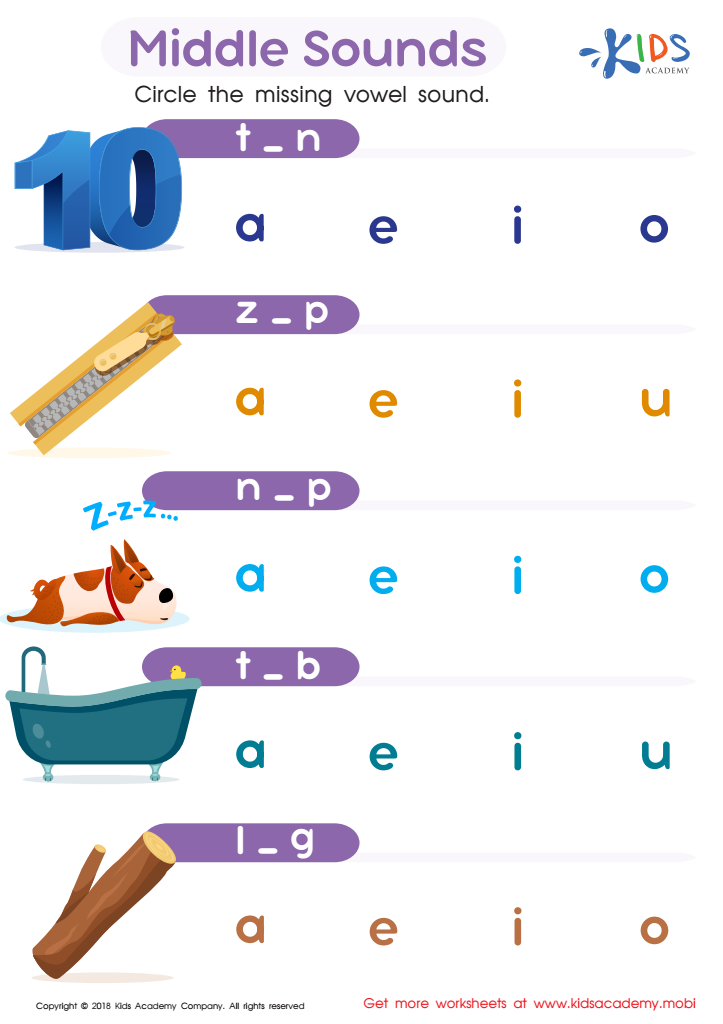
Middle Sounds Worksheet
Download this free worksheet and help your reader identify middle sounds in words. Pictures provide clues to the word, while tracing circles around the middle vowel sound strengthens fine motor and visual discrimination skills. It's a great way to teach sound discrimination between similar-sounding short vowels - a key component for proficient reading.
Middle Sounds Worksheet
Worksheet

Long and Short U Worksheet
Revised: Spice up your lesson on long and short vowels with this fun printout! Kids read the words "tube" and "tub," then reinforce the sound by coloring in the words and pictures. It's a great way to make phonics class enjoyable!
Download (PDF)
 Assign to My Students
Assign to My Students
Long and Short U Worksheet
Worksheet
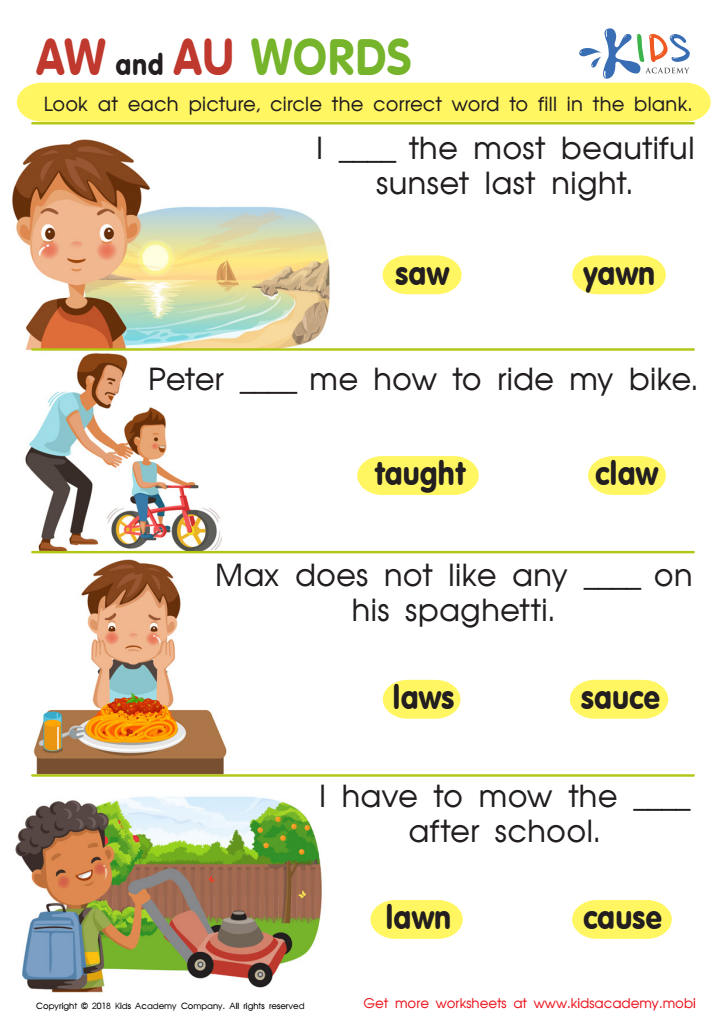
Reading: AW and AU Words Worksheet
This worksheet helps kids recognize that /au/ and /aw/ can make the same sound. Students read sentences and pick the correct word with one of the digraphs. Understanding digraphs improves decoding and reading fluency. Perfect for reading and phonics classes.
Reading: AW and AU Words Worksheet
Worksheet
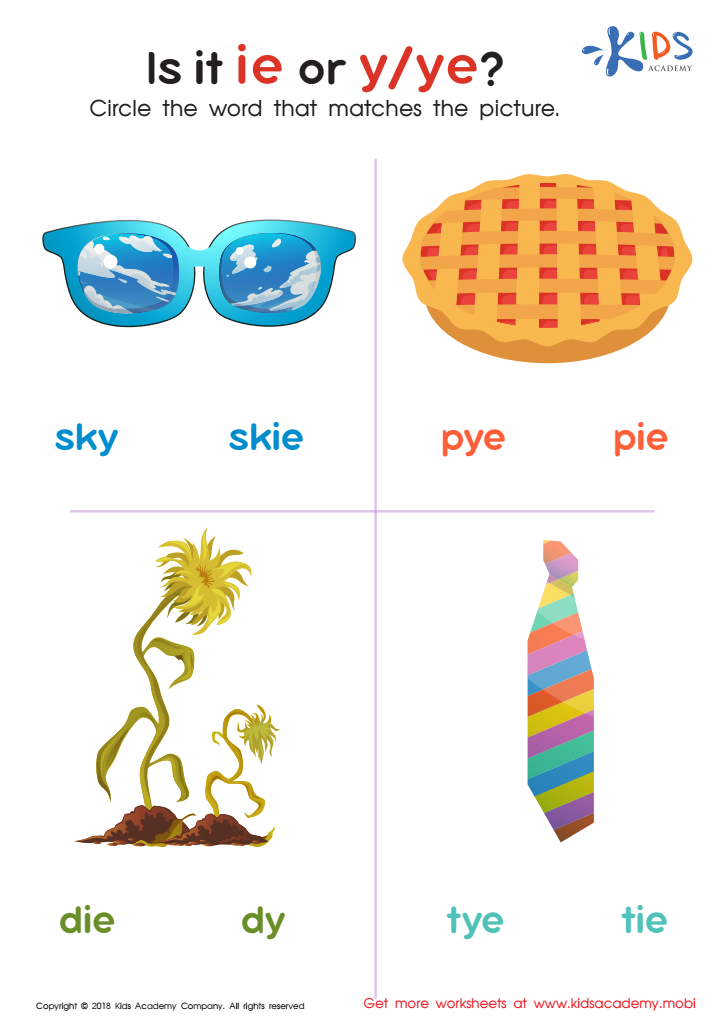
Is It IE or Y/Ye? Worksheet
Test your child's picture identification skills by pointing at common items in your house and asking them to name them. Then, look at the objects in this worksheet with your little one. Point at each one, ask for the name, then ask which spelling is correct. Help them circle the correct word.
Is It IE or Y/Ye? Worksheet
Worksheet
Join Kids Academy for Free
Who is primarily going to use this learning content?





Sound recognition of normal vowels is a critical component of literacy development for children aged 6 to 9. During these formative years, children are learning to read and write, making it essential for them to identify and differentiate vowel sounds accurately. Mastering vowel sounds enhances phonemic awareness, enabling children to decode words more efficiently, which is vital for early reading success.
When parents and teachers emphasize sound recognition, they create a strong foundation for future language skills. Children who confidently recognize and articulate vowel sounds are better equipped to tackle more complex phonics concepts, which directly influences their reading fluency and comprehension in later grades.
Furthermore, enabling strong sound recognition fosters self-esteem and a love for learning, as children experience success in reading tasks and feel encouraged to participate in classroom discussions. Additionally, understanding vowel sounds helps children improve their spelling capabilities, which is crucial for effective written communication.
By prioritizing sound recognition, parents and teachers play an essential role in solidifying literacy skills, paving the way for academic achievement, and instilling confidence in young learners as they navigate their educational journeys.