Basic measurement concepts Normal Worksheets for Ages 6-9
3 filtered results
-
From - To
Explore our "Basic Measurement Concepts Normal Worksheets for Ages 6-9," designed to make learning measurement fun and engaging! These printable worksheets introduce young learners to essential concepts such as length, weight, and volume through colorful illustrations and interactive activities. Tailored for early grade students, our resources foster critical thinking and hands-on experiences, helping children develop essential math skills. Whether you're a teacher or a parent, these worksheets provide a perfect balance of learning and play, ensuring that kids grasp the basics of measurement confidently. Start measuring success today with our easy-to-use worksheets that cater to different learning styles!
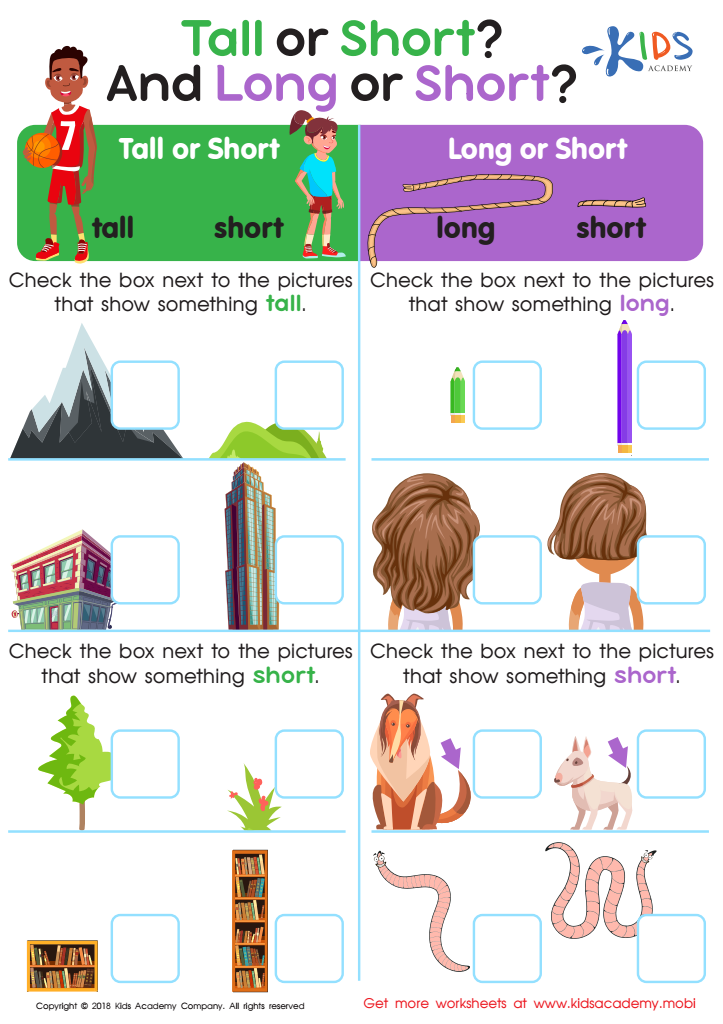
Tall or Short and Long or Short? Worksheet
 Assign to My Students
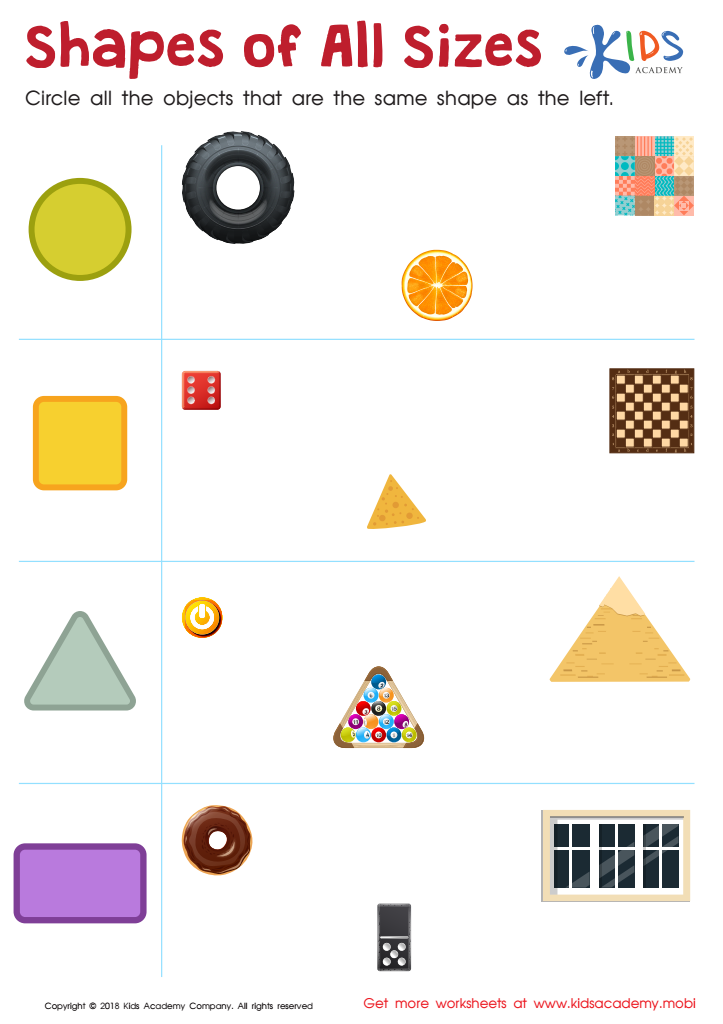
Shapes of All Sizes Worksheet
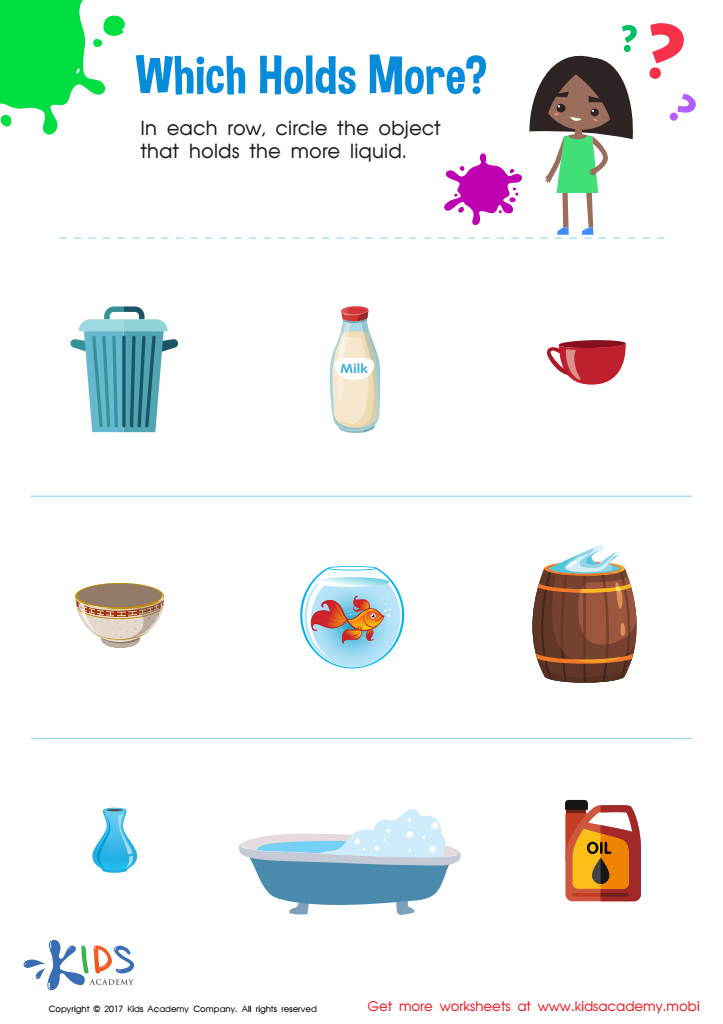
Which Holds More: Capacity Worksheet








Understanding basic measurement concepts is essential for children aged 6-9 as it lays the foundation for their mathematical development and everyday decision-making. At this developmental stage, children start to encounter various measurement tools and terms, such as length, weight, volume, and time. Familiarity with these concepts enhances their ability to comprehend and interact with the world around them.
For parents and teachers, nurturing measurement skills encourages critical thinking and problem-solving. Children learn to compare, contrast, and quantify various attributes, fostering analytical abilities that are crucial for academic success. Through engaging activities like cooking, crafting, or even playing games, children can grasp measurement in a practical and enjoyable context. This hands-on experience reinforces learning, making it meaningful and memorable.
Moreover, measurements are woven into numerous subjects, including science, art, and physical education. When children master these basic concepts, they are better prepared for more complex mathematical topics later on. Supporting students in developing such skills also enhances their confidence, making them more likely to engage with math positively. Overall, prioritizing measurement concepts not only enriches learners’ education but also equips them with valuable skills for everyday life.








