Detail identification Normal Worksheets for Ages 6-9
3 filtered results
-
From - To
Boost your child's attention to detail with our comprehensive "Detail Identification Normal Worksheets" designed for ages 6-9. These printable activities help young learners sharpen their observational skills by focusing on recognizing specific details in various contexts. Ideal for building a strong foundation in critical thinking, these worksheets enhance both reading comprehension and visual discrimination. Perfect for classroom use or at-home practice, each worksheet is crafted to challenge children in a fun and engaging manner. Let your kids enjoy learning while improving important cognitive skills essential for their academic journey. Download now and watch their keen eye for details flourish!
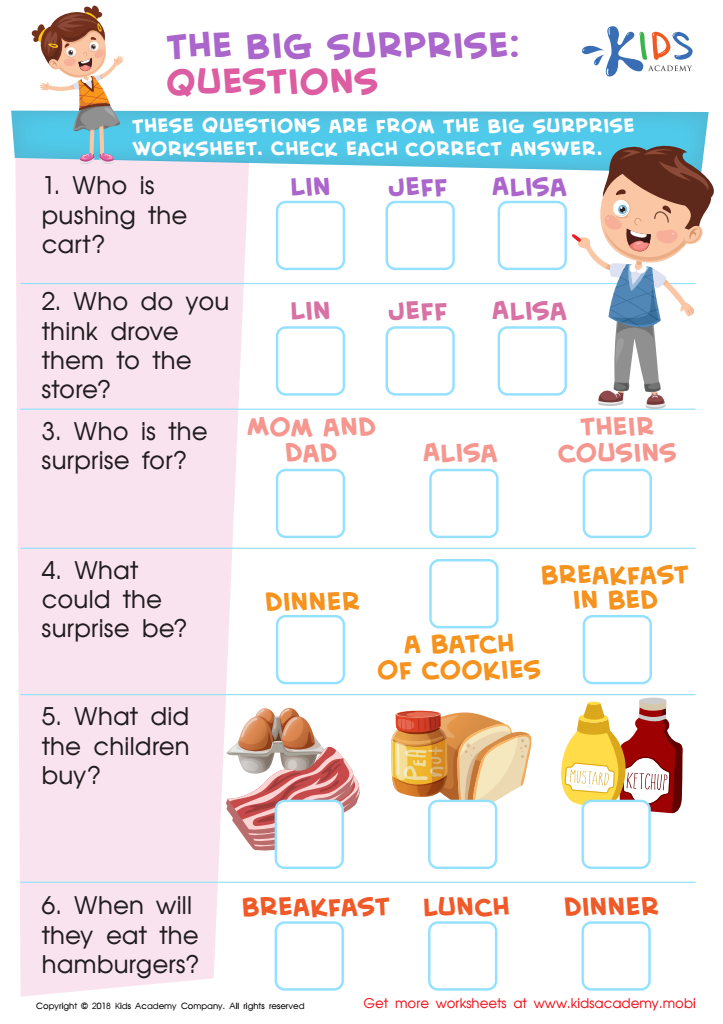
The Big Surprise: Questions Worksheet
 Assign to My Students
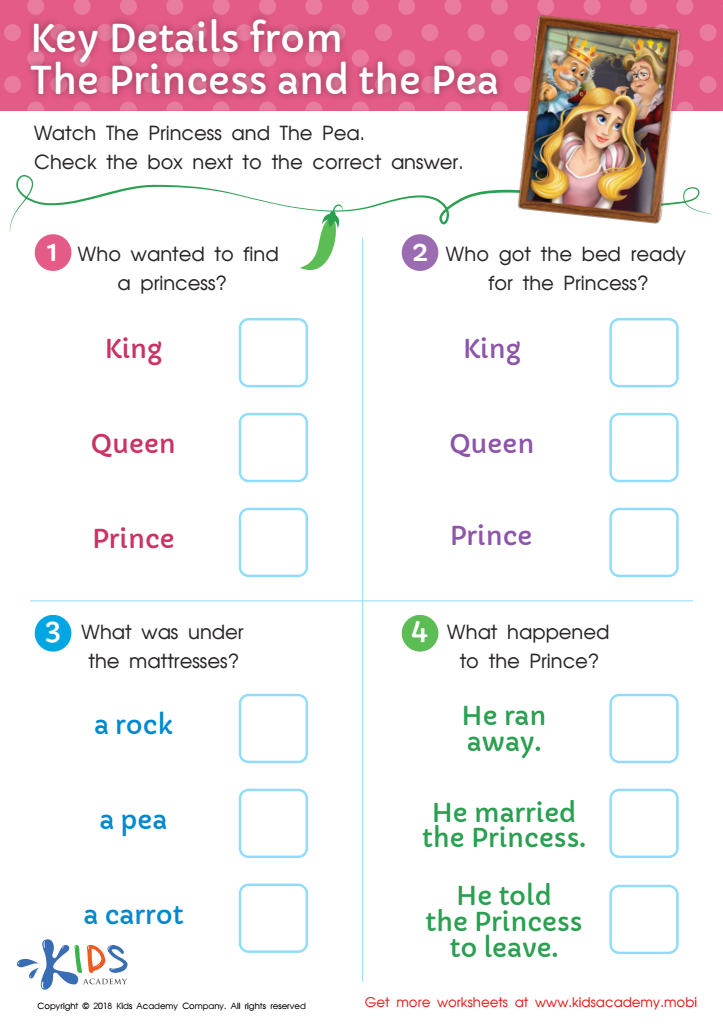
Key Details from the Princess and the Pea Worksheet

Key Details Neighborhoods Worksheet








Detail identification is a crucial skill for children aged 6-9, as it lays the foundation for their reading comprehension, critical thinking, and overall academic success. At this age, children are transitioning from learning to read to reading to learn, and their ability to notice and remember details is essential for understanding and recalling information from texts.
For parents and teachers, prioritizing detail identification helps children improve their focus and observation skills. When kids learn to pick out details in a story, they enhance their understanding of plot, characters, and settings, which in turn makes reading more enjoyable and engaging. This skill also assists in following instructions and completing tasks accurately, fostering independence and confidence in young learners.
Furthermore, the ability to identify details contributes to stronger communication skills. Children become better at describing events, objects, or concepts clearly, which improves both their spoken and written expression. In subjects beyond reading, such as math, science, and social studies, attention to detail ensures that children can grasp complex concepts and solve problems more effectively.
In essence, cultivating detail identification during these formative years equips children with foundational skills that are integral to their lifelong learning journey, making it a focus of importance for any devoted parent or teacher.








