Geography skills Normal Worksheets for Ages 6-9
3 filtered results
-
From - To
Explore our engaging Geography Skills Normal Worksheets designed specifically for children aged 6-9! These worksheets offer a fun and interactive way for young learners to develop essential geography skills, including map-reading, identifying landforms, understanding continents and countries, and much more. Each activity is tailored to enhance critical thinking and boost kids' confidence in their geographical knowledge. With vibrant visuals and age-appropriate challenges, our worksheets provide an enjoyable learning experience for early elementary students. Perfect for home or classroom use, these resources support educators and parents in fostering a love for geography in children. Dive into adventure and exploration today!
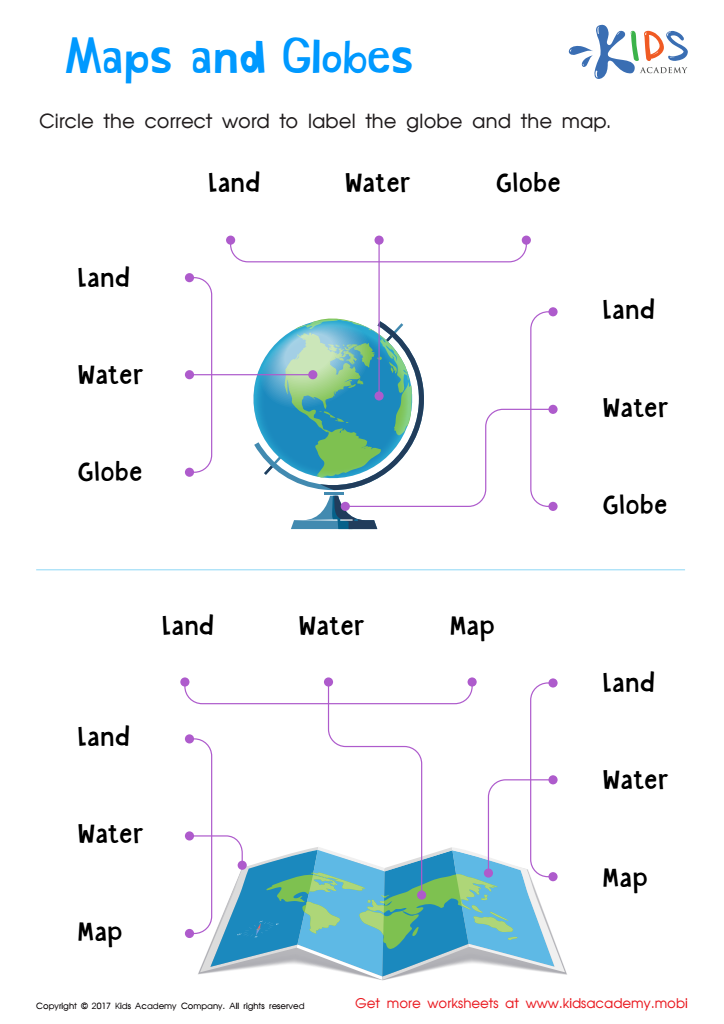
 Assign to My Students
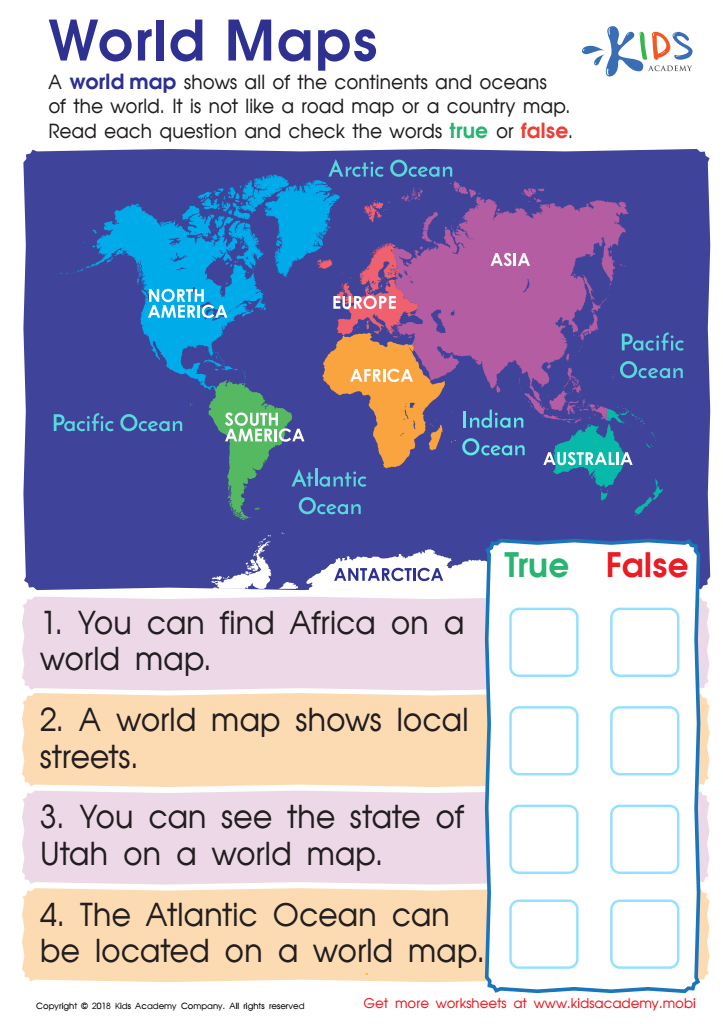
World Maps Worksheet
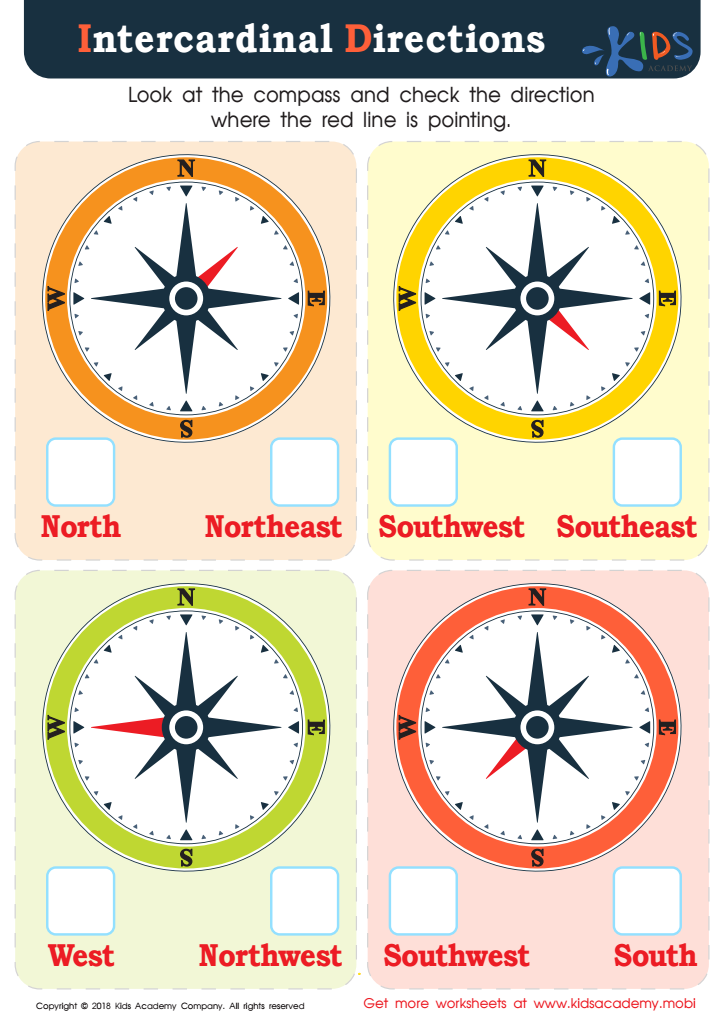
Intercardinal Directions Worksheet







Geography skills are vital for children aged 6-9 as they help develop critical thinking, spatial awareness, and a broader understanding of the world. During these formative years, kids are naturally curious about their environment and the world around them. By nurturing their geography skills, parents and teachers can harness this curiosity to enhance their learning experiences. Understanding basic geography concepts fosters an appreciation for cultural diversity, local and global communities, and the interconnectedness of people and places.
Additionally, geography teaches children how to read maps, understand directions, and recognize significant landmarks, which are essential life skills. It encourages inquiry-based learning, prompting children to ask questions about their surroundings, travel, and historical contexts. These skills lay the groundwork for compassion and awareness, cultivating responsible global citizens who value their role in tackling global issues such as climate change and social inequality.
Moreover, geography is increasingly integrated into various subjects, from literature to science, making it a versatile tool in a child's education. By prioritizing geography skills, parents and teachers equip children with the knowledge and confidence needed to navigate the world, ultimately preparing them for future academic and life challenges.








