Enhance your child's handwriting skills with our engaging normal worksheets designed specifically for ages 6 to 9. These worksheets help young learners develop neat and legible handwriting through fun and interactive exercises. Covering essential skills such as letter formation, spacing, and proper pencil grip, our resources are perfect for both home and classroom use. Each worksheet features colorful illustrations and age-appropriate activities that keep children motivated and excited about learning. With consistent practice, your child will build confidence and improve their writing abilities, setting the foundation for effective communication in the future. Start their handwriting journey today!

Check out this FREE "Handwriting Skills" Trial Lesson for age 6-9!

L

Favorites
With answer key
Interactive
  • 6-9
  • Handwriting Skills
  • Normal
Letter Q worksheets
Letter Q worksheets

Letter Q Tracing Page

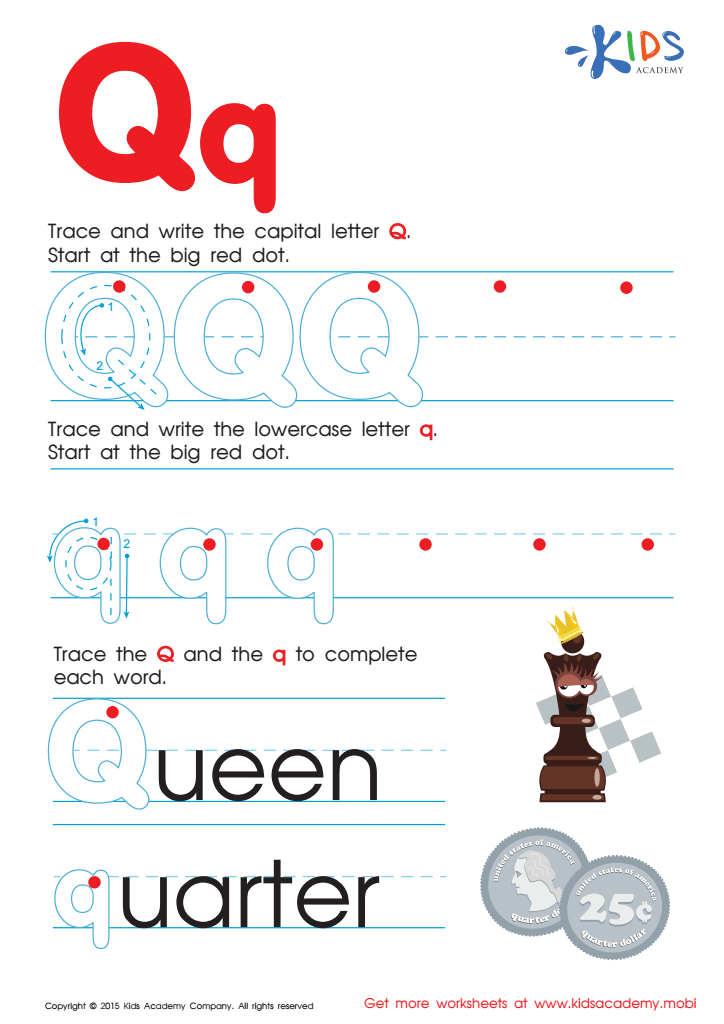
Learn the letter "Q"! Trace and write it a few times in upper and lowercase. Then help the Queen by writing her initial letter. Finally, write "quarters" and practice with more alphabet worksheets.
Letter Q Tracing Page
Worksheet
Letter L worksheets
Letter L worksheets

Letter L Tracing Page

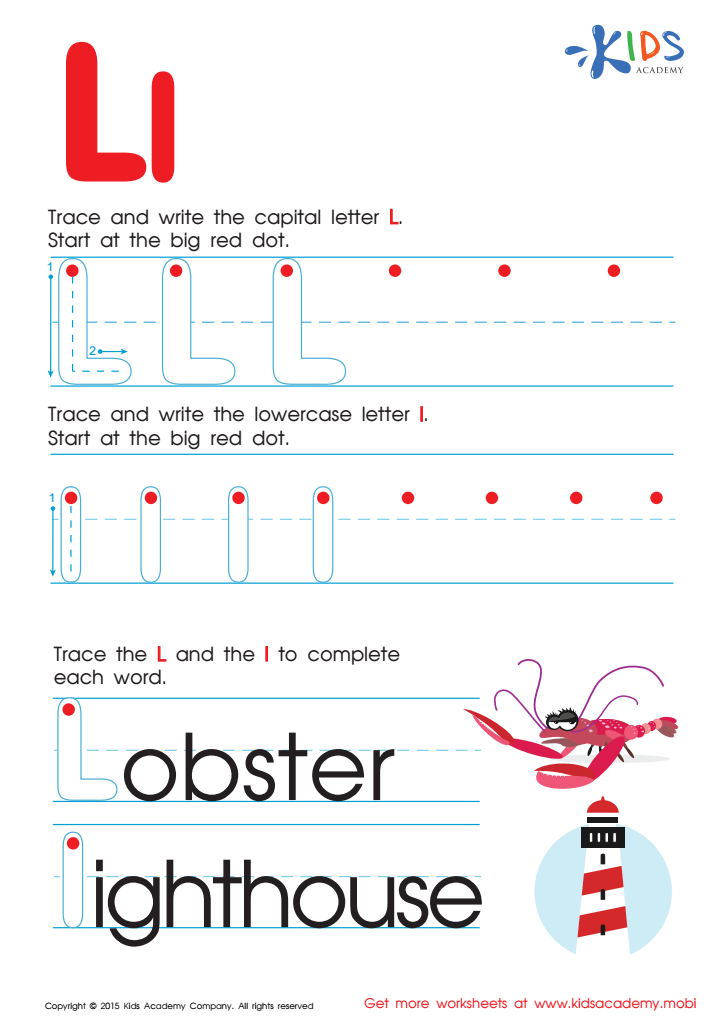
Trace uppercase and lowercase letters to practice writing. Pay attention to the lowercase letters, like the "L", that are not as tall as an uppercase "I" or as short as a lowercase "i". Words like "lobster" and "lighthouse" are waiting to be completed. Enjoy!
Letter L Tracing Page
Worksheet
Kindergarten number tracing worksheet

Kindergarten Number Tracing: Mary's Bag Worksheet
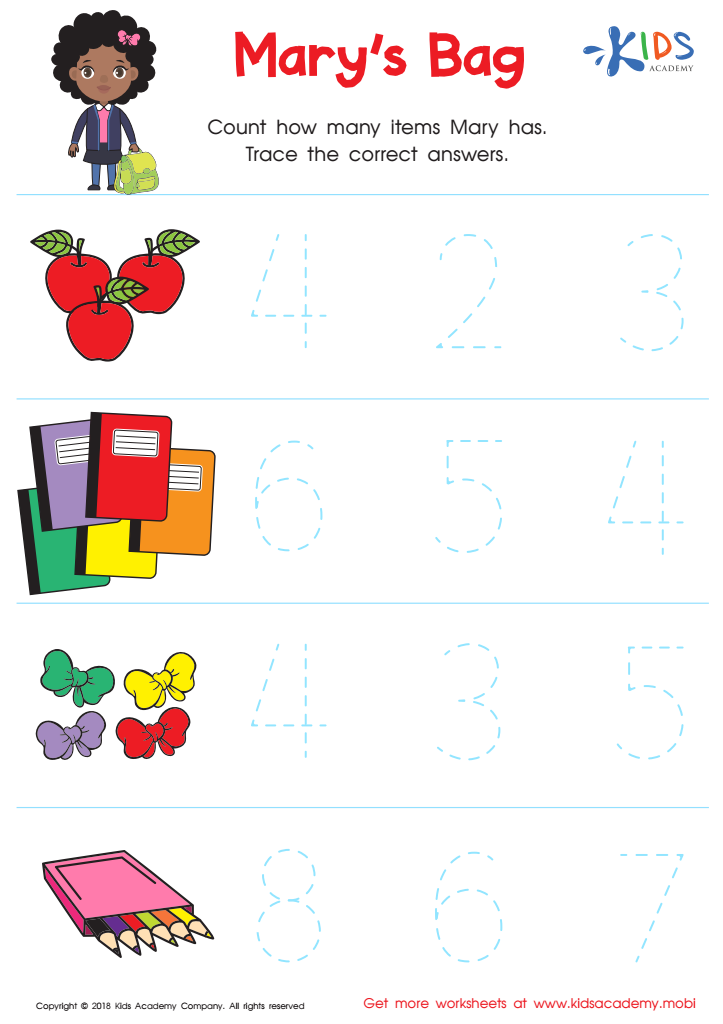
Counting and writing skills are honed with this kindergarten tracing worksheet. Guide Mary in counting the items in her bag then trace the correct number for each. Your child will get a great head start on essential kindergarten skills!
Kindergarten Number Tracing: Mary's Bag Worksheet
Worksheet
letter e worksheets
letter e worksheets

Letter E Tracing Page

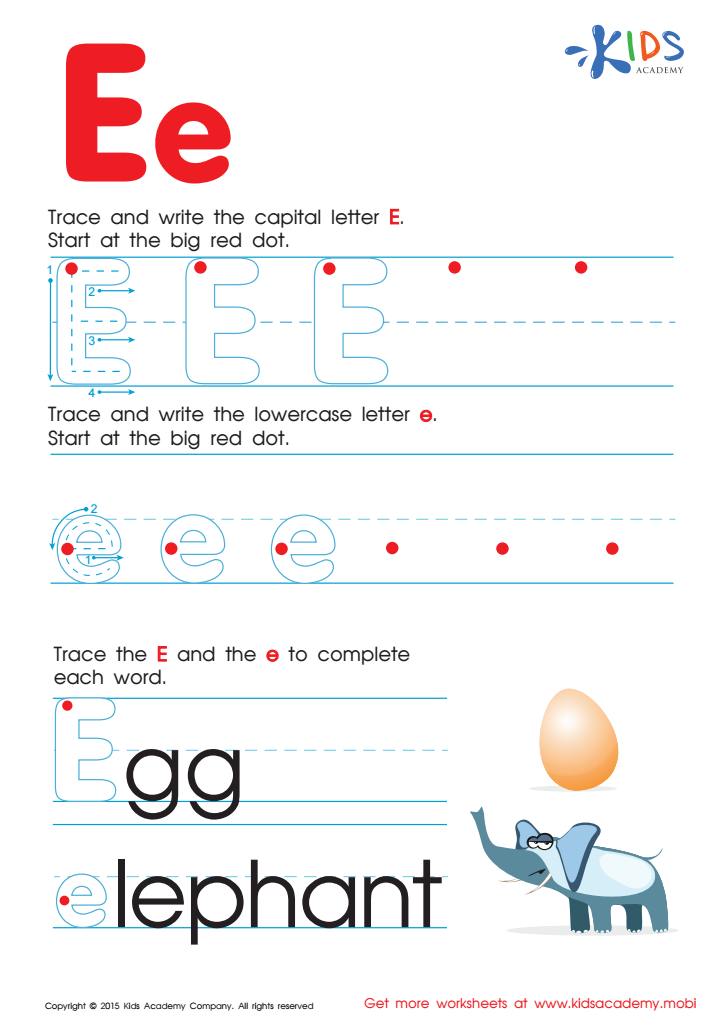
Trace and write the uppercase and lowercase "E" starting at the big red dot. Complete words to perfect letter writing. Egg and Elephant must be written carefully. More alphabet worksheets for kindergarten are available for download to spend more time with your children learning.
Letter E Tracing Page
Worksheet
3D Shapes in Real Life Cone Printable

Shapes in Real Life: Cone Worksheet

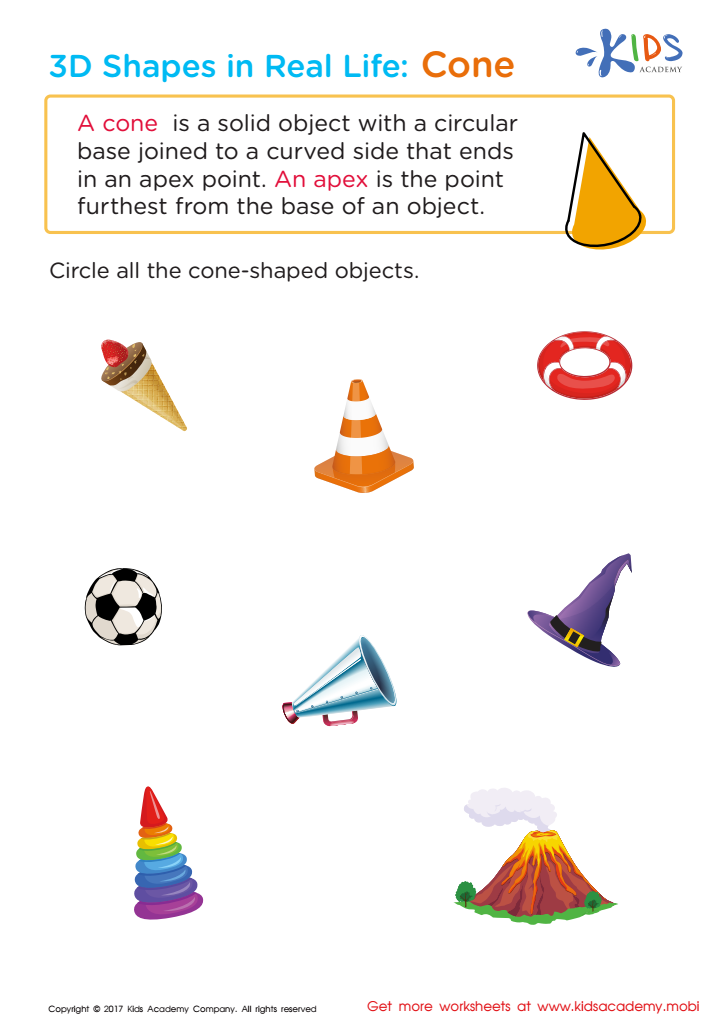
Help your child get ahead in math by learning about geometry, including 3D objects, with this 3D shapes in real life cone worksheet.
Shapes in Real Life: Cone Worksheet
Worksheet
Letter K worksheets
Letter K worksheets

Letter K Tracing Page

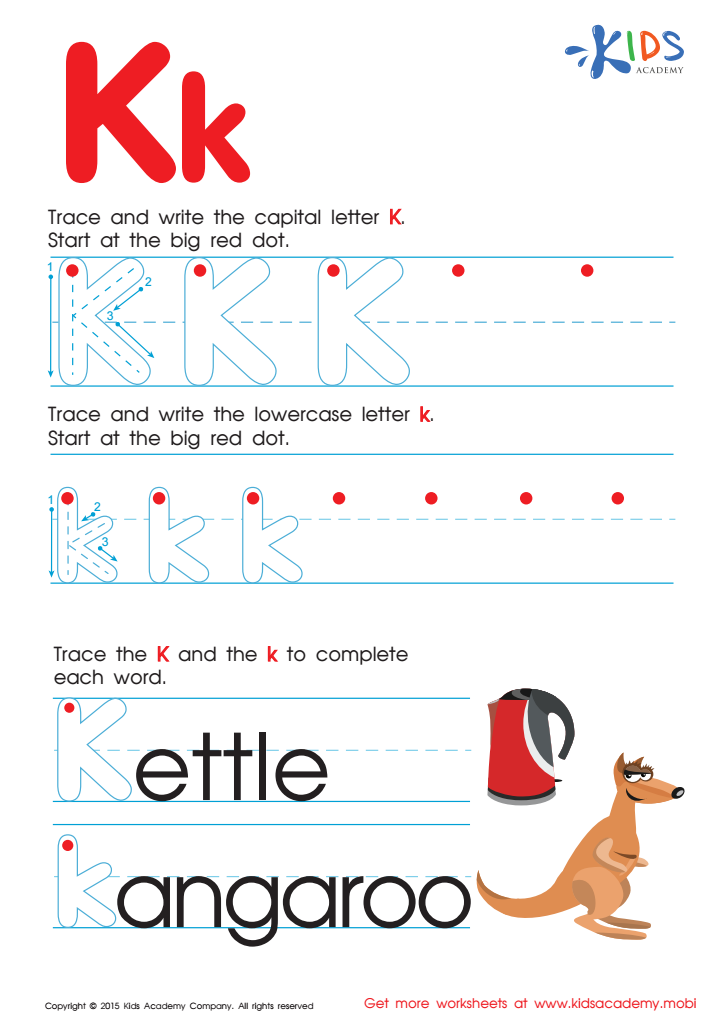
Trace and write the letter K; start at the big red dot. Use it to complete words like "Kettle" and "Kangaroo". Visit Kids Academy for more free alphabet worksheets for kindergarten.
Letter K Tracing Page
Worksheet
letter F worksheets
letter F worksheets

Letter F Tracing Page

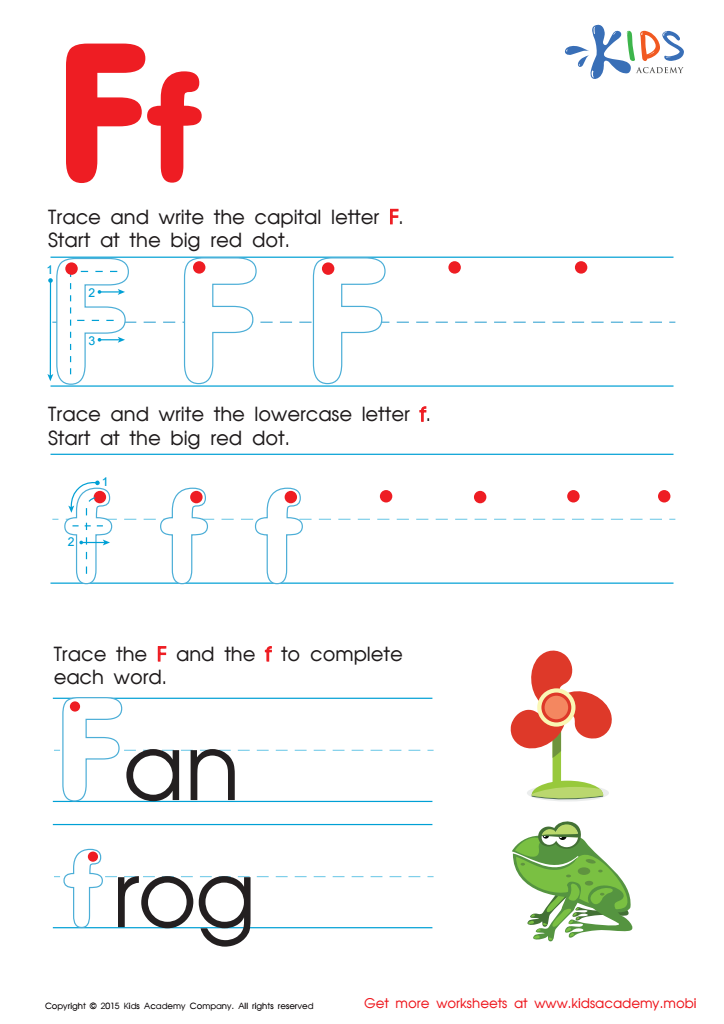
Trace "F" with your pencil! Start at the red dot and draw lines — it's fun! Check it out — it looks great! Keep practicing to make it even better. Then, try completing words. Help out the broken fan and funny frog! Get free alphabet worksheets and activities for your kids. Come see our new tracing pages!
Letter F Tracing Page
Worksheet
Kindergarten number tracing worksheet pdf

Kindergarten Number Tracing: Medow Flowers Worksheet

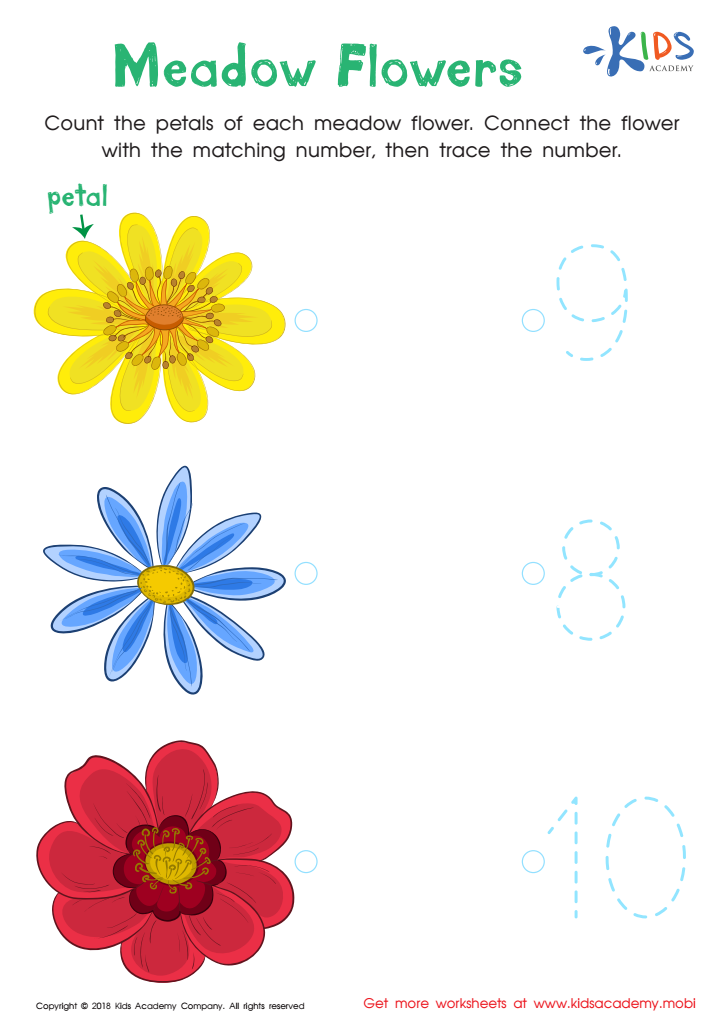
Take your child to the garden to count flower petals and trace numbers with this fun kindergarten PDF worksheet. They'll learn to count and write, all while enjoying the sweet scent of the flowers.
Kindergarten Number Tracing: Medow Flowers Worksheet

Worksheet


Handwriting skills are crucial for children aged 6-9 as they lay the foundation for effective communication and academic success. During this developmental stage, children are mastering the basic concepts of writing, including letter formation, spacing, and the mechanics of holding a pencil. Good handwriting contributes to a child’s ability to express their thoughts clearly and legibly, which boosts their confidence in sharing ideas.

Moreover, handwriting integrates cognitive, motor, and visual skills, enhancing brain development. The act of writing by hand engages areas of the brain involved in thinking and learning, which can lead to improved memory retention and comprehension.

In the classroom, neat handwriting can positively influence teachers’ perceptions of a child’s effort and abilities, impacting assessment results and potential support. Poor handwriting can create barriers to learning, causing frustration and decreased motivation in students.

Furthermore, as technology advances, the importance of handwriting remains relevant—it contributes to the development of an individual’s identity and personal expression. Parents and teachers play a vital role in nurturing these skills, ensuring that children not only learn the mechanics of writing but also appreciate its lifelong importance in communication and education. Investing time in handwriting development sets the stage for future success.