Historical Knowledge Normal Worksheets for Ages 6-9 - Page 2
27 filtered results
-
From - To
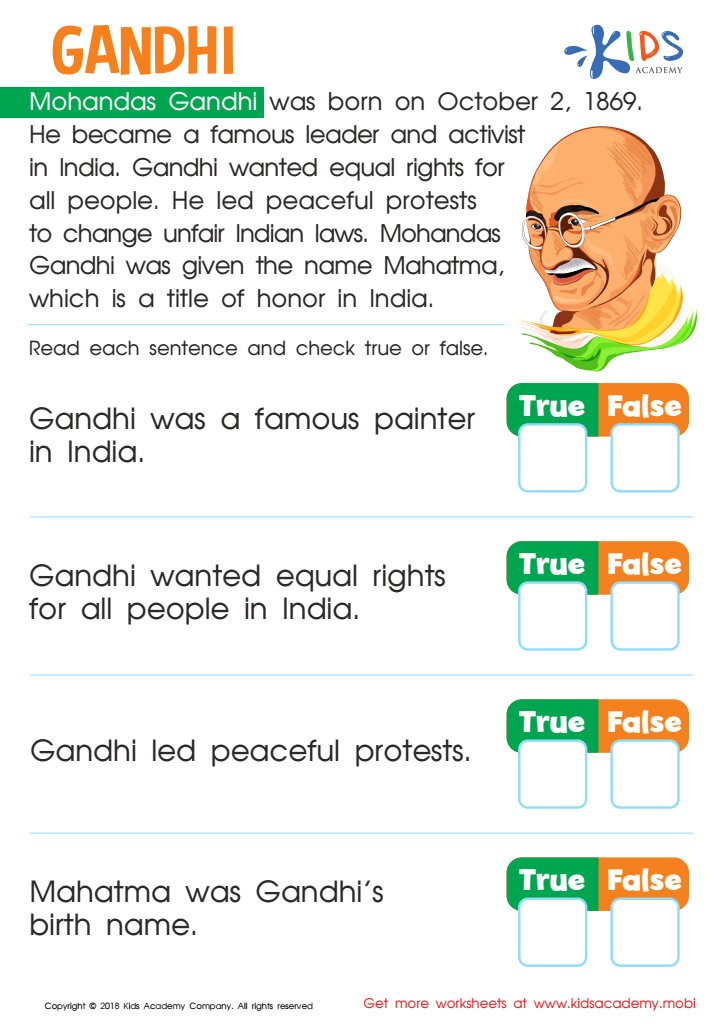
Gandhi Worksheet
 Assign to My Students
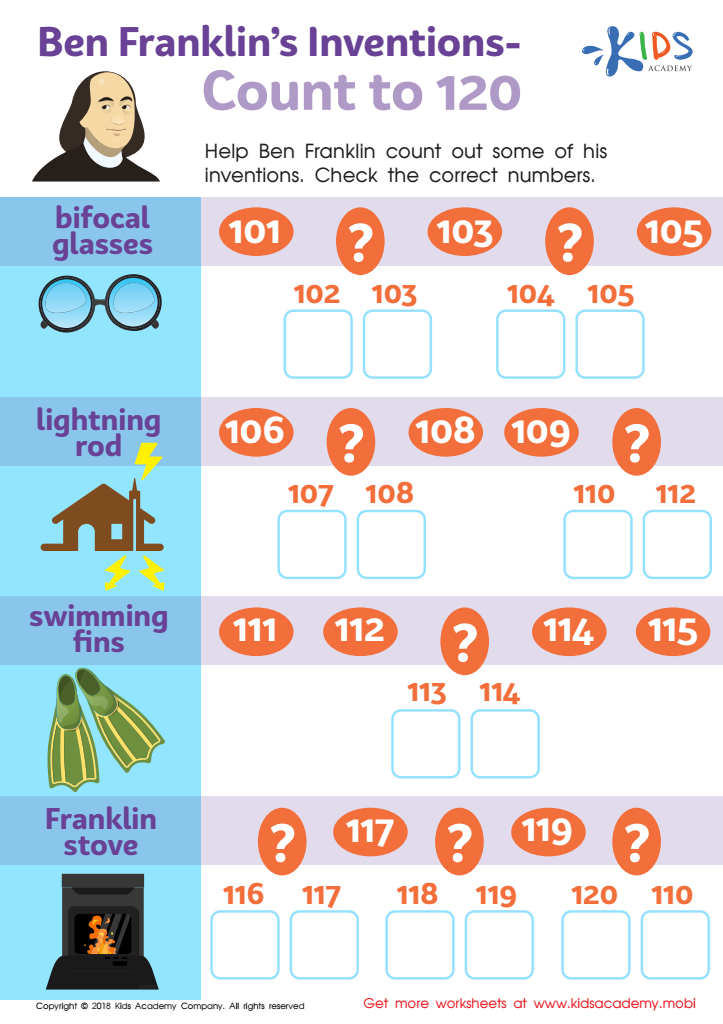
Ben Franklin’s Inventions – Count to 120 Worksheet
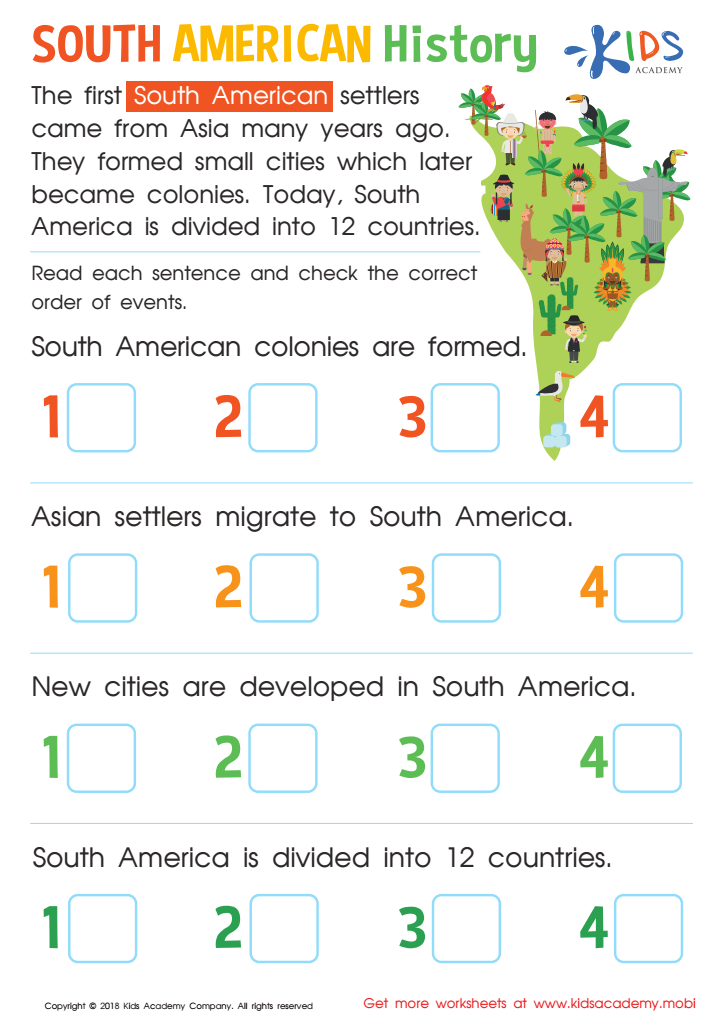
South American History Worksheet




.jpg)


Parents and teachers should value historical knowledge for children aged 6-9 because it forms the foundation of a well-rounded education and fosters their understanding of the world. At this age, children are highly curious, their minds are open to learning about the past, and they are beginning to form the ability to understand complex concepts such as cause and effect, timelines, and cultural differences.
Introducing historical knowledge early provides context for the present, helping kids understand how and why the world around them has come to be. It also encourages them to appreciate diversity by learning about different civilizations, traditions, and influential figures from the past. Knowing history fosters a sense of identity and belonging as children learn about their own heritage and the broader human story.
Furthermore, teaching history enhances critical thinking skills. As students analyze events, figures, and trends, they learn to evaluate sources, identify biases, and discern the reasons behind occurrences. This practice cultivates their reasoning abilities and informs their decision-making processes.
Finally, engaging historical knowledge through stories, artifacts, and interactive activities can be deeply engaging and fun for young learners. This positive early experience with history can foster a lifelong interest in learning and understanding the world. For these reasons, imparting historical knowledge to children aged 6-9 is crucial for their cognitive and social development.








