
Identifying patterns Normal Worksheets for Ages 6-9
3 filtered results
Difficulty Level
Grade
Age
-
From - To
Subject
Activity
Standards
Discover the joy of learning with our "Identifying Patterns Normal Worksheets" designed specifically for children aged 6-9. These engaging worksheets help develop critical thinking as students recognize and create patterns in various forms, fostering essential math and analytical skills. Perfect for at-home learning or classroom activities, our resources encourage creativity and enhance cognitive development through fun and interactive tasks. With colorful graphics and diverse exercises, children will stay motivated while mastering pattern recognition. Explore our collection today to make learning a delightful adventure for your young learners! Visit us now to access printable worksheets tailored for early education.
Favorites
With answer key
Interactive
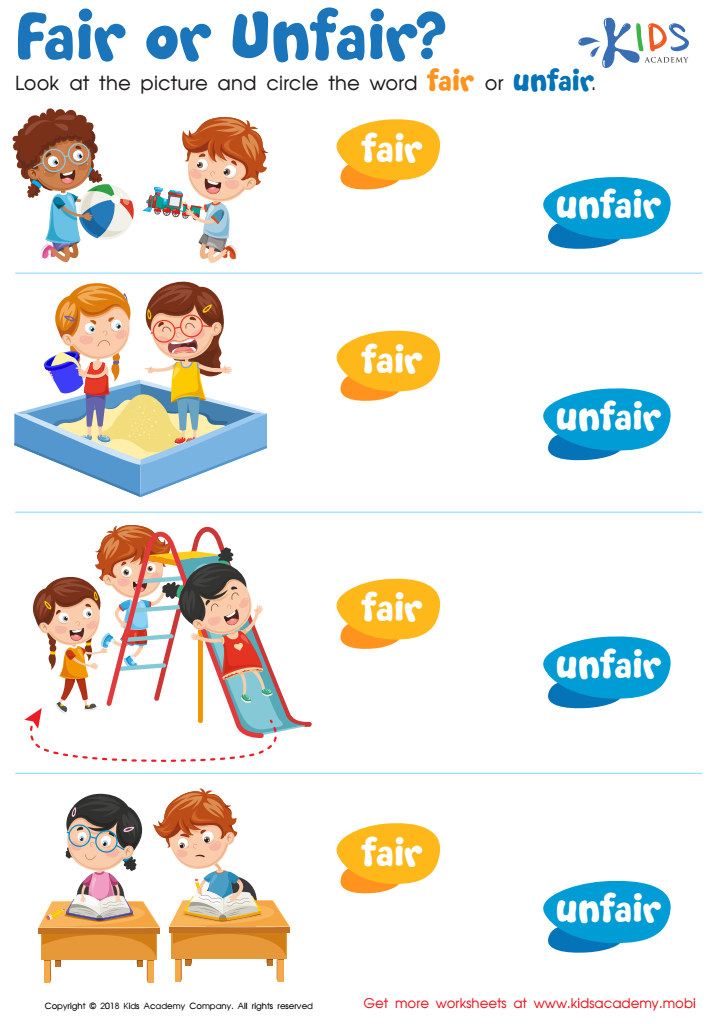
Fair or Unfair Worksheet
Look at the pictures in this worksheet with kids. Can they tell if the actions are fair or unfair? Help them decide and circle the appropriate option. When something causes harm to one person, it is unfair; when all parties benefit, it is fair.
 Assign to My Students
Fair or Unfair Worksheet
Worksheet
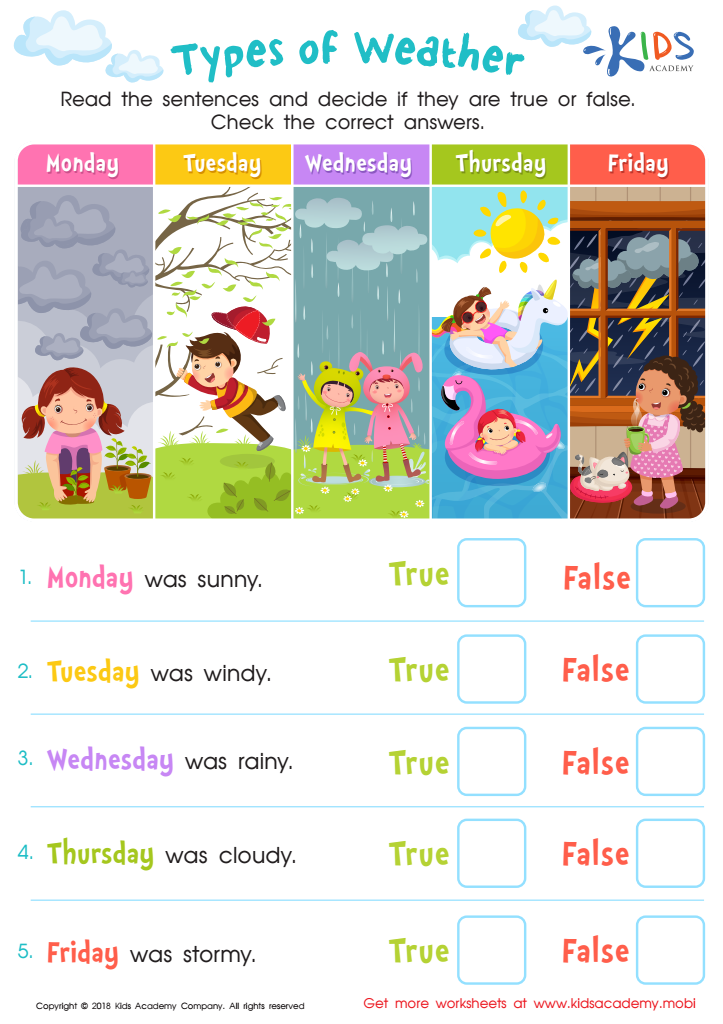
Types of Weather Worksheet
This worksheet will test your child's knowledge of the weather. Show them the pictures of five days of the week, each with a different weather and ask them to describe it. Then read the sentences and ask if they're true/false. Help them find the right answers.
Types of Weather Worksheet
Worksheet
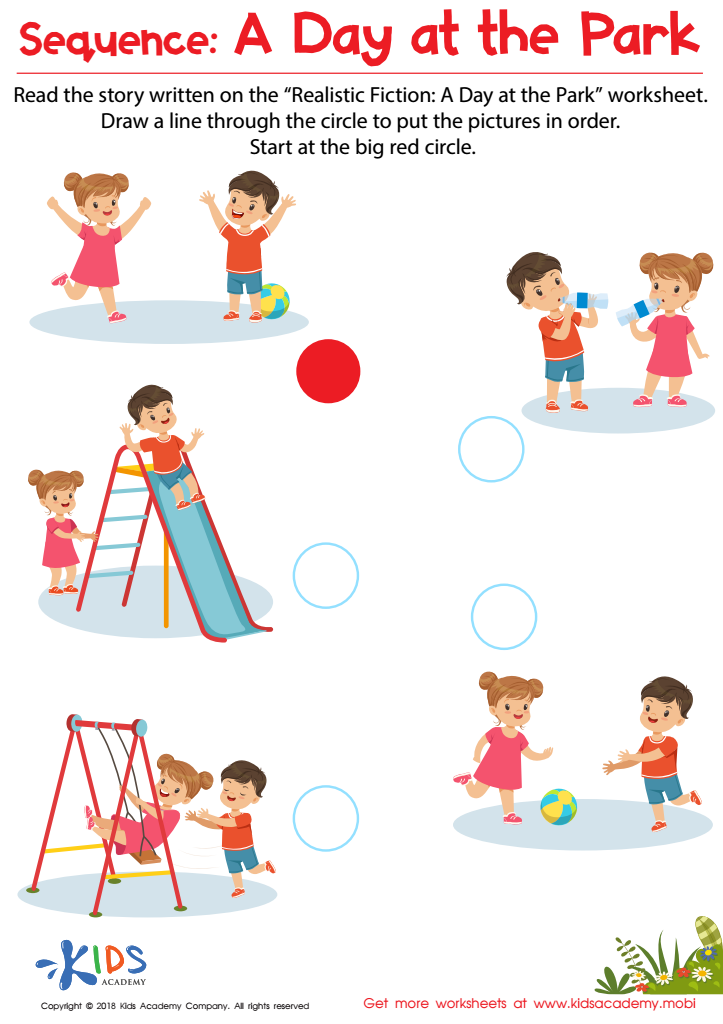
Sequence: A Day at the Park Worksheet
Help your child sequence the events of the story they just read with this activity! Start with the big red circle and draw lines to the other circles next to the images in the correct order. It's a great way to practice their reading skills! Try this downloadable worksheet today!
Sequence: A Day at the Park Worksheet
Worksheet
Join Kids Academy for Free
Who is primarily going to use this learning content?








Identifying patterns is a fundamental skill for children aged 6 to 9, and parents and teachers should prioritize its development for several reasons. First, pattern recognition lays the groundwork for critical thinking and problem-solving abilities. When children learn to recognize and predict patterns, they boost their cognitive skills, which are essential for mathematics, science, and even language development.
Moreover, understanding patterns enhances children's awareness of the world around them. Whether they are distinguishing between alternate colors in art, recognizing sequences in nature, or observing daily routines, patterns help children make sense of their environment. This skill contributes to their overall cognitive organization and the ability to forecast outcomes based on observations.
Additionally, recognizing patterns fosters creativity. It allows children to make connections between ideas, which can spark innovative thinking and exploration in various subjects. Lastly, pattern identification encourages collaboration and communication skills, as children may work together to discover and discuss patterns, enriching their social interactions.
By actively supporting and engaging children in pattern recognition activities, parents and teachers encourage a spirited learning atmosphere that promotes curiosity, a foundation for future learning, and prepares children for academic success.








