Moral understanding Normal Worksheets for Ages 6-9
5 filtered results
-
From - To
Discover our engaging Moral Understanding Worksheets designed for children aged 6-9. These resources aim to cultivate essential social skills and ethical reasoning in young learners. With a variety of interactive exercises, kids will explore concepts like empathy, respect, sharing, and honesty through fun activities. Each worksheet encourages critical thinking and reflection, allowing children to relate moral lessons to real-life scenarios. Perfect for classrooms or home use, our comprehensive selection supports educators and parents in nurturing well-rounded individuals. Begin your child’s journey in moral development today with our user-friendly worksheets filled with vibrant illustrations and stimulating content!
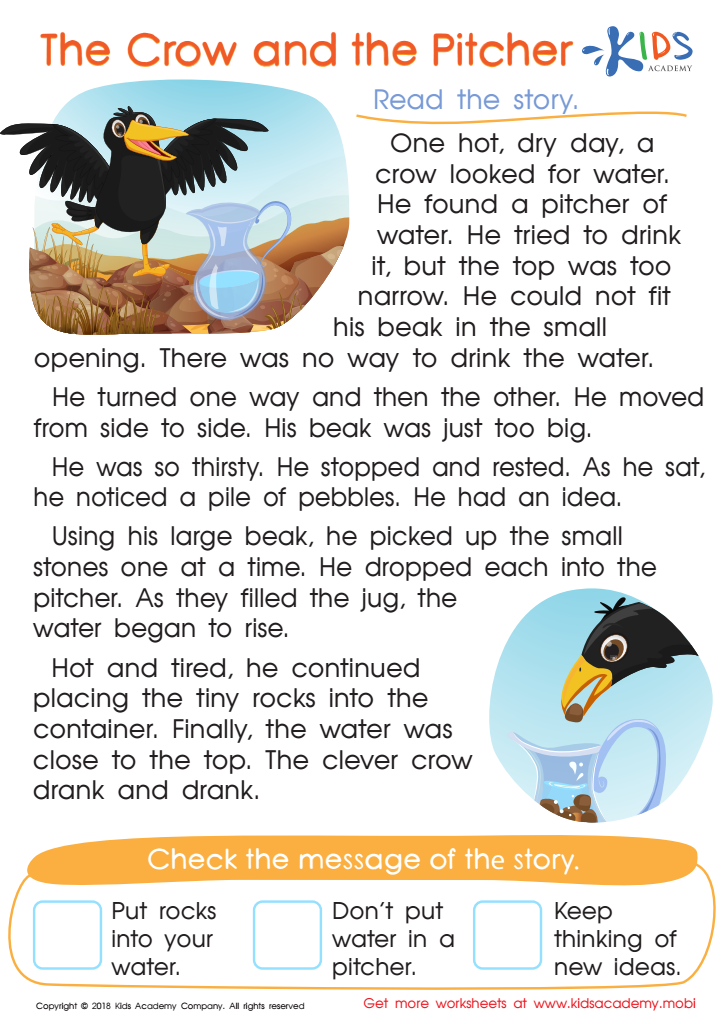
The Crow and the Pitcher Worksheet
 Assign to My Students
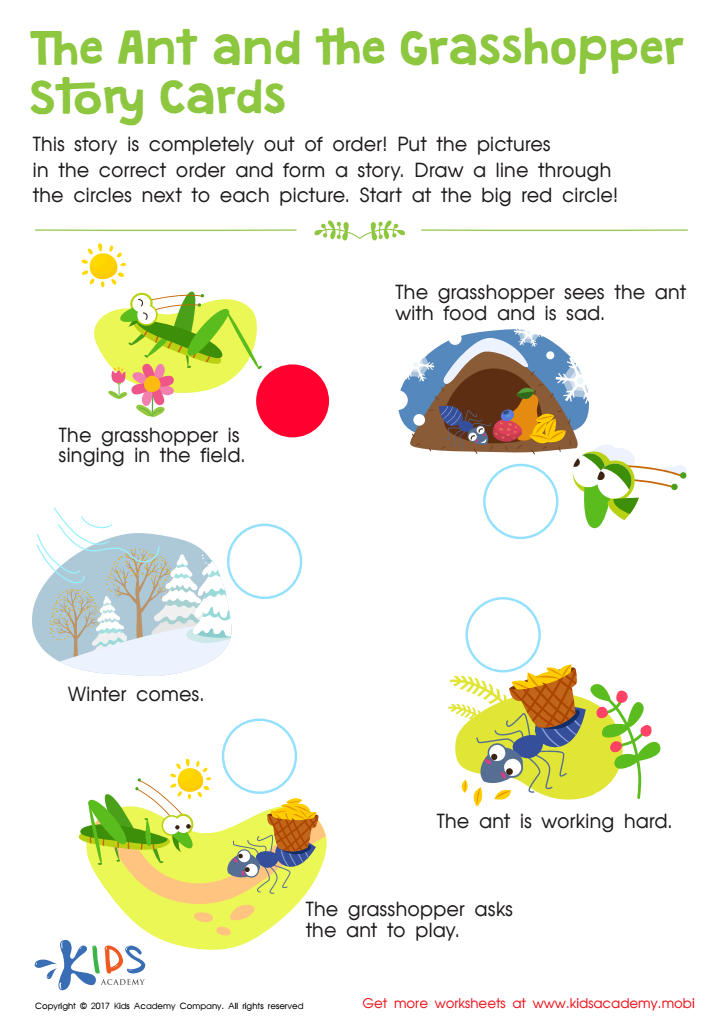
The Ant and The Grasshopper Worksheet
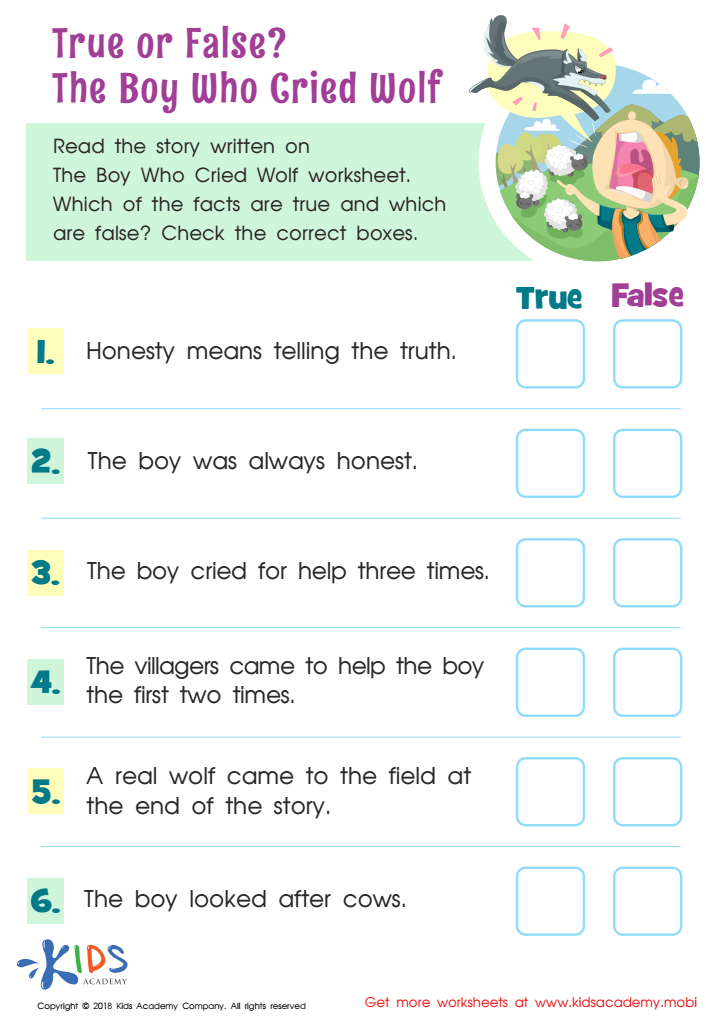
True or False? The Boy Who Cried Wolf Worksheet
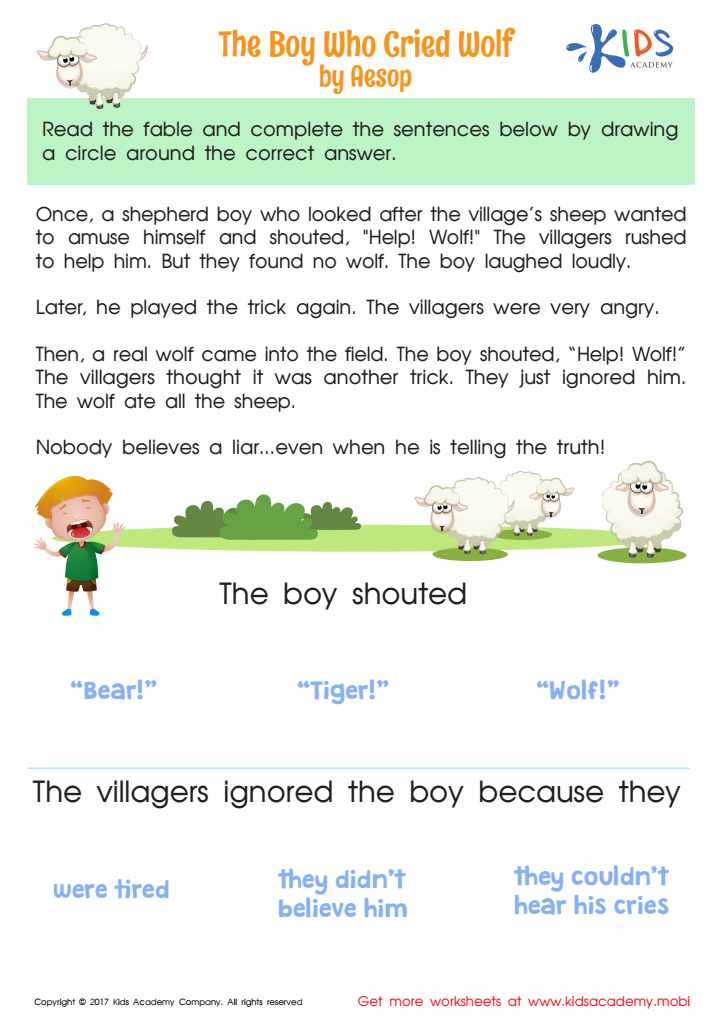
The Boy Who Cried Wolf Worksheet
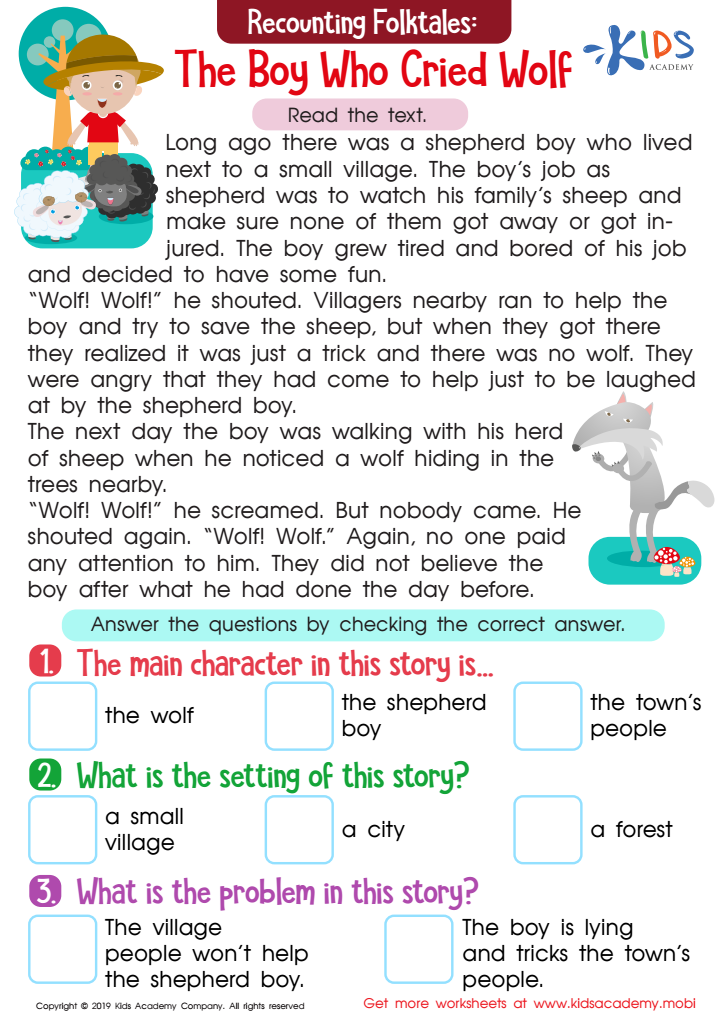
The Boy Who Cried Wolf Part 1 Worksheet








Moral understanding in children aged 6-9 is essential for their holistic development and social integration. At this stage, children begin to form their own beliefs about right and wrong, often influenced by family, peers, and teachers. Therefore, parents and educators play a critical role in guiding this process.
First, moral understanding helps children develop empathy, enabling them to recognize and respect the feelings and perspectives of others. This skill is vital for building strong, trusting relationships and fostering a sense of community. Furthermore, engaging children in discussions about moral dilemmas encourages critical thinking, allowing them to evaluate choices and consequences.
Additionally, instilling values during these formative years lays the groundwork for responsible citizenship. Children who understand ethical concepts are more likely to contribute positively to society, making informed decisions as they grow. This understanding also fosters resilience as children learn to cope with challenges and injustices in a constructive manner.
Ultimately, nurturing moral understanding helps create a safe and supportive environment conducive to learning. Parents and teachers should prioritize this aspect of development, as it shapes not only academically successful individuals but also compassionate and well-rounded members of society.








