Reading analog clocks Normal Worksheets for Ages 6-9
3 filtered results
-
From - To
Our "Reading Analog Clocks Normal Worksheets" are designed for children ages 6 to 9 and provide a fun, engaging way to learn to tell time. Each worksheet features colorful, easy-to-read analog clocks and a variety of exercises to help kids grasp the concept of hours and minutes. Our printable resources are perfect for classroom or home use and are adapted to gradually build your child's confidence and skills in reading analog clocks. Unlock the joy of learning time with these expertly crafted worksheets from Kids Academy, specially tailored to support your young learner's growth and development.
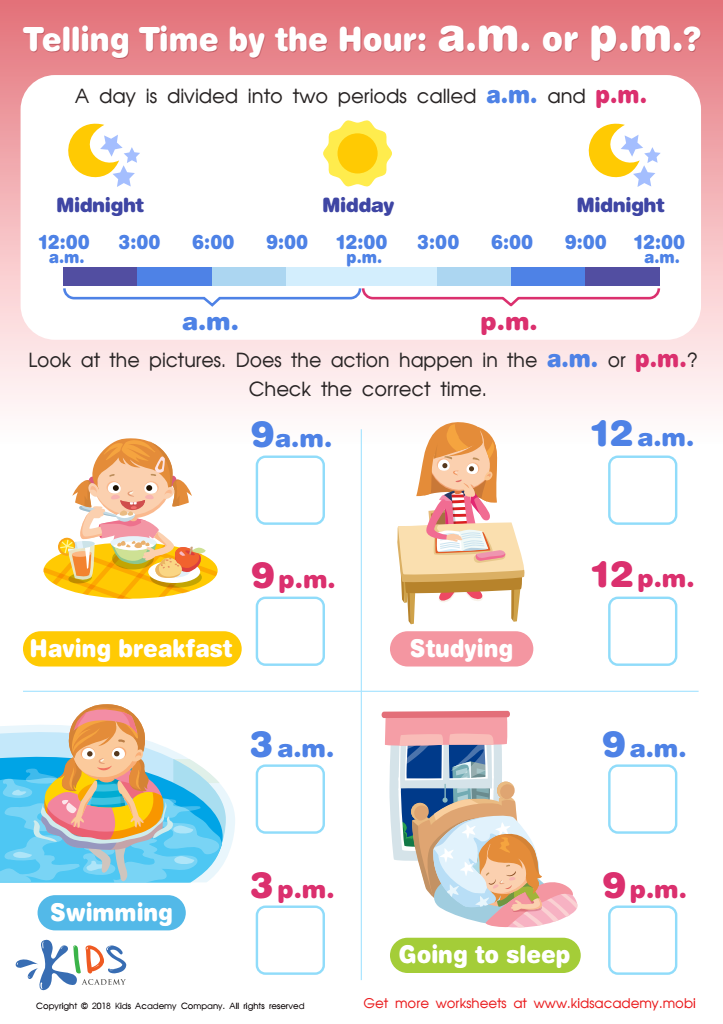
Tilling Time by the Hour: a.m. or p.m.? Worksheet
 Assign to My Students
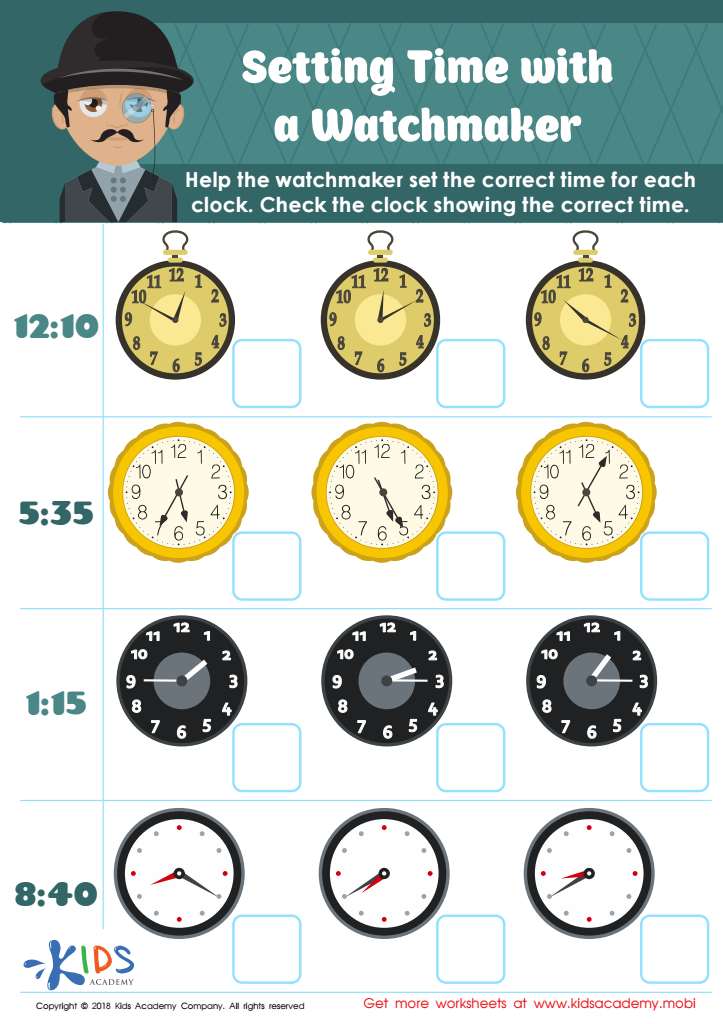
Setting Time with Watchmaker Worksheet
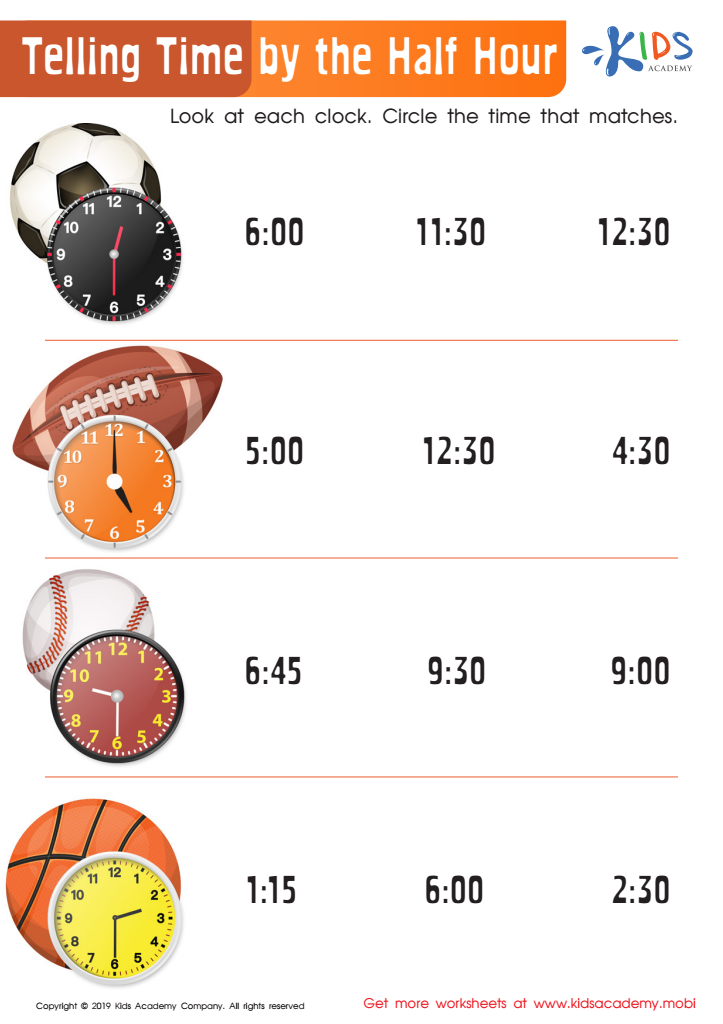
Telling Time by the Half Hour Worksheet


.jpg)



Understanding how to read analog clocks is an essential skill for children aged 6-9, and it's crucial that parents and teachers prioritize this aspect of early education. Analog clocks help children develop a sense of time that can't always be gleaned from digital clocks. This skill promotes cognitive development, as it necessitates a conceptual grasp of the passage of time, sequencing events, and spatial thinking.
First, learning to read an analog clock enhances mathematical skills. Children practice counting by fives, learn about fractions, and reinforce their understanding of numbers. Second, it cultivates a child’s ability to sense duration and to manage their time effectively. This early understanding can assist in structuring their day and establishes the groundwork for time-management skills they'll need in the future.
Moreover, analog clocks are still prevalent in many environments, including schools, homes, and public places. Knowing how to read them ensures that children aren't disadvantaged in settings where digital clocks may not be available. Ensuring that children aged 6-9 can read analog clocks empowers them with the confidence and independence to interpret and manage time, which is pivotal to their daily routines and overall learning journey. Effective time-related instruction enriches their academic progress and the quality of their everyday experiences.








