
Reading thermometers Normal Worksheets for Ages 6-9
3 filtered results
Difficulty Level
Grade
Age
-
From - To
Subject
Activity
Standards
Welcome to our Reading Thermometers Normal Worksheets for ages 6-9! Designed to boost your child's understanding of temperature and measurement, these engaging worksheets will provide hands-on practice. Students will learn to read thermometers, understand temperature scales, and draw conclusions based on the data presented. Bright colors and fun illustrations make learning enjoyable, while various activities cater to different learning styles. Perfect for classroom or home use, these worksheets help build essential math and science skills in a playful and approachable way. Start your educational journey now and watch your child's confidence in reading thermometers soar!
Favorites
With answer key
Interactive
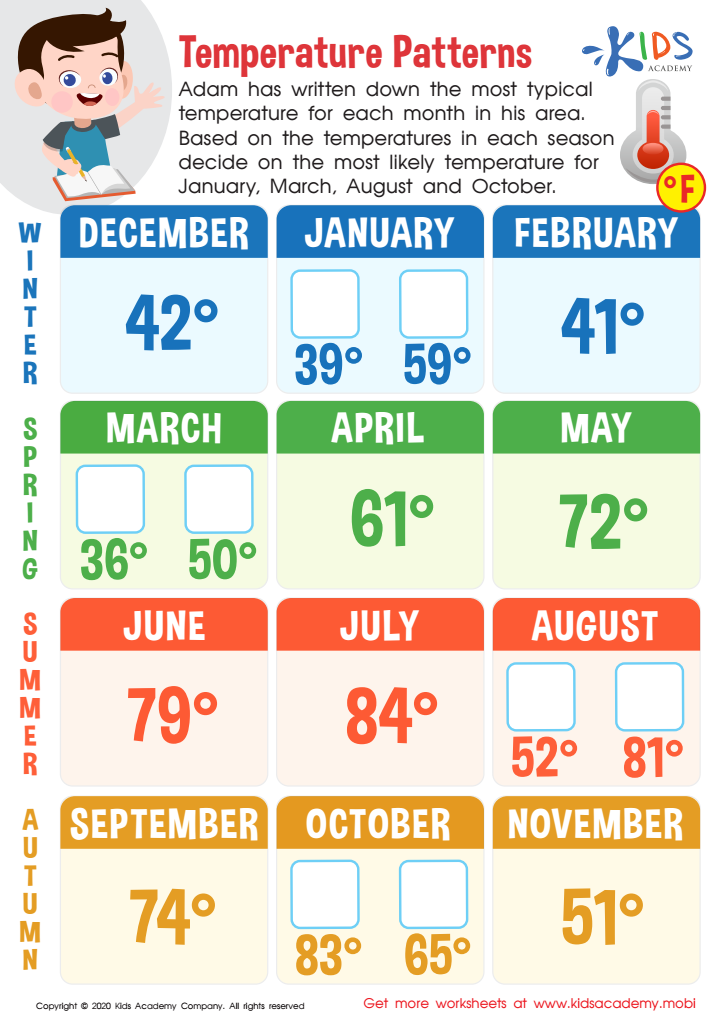
Temperature Patterns Worksheet
Adam has recorded temperatures in his area. Help your child use the data to predict temperatures for one month in each season. Check the box next to the correct temperature for each row in this worksheet. In America, temperatures vary by climate and season - colder in winter, hotter in summer.
 Assign to My Students
Temperature Patterns Worksheet
Worksheet
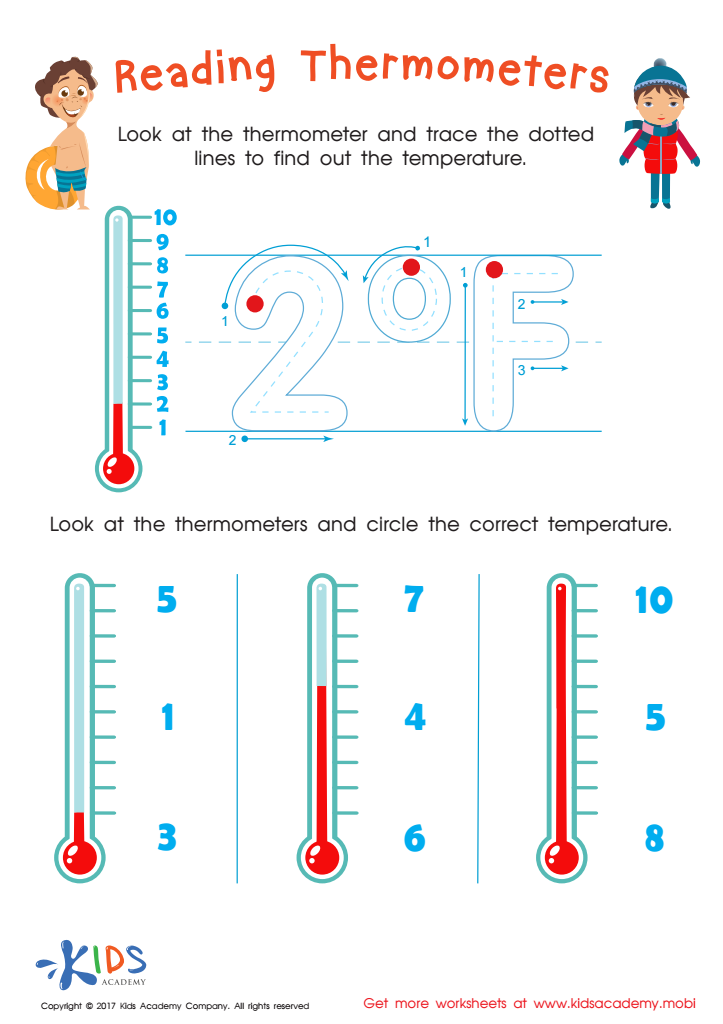
Reading Thermometers Printable
For kids to grasp temperature, they need to learn how to read a thermometer. Use this worksheet to teach them early on - whether they're sick or in the cold. It's an important life skill!
Reading Thermometers Printable
Worksheet
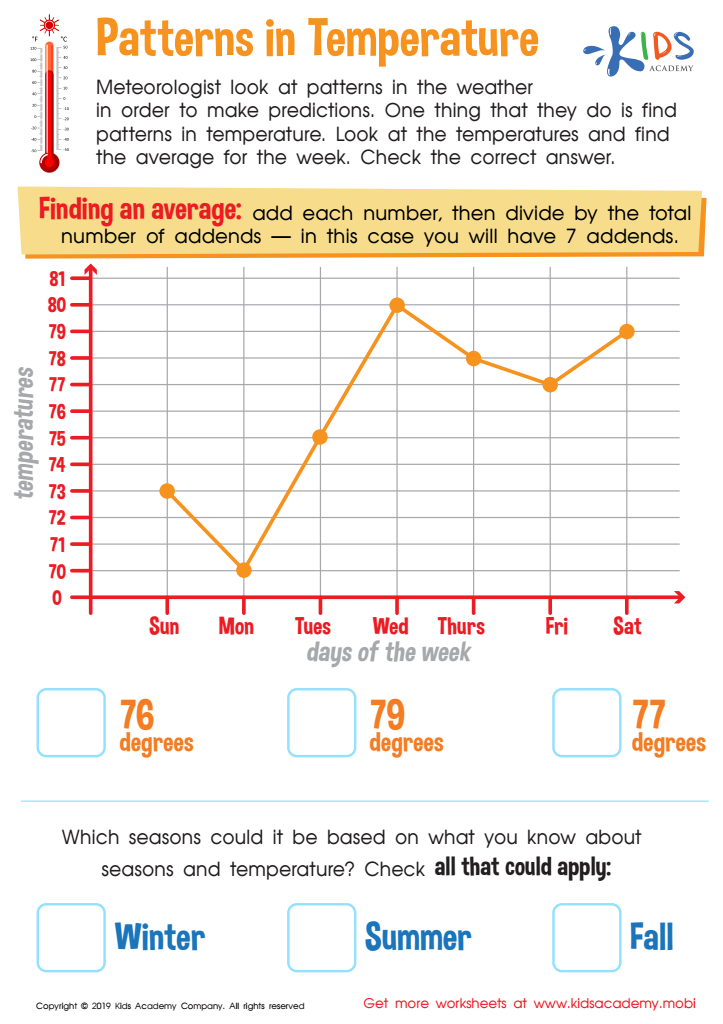
Patterns in Temperature Worksheet
Kids need to learn how to read and interpret data from graphs and charts. This free worksheet on temperature patterns helps them to do just that. They'll practice finding averages and answer questions in multiple-choice format. Plus, it provides a great learning experience!
Patterns in Temperature Worksheet
Worksheet
Join Kids Academy for Free
Who is primarily going to use this learning content?







Reading thermometers is an essential skill for children aged 6-9, as it promotes their understanding of health, science, and everyday problem-solving. Parents and teachers should care about this foundational skill for several reasons.
Firstly, knowing how to read a thermometer empowers children to monitor their health and recognize when they or others may be unwell. This skill enhances their understanding of common illnesses and the importance of seeking help when needed, fostering independence and responsibility.
Secondly, understanding temperature measurement introduces basic scientific concepts. It allows children to explore units of measurement, compare temperatures, and recognize temperature changes in various contexts, such as weather patterns and cooking.
Moreover, teaching children to read thermometers encourages critical thinking. They learn to interpret information, communicate findings, and apply their knowledge in practical situations, reinforcing their cognitive development.
Lastly, engaging children in these activities strengthens the partnership between home and school. It encourages parents to become actively involved in their child's learning journey, making science and health topics more relatable and fun. Thus, incorporating thermometer reading into early education lays a foundation for lifelong learning and adaptability.








