
Rhyming skills Normal Worksheets for Ages 6-9
3 filtered results
Difficulty Level
Grade
Age
-
From - To
Subject
Activity
Standards
Enhance your child’s phonemic awareness with our engaging Rhyming Skills Normal Worksheets designed for ages 6-9. These printable worksheets from Kids Academy focus on improving your child's ability to recognize and generate rhyming words—key foundational skills for reading fluency. Each activity is crafted to be both educational and fun, featuring colorful illustrations and interactive exercises. Strengthen your child's language development and confidence in reading with these expertly designed resources perfect for home or classroom use. Start exploring today to discover the joy of rhyming with our comprehensive selection of worksheets tailored to young learners!
Favorites
With answer key
Interactive
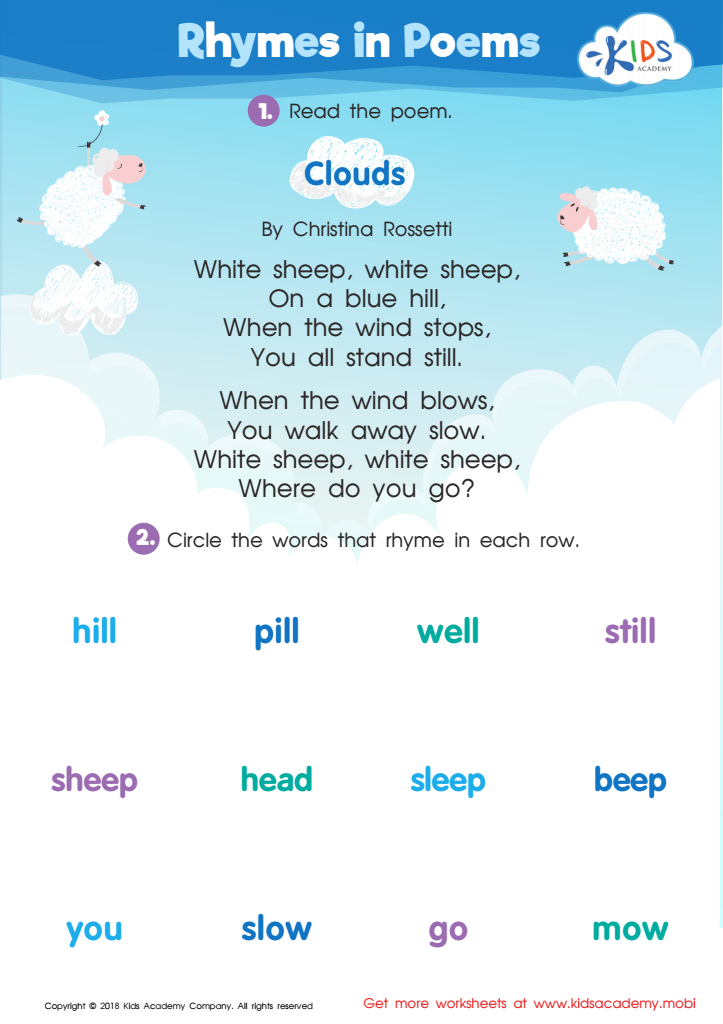
Rhymes in Poems Worksheet
Poems are lovely works of literature; some with rhymes, and some without. This poem for kids is full of rhymes and tells the tale of a sheep. Read it aloud to your kids, then help them circle the rhyming words.
 Assign to My Students
Rhymes in Poems Worksheet
Worksheet
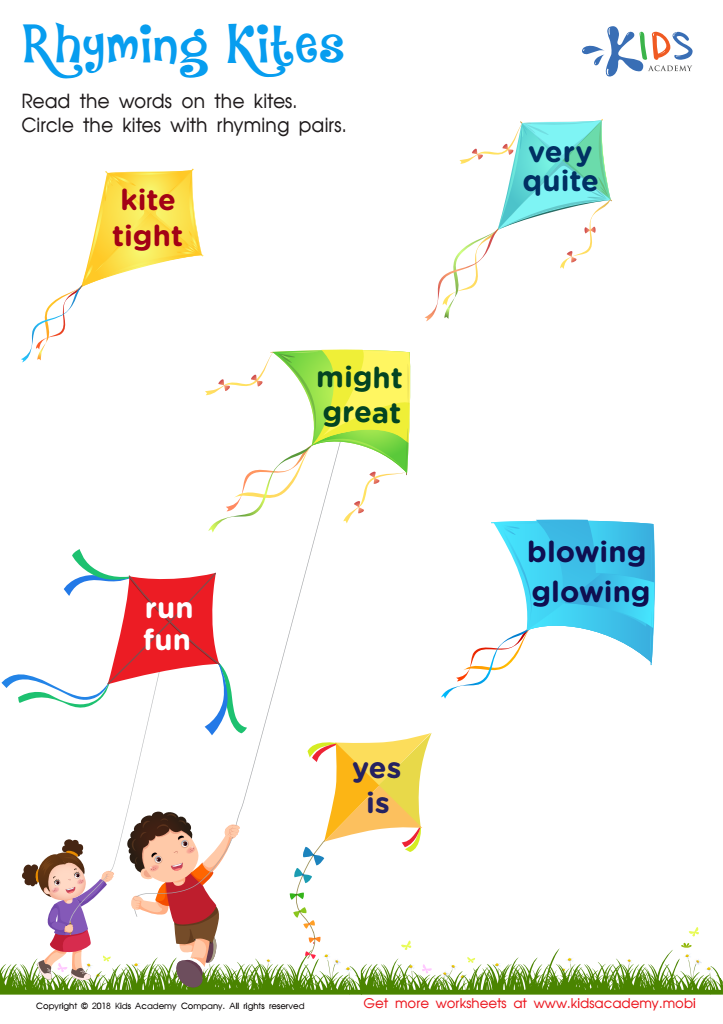
Rhyming Kites Worksheet
On a spring day, fly a kite! Kids Academy has a rhyming worksheet to boost your child's skills. Read the pairs of words aloud. Circle the kites if they rhyme, leave them blank if they don't. Listen carefully and find all the rhyming word pairs to complete this sheet!
Rhyming Kites Worksheet
Worksheet
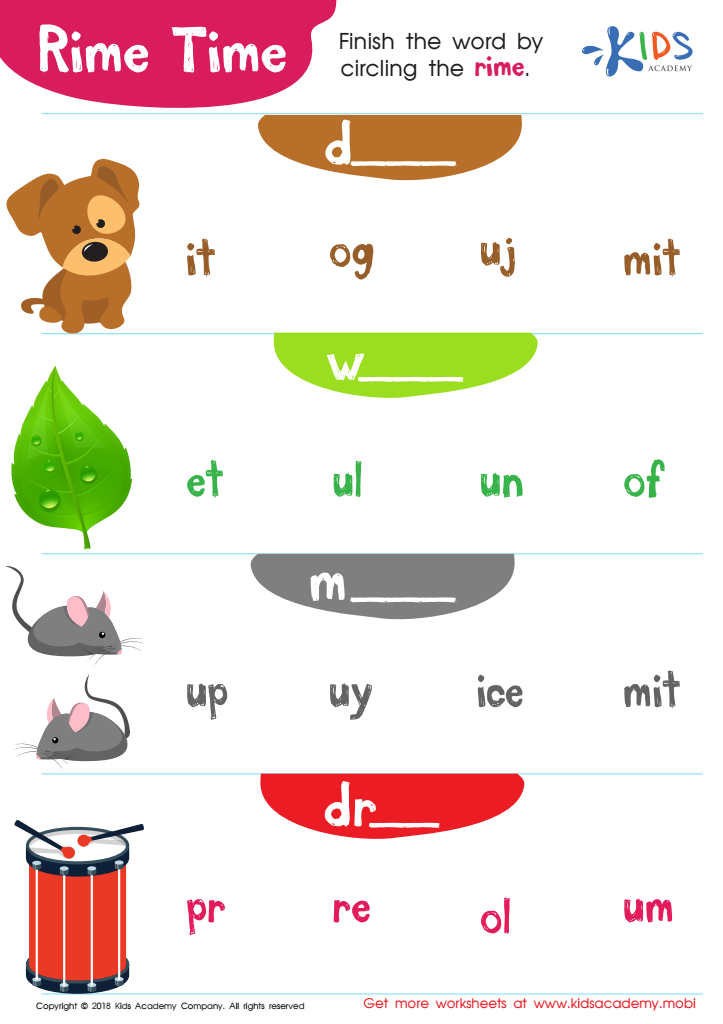
Rime Time Worksheet
This free PDF worksheet helps new and emerging readers identify rimes (the letters after initial consonants) and practice fine motor skills. Kids trace the correct rimes for each picture and increase their fluency and decoding skills with each one!
Rime Time Worksheet
Worksheet
Join Kids Academy for Free
Who is primarily going to use this learning content?







Rhyming skills play a fundamental role in the early literacy development of children aged 6-9. These skills facilitate phonemic awareness, which is the ability to hear, identify, and manipulate phonemes, the smallest units of sound in speech. When children learn to recognize rhyming words, they become more adept at identifying patterns and sounds in language, crucial for decoding words during reading.
For parents and teachers, fostering rhyming skills can significantly impact a child's reading fluency and comprehension. Engaging with rhymes enhances vocabulary as children are exposed to a variety of words and their meanings in different contexts. Additionally, rhyming activities make learning fun and interactive, which can motivate children to actively participate and show enthusiasm toward reading and language arts.
Moreover, rhyming can be an indicator of a child's reading readiness. Identifying delays or challenges in recognizing rhyming patterns enables early interventions to support literacy development. Apart from reading, rhyming also supports memory development and auditory discrimination, skills critical for all aspects of learning. Therefore, prioritizing rhyming in early education lays a robust foundation for a child's overall academic journey, making it a vital aspect for parents and teachers to focus on.








