
Sorting skills Normal Worksheets for Ages 6-9
5 filtered results
Difficulty Level
Grade
Age
-
From - To
Subject
Activity
Standards
Discover our engaging Sorting Skills Worksheets for ages 6-9, designed to boost your child's cognitive abilities while making learning fun! Perfect for developing essential sorting and categorization skills, these normal worksheets feature vibrant images and simple activities tailored to young learners. Children will enjoy organizing objects, understanding similarities and differences, and enhancing critical thinking through a variety of exercises. Our sorting worksheets are ideal for school or home use, integrating seamlessly into any curriculum. Encourage creativity and independent thinking with these enjoyable resources that make sorting a straightforward and effective learning experience. Start your child's educational journey with our sorting skills worksheets today!
Favorites
With answer key
Interactive
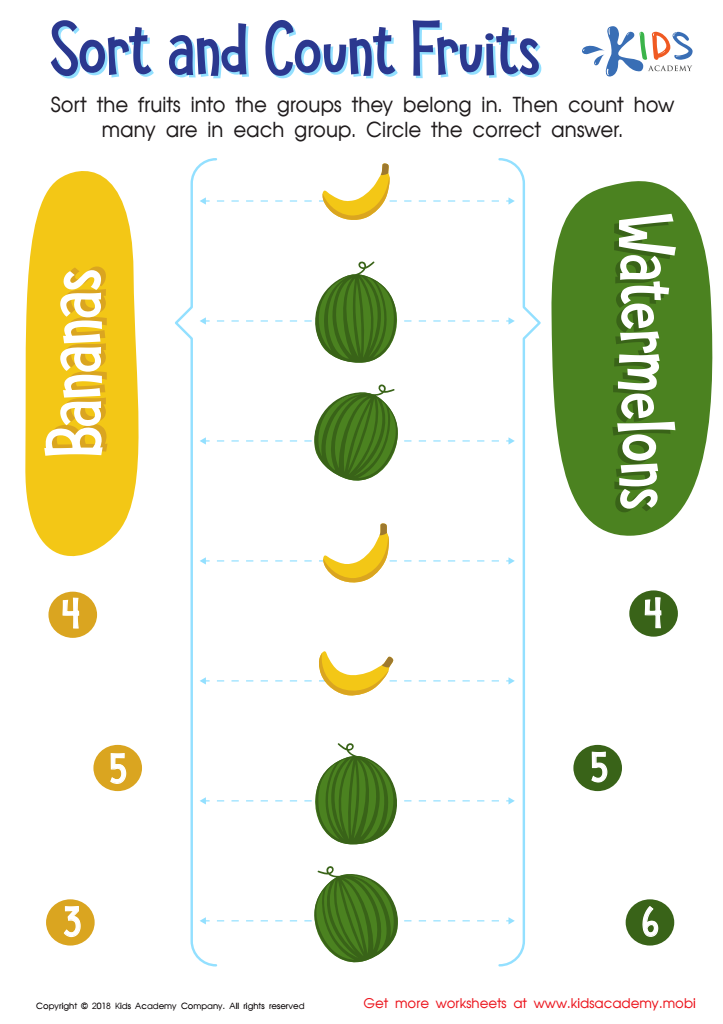
Sort and Count Fruits Worksheet
Allow your children to hone their critical thinking and number reasoning skills with this free worksheet. They'll sort, count, and trace fruits while learning basic number sense. A fun, delicious learning experience with familiar pictures they'll love.
 Assign to My Students
Sort and Count Fruits Worksheet
Worksheet
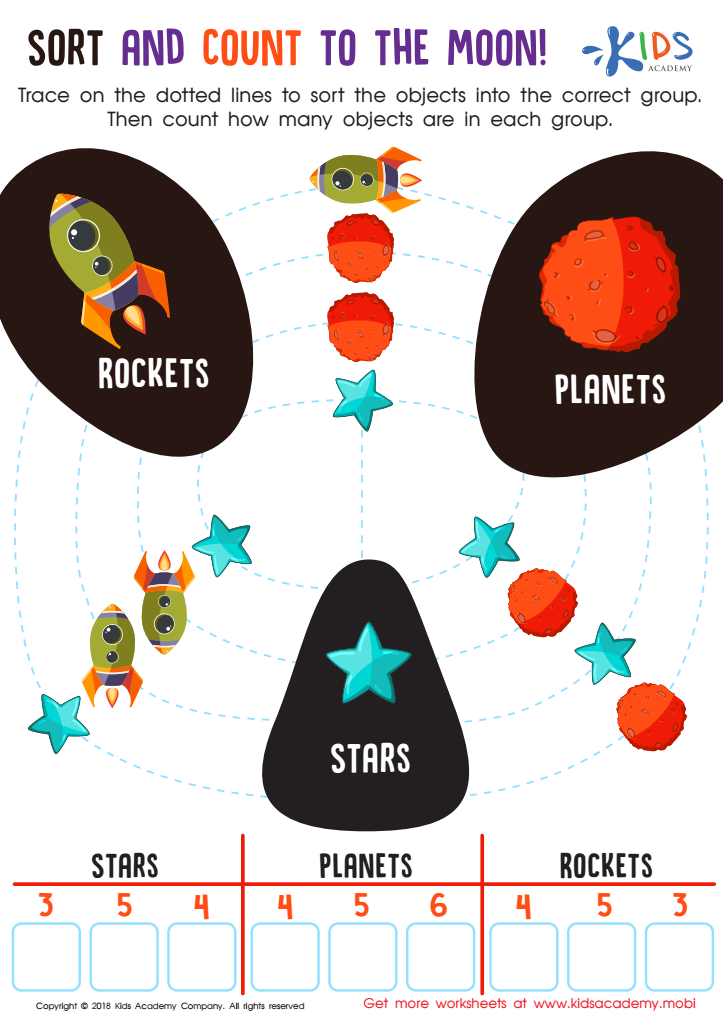
Sort and Count to the Moon Worksheet
Little space explorers will love counting, sorting and strengthening number sense with this galactic worksheet! They'll use traceable lines to sort pictures of stars, planets and rockets into categories according to properties. After sorting, they'll count each item and fill in the boxes. Bold pictures make it fun and build critical thinking skills.
Sort and Count to the Moon Worksheet
Worksheet
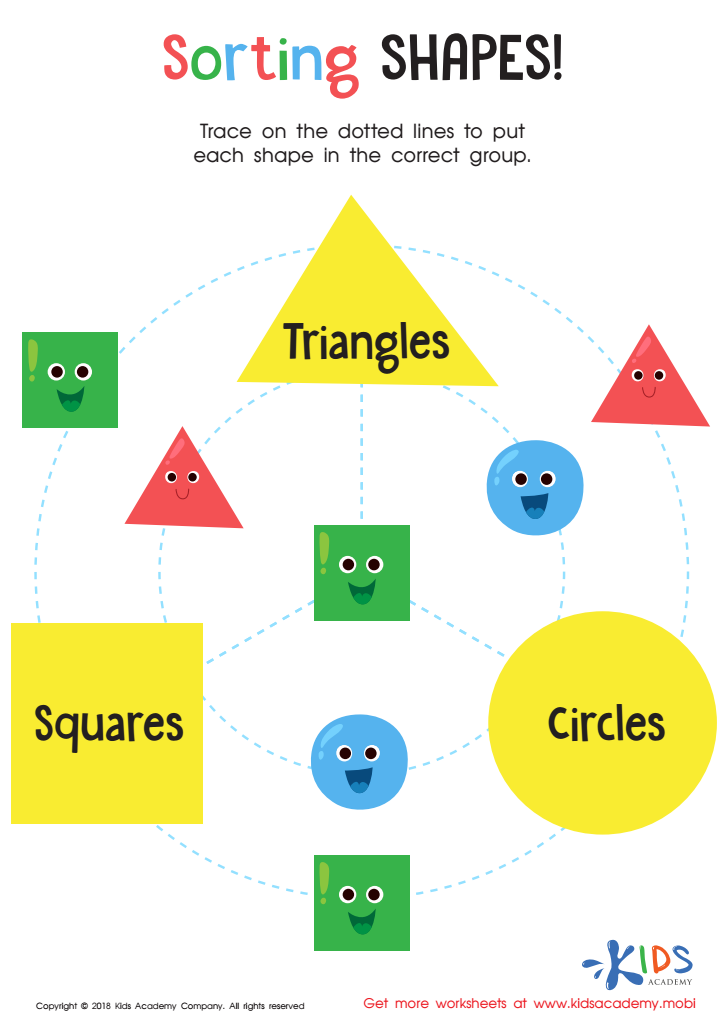
Sorting Shapes - Part 3 Worksheet
Download this fun PDF to help your kiddos recognize basic shapes like circles, squares, and triangles. It'll sharpen their fine motor skills as they trace and sort shapes by color, size, and sides. Your kids won't even realize they're learning with these cheery shapes!
Sorting Shapes - Part 3 Worksheet
Worksheet
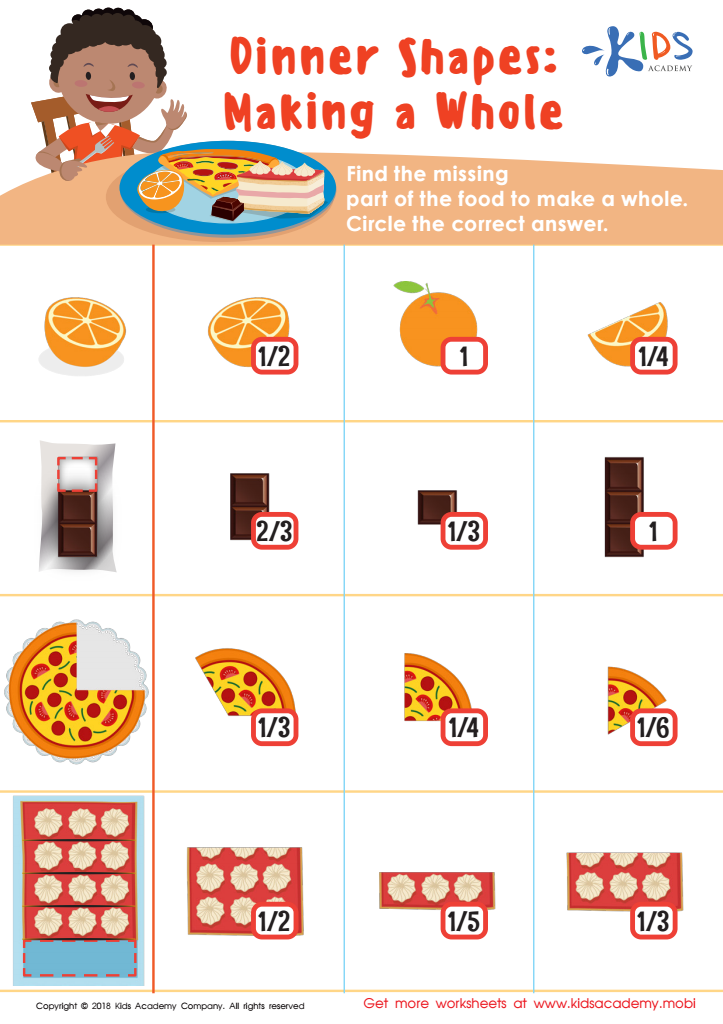
Dinner Shapes: Making a Whole Worksheet
Using food and snacks to stimulate learning and interest in topics is a great strategy. Fractions can prove tricky, but this worksheet can help your child become an expert. Have them look for the missing parts of the food to make a whole, then circle the answer.
Dinner Shapes: Making a Whole Worksheet
Worksheet
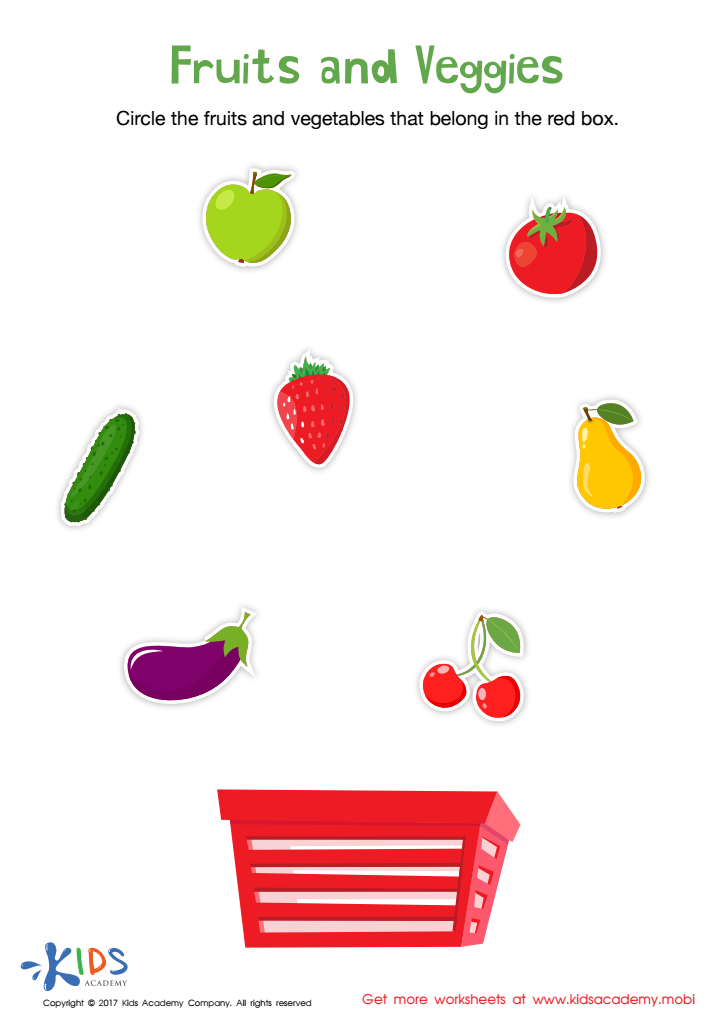
Classifying Fruits and Veggies by Color Sorting Worksheet
Worksheet
Join Kids Academy for Free
Who is primarily going to use this learning content?





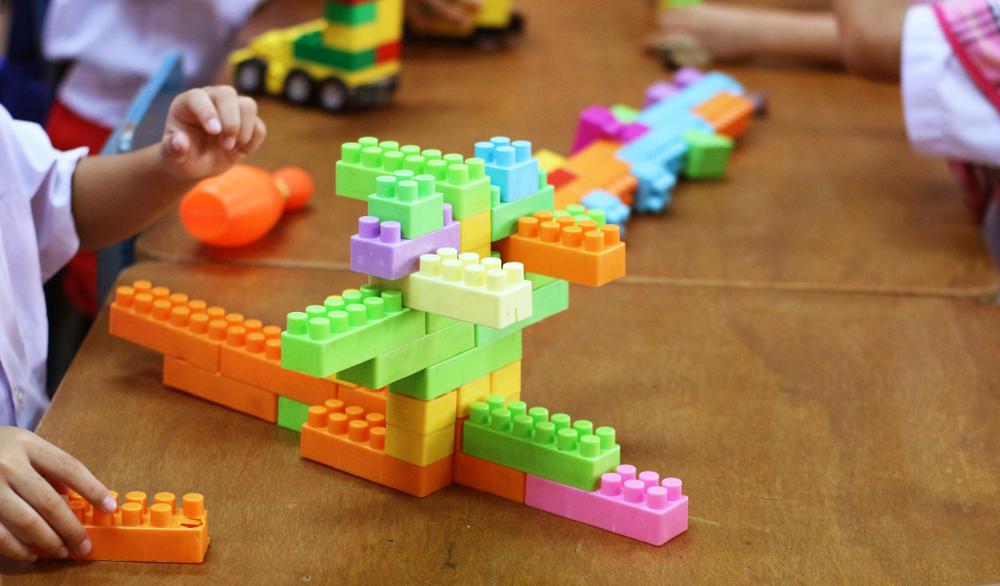
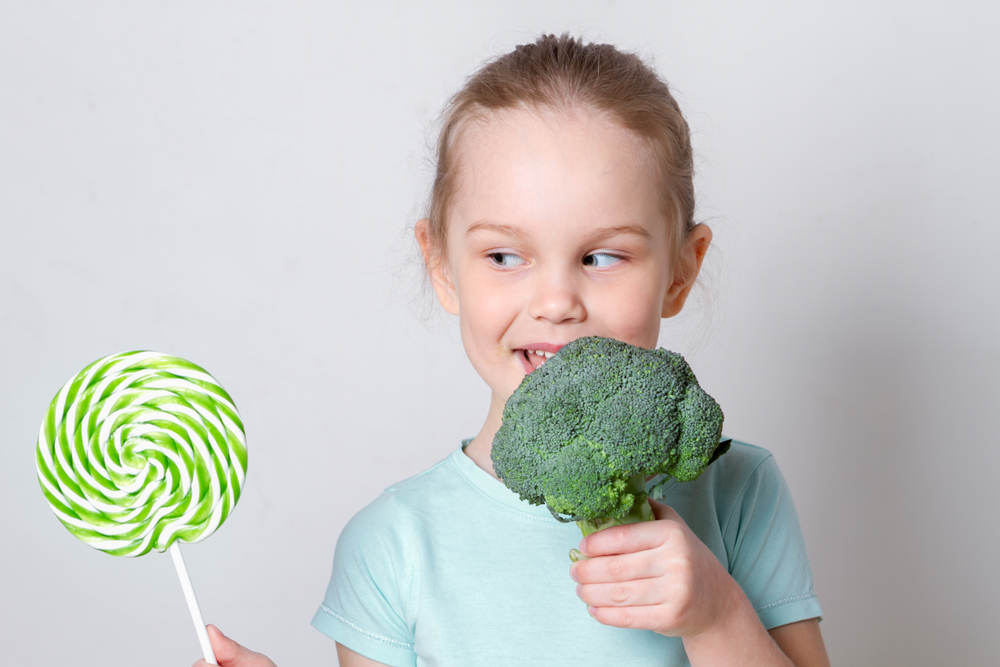

Sorting skills are fundamental cognitive abilities crucial for children's early development, particularly in the ages 6-9. These skills go beyond simple categorization; they lay the groundwork for critical thinking and problem-solving. As children learn to sort objects—by color, size, shape, or function—they develop an understanding of relationships and attributes, fostering logical reasoning.
For parents and teachers, nurturing sorting skills is essential because they enhance children's ability to make connections and organize their thoughts. Such skills contribute to academic readiness, as they form the basis for more complex tasks related to math, science, and literacy. For instance, children who can categorize and organize information are better equipped to tackle subjects involving data interpretation or classification.
Moreover, sorting activities promote fine motor skills and hand-eye coordination, as children manipulate objects. Equally important, these skills can enhance social interactions; children learn to work collaboratively in group activities, fostering communication and teamwork.
Incorporating sorting exercises into everyday activities, such as sorting toys, clothes, or even snacks, can make learning enjoyable while reinforcing these critical skills. Supporting sorting abilities not only aids academic achievement but also helps children grow into organized, adaptable learners.








