Spatial understanding Normal Worksheets for Ages 6-9
3 filtered results
-
From - To
Explore our comprehensive collection of Spatial Understanding Worksheets tailored specifically for ages 6-9. These engaging and interactive resources are designed to enhance children's ability to visualize and manipulate objects in space. Our worksheets include a variety of activities, such as puzzles, mazes, and matching games, which promote skills like directionality, balance, and mental rotation. Parents and educators will appreciate how these worksheets make learning fun while reinforcing critical thinking and problem-solving skills. Perfect for home or classroom use, our Spatial Understanding Worksheets provide an innovative approach to essential developmental skills, helping children navigate their world with confidence and creativity. Start your journey today!
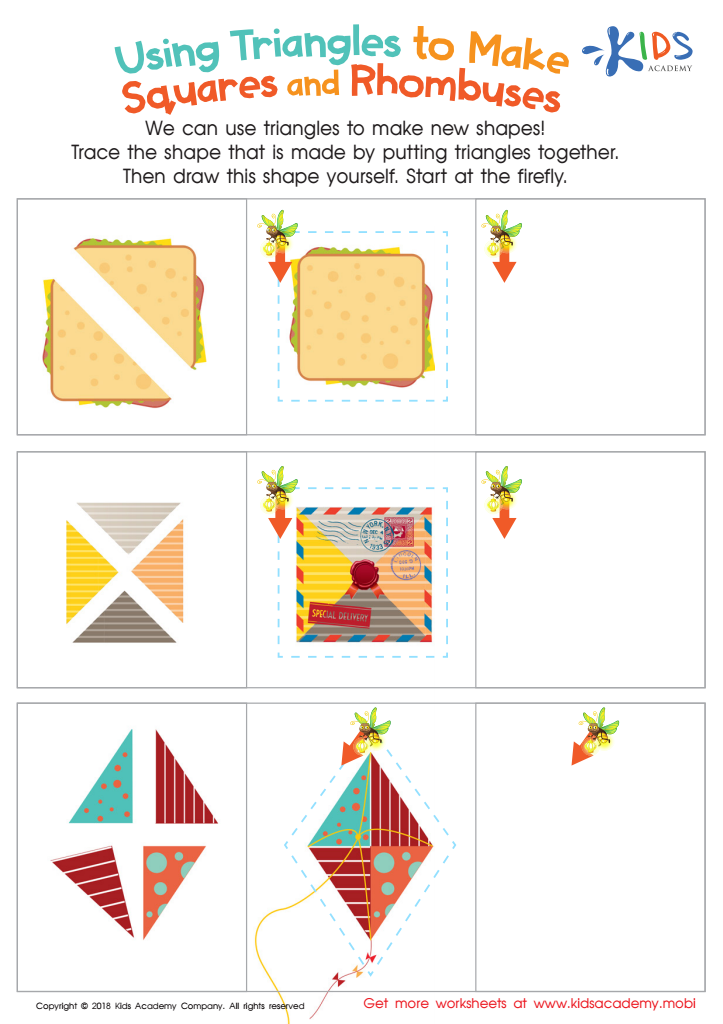
Using Triangles to Make Squares and Rhombuses Worksheet
 Assign to My Students
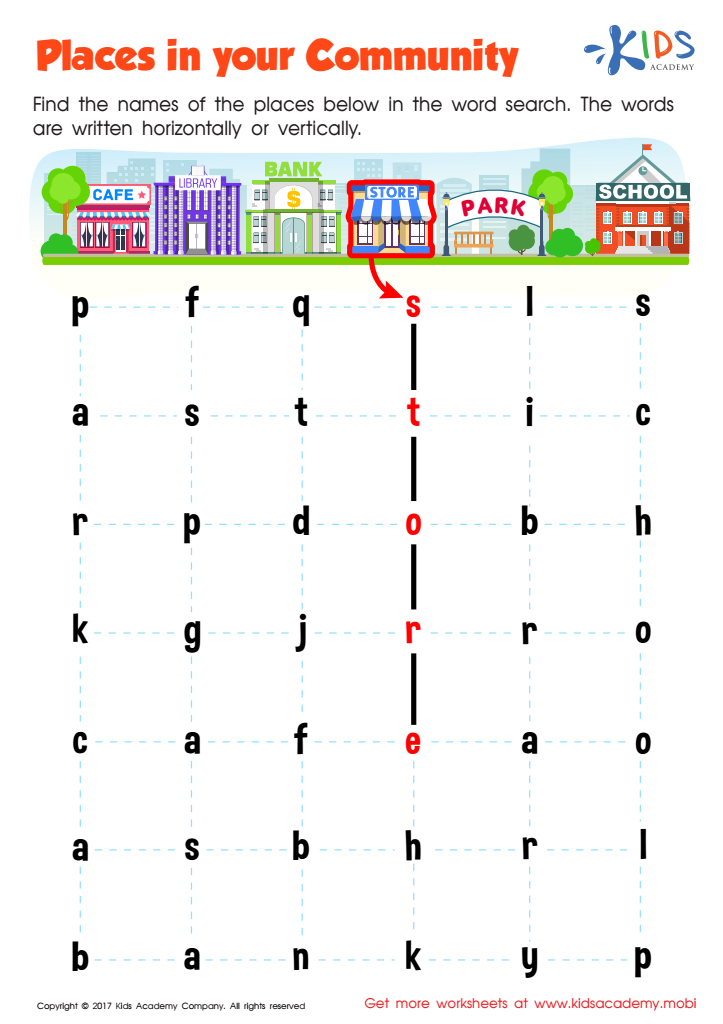
Places in Your Community Worksheet
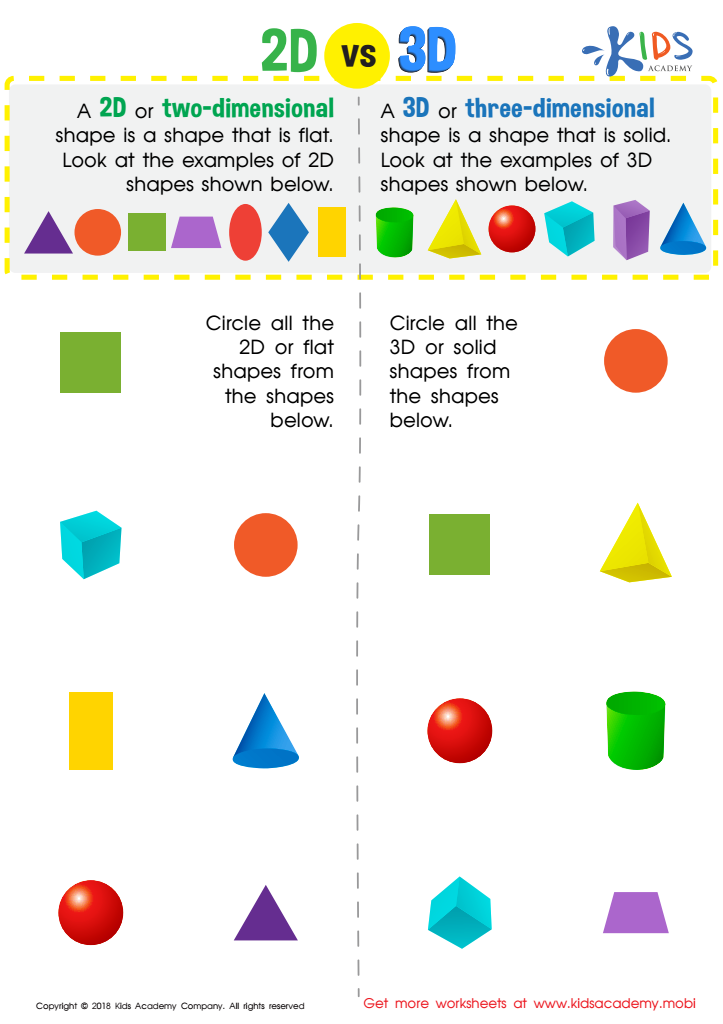
2D vs 3D Shapes Worksheet







Spatial understanding is a crucial aspect of cognitive development for children ages 6-9, and both parents and teachers should prioritize its cultivation. During these formative years, children begin to make sense of the world around them, which includes understanding shapes, sizes, distances, and spatial relationships. This foundation not only supports their mathematical skills, as geometry becomes increasingly significant, but also enhances problem-solving abilities and critical thinking.
When children develop strong spatial skills, they tend to excel in disciplines like science and technology, areas that are becoming more vital in a rapidly evolving job market. Moreover, spatial understanding promotes creativity and innovation, enabling children to visualize their ideas and transform them into tangible outcomes.
Active engagement in spatial activities—like building with blocks, navigating mazes, or playing strategy games—encourages exploration and boosts self-confidence. Parents and teachers can facilitate this learning by providing resources and opportunities for hands-on experiences. By nurturing spatial understanding, adults empower children to become competent learners, capable of tackling complex concepts across multiple subjects, while also preparing them for future academic and career success. Ultimately, investing in spatial skills lays the groundwork for well-rounded, capable individuals.








