Spelling practice Normal Worksheets for Ages 6-9 - Page 5
98 filtered results
-
From - To
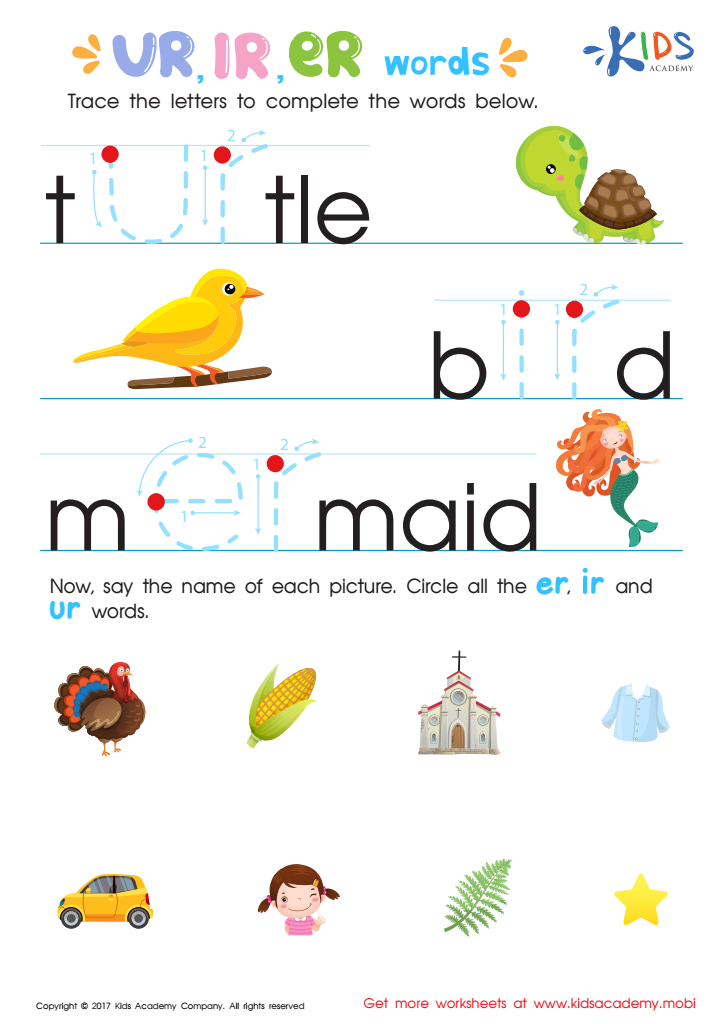
IR UR ER Words Worksheet
 Assign to My Students
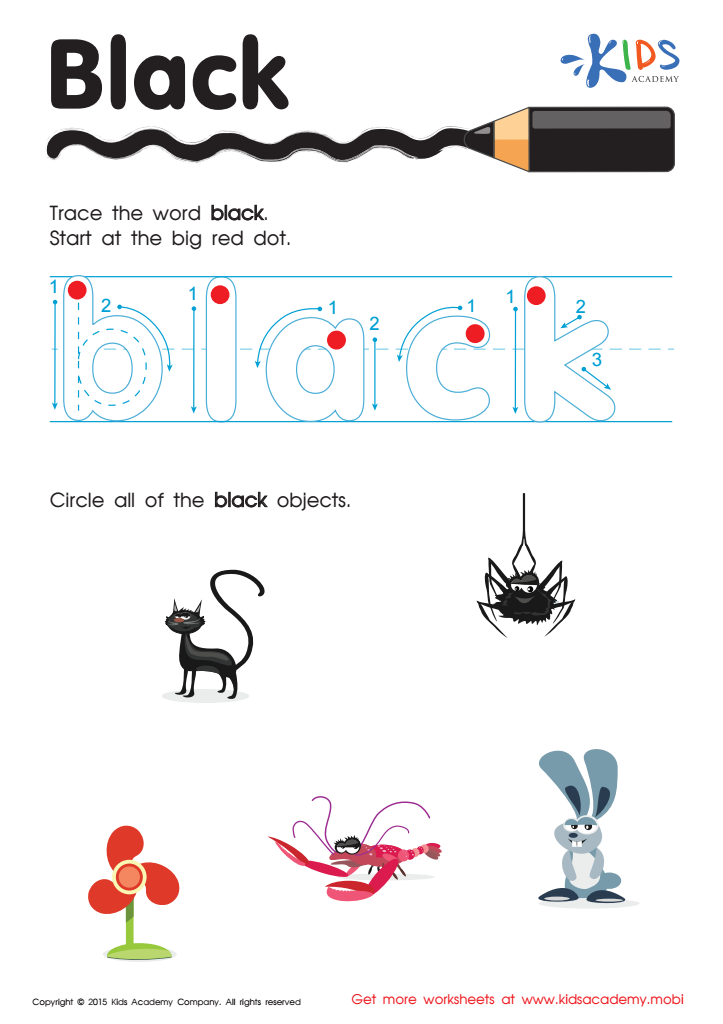
Black Tracing Color Words Printable







Spelling practice for children ages 6-9 is critical for their overall literacy development and academic success. At this stage, young learners are developing foundational language skills, which serve as the building blocks for effective communication. Regular spelling practice helps enhance phonetic skills, making it easier for children to decode and recognize words, which is essential in both reading and writing.
Furthermore, spelling proficiency contributes to confidence in classroom participation and written assignments. When children can spell accurately, they are more likely to express their thoughts clearly and engage positively in discussions. This self-assurance can increase a child’s motivation to learn and take risks in their educational journey.
Additionally, consistent practice reinforces memory retention and cognitive development. Engaging in varied spelling activities—like word games, writing sentences, and using spelling in context—stimulates critical thinking skills.
Teachers and parents play an essential role in this learning process by providing support, creating a positive environment for practice, and emphasizing its importance. Encouraging children to see spelling as an enjoyable challenge rather than a chore fosters a love for learning, setting them up for lifelong success in literacy and beyond. Investing time in spelling education is an investment in a child's future.








