
Story analysis Normal Worksheets for Ages 6-9
4 filtered results
Difficulty Level
Grade
Age
-
From - To
Subject
Activity
Standards
Unlock your child's creativity and critical thinking skills with our Story Analysis Normal Worksheets, designed specifically for ages 6-9. These engaging activities help children explore the elements of storytelling, including characters, setting, and plot. Ideal for classroom or home use, our worksheets encourage young learners to dissect their favorite stories, fostering comprehension and analytical abilities. With colorful visuals and age-appropriate content, these printable resources make learning fun and interactive. Perfect for nurturing a love of reading and storytelling, our Story Analysis worksheets empower kids to express their thoughts and ideas while enhancing their language skills. Dive into an exciting literary adventure today!
Favorites
With answer key
Interactive
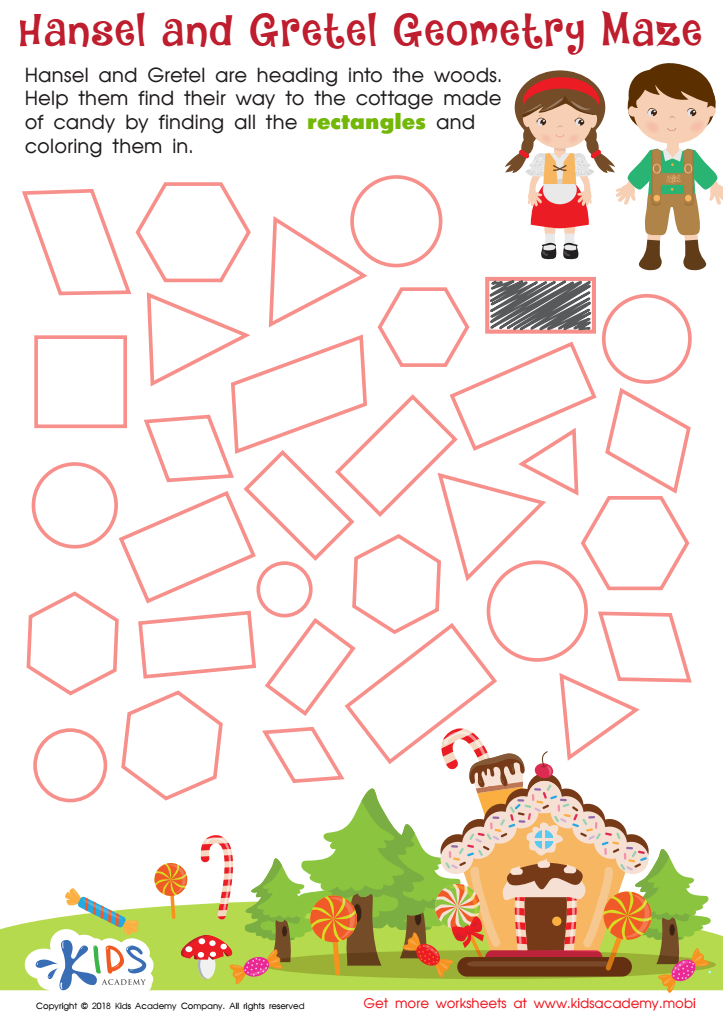
Hansel and Gretel Geometry Maze Worksheet
Your kids will have fun helping Hansel and Gretel get through a colorful forest of shapes! This free PDF reinforces the properties of rectangles, building skills in visual discernment and laying the foundations for geometry. They'll be too busy enjoying the story to realize they're learning!
 Assign to My Students
Hansel and Gretel Geometry Maze Worksheet
Worksheet
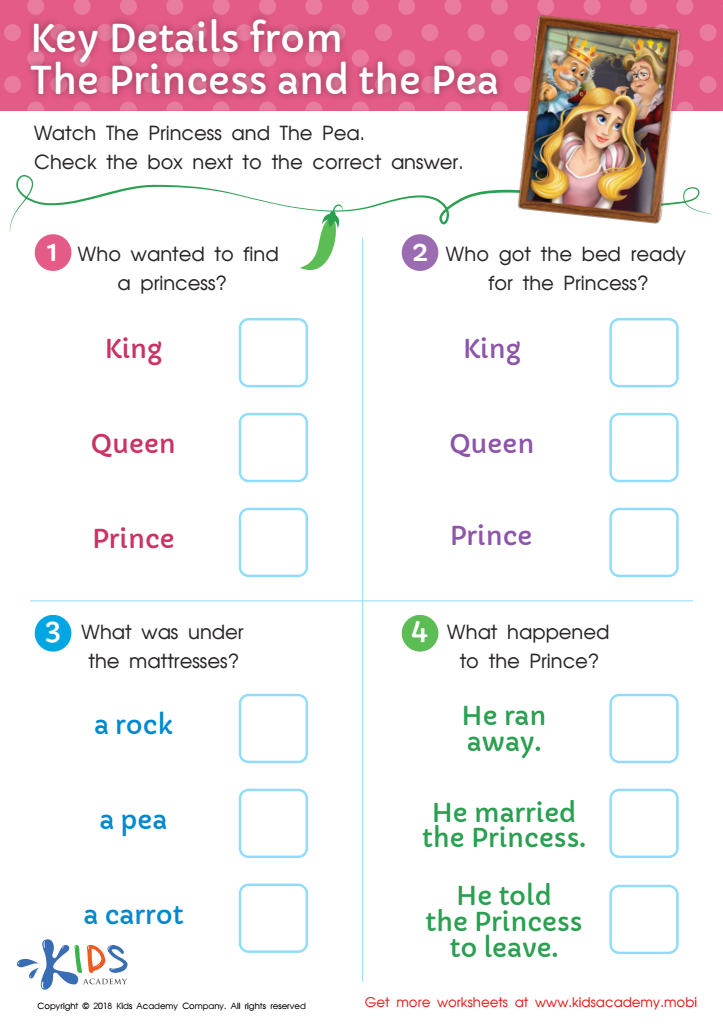
Key Details from the Princess and the Pea Worksheet
After reading The Princess and the Pea, ask your students questions to assess their comprehension of the story. Check their knowledge of key details. This printable can be used to help evaluate their understanding. Encouraging the recall of story events helps build important reading skills.
Key Details from the Princess and the Pea Worksheet
Worksheet
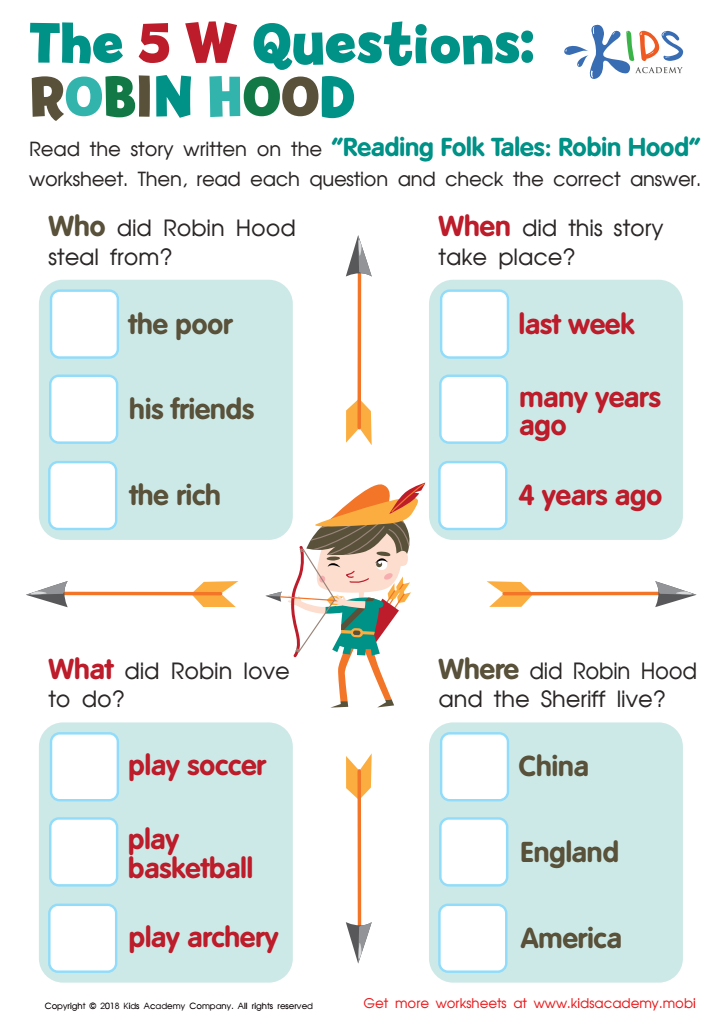
The 5 W Questions: Robin Hood Worksheet
Before embarking on this Robin Hood adventure, ensure your child reads and comprehends the 'Reading Folk Tales: Robin Hood' worksheet. Have them consider the story's lessons, and observe the details. Read the questions and help your kids select the correct answers.
The 5 W Questions: Robin Hood Worksheet
Worksheet
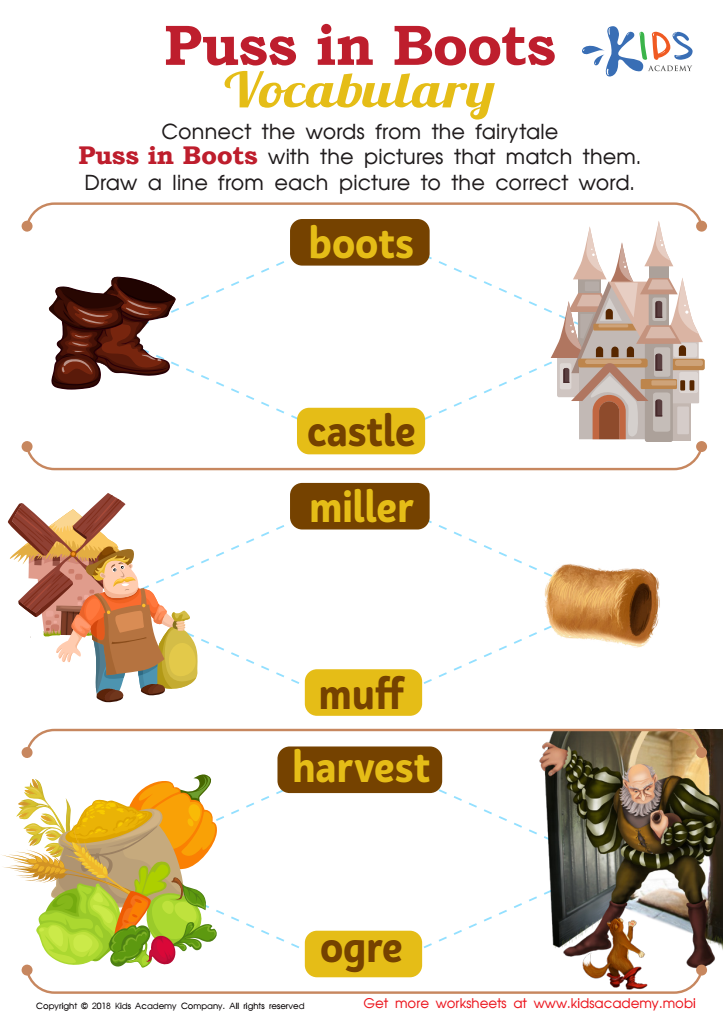
Puss in Boots Vocabulary Worksheet
Let your kids enjoy story-telling while learning at the same time. Help them learn from the fairytale, Puss in Boots, by connecting words from the worksheet with the matching pictures. Ask them to draw a line between each picture and corresponding word to build their vocabulary.
Puss in Boots Vocabulary Worksheet
Worksheet
Join Kids Academy for Free
Who is primarily going to use this learning content?






Story analysis is a vital skill for children aged 6-9, and both parents and teachers should actively engage with it for several reasons. First, analyzing stories helps children develop critical thinking skills as they learn to examine plot structures, character motivations, and themes. This critical engagement nurtures their ability to make connections and draw conclusions, both essential abilities in academics and everyday life.
Moreover, story analysis fosters language development. As children discuss narratives, they expand their vocabulary, improve their comprehension skills, and become more articulate in expressing their ideas. This dialogue encourages children to communicate effectively—a key skill in their future interactions.
Additionally, exploring stories enhances empathy and social understanding. Children gain insights into diverse perspectives and emotions by analyzing characters' actions and choices, making them more empathetic and socially aware.
Furthermore, story analysis can ignite a deeper love for reading. When children learn to appreciate the nuances of a narrative, they are more likely to engage with literature actively and seek out new books. This lifelong love for reading enriches their learning experiences and personal development.
In summary, encouraging story analysis nurtures critical thinking, language skills, empathy, and a passion for reading, benefiting children well beyond their early years.








