Story comprehension Normal Worksheets for Ages 6-9
5 filtered results
-
From - To
Enhance your child's reading skills with our Story Comprehension Worksheets designed specifically for ages 6-9. Our engaging and age-appropriate worksheets encourage critical thinking and improve understanding of narrative elements. Each worksheet includes fun exercises that require children to retell stories, answer comprehension questions, and analyze key plot points and characters, fostering a love for reading. Aligned with educational standards, these worksheets are perfect for classroom use or at-home learning. Explore a variety of themes and stories that stimulate imagination while building essential literacy skills. Start your child's journey to confident storytelling today with our printable and interactive resources!
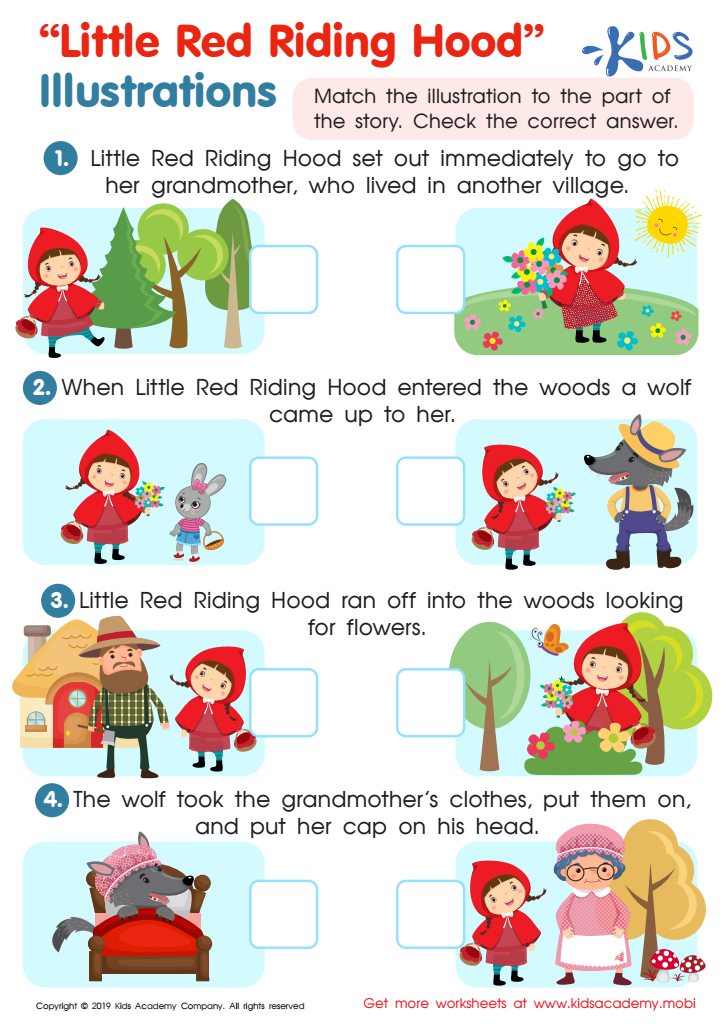
Little Red Riding Hood: Illustrations Worksheet
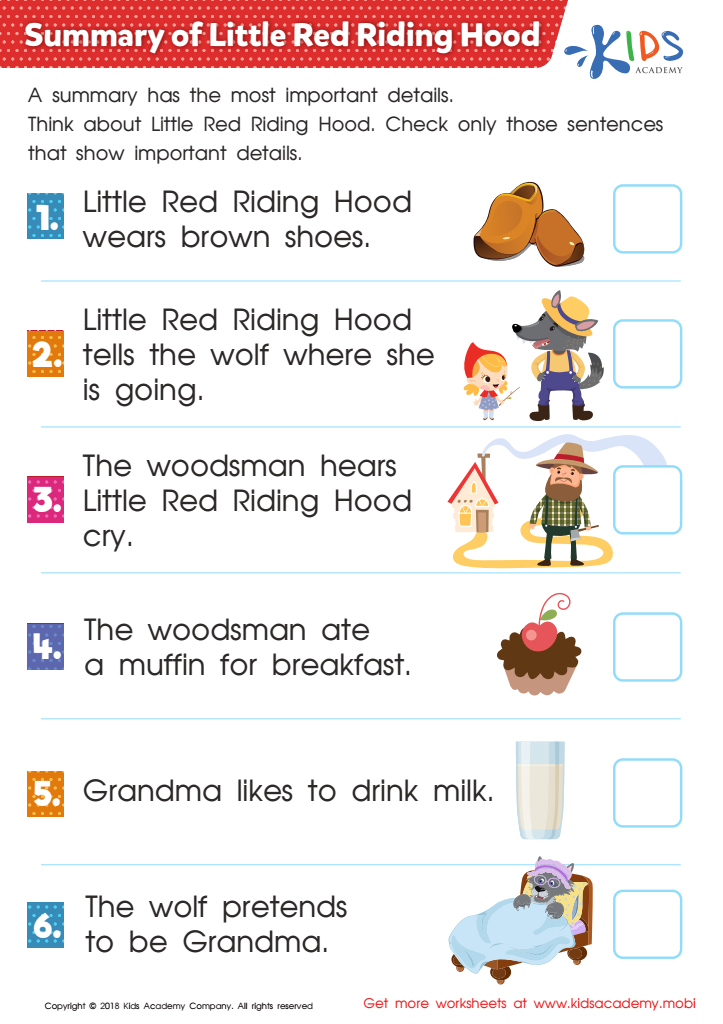
Summary of Little Red Riding Hood Worksheet
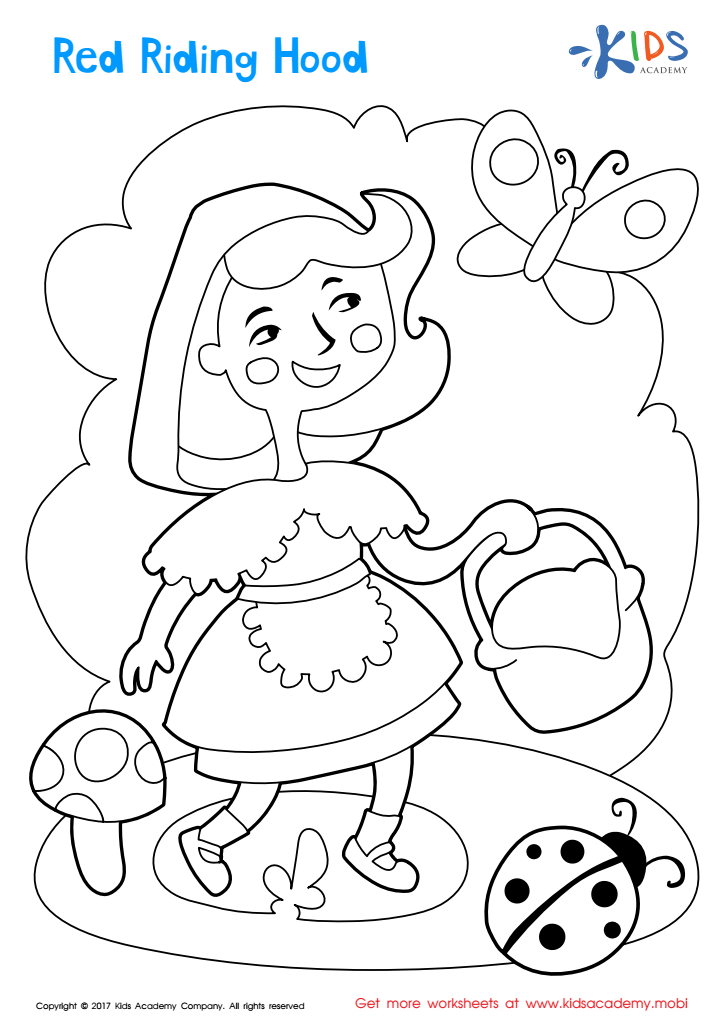
Red Riding Hood Coloring Page
 Assign to My Students
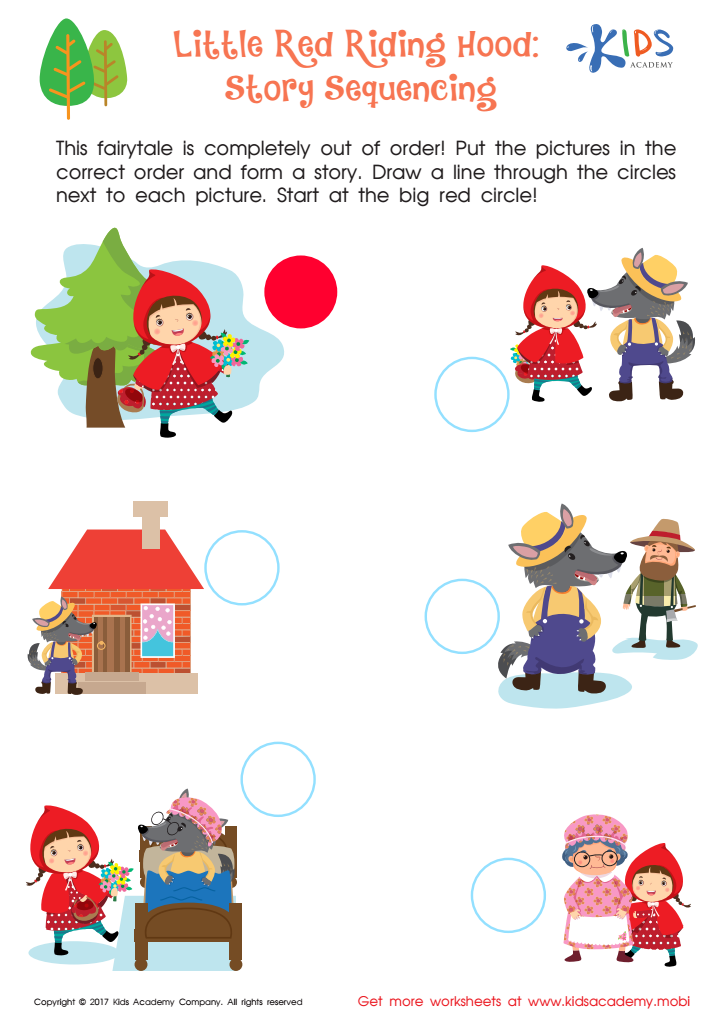
Story Sequencing Printable
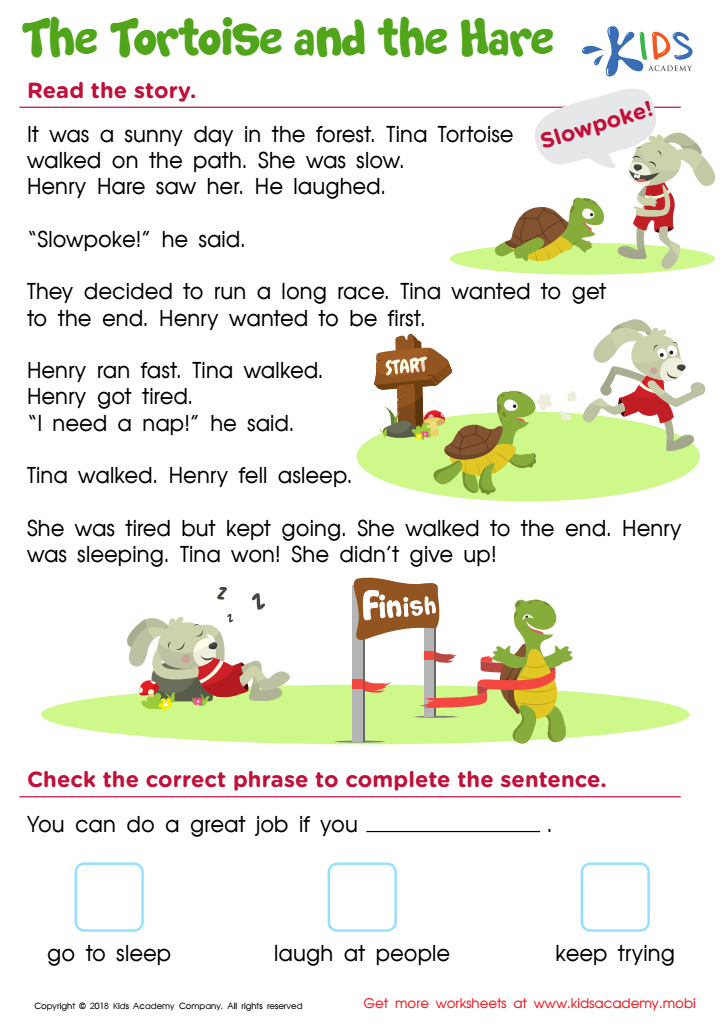
The Tortoise and the Hare Worksheet







Story comprehension is vital for children ages 6-9 as it forms the foundation for their academic success and lifelong learning. At this developmental stage, children transition from learning to read to reading to learn. Understanding stories fosters critical thinking, imagination, and empathy, as it allows young readers to grasp themes, characters, and plot development. When children are proficient in story comprehension, they are more likely to engage actively with texts, asking questions and making connections, which enhances their overall literacy skills.
Additionally, strong comprehension skills correlate with better performance across various subjects, including math and science. Parents and teachers play a pivotal role in nurturing these skills through interactive reading sessions, discussions about stories, and asking open-ended questions. Engaging children in conversations about their interpretations promotes deeper understanding and helps clarify any misconceptions.
Furthermore, story comprehension aids in social-emotional development. Through narratives, children encounter diverse perspectives and can develop a greater sense of empathy and cultural awareness. In summary, prioritizing story comprehension for ages 6-9 is essential for building critical literacy skills, encouraging creative thinking, and enhancing social capabilities, equipping children for future success in school and life.








