
Understanding adjectives Normal Worksheets for Ages 6-9
5 filtered results
Difficulty Level
Grade
Age
-
From - To
Subject
Activity
Standards
Welcome to our “Understanding Adjectives Normal Worksheets” tailored for children ages 6-9! These engaging worksheets are designed to help young learners grasp the concept of adjectives and enhance their vocabulary skills. Each activity focuses on identifying, using, and understanding adjectives in fun and interactive ways. With colorful graphics and age-appropriate exercises, your child will enjoy exploring descriptive words that add richness to their writing and speaking. Ideal for teachers and parents, these printable worksheets offer a valuable resource for reinforcing grammar lessons in the classroom or at home. Start your child's journey to better communication skills today!
Favorites
With answer key
Interactive
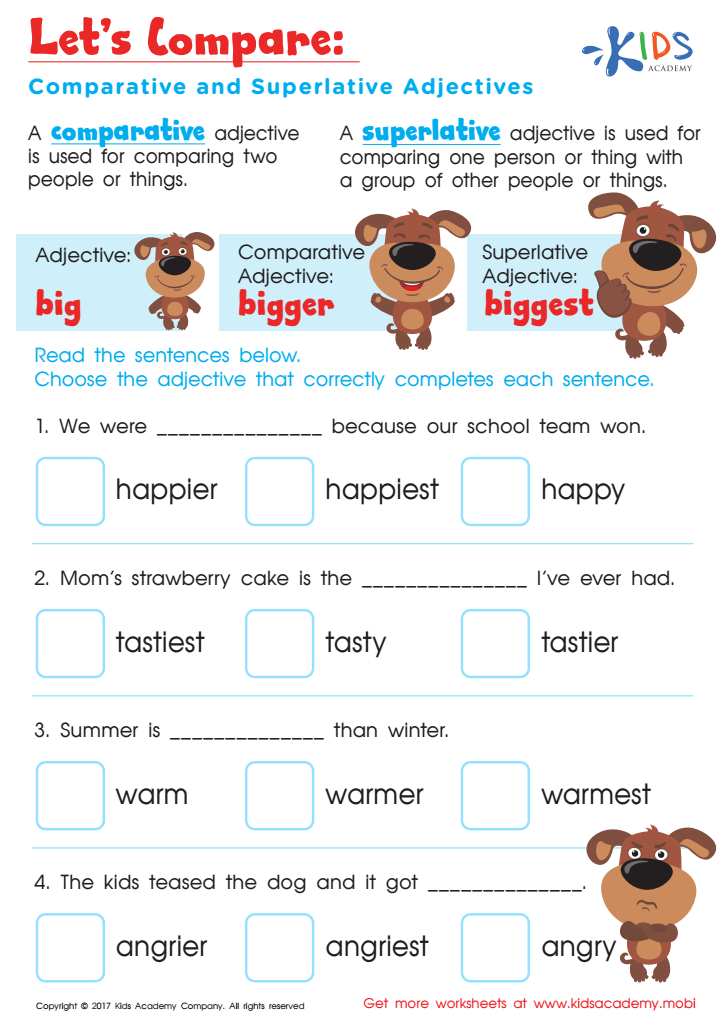
Comparative and Superlative Worksheet
Kids can discover the difference between comparative and superlative adjectives and practice using them correctly - is it big, bigger, or biggest? Perfect for grade 3.
 Assign to My Students
Comparative and Superlative Worksheet
Worksheet
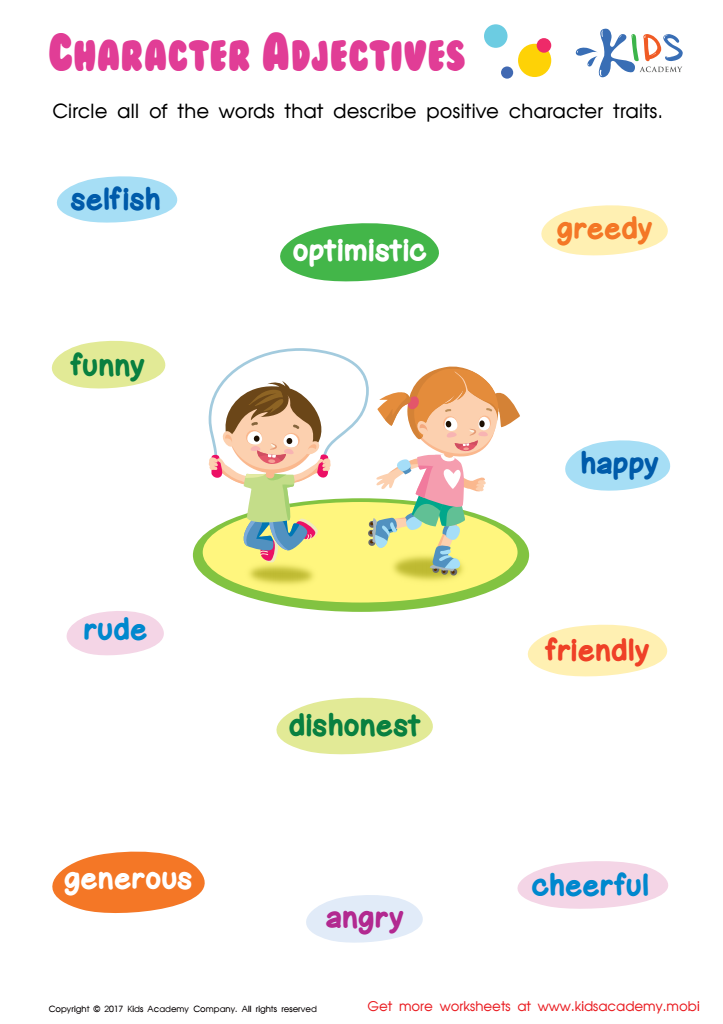
Character Adjectives Worksheet
Help your child express their feelings easily with this PDF worksheet! It focuses on character adjectives and increases their vocabulary, so they can confidently articulate positive emotions.
Character Adjectives Worksheet
Worksheet
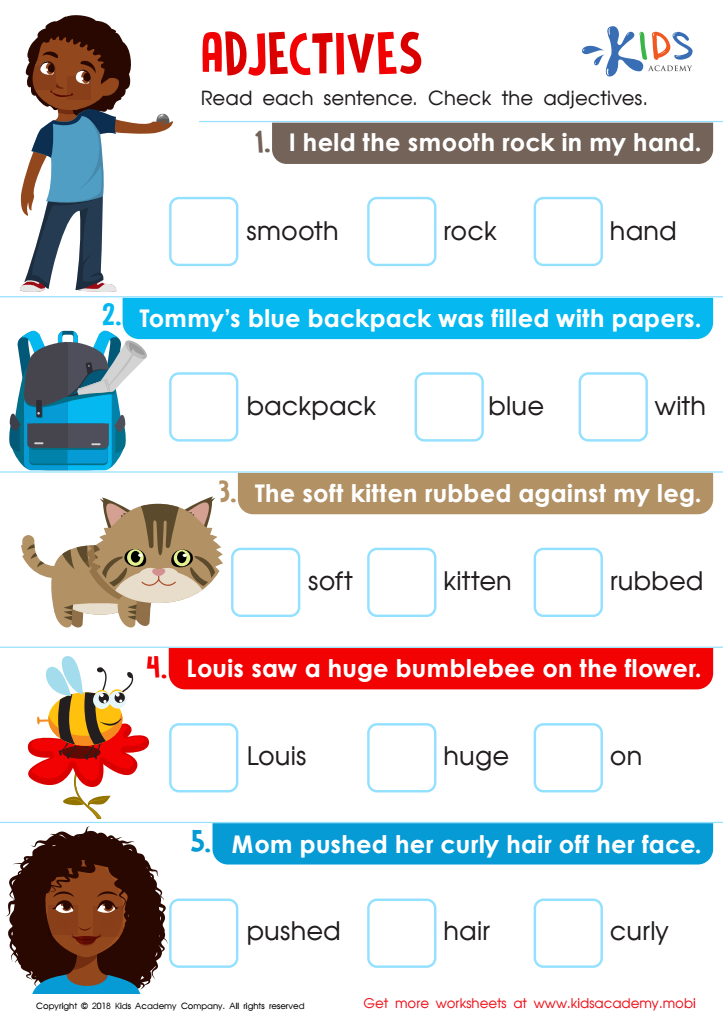
Adjectives Worksheet
Adjectives are words that describe a noun. Examples include "beautiful" and "good". Ask your students to use these adjectives in a sentence and have them identify the adjectives in five sentences on a worksheet. Point out that adjectives are essential to understand, and have them check their answers.
Adjectives Worksheet
Worksheet
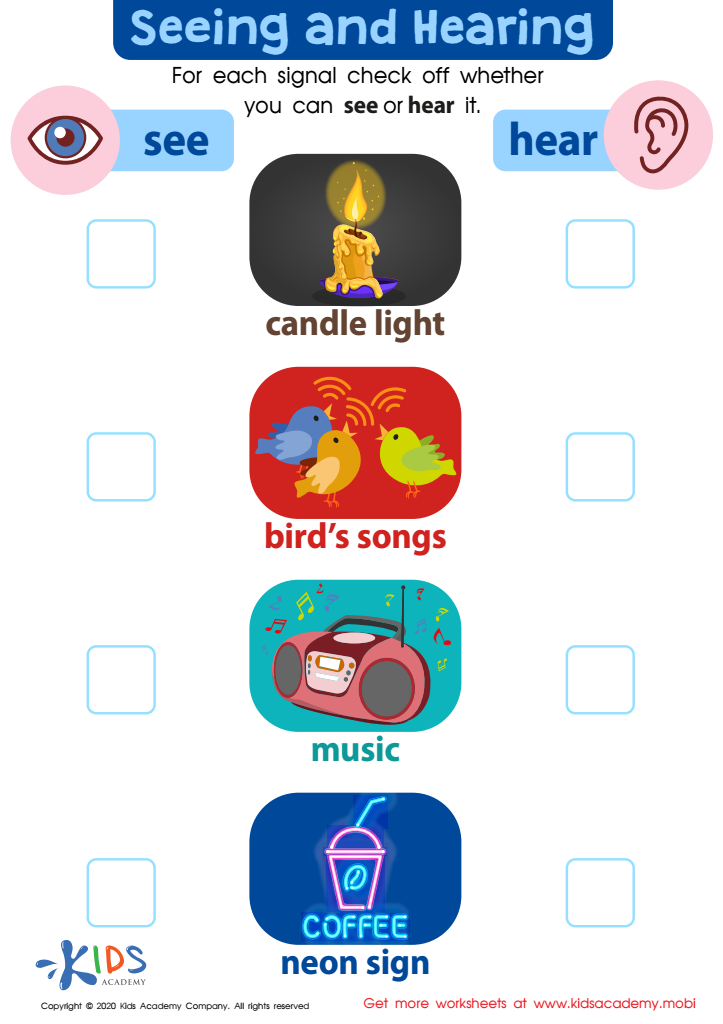
Seeing and Hearing Worksheet
Before beginning this worksheet, ensure your students know that we have five senses: eyes (seeing), tongue (tasting), skin (feeling), nose (smelling), and ears (hearing). This worksheet will explore seeing and hearing - ask your students what they can see/hear in the picture and get them to check it off.
Seeing and Hearing Worksheet
Worksheet
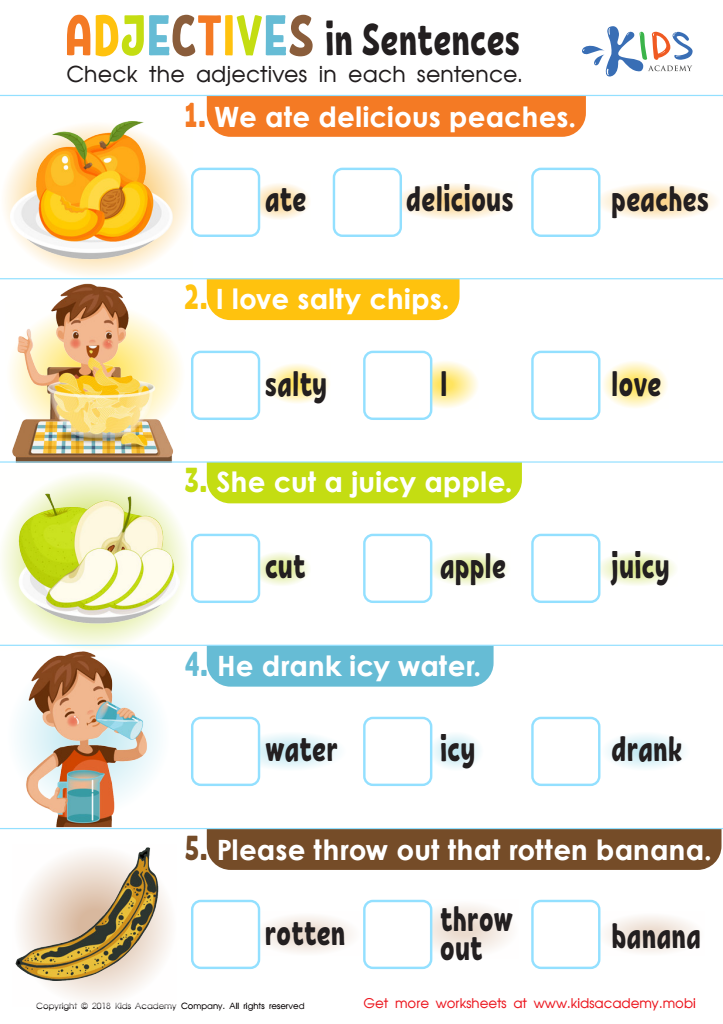
Adjectives in Sentences Worksheet
Our learners can find it hard to use writing to add detail, but adjectives can help. With this fun worksheet, kids can identify adjectives that describe food and drink. Guide them through each sentence, discussing the words and having them choose the one that gives information about the food/drink.
Adjectives in Sentences Worksheet
Worksheet
Join Kids Academy for Free
Who is primarily going to use this learning content?








Understanding adjectives is essential for children aged 6-9, as this foundational aspect of language greatly enhances their communication skills. Adjectives describe nouns, providing detail and improving clarity in both spoken and written language. When children recognize and use adjectives effectively, they can convey specific meanings and express their thoughts more vividly.
For parents and teachers, focusing on adjectives helps cultivate children’s vocabulary and fosters linguistic creativity. As they learn to use adjectives, children can better describe their experiences, surroundings, and feelings, which in turn builds confidence in their language abilities. Additionally, this understanding supports literacy development; as children encounter descriptive language in reading, they can better analyze texts and engage with stories, enhancing comprehension.
Furthermore, recognizing the various degrees of adjectives—such as comparative and superlative forms—enables children to make distinctions in size, quality, and quantity, essential for critical thinking. Engaging young learners with interactive and fun activities centered around adjectives, like games and storytelling, reinforces this knowledge and keeps their interest alive.
In summary, prioritizing the understanding of adjectives is vital for developing effective communication, boosting literacy skills, and fostering creativity in young learners, making it a significant focus for both parents and teachers.








