Understanding perspectives Normal Worksheets for Ages 6-9
3 filtered results
-
From - To
Unlock the power of perspective with our "Understanding Perspectives Normal Worksheets" designed for kids ages 6-9! These engaging, printable worksheets help young learners explore different viewpoints and develop essential social-emotional skills. With fun activities that encourage critical thinking, storytelling, and empathy, children will gain insights into how others think and feel. Ideal for classrooms or home learning, these worksheets foster creativity and collaboration while making learning enjoyable. Whether your child is interpreting scenarios or engaging in discussions, our resources support their growth and understanding of diverse perspectives. Start your child's journey to becoming a thoughtful, compassionate individual today!
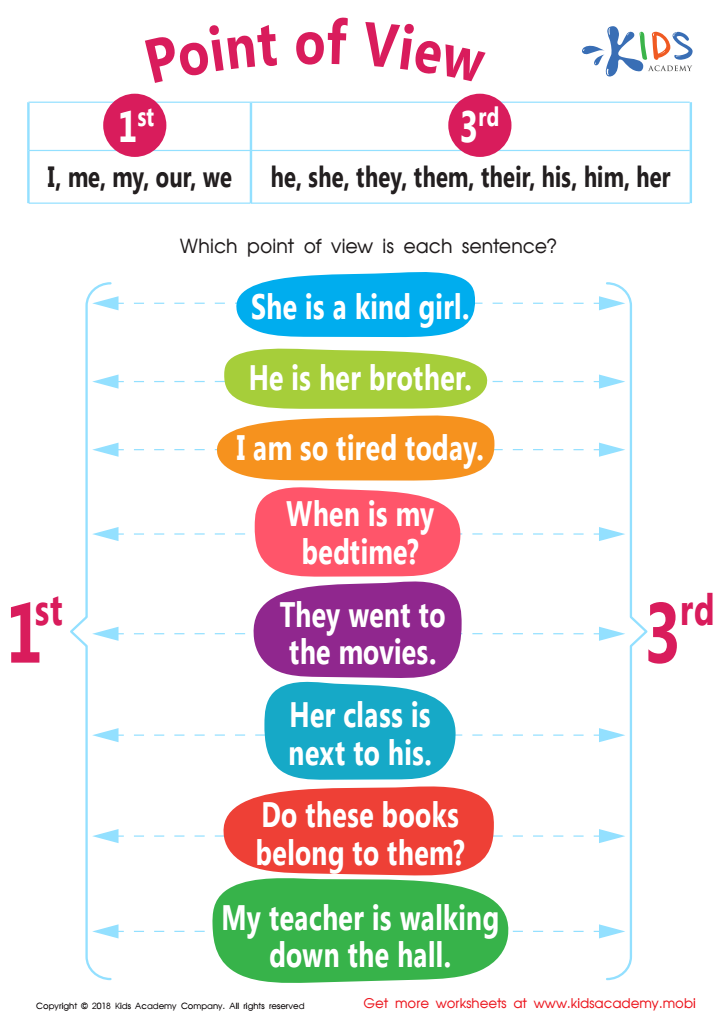
Point of View Worksheet
 Assign to My Students
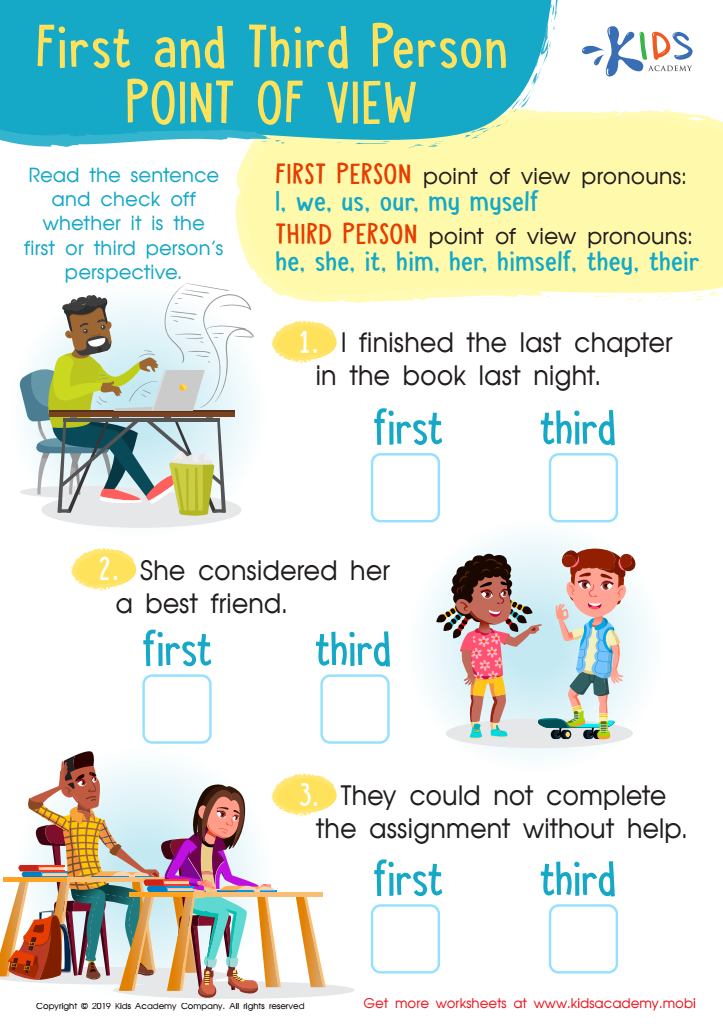
First and Third Person Point of View Worksheet
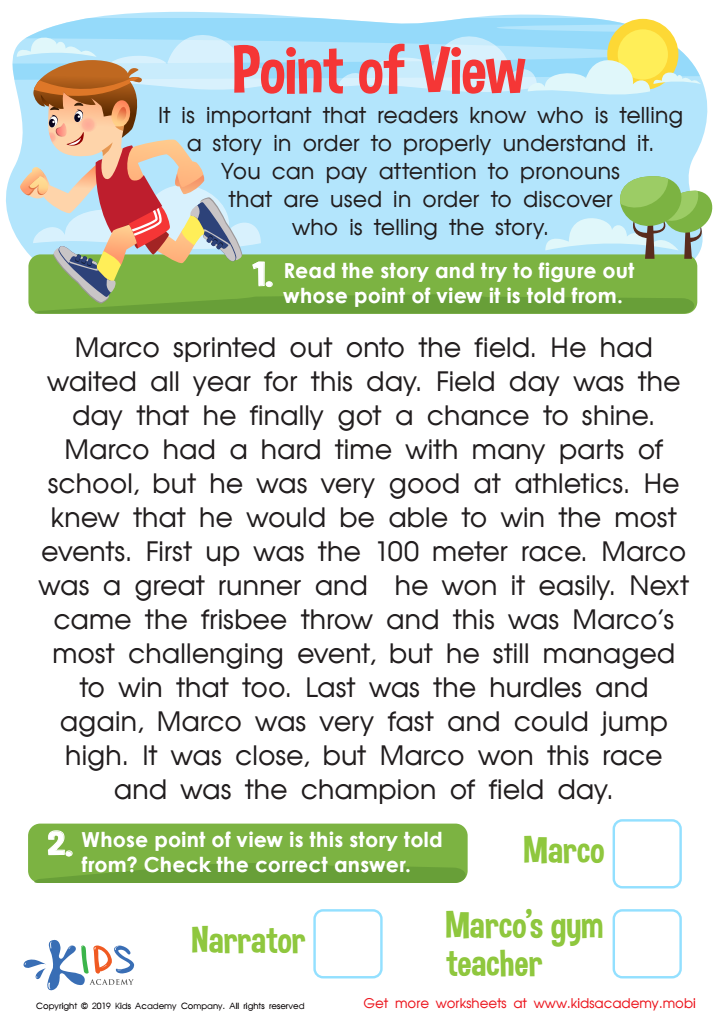
Point of View Worksheet






Understanding perspectives is crucial for children aged 6-9 because it lays the foundation for empathy, social skills, and emotional intelligence. At this developmental stage, children are beginning to navigate complex social interactions and are starting to realize that others may have different feelings, thoughts, and experiences. By promoting perspective-taking, parents and teachers can help children learn to consider viewpoints that differ from their own, which fosters empathy and compassion.
Encouraging children to understand perspectives helps reduce conflicts and bullying, as they become more aware of how their actions affect others. It also enhances communication skills, enabling them to collaborate better with peers in group activities and projects. Moreover, grasping different perspectives contributes to critical thinking and enhances problem-solving abilities, as children learn to analyze situations from various angles.
When parents and teachers model and discuss perspective-taking, it reinforces the idea that respecting and valuing others’ viewpoints is fundamental for healthy relationships and a supportive community. Ultimately, investing in the ability to understand perspectives equips children with essential life skills, aiding their social development and promoting a nurturing and inclusive environment both at home and in school.








