Visual discrimination skills Normal Worksheets for Ages 6-9
5 filtered results
-
From - To
Our "Visual Discrimination Skills Normal Worksheets for Ages 6-9" are designed to enhance essential learning skills in young children. Perfect for kids aged 6-9, these worksheets focus on helping children discern differences in shapes, patterns, and details, which is crucial for reading and mathematics. Through colorful and engaging activities, children can develop keen observation and critical thinking skills. These worksheets are tailored to align with educational standards and support classroom learning or homeschooling environments. Empower your child to excel in their academic journey with our expertly crafted visual discrimination worksheets.
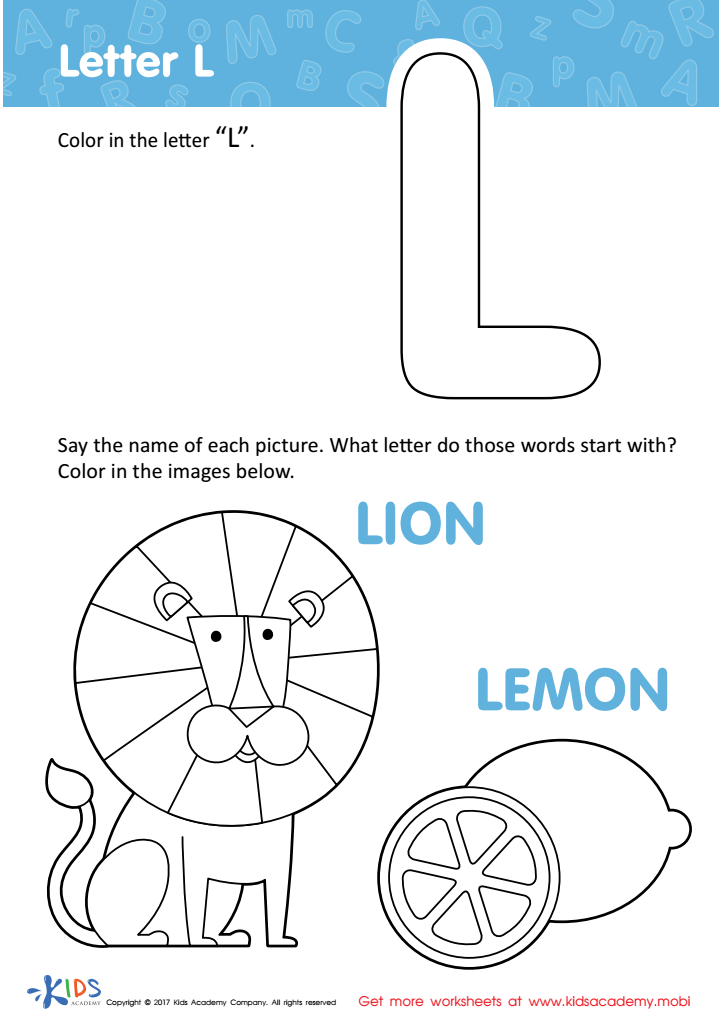
Letter L Coloring Sheet
 Assign to My Students
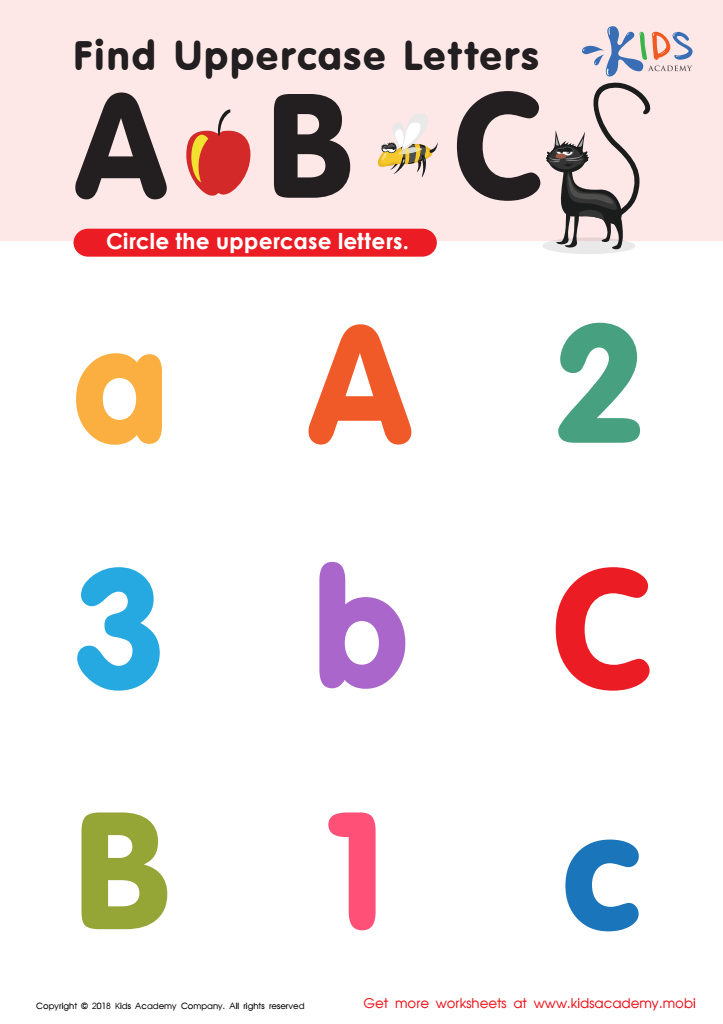
Find Uppercase Letters A, B, and C Worksheet
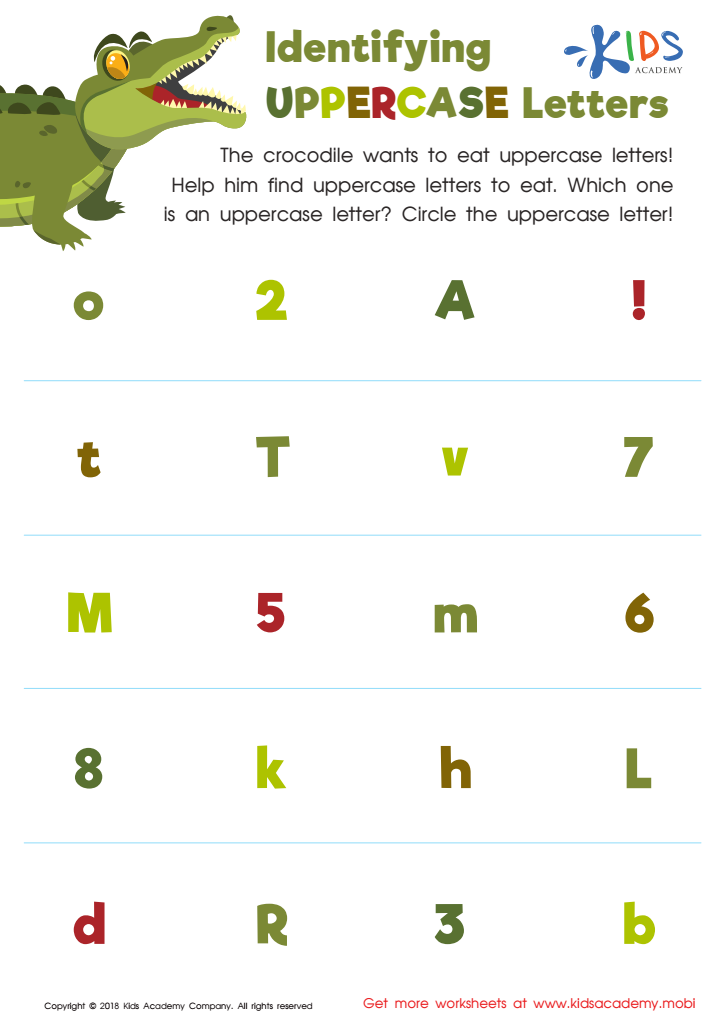
Identifying Uppercase Letters Worksheet
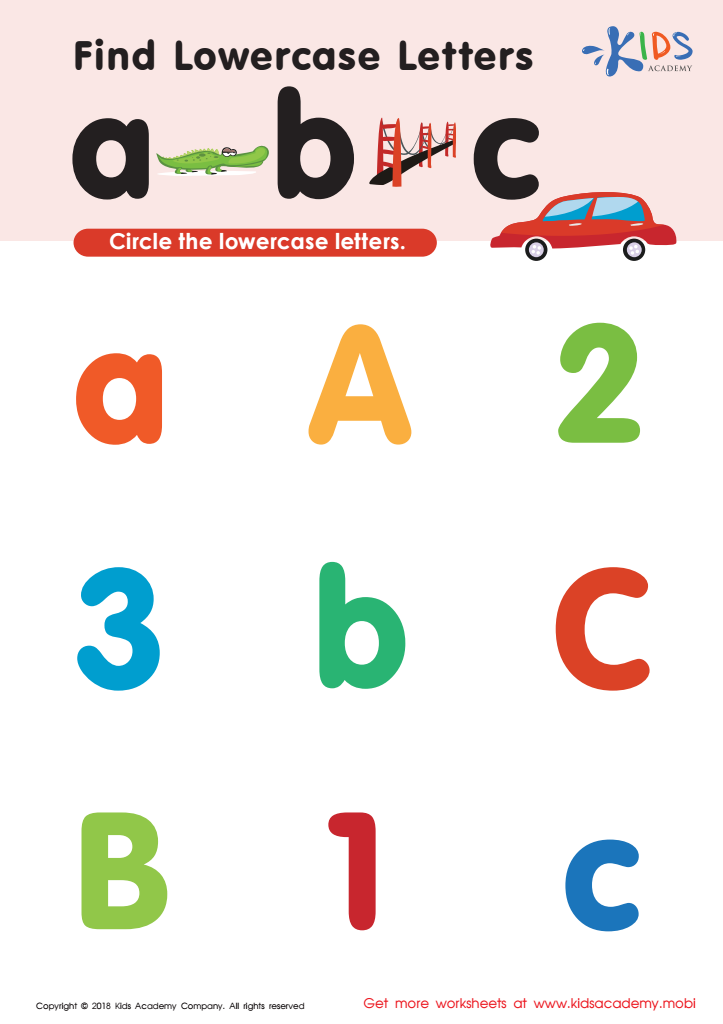
Find lowercase letters a b c Worksheet
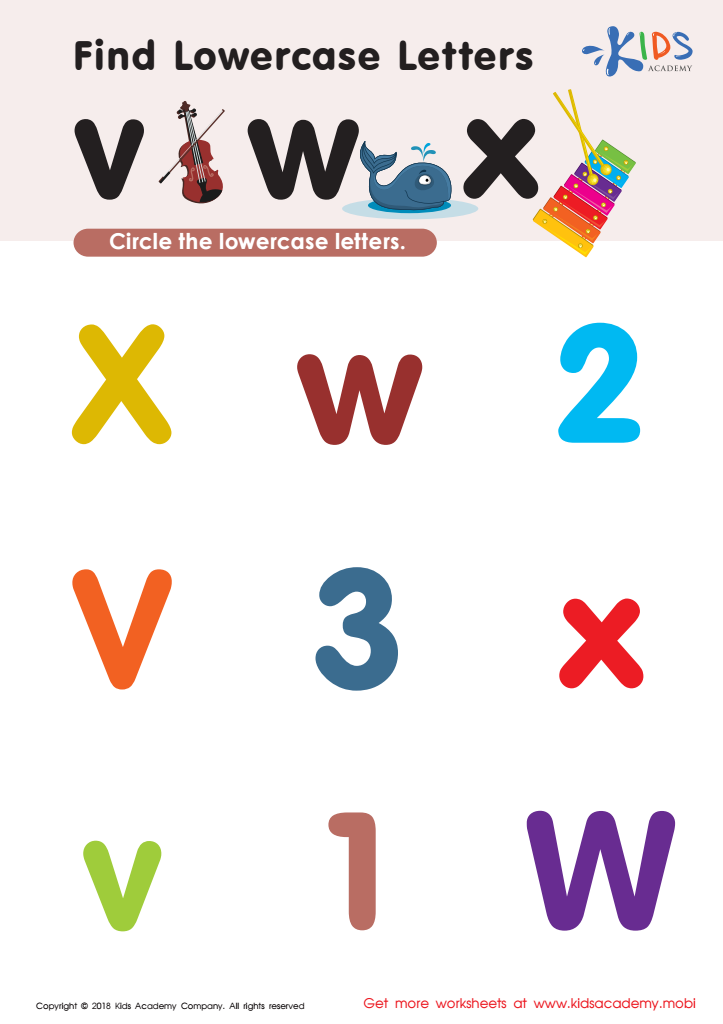
Find Lowercase Letters v w x Worksheet







Visual discrimination skills are crucial for children aged 6-9 as they play a foundational role in various aspects of learning and development. These skills enable children to recognize differences and similarities between shapes, patterns, numbers, and letters, which is essential for reading and writing. For instance, being able to differentiate between similar looking letters such as 'b' and 'd' or 'p' and 'q' ensures accurate reading and writing, reducing common errors that can hinder academic progress.
Moreover, visual discrimination contributes to mathematical skills by helping children discern between numbers and geometric shapes. Operational tasks such as sorting objects, recognizing symbols, and understanding visual patterns lay the groundwork for more complex problem-solving abilities.
Graphics in textbooks, puzzles, and everyday classroom activities also rely on strong visual discrimination skills. These tasks bolster critical thinking and spatial awareness, crucial elements in overall cognitive development. Engagement in activities that enhance visual discrimination, like matching games and puzzles, can lead to improved concentration and memory.
For parents and teachers, nurturing these skills means providing a strong foundation for their child’s future learning. Early intervention and support in this area can also help identify and mitigate potential learning difficulties, ensuring every child has the opportunity to succeed academically and beyond.








