
Word Formation Normal Worksheets for Ages 6-9
3 filtered results
Difficulty Level
Grade
Age
-
From - To
Subject
Activity
Standards
Enhance your child's language development with our Word Formation Normal Worksheets designed for ages 6-9. These engaging and educational worksheets cover a range of word formation activities, helping young learners grasp the building blocks of English. Fun exercises ensure kids have a great time while expanding their vocabulary and understanding of different word forms. Ideal for both classroom use and homeschooling, our worksheets provide a solid foundation in language skills through interactive and exciting tasks. Help your child become a confident language user with our expertly crafted materials, tailored to make learning enjoyable and effective.
Favorites
With answer key
Interactive
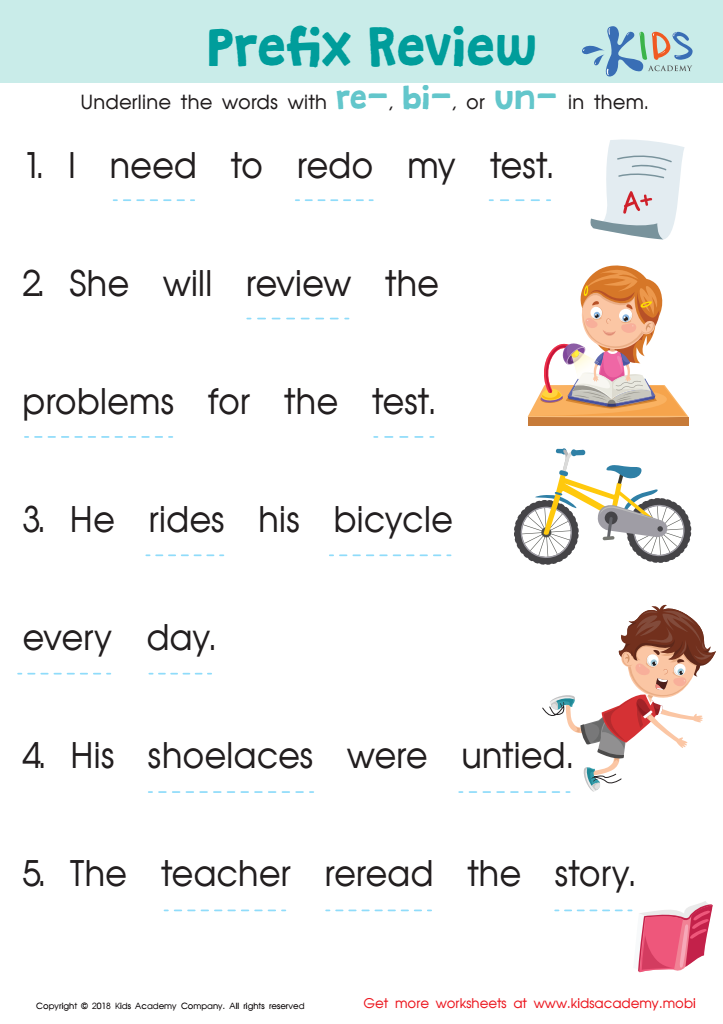
Prefix Review Worksheet
Learning prefixes is key for effective communication. Help your child master re-, bi-, and un- with a Kids Academy worksheet. Ask them to go through each sentence, underlining words with one of the prefixes. This will help them appreciate how prefixes alter the meaning of a root word.
 Assign to My Students
Prefix Review Worksheet
Worksheet
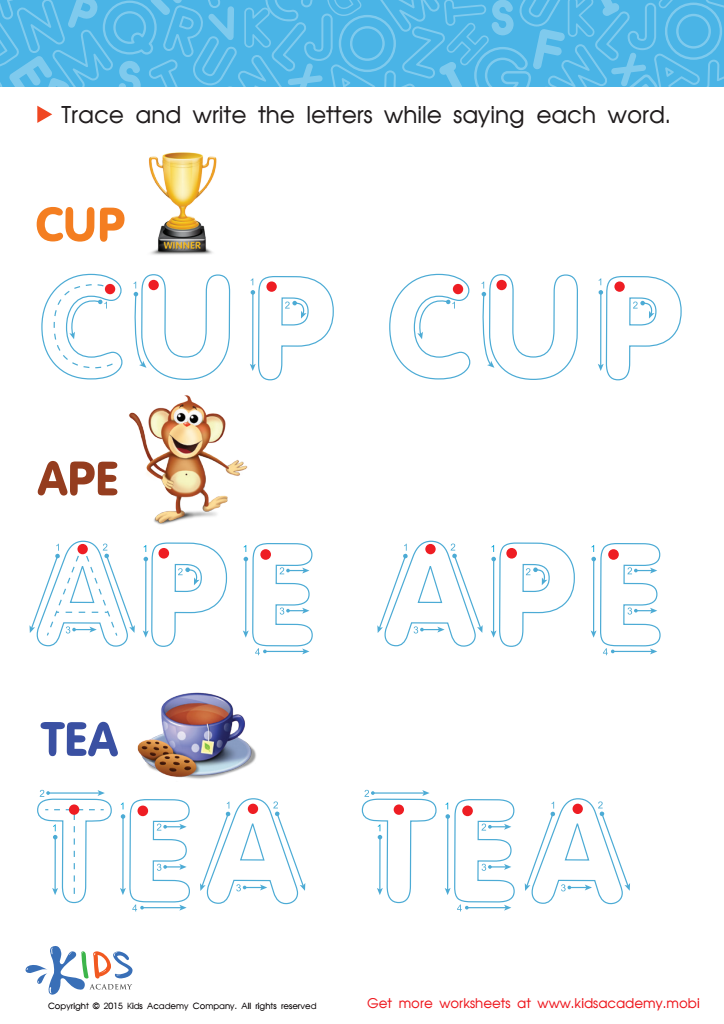
A Cup, an Ape and Tea Spelling Worksheet
Check out Kids Academy's new English vocab worksheet! You'll find three lines with three words each. Practice your pronunciation and writing by writing them one by one. We have more free spelling word worksheets on our website, so download and practice today!
A Cup, an Ape and Tea Spelling Worksheet
Worksheet
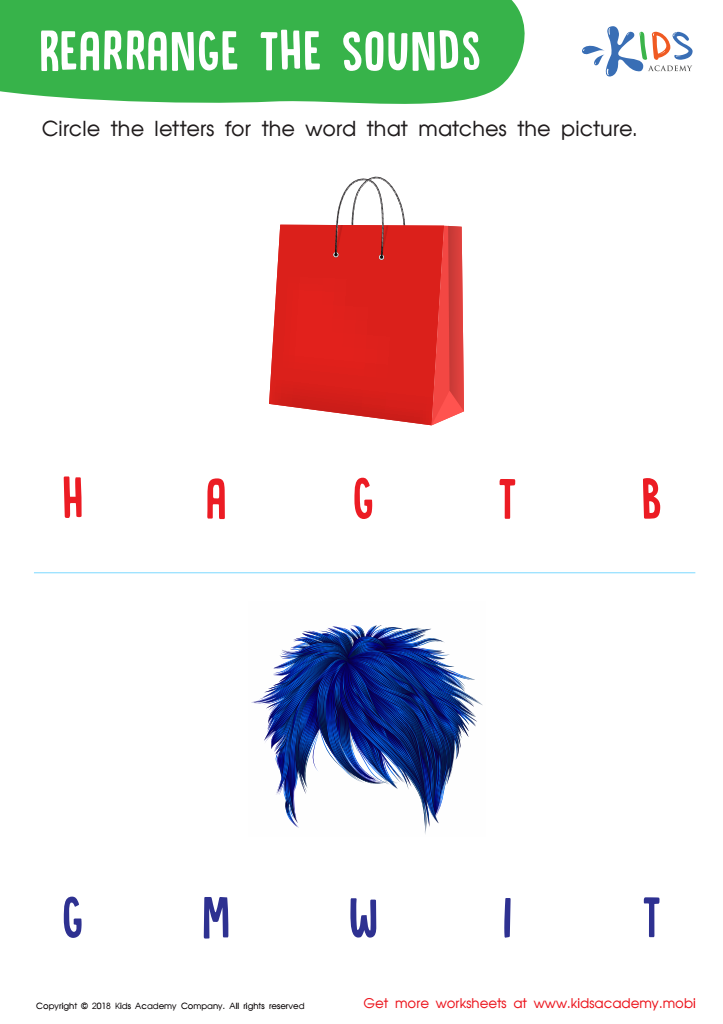
Rearrange the Sounds Worksheet
Ask students if they can identify the objects in the worksheet and spell the words. Guide them to find and circle the letters that match the picture. This exercise should be easy-peasy for advanced spellers.
Rearrange the Sounds Worksheet
Worksheet
Join Kids Academy for Free
Who is primarily going to use this learning content?








Word formation is a critical skill in language development, especially for children aged 6-9, as this is when foundational literacy skills are solidifying. During these early years, children transition from recognizing and pronouncing words to understanding how words are formed and structured. This period is crucial for vocabulary expansion, which directly affects reading comprehension and overall communication skills.
For parents and teachers, fostering an understanding of word formation helps children decode new words, enabling them to read more fluently and accurately. By learning root words, prefixes, and suffixes, children can piece together meanings and enhance their ability to spell complex words. For example, understanding that “un-” often means “not” can help a child understand words like “unhappy” or “unfair.”
Additionally, awareness of word formation strengthens writing skills. When children grasp how words are constructed, they can better manipulate language to express their thoughts clearly and creatively. This unlocks higher levels of thinking and comprehension, which are essential for academic success across all subjects.
Moreover, proficiency in word formation fosters a love of language and boosts confidence. As children become skilled at building and understanding words, they feel more empowered to explore new texts, participate in discussions, and pursue their educational interests with enthusiasm. In sum, investing in word formation skills early on sets the stage for a robust and lifelong mastery of language.








