Word segmentation Normal Worksheets for Ages 6-9
3 filtered results
-
From - To
Enhance your child’s literacy skills with our Word Segmentation Normal Worksheets, designed specifically for ages 6-9! These engaging printables focus on helping young learners break down words into their individual sounds or syllables, integral for developing reading and spelling abilities. With a variety of fun activities, including matching, sorting, and filling in the blanks, children will enjoy practicing word segmentation in an interactive way. Our worksheets align with early learning standards, making them an ideal resource for parents and teachers alike. Download now to support your child’s journey to becoming a confident reader and writer!
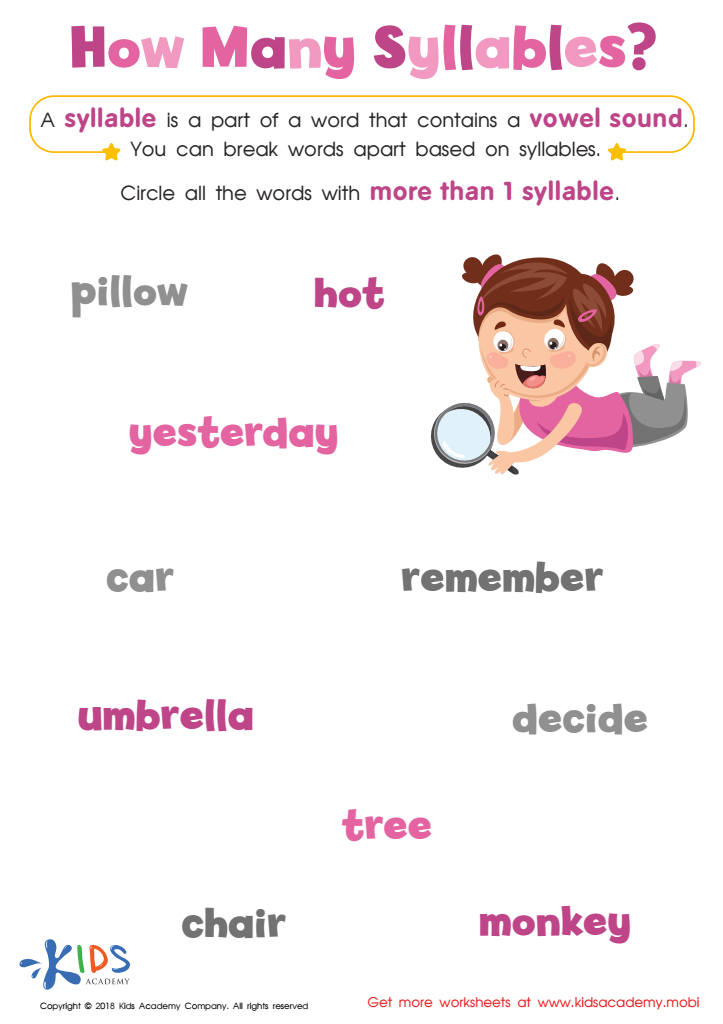
Reading: How Many Syllables Worksheet
 Assign to My Students
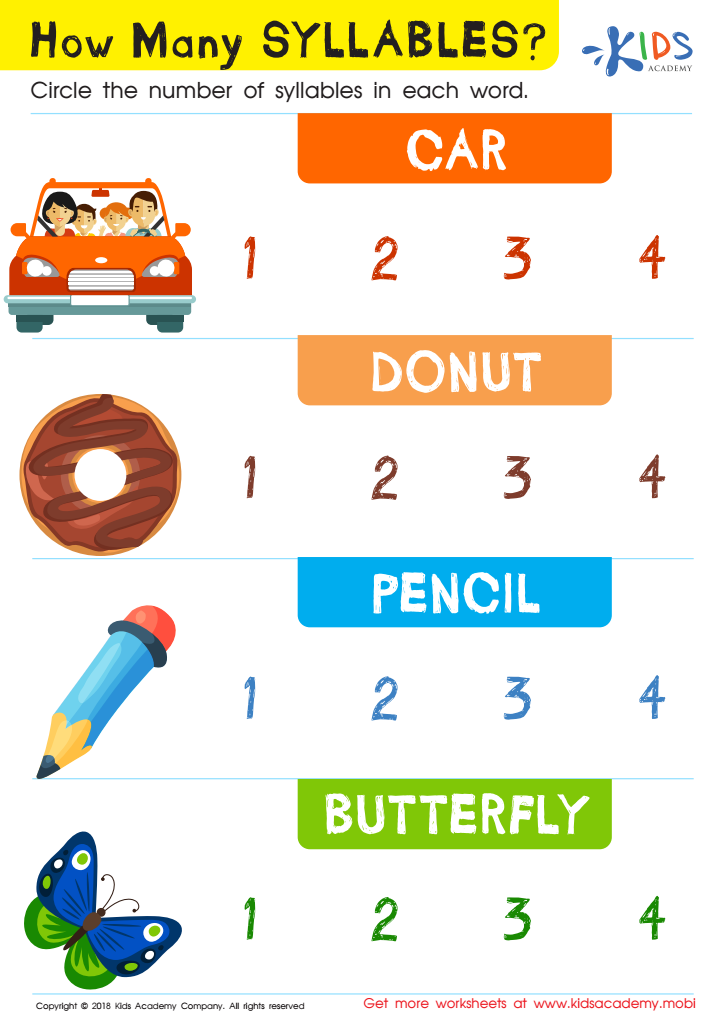
How Many Syllables? Worksheet
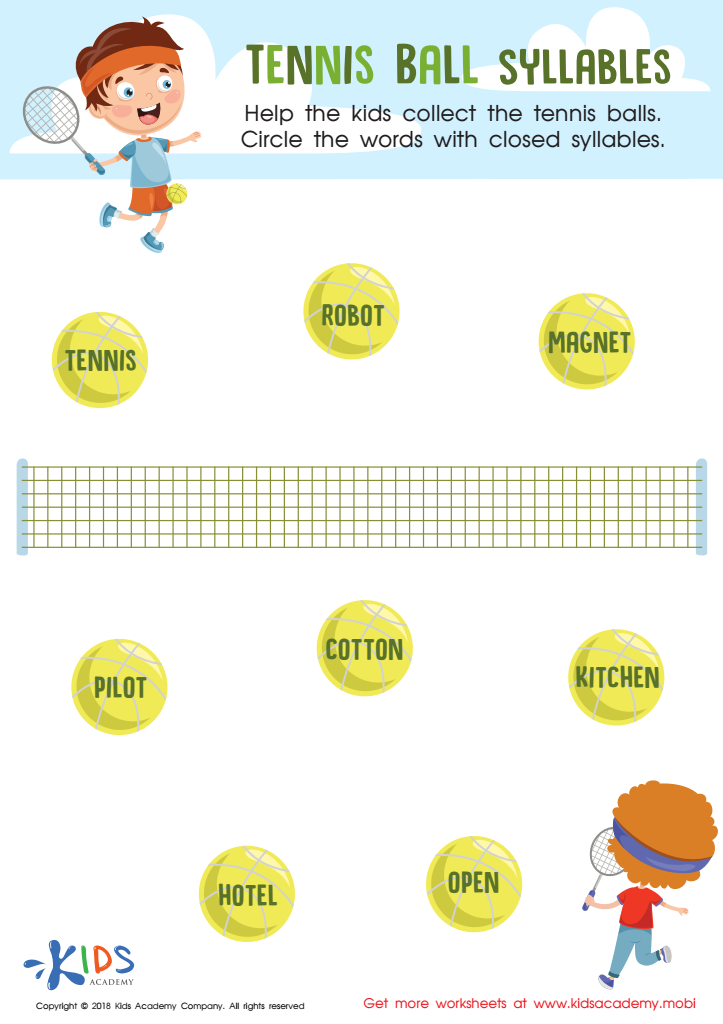
Tennis Ball Syllables Worksheet







Word segmentation skill is crucial for children aged 6-9, particularly in the context of language development and literacy. This stage is vital as children transition from learning to read to reading to learn. Effective word segmentation—the ability to identify and separate individual words within spoken or written sentences—lays the foundation for reading comprehension.
Parents and teachers should care about this skill because it directly impacts phonological awareness, an essential component of reading proficiency. By mastering word segmentation, children can decode words more easily, leading to improved reading fluency and comprehension. Without this skill, children may struggle to understand the meaning of text, which can ultimately affect their overall academic performance and self-confidence.
Moreover, word segmentation practice enhances vocabulary development—children learn to recognize that words are made up of distinct parts, which aids in word recognition. When children are supported in developing this fundamental skill, they are more likely to embrace literacy, fostering a love for reading that can last a lifetime. Furthermore, strong literacy skills are linked to greater success in all subject areas, reinforcing the importance of prioritizing word segmentation in early education. Therefore, parents and teachers must actively support and cultivate this essential skill.








