Logical thinking development Normal Addition & Subtraction Worksheets for Ages 6-9
4 filtered results
-
From - To
Boost your child’s numerical proficiency and logical thinking with our Normal Addition & Subtraction Worksheets for Ages 6-9. Designed to challenge and engage, these worksheets enhance cognitive abilities through carefully structured math problems. Each page promotes critical thinking, problem-solving, and foundational math skills, ensuring your child builds a strong arithmetic foundation. The captivating exercises capture interest, making learning enjoyable and effective. Perfect for classroom and at-home use, these worksheets cater to various learning styles, helping young learners achieve math success with confidence. Elevate your child’s logical reasoning and arithmetic skills with our expertly crafted math worksheets today.
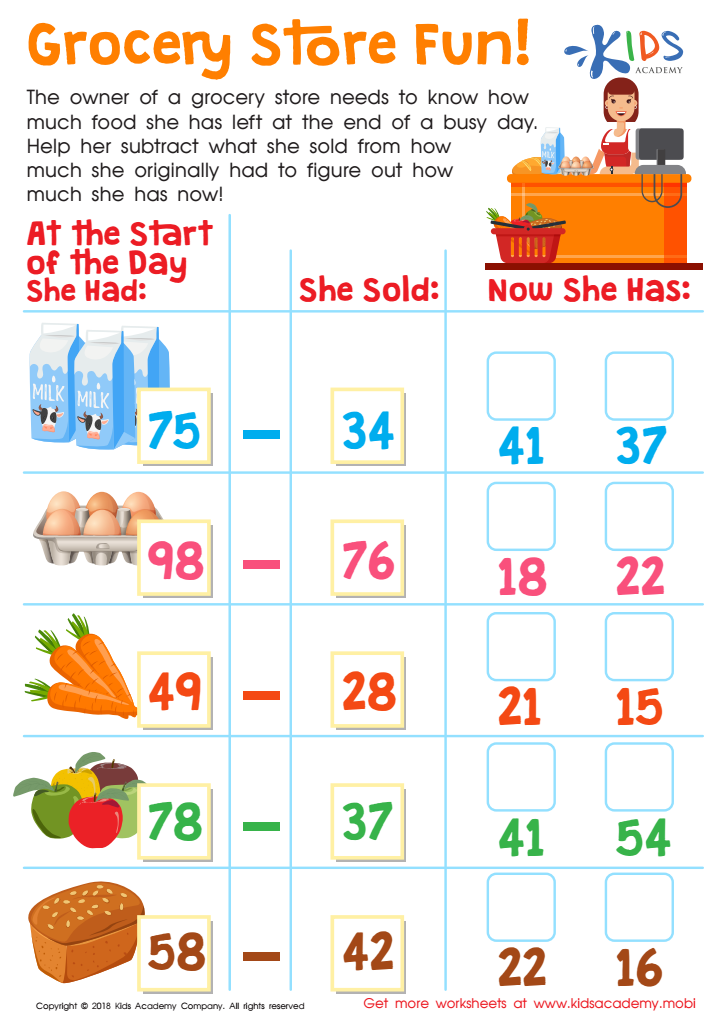
Grocery Store Fun! Worksheet
 Assign to My Students
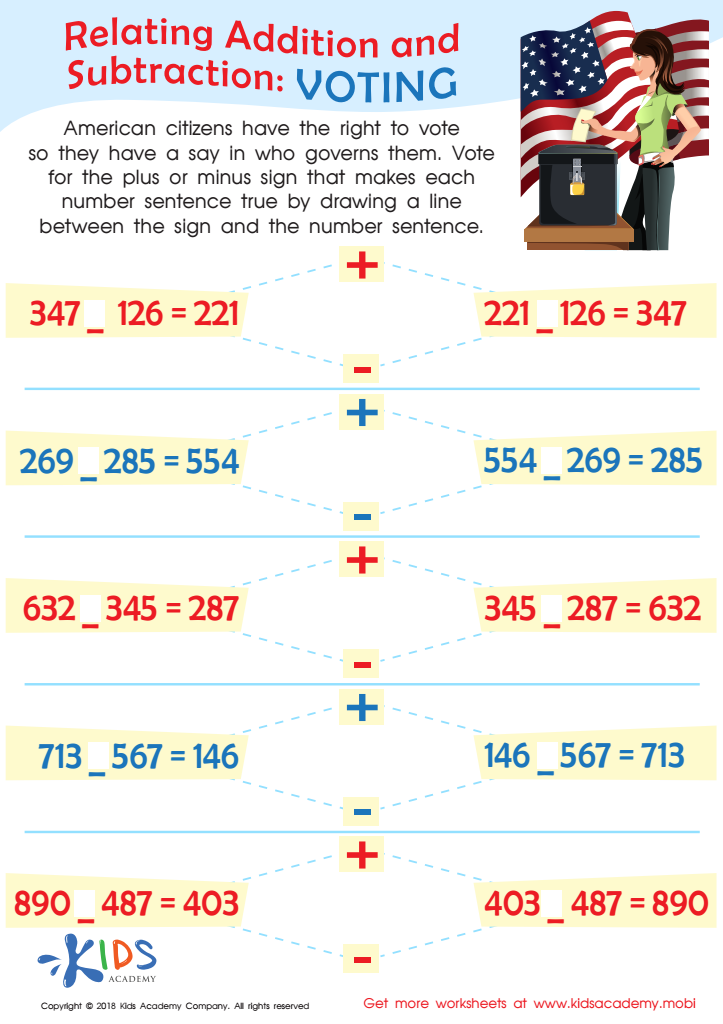
Voting Worksheet
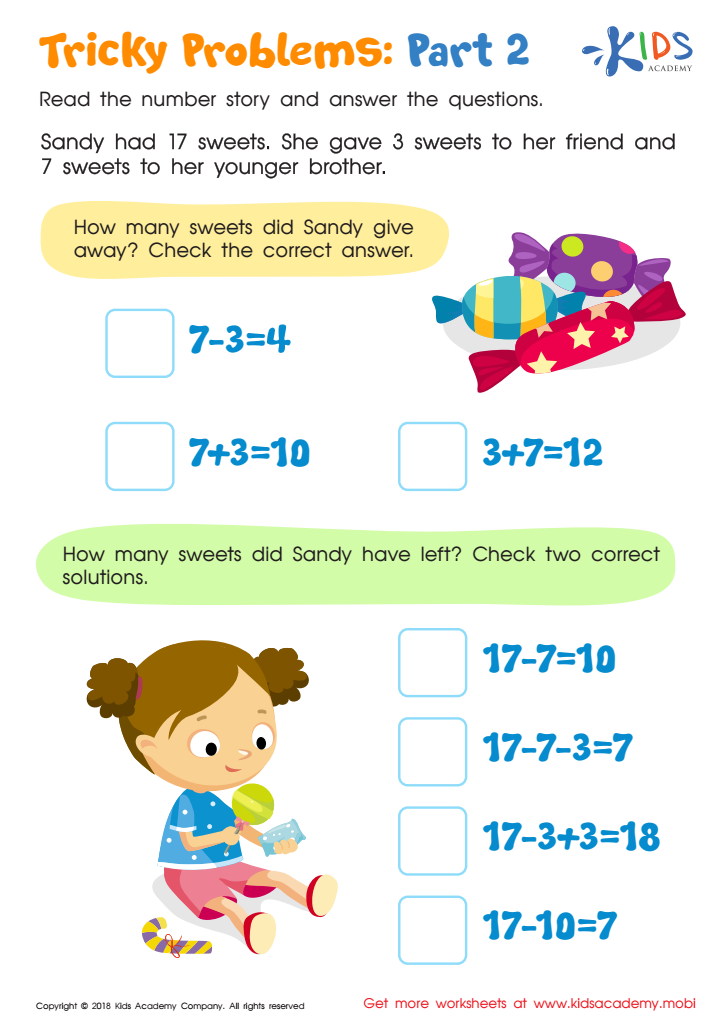
Tricky Problems Worksheet: Part 2
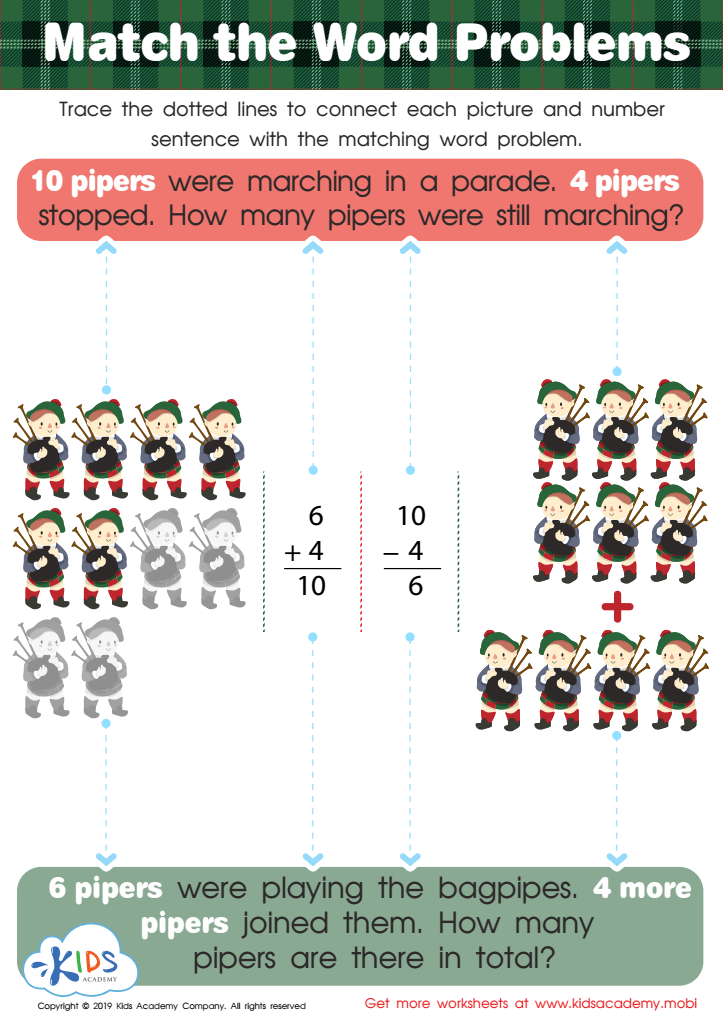
Match the Word Problems Worksheet








Developing logical thinking and basic arithmetic skills in children aged 6 to 9 is fundamental for fostering strong cognitive capabilities that will serve them throughout their academic journey and beyond. Logical thinking equips children with the ability to reason, make connections, and solve problems effectively. These abilities are cornerstone skills not only for higher-level mathematics but across all subjects, contributing to better comprehension and adaptability in diverse learning situations.
Introducing normal addition and subtraction during these formative years helps solidify a child's numerical understanding and fluency with basic math concepts. Mastery of these fundamentals provides a solid foundation upon which more complex mathematical concepts build, such as multiplication, division, fractions, and eventually algebra. Fluency in addition and subtraction also translates to real-world scenarios; children can more confidently handle money, tell time, and measure quantities, making them more independent and competent in daily tasks.
Moreover, engaging with these cognitive challenges early on fosters a positive learning attitude. Children who are comfortable and proficient with basic math experience reduced anxiety around more complex topics in the future, cultivating a sense of accomplishment and encouraging lifelong learning. Hence, parents and teachers should prioritize logical thinking and basic arithmetic to empower children with the critical analytical tools they need for academic success and practical life skills.








