Fine Motor Skills Normal Addition Worksheets for Ages 6-9
3 filtered results
-
From - To
Enhance your child's fine motor skills while mastering addition with our engaging worksheets designed specifically for ages 6-9. These activities intertwine math practice with hand-eye coordination development, ensuring your child strengthens their grasping, cutting, and writing abilities as they solve addition problems. Each worksheet offers a variety of fun exercises, from tracing numbers to solving colorful math puzzles, making learning a joyful experience. Perfect for home or classroom use, our worksheets encourage independent practice and build confidence in budding mathematicians. Download now and watch your child thrive in both math and motor skills while having fun!

18 Candles Worksheet
 Assign to My Students

Help the Bee Find 16 Flowers Worksheet
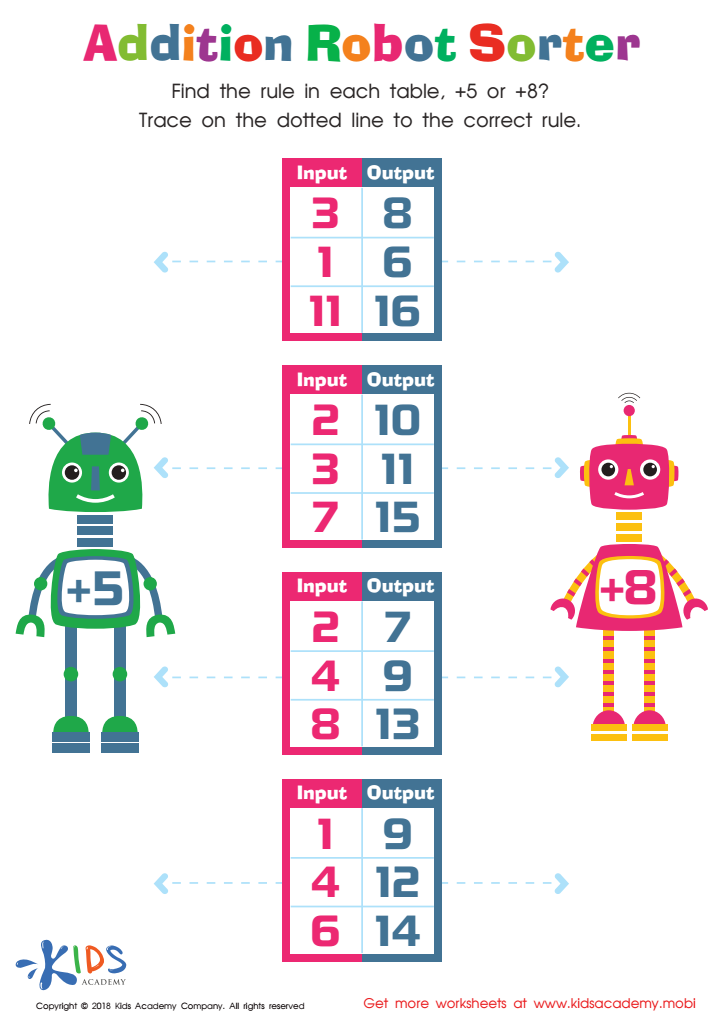
Addition Robot Sorter Worksheet








Fine motor skills are essential for young children, particularly for those aged 6-9, as they are foundational for various academic and daily life tasks. These skills involve the coordination of small muscles in hands and fingers, allowing children to perform small, precise movements. At this age, children are expected to complete tasks that require good fine motor skills, such as writing, drawing, cutting, and manipulating small objects.
Parents and teachers should care about fine motor skill development because it directly impacts a child's academic success. Proficient fine motor skills are essential for writing neatly and legibly, which affects a child's ability to complete homework and exams effectively. In addition, fine motor skills contribute to essential self-care tasks like buttoning shirts and tying shoelaces, fostering independence.
Moreover, the development of these skills nurtures a child's cognitive growth and coordination, supporting their overall physical development. Activities that enhance fine motor skills—such as playing with building blocks, arts and crafts, or even simple puzzles—also promote creativity and problem-solving abilities.
Investing time and energy in fostering fine motor skills during these formative years will prepare children for future learning and empower them in both academic and social environments.