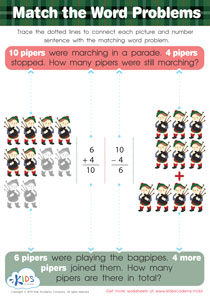
Problem-solving abilities Normal Addition Worksheets for Ages 6-9
4 filtered results
-
From - To
Our "Problem-Solving Abilities Normal Addition Worksheets for Ages 6-9" are expertly crafted to enhance your child's mathematical skills. Designed specifically for younger learners, these engaging worksheets focus on normal addition problems that help strengthen their problem-solving abilities. Through a variety of exercises, children will practice adding single-digit and double-digit numbers, fostering both confidence and competence in their math abilities. Each worksheet is colorful and fun, ensuring that learning remains an enjoyable experience. Perfect for both classroom and at-home learning, these resources support your child's academic growth and nurture a love for math. Start their journey to mastering addition today!
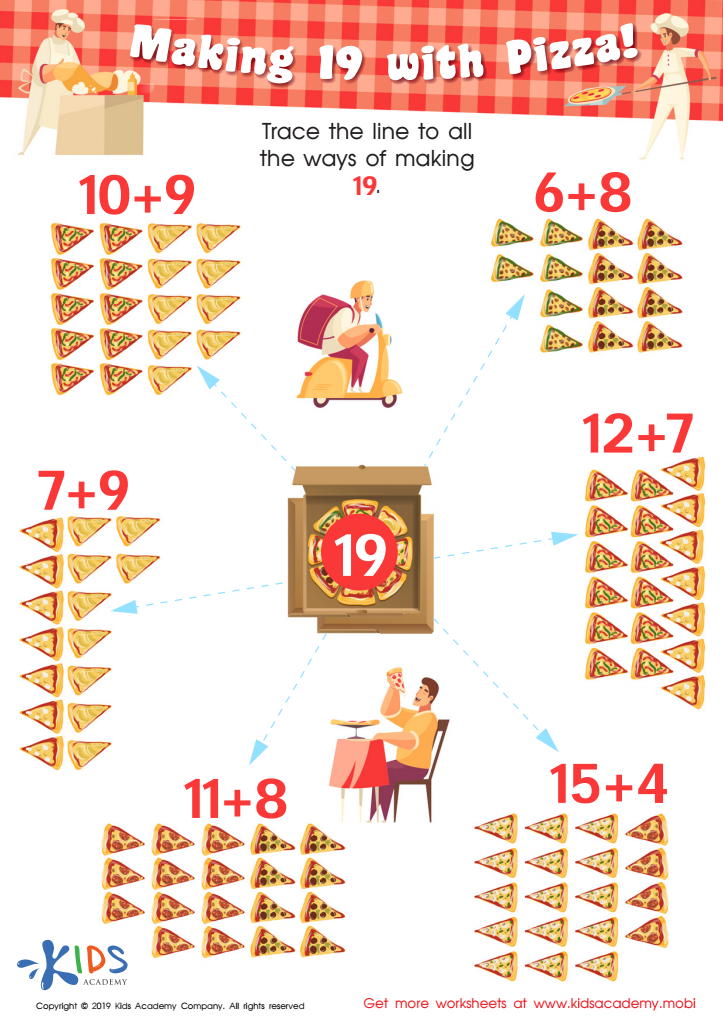
Making 19 with Pizza! Worksheet
 Assign to My Students
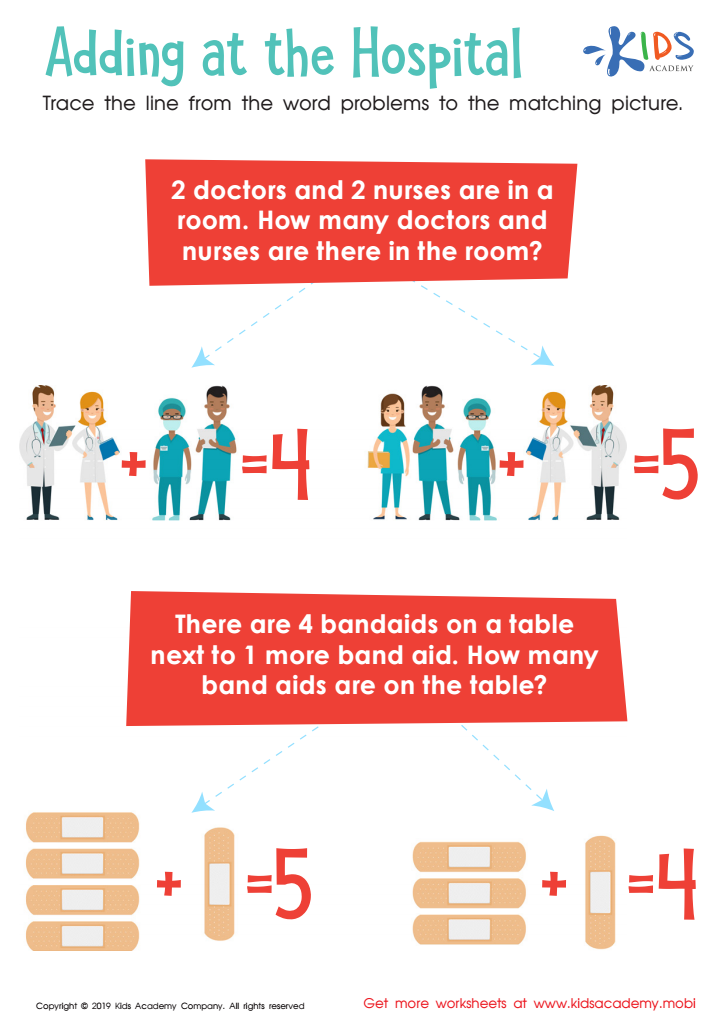
Adding at the Hospital Worksheet
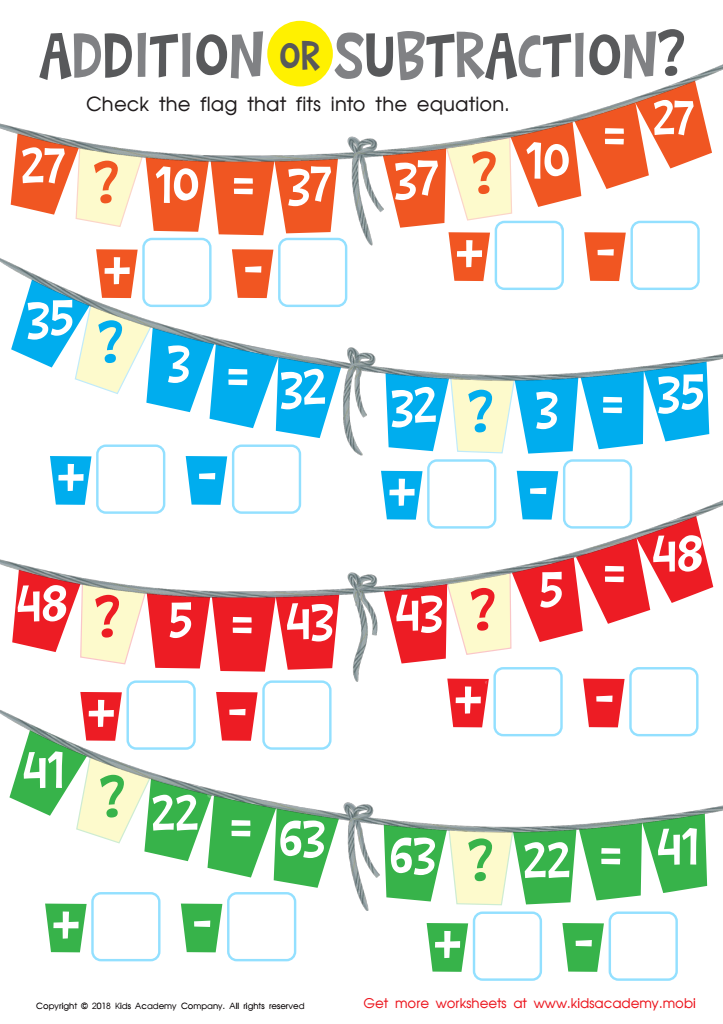
Addition or Subtraction? Worksheet
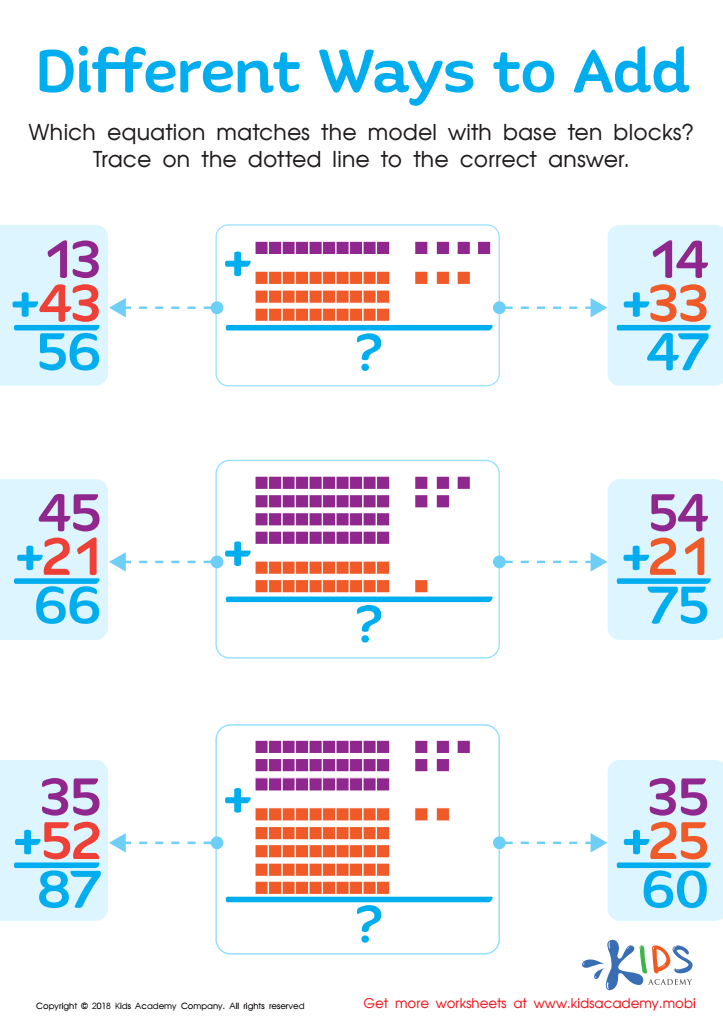
Different Ways to Add Worksheet





.jpg)

.jpg)
Parents and teachers should prioritize problem-solving abilities in normal addition for children aged 6-9 because these skills lay the foundational groundwork for future mathematical learning and cognitive development. At this formative age, mastering basic addition aids children in developing critical thinking and analytical capabilities. It enhances their ability to approach various challenges independently and apply logical strategies to find solutions. Being proficient in simple addition is not just about getting the right answers; it nurtures patience, perseverance, and the ability to follow multi-step processes, all of which are valuable life skills.
Moreover, problem-solving in math fosters confidence and a sense of achievement. When children successfully solve an addition problem, it boosts their self-esteem and encourages a positive attitude toward learning. This positive reinforcement is crucial in keeping them motivated to tackle more complex concepts as they advance in their education.
Additionally, these basic mathematical skills are intertwined with other academic subjects and real-life situations. They are essential for understanding more complex math topics like multiplication and division and are necessary for everyday tasks, such as handling money, telling time, and measuring ingredients.
In conclusion, caring about children's problem-solving abilities in normal addition sets them on a path to lifelong learning, problem-solving proficiency, and overall academic success.