Problem-solving practice Normal Addition Worksheets for Ages 6-9
3 filtered results
-
From - To
Boost your child's math skills with our "Problem-Solving Practice: Normal Addition Worksheets for Ages 6-9". These engaging worksheets are designed to offer young learners a fun and interactive way to improve their addition abilities. Each worksheet features a variety of addition problems that help children develop critical thinking and problem-solving skills. Perfect for classroom use or at-home practice, our thoughtfully crafted addition worksheets ensure that kids grasp fundamental math concepts while enjoying the learning process. Support your child’s educational journey and build their confidence with our expertly curated addition practice worksheets. Download and print today for endless learning fun!

Addition with Regrouping Worksheet
 Assign to My Students
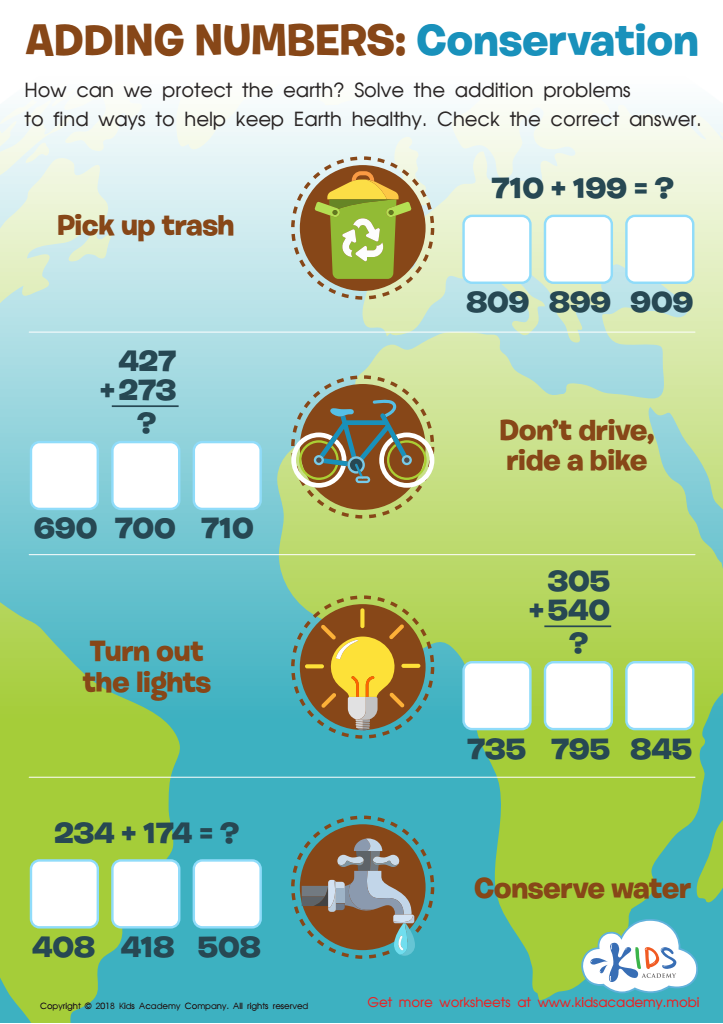
Adding Numbers: Conservation Worksheet
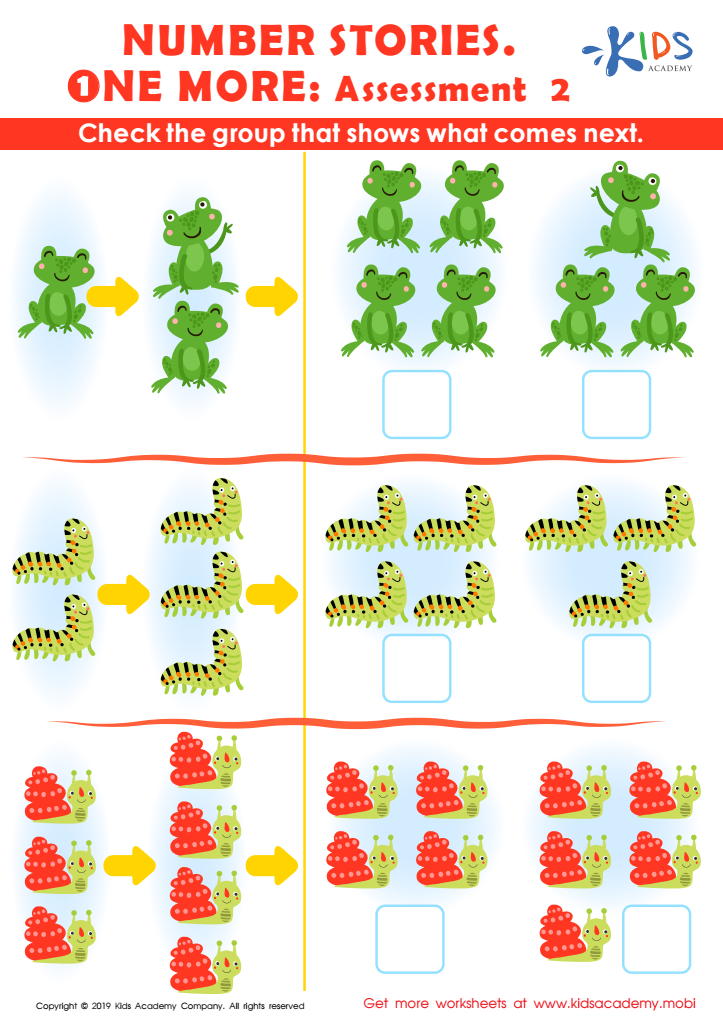
Number Stories One More – Assessment 2 Worksheet








Parents and teachers should care about problem-solving practice, especially normal addition, for children aged 6-9, because it lays a crucial foundation for future mathematical learning. At this young age, developing a strong grasp of basic arithmetic is essential, as these skills are building blocks for more complex mathematical concepts. By practicing addition, children enhance their number sense, improve memory, and learn to approach problems systematically.
Engaging in problem-solving activities promotes critical thinking and analytical skills, as children learn to break problems down into manageable steps. It fosters an organized way of thinking that is beneficial not only in mathematics but across all subjects and daily life challenges. This practice also cultivates perseverance, as children understand that problems can often be solved through different approaches and repeated trials.
Moreover, normal addition problems are contextually relevant and relatable. Using real-life examples, such as counting snacks or calculating time, can make learning more engaging and meaningful. Parents and teachers who invest time in fostering these skills help children build confidence and a positive attitude toward learning. The support and encouragement provided during this critical period have a lasting impact on a child's academic journey and beyond.