Multiplication practice Normal Arrays Worksheets for Ages 6-9
3 filtered results
-
From - To
Explore our engaging Multiplication Practice Normal Arrays Worksheets, specially designed for children ages 6-9. These worksheets provide a fun and interactive way to reinforce multiplication concepts through the use of visual arrays, helping young learners develop their mathematical skills with ease. Each worksheet encourages understanding of multiplication as repeated addition, making it easier for kids to grasp this foundational skill. Our resources are perfect for teachers and parents looking to enhance classroom learning or support home study. With various puzzles and exciting challenges, your child will build confidence in multiplication while enjoying the process! Transform learning into fun today!
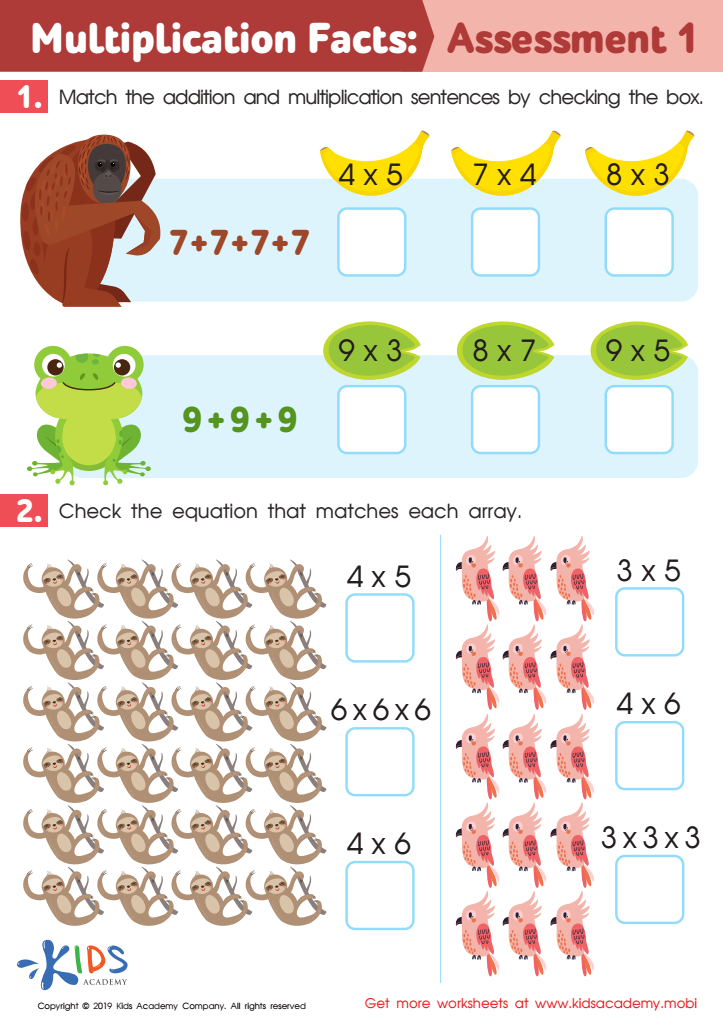
Multiplication Facts: Assessment 1 Worksheet
 Assign to My Students
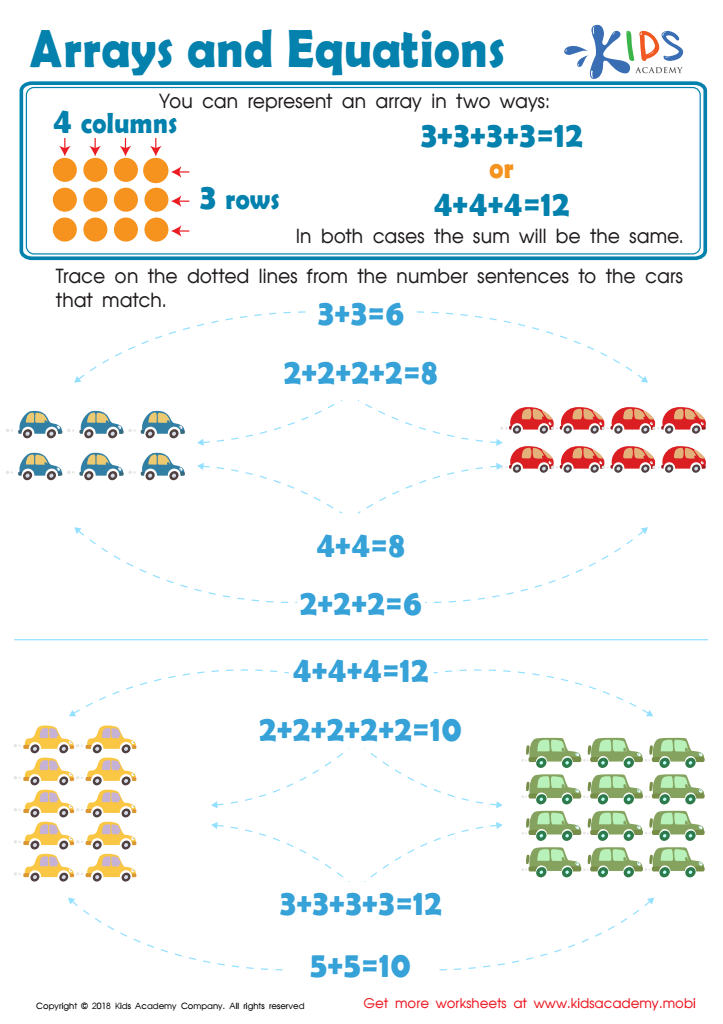
Arrays and Equations Worksheet
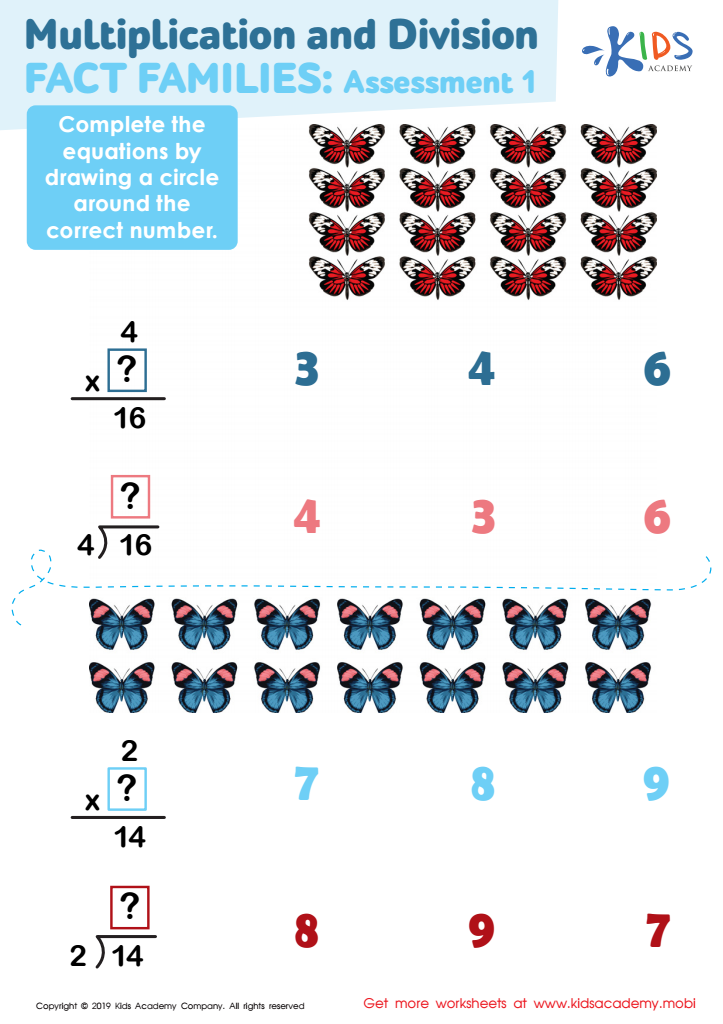
Multiplication and Division Fact Families Assessment 1 Worksheet








Multiplication practice using Normal Arrays is essential for children aged 6-9 as it enhances their understanding of foundational math concepts. At this developmental stage, children are determining how to categorize information and form connections, making visual representations particularly impactful. Normal Arrays utilize grids or matrices to visually demonstrate how multiplication works, helping children see the relationship between repeated addition and multiplication itself.
By employing these visual models, children can develop a conceptual understanding of multiplication that goes beyond rote memorization. This understanding fosters number sense, allowing students to first grasp the idea that multiplication represents groups of numbers. Furthermore, knowing how to arrange data visually prepares them for more complex problem-solving tasks in the future.
Practicing multiplication through Normal Arrays can also be engaging and interactive, making learning enjoyable. Parents and teachers can incorporate games and hands-on activities, which support diverse learning styles and encourage persistence.
Ultimately, by fostering a solid grip on multiplication through Normal Arrays, children lay a strong academic foundation that will aid them in subsequent math concepts, boost their confidence in their math abilities, and promote a positive attitude toward math as a subject. This gives them the tools for success not just in school, but throughout their lives.








