Comparing Fractions Normal Numbers Worksheets for Ages 6-9
4 filtered results
-
From - To
Explore our engaging "Comparing Fractions Normal Numbers Worksheets" designed for children aged 6-9. These worksheets provide an interactive way for young learners to grasp the concept of fractions by comparing different numerical values. Through fun exercises, kids will develop essential math skills, understand numerator and denominator roles, and enhance their problem-solving abilities. Ideal for classroom or home use, each worksheet encourages critical thinking while keeping learning enjoyable. Activate your child's mathematical journey today and boost their confidence in comparing fractions with our colorful, user-friendly resources. Perfect for reinforcing important skills and making math a fun experience for every child!
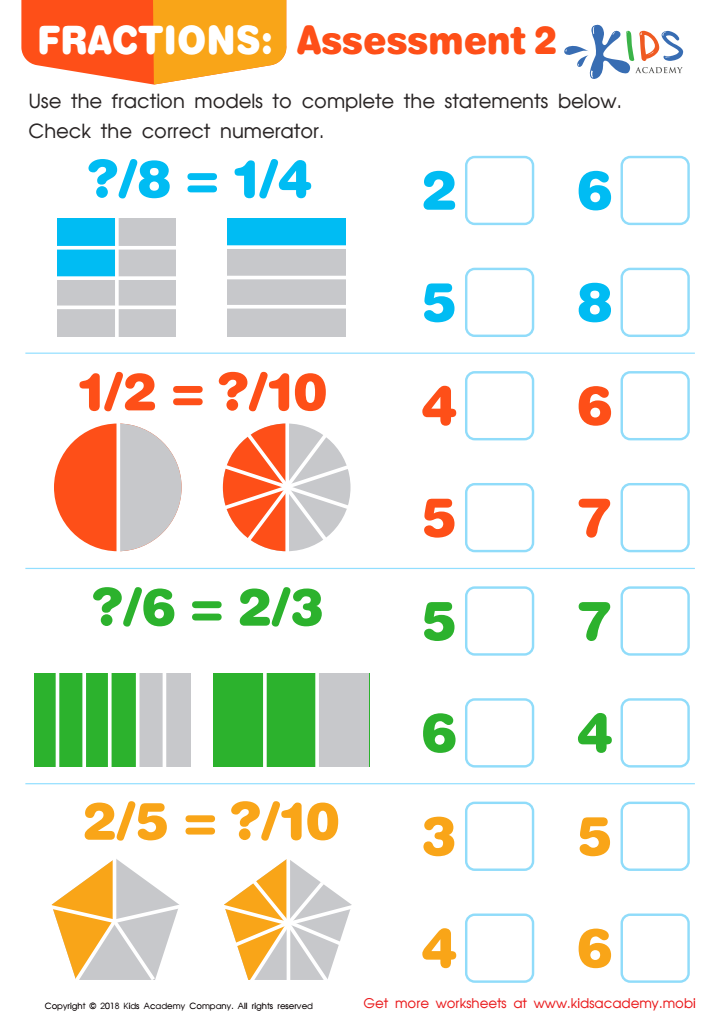
Fractions: Assessment 2 Worksheet
 Assign to My Students
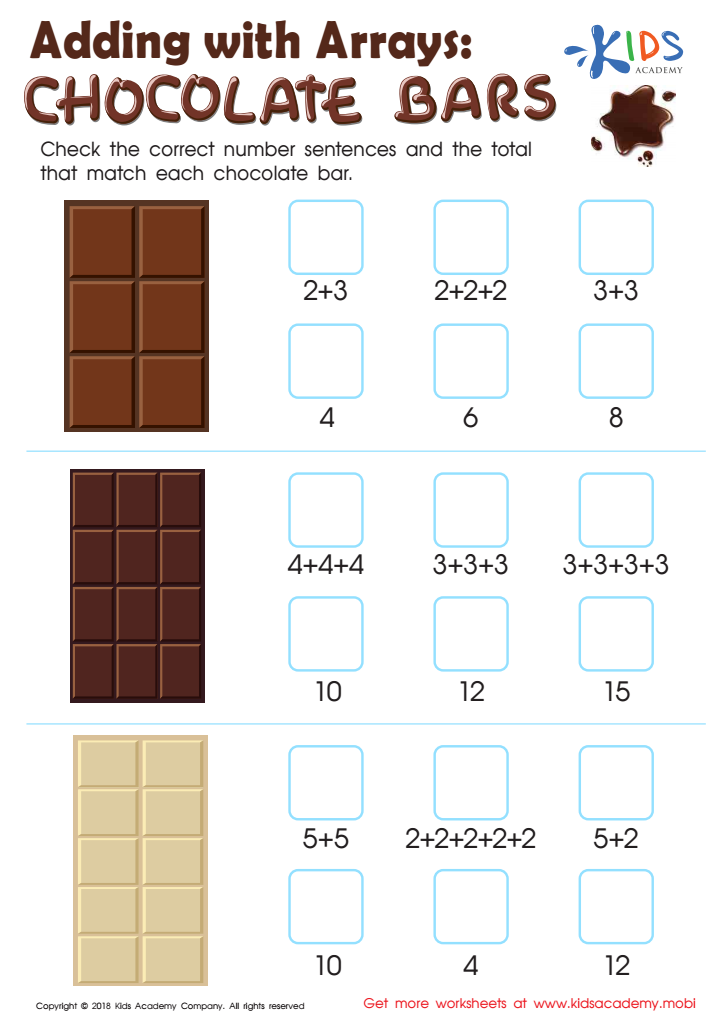
Adding with Arrays: Chocolate Bars Worksheet
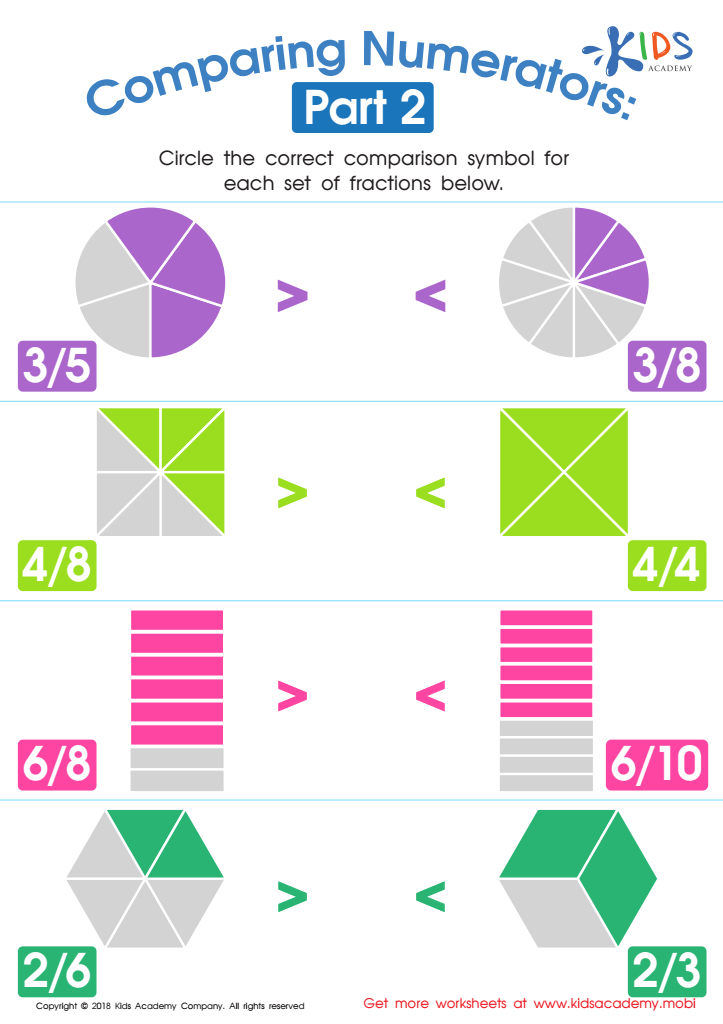
Comparing Numerators Part 2 Worksheet
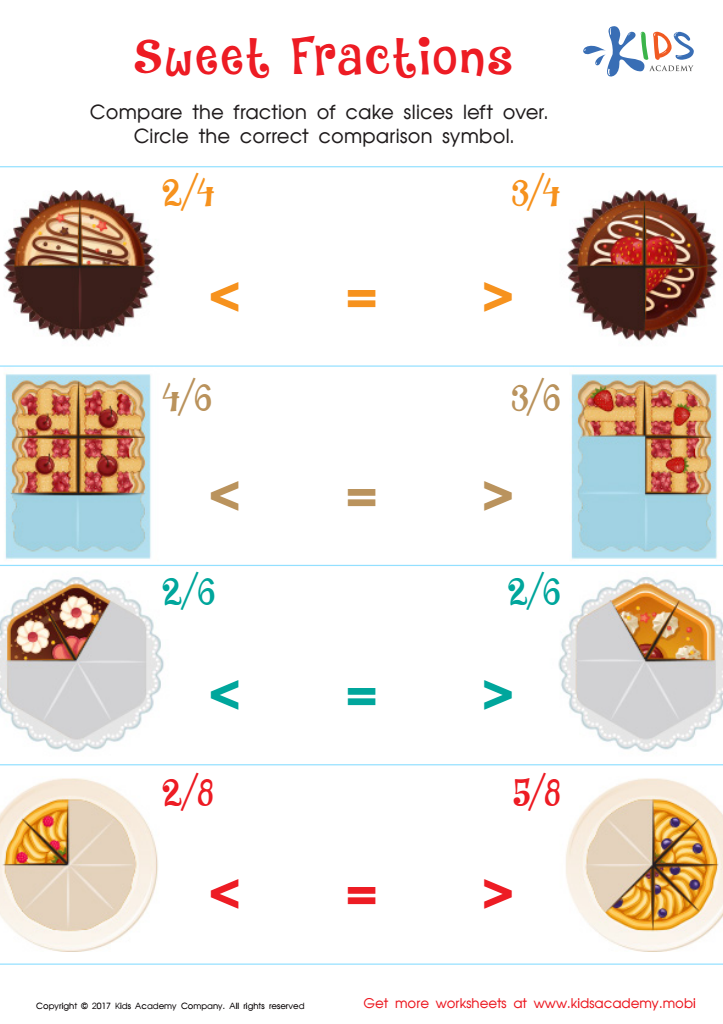
Compare Fractions Worksheet







Comparing fractions is a foundational mathematical skill that forms the basis for more advanced concepts in math. For children ages 6-9, understanding how to compare fractions using normal numbers—like 1/2, 3/4, and 2/3—sets the stage for their future success in math. Parents and teachers should care about this skill because it enhances critical thinking and problem-solving abilities. As children learn to visualize and manipulate fractions, they develop a deeper understanding of numerical relationships, which is crucial for their overall math comprehension.
Moreover, at this age, children are beginning to make connections between fractions and everyday situations, such as sharing food or dividing objects. By guiding them in comparing fractions, adults can help nurture their intuition about proportions. This understanding fosters confidence and encourages a positive attitude towards math.
Additionally, mastering fraction comparison reinforces skills they will need in higher grades, aiding comprehension in subjects like measurement, ratios, and percentages. Therefore, supporting children in this area not only facilitates academic growth but also instills a necessary problem-solving mindset they will carry into more complex mathematical challenges in the future. By prioritizing this skill, parents and teachers help build a strong mathematical foundation that aligns with everyday living and academic success.








