Recognizing number patterns Normal Numbers Worksheets for Ages 6-9
4 filtered results
-
From - To
Discover the exciting world of number patterns with our "Recognizing Number Patterns Normal Numbers Worksheets" designed for children aged 6-9! These engaging worksheets help young learners develop critical mathematical skills through fun exercises and colorful illustrations. Kids will explore sequences, identify recurring patterns, and enhance their problem-solving abilities. Each worksheet is carefully crafted to promote cognitive development while keeping the learning experience enjoyable. Perfect for parents and teachers, these resources align with early educational standards, making math accessible and fun. Empower your child’s learning journey today by introducing them to the fascinating concepts of number patterns! Get started now!
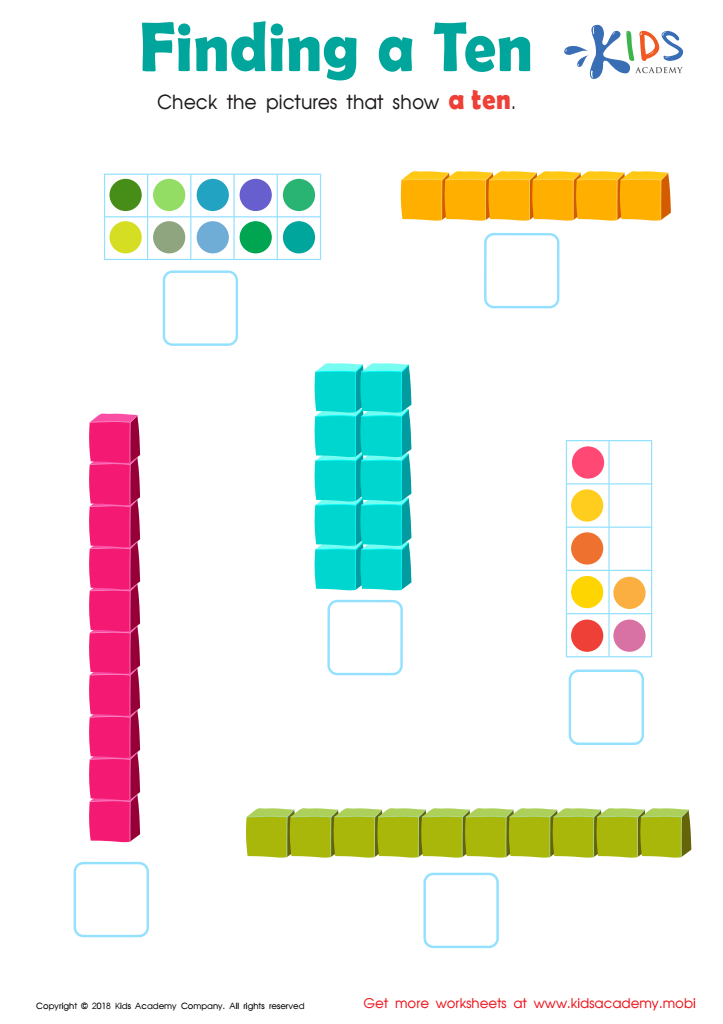
Finding a Ten Worksheet
 Assign to My Students
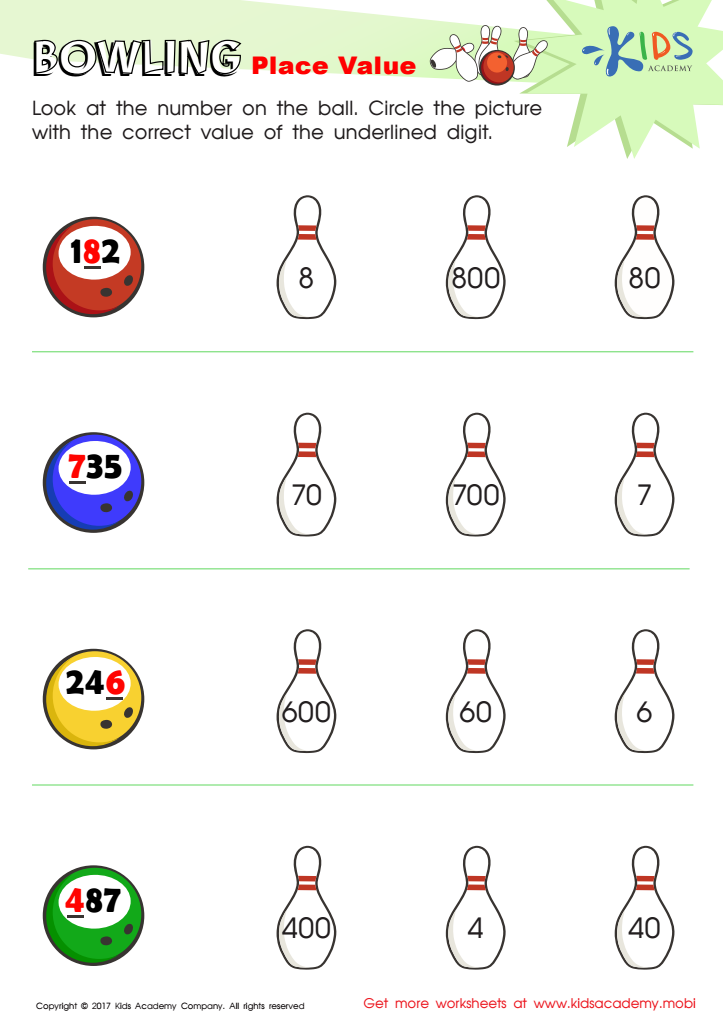
Place Value Worksheet
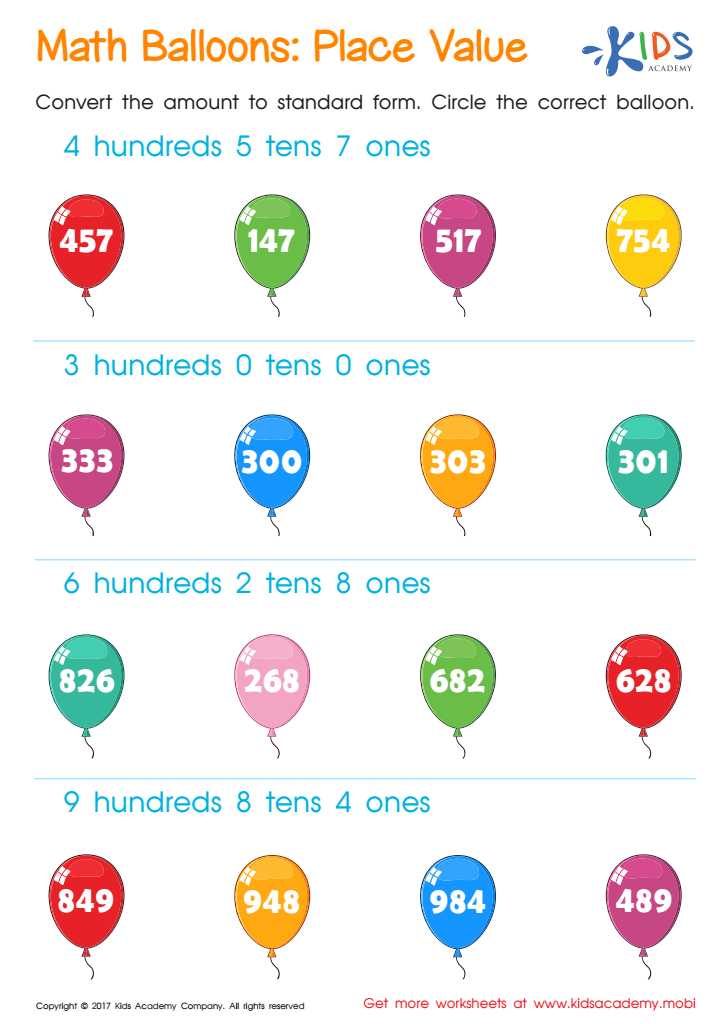
Place Value Printable Worksheet
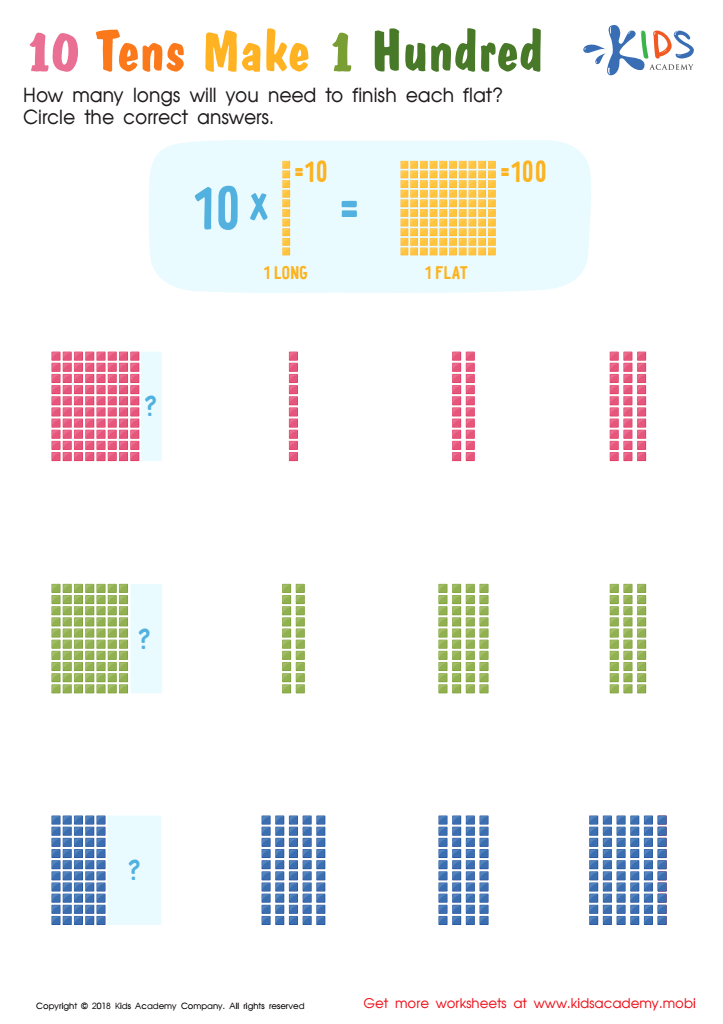
10 Tens Make 1 Hundred Worksheet








Recognizing number patterns is a fundamental skill for children aged 6-9, and it plays a significant role in their mathematical development. Understanding patterns helps children make connections within mathematical concepts, enhancing their problem-solving abilities and logical thinking skills. By recognizing patterns, young learners can identify relationships among numbers, which is the foundation for more complex mathematical operations, such as addition, subtraction, multiplication, and division.
For parents and teachers, fostering this skill encourages a sense of curiosity and exploration in children. When children see and understand patterns, they gain confidence in their mathematical abilities, making them more likely to engage in math-related activities and discussions. Additionally, patterns can be found in real-life situations—like in nature or through music—allowing educators and parents to create interdisciplinary learning experiences that make math relatable and enjoyable.
Furthermore, pattern recognition is linked to future academic success. It equips students with tools to approach and solve problems logically, establishing a strong base for future learning in STEM (science, technology, engineering, and mathematics). By emphasizing the importance of this skill, parents and teachers empower children to become thoughtful, analytical thinkers, better prepared for the challenges of higher education and everyday life.








