Enhance your child's math skills with our Animal Recognition Normal Math Worksheets, designed for ages 6-9! These engaging activities combine basic math concepts with fascinating animal themes to captivate young learners. From counting and addition to solving puzzles and adding creativity, children will enjoy fun, educational practice that strengthens their understanding of numbers and animal recognition. Perfect for both classroom and at-home learning, our worksheets help build a solid foundation in math while sparking a love for wildlife. Explore our collection to make learning math an exciting adventure for your child!

Check out this FREE Trial Lesson on Math for age 6-9!

Sorting Objects into 3 Categories

Favorites
With answer key
Interactive
  • 6-9
  • Animal recognition
  • Math
  • Normal
Sorting Animals in 3 Groups Worksheet

Sorting Animals in 3 Groups Worksheet

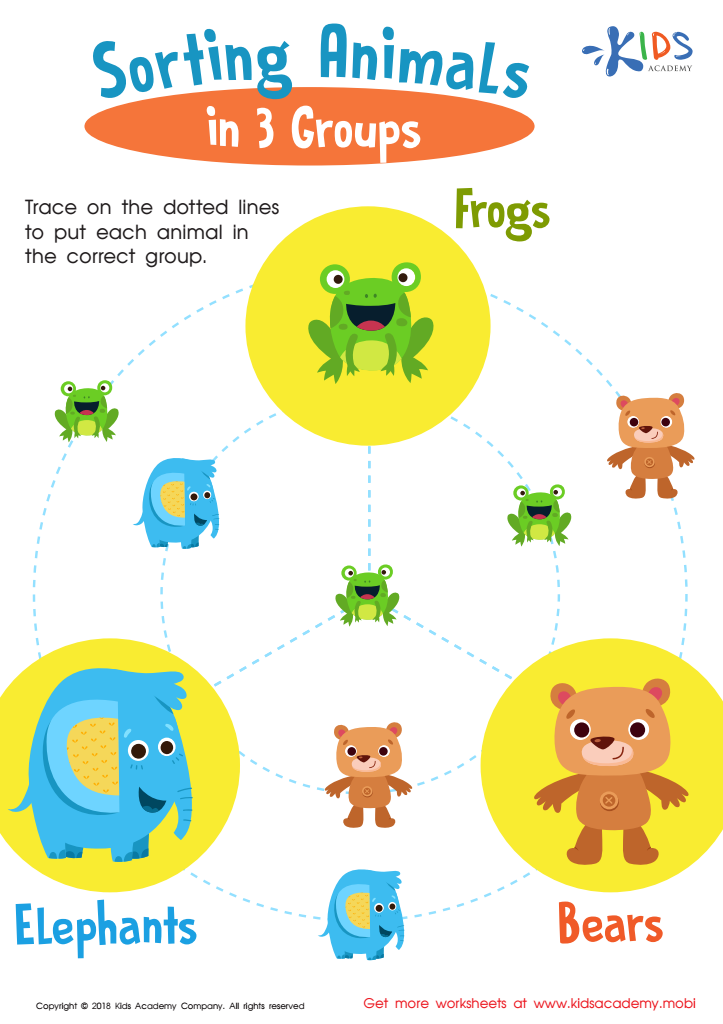
Let your kids practice and build skills for future Venn Diagrams with this PDF worksheet. They'll trace lines to match and group animals, and learn the differences and similarities of animals by categorizing with pictures and words. Plus, it's a great way to develop fine motor skills.
Sorting Animals in 3 Groups Worksheet
Worksheet
Math PDF Worksheet: Count Funny Animals

Count Funny Animals Worksheet

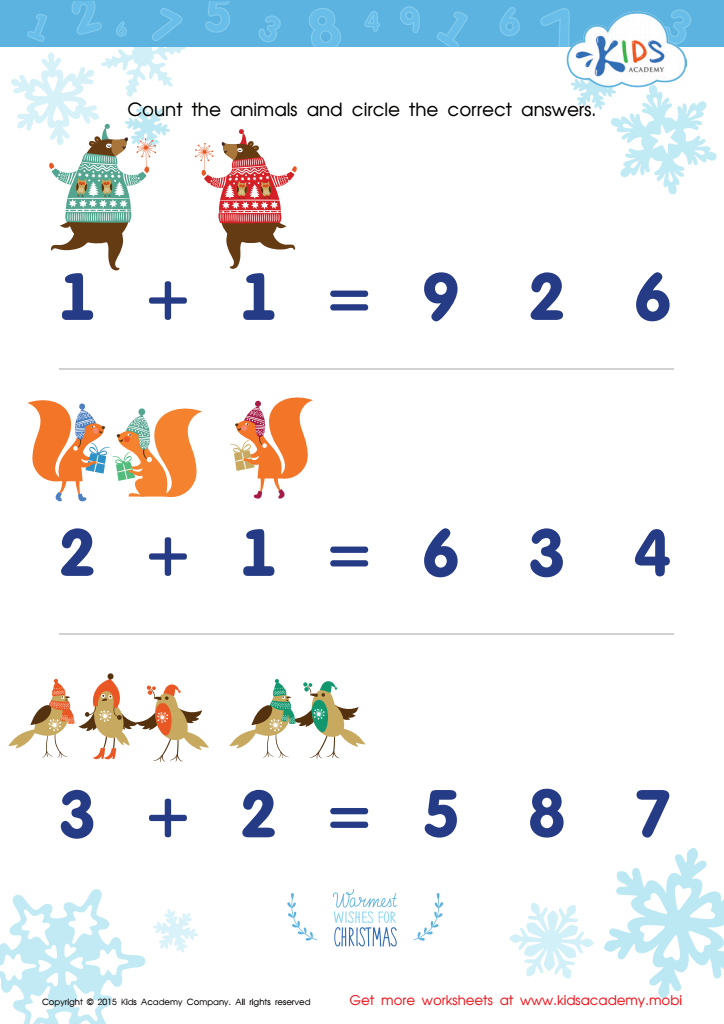
Get your kid in the Christmas spirit with this festive addition worksheet! They'll have fun counting the colorful animals and writing in the numbers. Our graphic layout makes it easy for them to visualize and solve the task. Print it out and help your kid keep their math skills sharp this winter with Kids Academy!
Count Funny Animals Worksheet
Worksheet
Counting Pets Worksheet

Counting Pets Worksheet

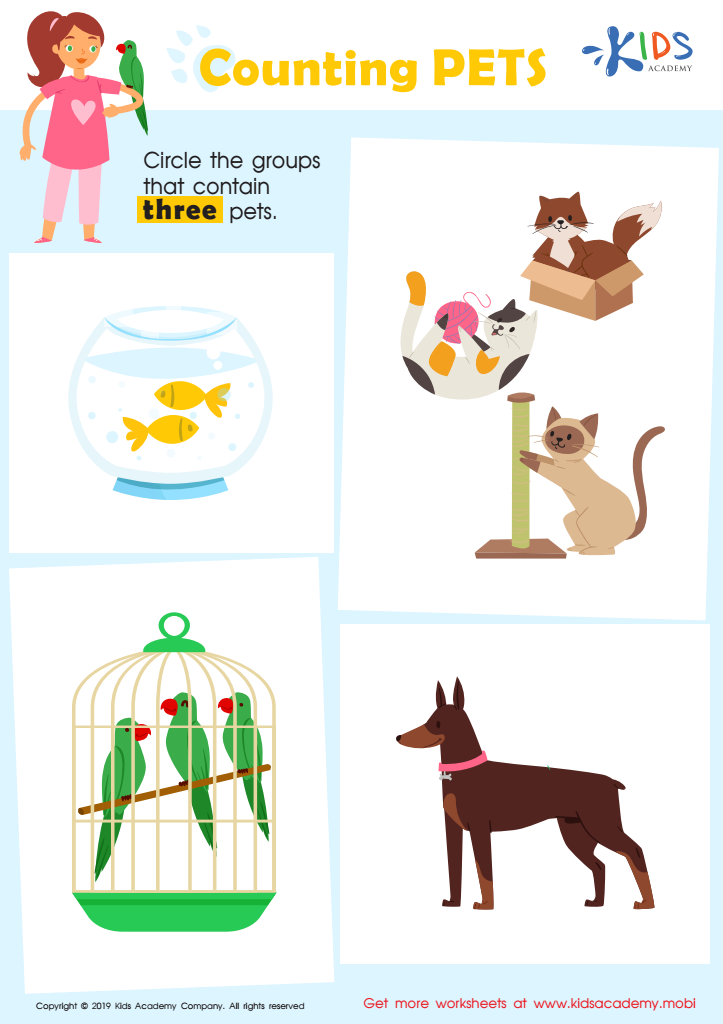
Kids adore their pets, making this free pet counting worksheet the perfect way to combine something they love with math skills. They'll count the number of pets, circle the pictures with three pets, and use one-to-one picture representation to help. This exercise will cultivate their learning and reinforce their love of animals!
Counting Pets Worksheet
Worksheet
Help the Warthog Count the Grubs Worksheet

Help the Warthog Count the Grubs Worksheet

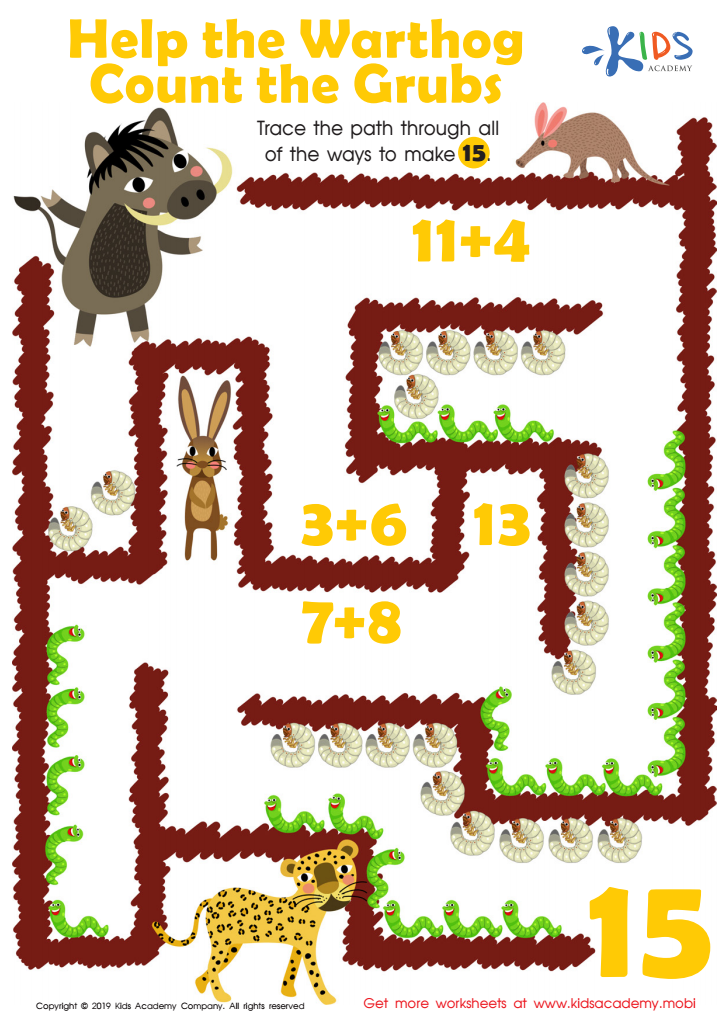
Test your kids' knowledge of wild animals. Ask them to name some they know, then have them identify the animals on this worksheet. If they can't, take the time to tell them the names. Finally, trace the warthog's path through the maze by solving the equations and going through paths that make 15.
Help the Warthog Count the Grubs Worksheet
Worksheet
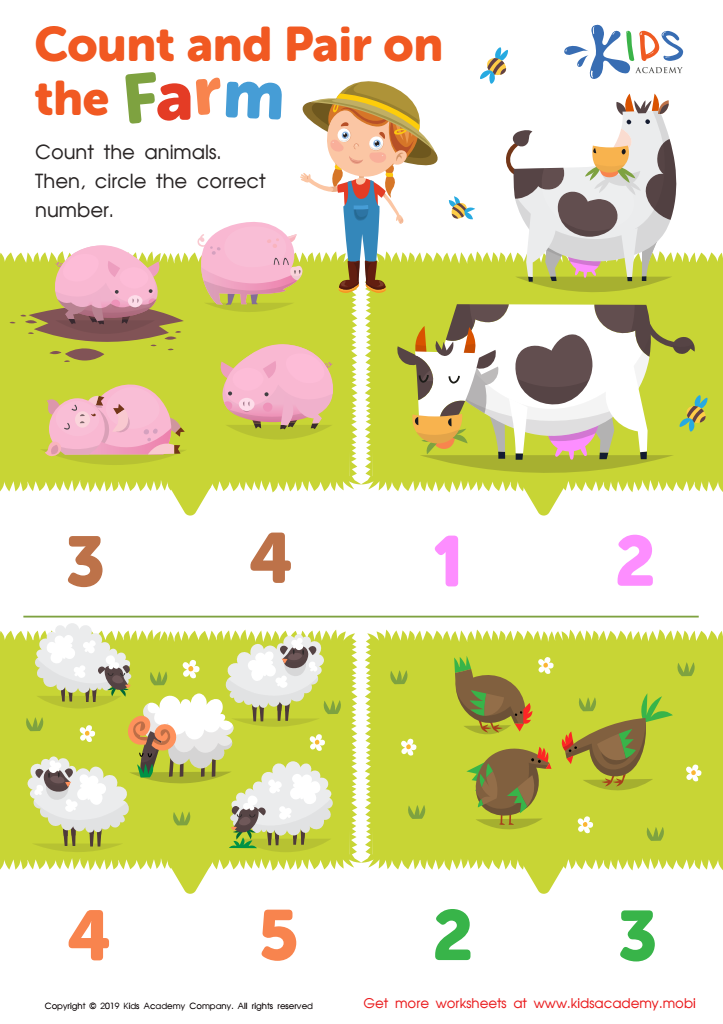
Count and Pair on the Farm Worksheet

Count and Pair on the Farm Worksheet

Farms are essential to our society: they grow food and crops, and raise animals for us to use. Kids can have a great time at a farm, engaging in activities like identifying animals, counting them, and circling the correct number. On this worksheet, ask your kids to try all three!
Count and Pair on the Farm Worksheet
Worksheet
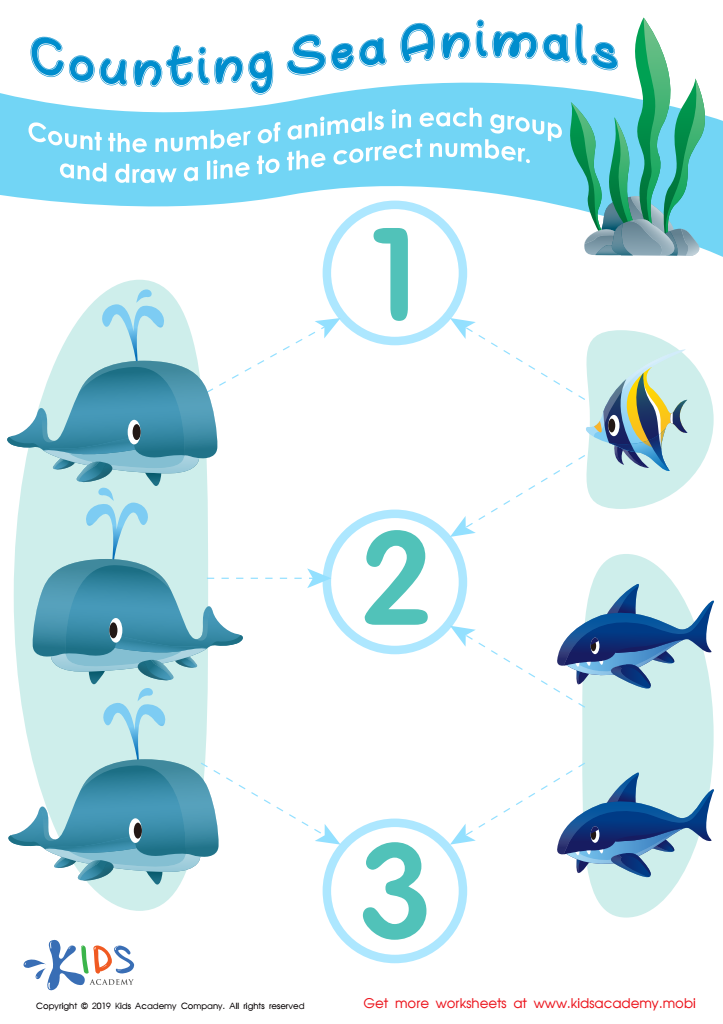
Counting Sea Animals Worksheet

Counting Sea Animals Worksheet

Kids adore sea creatures for their captivating, unknown nature. Let them use this free worksheet to practice counting, where they match numbers to groups of animals. Through traceable lines, they'll easily connect numbers to sea creatures and learn math with vibrant, underwater fun!
Counting Sea Animals Worksheet
Worksheet
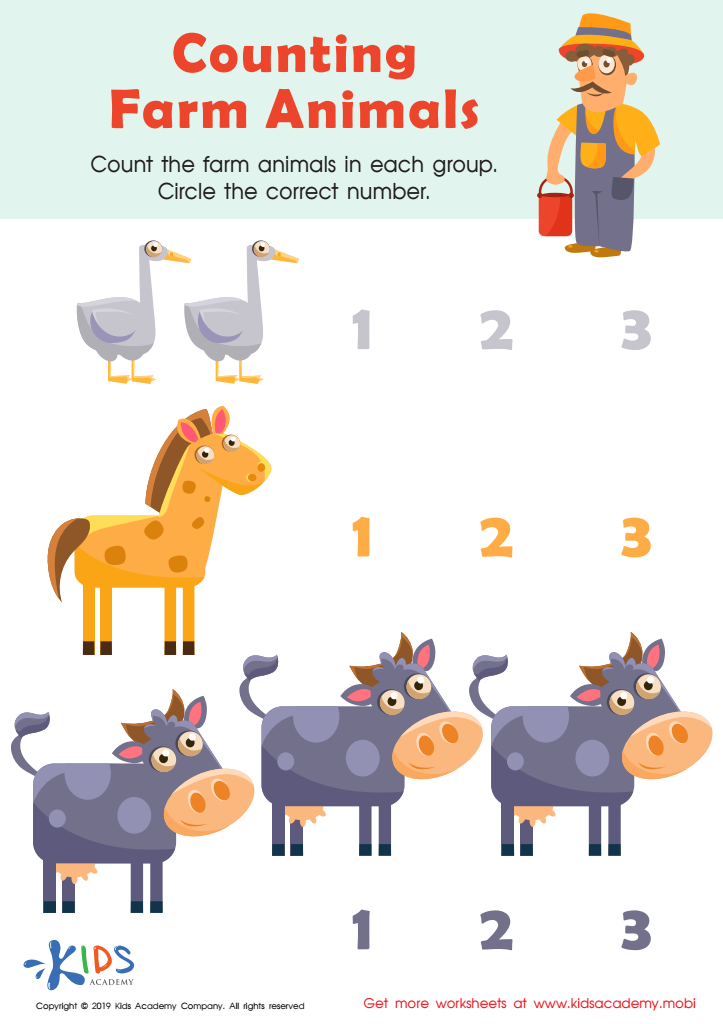
Counting Farm Animals Worksheet


Counting Farm Animals Worksheet

Kids love farms! That's why this free farm animals counting worksheet is great for building number sense and counting skills. Have your young mathematician count the pictures, then circle the corresponding number. It's a fun and meaningful way to practice counting.
Counting Farm Animals Worksheet

Worksheet


Parents and teachers should care about animal recognition in normal math (combining basic math skills with animal identification) for children ages 6-9 because it strengthens cognitive development and enhances engagement. Integrating fun activities like animal recognition into math lessons helps make learning more interactive and exciting, which can maintain a child's attention and motivate them to participate.

At this critical age, children are developing foundational skills in both geometry and arithmetic, as well as expanding their understanding of the natural world. Using animals in math problems can help solidify concepts such as counting, sorting, and basic operations. For example, asking a child to count the number of legs on several animals, or to group animals by type and number, can help reinforce these math basics in a memorable way.

Additionally, combining subjects prompts holistic learning. Recognizing patterns in the number of spots on a ladybug or calculating animal footprints can develop a child's observational and analytical skills. It broadens their curiosity and contributes to a well-rounded education, merging STEM (Science, Technology, Engineering, and Mathematics) with environmental awareness.

Engagement and relevance are crucial for young learners, and always seeing a connection to the real world — such as through familiar and interesting contexts like animals — makes abstract math concepts tangible and less intimidating. This approach supports both academic success and fosters a deeper understanding and appreciation of the world they live in.