Recognizing number patterns Normal Math Worksheets for Ages 6-9
4 filtered results
-
From - To
Unlock your child's mathematical potential with our “Recognizing Number Patterns” normal math worksheets, specifically designed for children aged 6 to 9. These engaging worksheets help young learners identify and understand number sequences and patterns, boosting their problem-solving skills and number sense. With colorful graphics and age-appropriate exercises, kids will enjoy practicing essential math concepts in a fun way. Our worksheets cater to various skill levels, ensuring that every child can advance at their own pace. Download now to set your child on a path toward mathematical confidence and success, while fostering a love for learning through playful education!
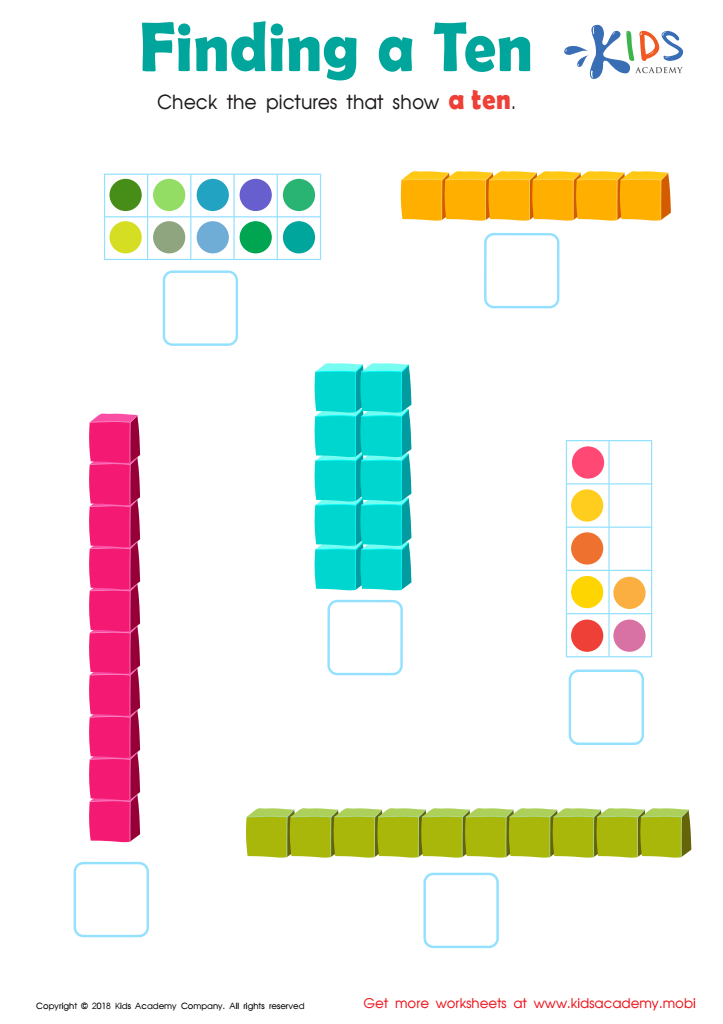
Finding a Ten Worksheet
 Assign to My Students
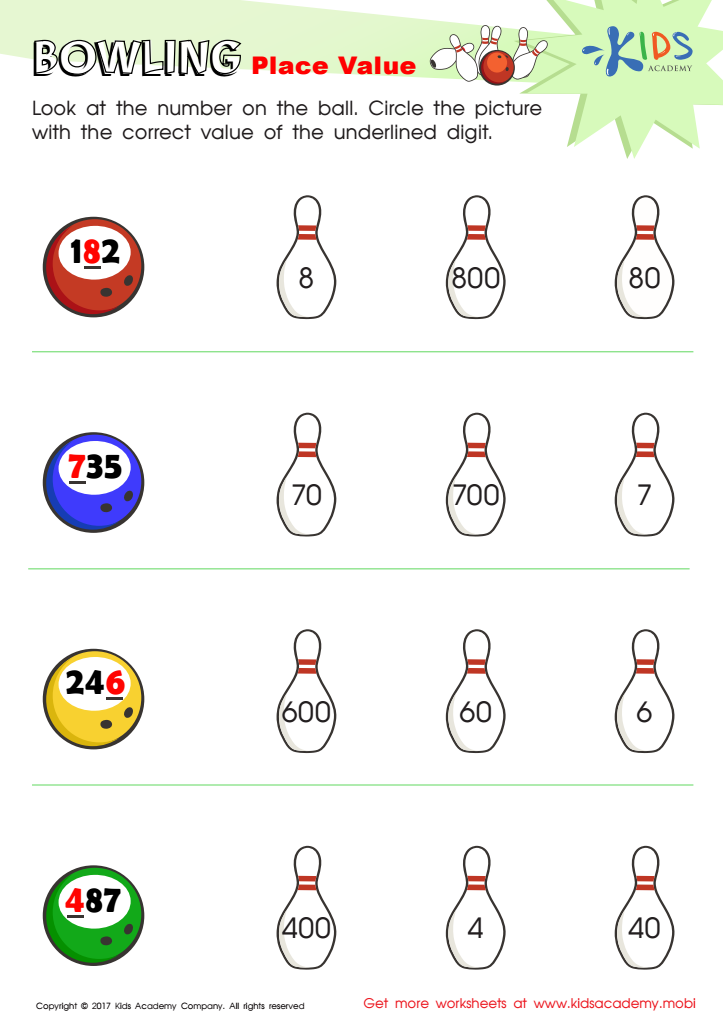
Place Value Worksheet
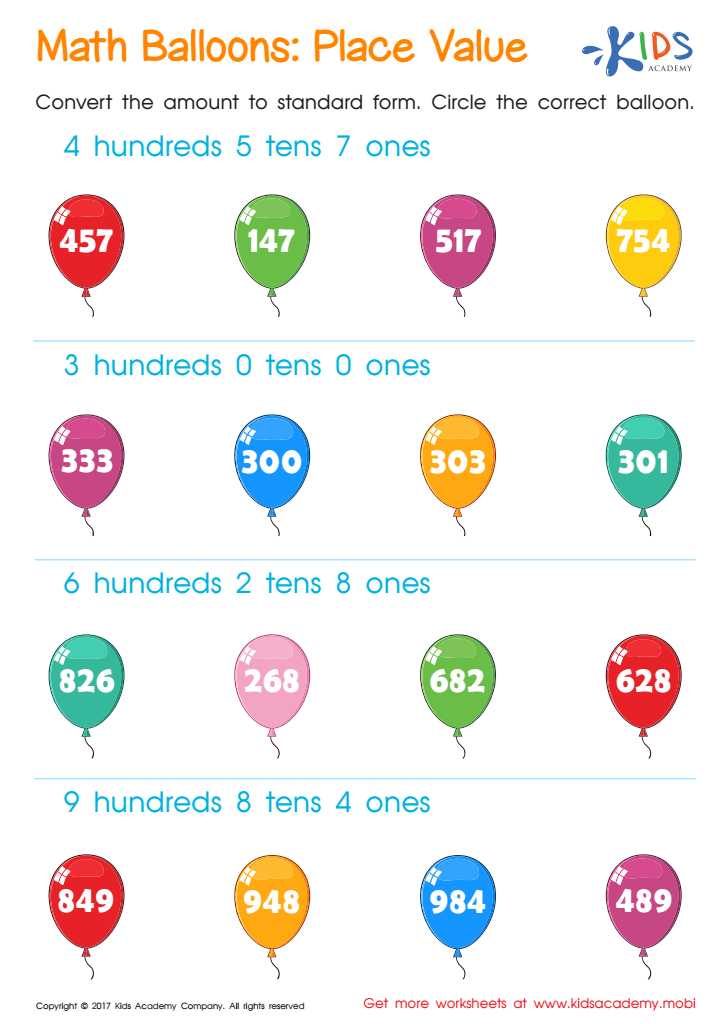
Place Value Printable Worksheet
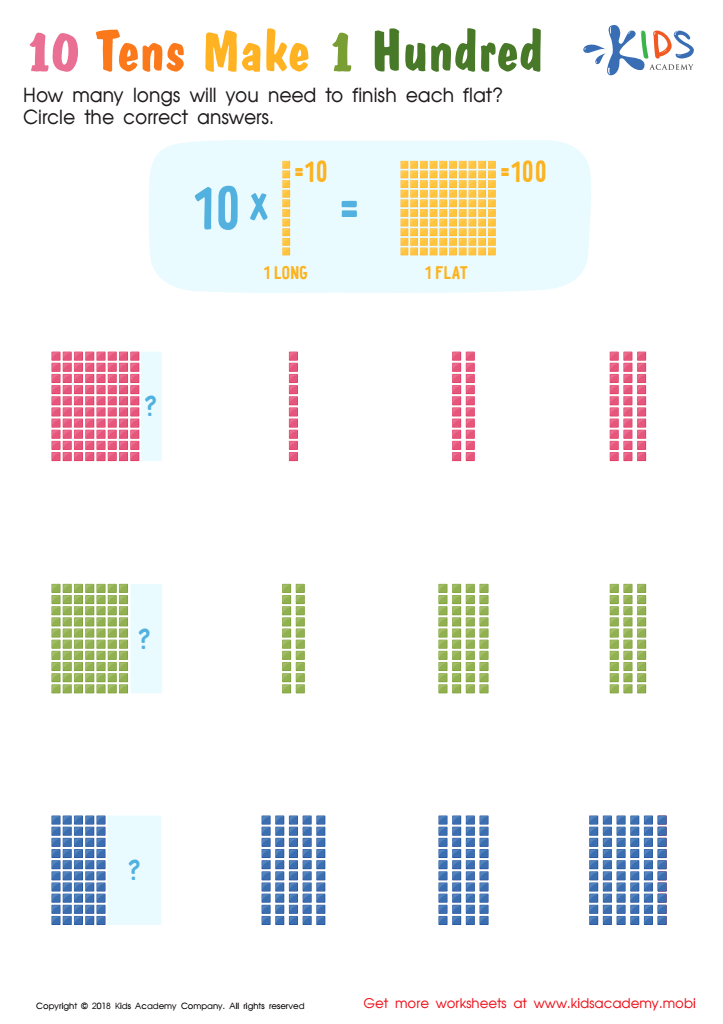
10 Tens Make 1 Hundred Worksheet






Recognizing number patterns is a fundamental skill for children aged 6-9, fostering critical thinking and problem-solving abilities. For parents and teachers, encouraging this skill can have long-lasting benefits in a child’s mathematical education. Understanding number patterns lays the groundwork for more complex mathematical concepts like addition, subtraction, multiplication, and division, supporting overall numeracy development.
Patterns help students identify relationships between numbers, enhancing their ability to predict outcomes, which is a vital skill in everyday situations and higher-level math. When children experiment with patterns, they not only boost their computational skills but also nurture creativity and curiosity, preparing them for a wide range of future learning opportunities.
Just as crucially, pattern recognition can bolster a child’s confidence in math. When students grasp these concepts, they are less likely to experience math anxiety, making them more inclined to engage with and excel in the subject.
Moreover, involving parents in recognizing and discussing number patterns can forge a strong home-school connection, where math becomes an enjoyable, shared activity, transforming learning into a collaborative experience and setting the stage for lifelong learning in mathematics for children. Thus, focusing on this skill is essential in cultivating mathematically-minded learners.








