
Spatial reasoning Normal Math Worksheets for Ages 6-9
3 filtered results
Difficulty Level
Grade
Age
-
From - To
Subject
Activity
Standards
Discover our engaging Spatial Reasoning Normal Math Worksheets, designed specifically for children ages 6-9. These worksheets help young learners enhance their spatial awareness and problem-solving skills through fun, interactive activities. Each worksheet features a variety of exercises that encourage children to visualize shapes, recognize patterns, and understand spatial relationships. Our user-friendly format ensures that kids stay motivated while developing essential math skills. Perfect for home practice or classroom use, these worksheets provide essential support to your child's educational journey. Help your child gain confidence in math and develop strong spatial reasoning abilities with our thoughtfully-created resources today!
Favorites
With answer key
Interactive
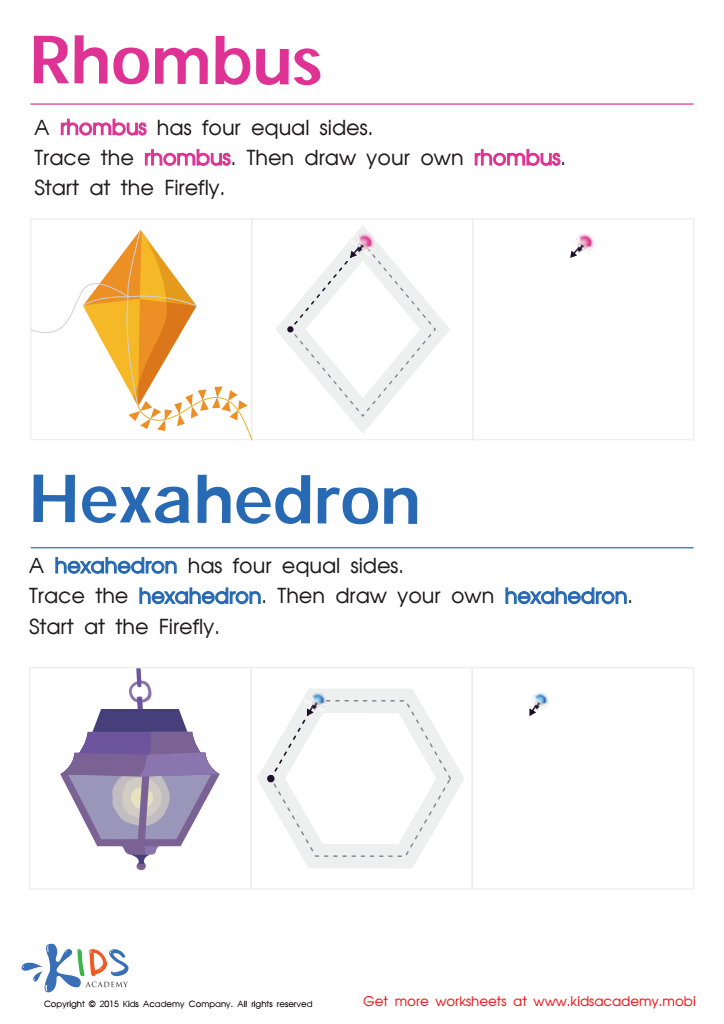
Draw a Rhombus And a Hexahedron Printable
Trace, draw and recognize shapes like rhombus, hexahedron and more! Start with the firefly to trace a rhombus, then use the yellow kite to remember the shape. Use the light to trace and draw a hexahedron. Learn with the best!
 Assign to My Students
Draw a Rhombus And a Hexahedron Printable
Worksheet
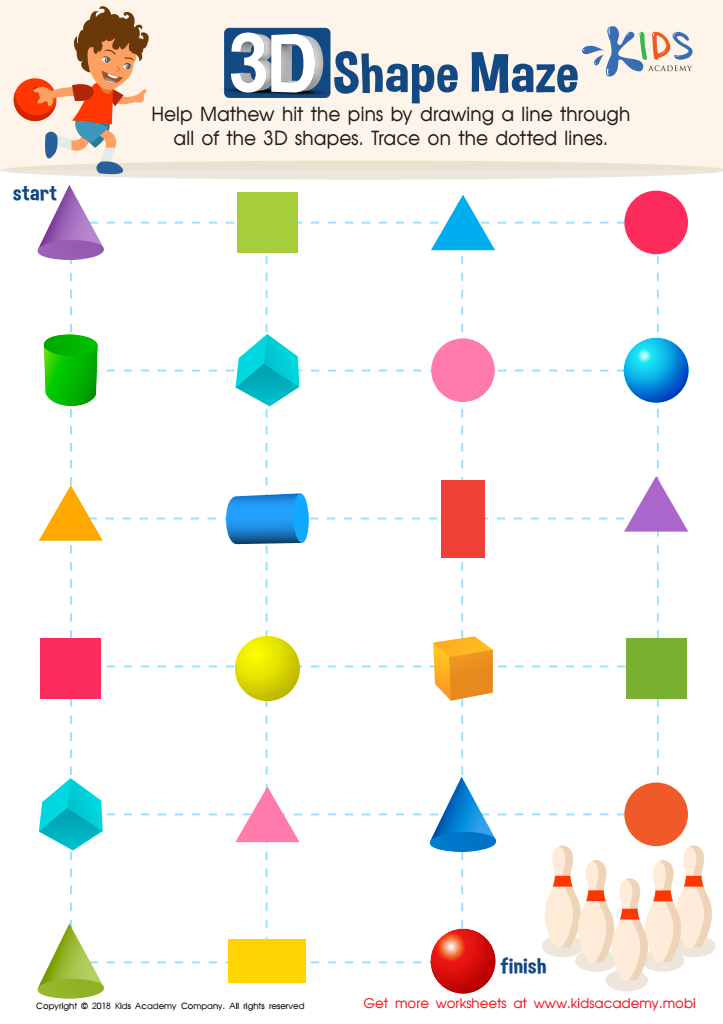
Shapes Maze Geometry Worksheet
Boost your child's geometry skills with this shapes maze worksheet! Help Matthew bowl a strike by guiding him through the maze to draw a line through every 3D shape. It's a fun and challenging way to practice foundational math skills!
Shapes Maze Geometry Worksheet
Worksheet
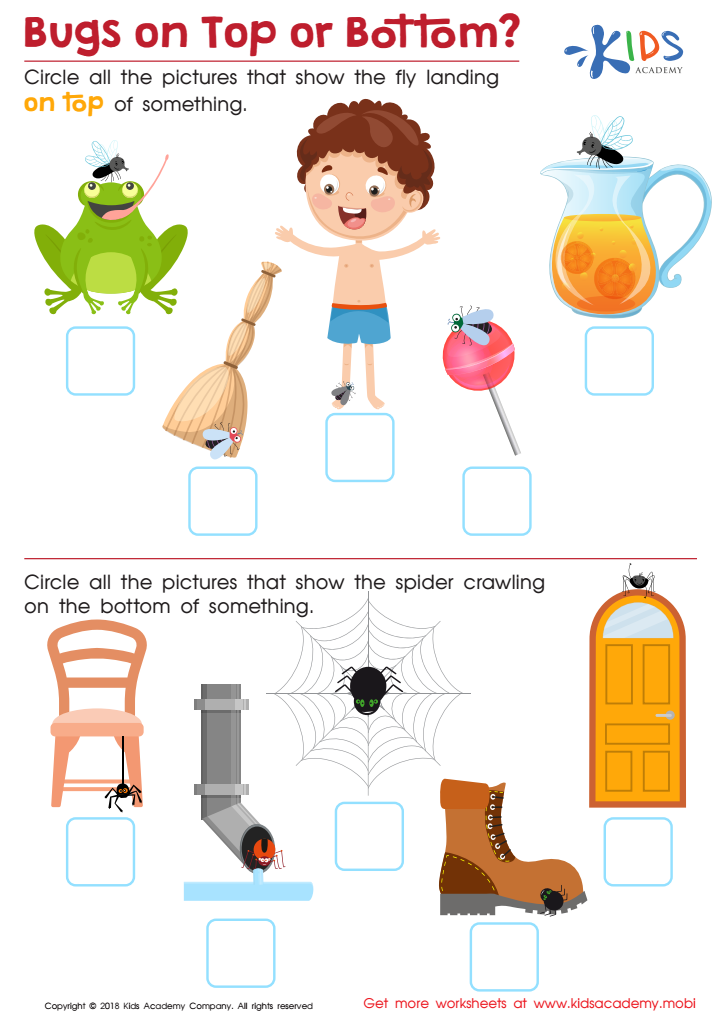
Bugs on Top or Bottom? Worksheet
Preschoolers need to learn directional skills such as top and bottom. This PDF worksheet helps them recognize bugs on the top or bottom using fun visuals. It builds their spatial reasoning while teaching prepositional words in an engaging way.
Bugs on Top or Bottom? Worksheet
Worksheet
Join Kids Academy for Free
Who is primarily going to use this learning content?




.jpg)


Spatial reasoning is a crucial cognitive skill that significantly influences a child’s understanding of math and science concepts, especially for those aged 6-9. During this critical developmental stage, children begin to form fundamental mathematical foundations, and spatial reasoning plays a key role in areas such as geometry, measurement, and data visualization.
By fostering strong spatial reasoning skills, parents and teachers can help children improve their problem-solving abilities and enhance their capacity to visualize objects and manipulate them mentally. This skillset is essential for understanding concepts like shapes, symmetry, and spatial relationships, which are integral to their future academic success in mathematics and related disciplines.
Incorporating spatial reasoning into the learning environment aids in developing critical thinking and innovation skills. Activities such as building blocks, puzzles, and interactive games not only make learning enjoyable but also provide practical applications of spatial concepts.
Furthermore, children with strong spatial reasoning abilities often perform better in standardized testing, leading to higher confidence and motivation in school. In essence, fostering spatial reasoning in young children lays a solid foundation for their educational journey, promoting long-term academic excellence and a love for learning. Therefore, educators and parents should prioritize its development as an integral part of the curriculum.








